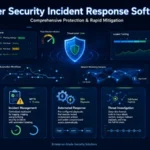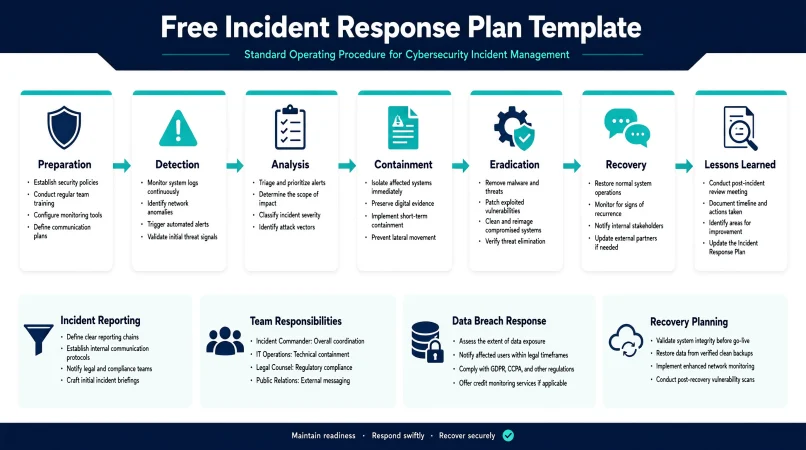
An incident response plan template free is a practical starting point for documenting how an organization identifies, contains, investigates, and recovers from security incidents. A useful template includes response roles, reporting procedures, communication steps, recovery actions, and lessons learned.
Top alternatives: Free Cybersecurity Incident Response Template, Security Incident Response Plan Example, IT Incident Management Template, Data Breach Response Checklist, Emergency Incident Response Plan.
A security incident can turn an ordinary workday into a race against the clock. One minute, everything is running smoothly. The next, suspicious logins appear, systems stop responding, or someone reports that sensitive information might have been exposed. Nobody wants to be the person asking, “So, what’s the plan?” while everyone else waits for answers.
That’s where an incident response plan template free becomes useful. Whether you’re managing a small business, supporting an IT team, or building a cybersecurity program, having a documented response process helps everyone understand what to do when something goes wrong.
A good plan identifies responsibilities, establishes reporting procedures, prioritizes containment, and guides recovery. It also reduces confusion when pressure is high. You don’t need to start with a complicated document or an expensive solution. A practical template can give you a solid foundation that you customize to your organization’s risks, resources, and requirements.
The goal is simple: prepare today so your team can respond more confidently tomorrow.
1. Basic Incident Response Plan Templates
A basic template is ideal for organizations that need a clear, manageable starting point without unnecessary complexity. It outlines the essential steps for recognizing, reporting, managing, and resolving incidents.
1. Incident Response Plan Starter
Example: Use this when documenting your organization’s first formal incident response process.
Meaning: Establishes a straightforward structure for handling incidents from detection through recovery.
2. Simple Security Incident Plan
Example: Choose this when a small business needs documented cybersecurity procedures.
Meaning: Keeps response instructions accessible and easy for employees to understand.
3. General IT Incident Response Template
Example: Use this when your IT department handles outages, suspicious activity, and system disruptions.
Meaning: Creates a consistent process for managing different types of technology incidents.
4. Incident Reporting and Response Plan
Example: Apply this when employees need clear instructions for reporting unusual activity.
Meaning: Connects incident reporting with investigation and response responsibilities.
5. Small Business Incident Plan
Example: Use this when your company has a limited IT team and needs practical procedures.
Meaning: Focuses on essential actions without requiring a large security department.
6. Organizational Incident Management Plan
Example: Choose this when several departments participate in incident handling.
Meaning: Defines how teams coordinate their responsibilities during an incident.
7. Incident Response Checklist Template
Example: Keep this checklist available for employees who need to report or escalate an incident.
Meaning: Converts important response activities into actionable steps.
8. Standard Incident Response Document
Example: Use this as the foundation for a company-wide incident response policy.
Meaning: Provides a consistent document for recording procedures, responsibilities, and expectations.
9. Incident Response Workflow Template
Example: Apply this when your team needs a visual sequence of response activities.
Meaning: Shows how an incident moves from initial detection to closure.
2. Cybersecurity Incident Response Plan Templates
Cybersecurity incidents can involve malware, unauthorized access, compromised accounts, or suspicious network activity. A specialized template helps security teams follow a structured response process.
1. Cybersecurity Incident Response Plan
Example: Use this when establishing your organization’s core security incident procedures.
Meaning: Defines how cybersecurity events are identified, assessed, contained, and resolved.
2. Security Incident Handling Template
Example: Apply this when analysts need a consistent method for investigating security alerts.
Meaning: Standardizes the steps used to examine and manage potential incidents.
3. Cyber Threat Response Plan
Example: Use this when preparing for phishing campaigns, malicious activity, or attempted intrusions.
Meaning: Establishes actions for assessing threats and reducing their potential impact.
4. Unauthorized Access Response Plan
Example: Choose this when an employee account or administrative login may be compromised.
Meaning: Guides investigation, access restriction, credential protection, and recovery.
5. Endpoint Security Incident Template
Example: Use this when a workstation or company laptop shows signs of compromise.
Meaning: Helps responders investigate affected devices and determine appropriate containment measures.
6. Network Security Incident Plan
Example: Apply this when unusual traffic or suspicious network connections are detected.
Meaning: Structures network investigation, containment, and restoration activities.
7. Security Alert Escalation Template
Example: Use this when monitoring staff need to decide which alerts require urgent attention.
Meaning: Establishes escalation criteria based on severity, evidence, and potential impact.
8. Cybersecurity Investigation Log
Example: Keep this during an investigation involving suspicious files or account activity.
Meaning: Records observations, evidence references, timestamps, and investigative decisions.
9. Security Incident Severity Matrix
Example: Use this when your organization needs consistent incident priority levels.
Meaning: Helps classify incidents according to business impact, urgency, and potential damage.
10. Cybersecurity Response Communication Plan
Example: Apply this when security, IT, management, and legal teams must coordinate.
Meaning: Defines how incident information is shared with authorized stakeholders.
3. Data Breach Incident Response Templates
A suspected data breach requires careful investigation, controlled communication, and appropriate protection of affected information. The right template helps organizations document decisions and coordinate their response.
1. Data Breach Response Plan
Example: Use this when personal, financial, or confidential business information may have been exposed.
Meaning: Establishes procedures for investigating and managing a suspected breach.
2. Personal Data Exposure Template
Example: Apply this when customer or employee information may have reached unauthorized individuals.
Meaning: Helps document the information involved, potential exposure, and response actions.
3. Data Breach Assessment Checklist
Example: Use this during the initial investigation of a possible information disclosure.
Meaning: Guides responders through assessing the incident’s scope and potential consequences.
4. Confidential Information Incident Plan
Example: Choose this when sensitive business documents may have been accessed improperly.
Meaning: Supports containment and investigation of incidents involving confidential information.
5. Customer Data Incident Template
Example: Use this when a customer database or customer-facing application may be compromised.
Meaning: Helps coordinate technical investigation and appropriate stakeholder communication.
6. Data Loss Response Plan
Example: Apply this when important business information is deleted, stolen, or unexpectedly unavailable.
Meaning: Organizes investigation, data protection, and restoration activities.
7. Breach Evidence Documentation Template
Example: Use this to record relevant logs, affected systems, and investigative findings.
Meaning: Preserves an organized record of evidence and response decisions.
8. Data Breach Notification Checklist
Example: Use this when legal or compliance personnel must assess notification obligations.
Meaning: Helps track notification decisions, deadlines, approvals, and required documentation.
9. Third-Party Data Breach Plan
Example: Apply this when a vendor reports a security incident involving your information.
Meaning: Coordinates communication, risk assessment, and follow-up with the affected provider.
4. IT Incident Response Plan Templates
IT incidents are not always cyberattacks. Hardware failures, application errors, network outages, and configuration problems can also interrupt operations. An IT-focused template helps teams restore services in an organized way.
1. IT Incident Response Plan
Example: Use this when documenting procedures for technology disruptions across your organization.
Meaning: Establishes responsibilities and response steps for IT-related incidents.
2. System Outage Response Template
Example: Apply this when a critical application or internal system becomes unavailable.
Meaning: Guides outage assessment, escalation, communication, and restoration.
3. Network Outage Incident Plan
Example: Use this when employees lose access to essential network services.
Meaning: Structures troubleshooting and recovery coordination.
4. Application Incident Template
Example: Choose this when a business application repeatedly crashes or behaves unexpectedly.
Meaning: Documents application problems, their impact, and corrective actions.
5. Hardware Failure Response Plan
Example: Use this when a critical server, storage device, or network component fails.
Meaning: Helps coordinate diagnosis, replacement, and service restoration.
6. IT Service Disruption Checklist
Example: Keep this available for service desk staff handling urgent technology problems.
Meaning: Provides a repeatable checklist for initial assessment and escalation.
7. IT Incident Escalation Matrix
Example: Apply this when support staff need to determine which team should handle a problem.
Meaning: Maps incident severity to the appropriate response personnel.
8. Technical Incident Timeline Template
Example: Use this when recording a prolonged outage involving multiple teams.
Meaning: Creates a chronological record of events and recovery decisions.
9. IT Incident Communication Plan
Example: Choose this when an outage affects employees or customers.
Meaning: Defines how stakeholders receive accurate service updates.
10. IT Root Cause Analysis Template
Example: Use this after a recurring technical failure has been resolved.
Meaning: Helps identify underlying causes instead of repeatedly treating symptoms.
5. Malware and Ransomware Response Templates
Malware and ransomware incidents can threaten sensitive information, disrupt services, and affect connected systems. A specialized plan helps responders coordinate containment and recovery without making the situation worse.
1. Malware Incident Response Plan
Example: Use this when a device displays signs of malicious software infection.
Meaning: Establishes procedures for investigating and containing suspected malware.
2. Ransomware Response Checklist
Example: Keep this available when systems show signs of ransomware activity.
Meaning: Organizes urgent escalation, containment, evidence preservation, and recovery coordination.
3. Malware Investigation Template
Example: Apply this when security staff need to examine suspicious files or processes.
Meaning: Records investigative findings and actions taken during malware analysis.
4. Infected Endpoint Response Plan
Example: Use this when a company computer appears compromised.
Meaning: Guides isolation decisions and investigation of the affected endpoint.
5. Ransomware Communication Plan
Example: Choose this when leadership needs accurate updates during a ransomware incident.
Meaning: Establishes controlled communication between technical responders and decision-makers.
6. Malware Containment Checklist
Example: Use this when responders need to limit further spread across connected systems.
Meaning: Tracks containment actions and the verification of their effectiveness.
7. Ransomware Recovery Plan
Example: Apply this after the organization has assessed the threat and established a recovery strategy.
Meaning: Organizes safe restoration, system validation, and recovery priorities.
8. Malware Evidence Log
Example: Keep this during an investigation involving suspicious programs or files.
Meaning: Documents evidence references, observations, and investigative actions.
9. Ransomware Impact Assessment
Example: Use this when determining which systems and business services are affected.
Meaning: Evaluates operational disruption and the scope of potential damage.
10. Malware Escalation Matrix
Example: Apply this when a suspected infection affects critical business systems.
Meaning: Defines escalation thresholds and the people responsible for major decisions.
6. Cloud Security Incident Response Templates
Cloud environments introduce additional response considerations, including identity permissions, remote services, provider responsibilities, and distributed workloads. A cloud-specific plan helps teams account for these factors.
1. Cloud Incident Response Plan
Example: Use this when your organization operates business applications or infrastructure in the cloud.
Meaning: Defines procedures for investigating and responding to cloud-related security incidents.
2. Cloud Account Compromise Template
Example: Apply this when a cloud administrator account shows suspicious activity.
Meaning: Guides account investigation, access restriction, and credential recovery.
3. Cloud Misconfiguration Response Plan
Example: Use this when a storage resource or service appears incorrectly configured.
Meaning: Helps assess exposure and coordinate corrective configuration changes.
4. Cloud Data Exposure Checklist
Example: Choose this when cloud-hosted information may be publicly accessible.
Meaning: Organizes exposure assessment, access restriction, and investigation.
5. Cloud Workload Incident Template
Example: Use this when a cloud-hosted virtual machine or workload behaves suspiciously.
Meaning: Documents affected resources and relevant response actions.
6. Cloud Identity Incident Plan
Example: Apply this when identity permissions or authentication activity indicate a possible compromise.
Meaning: Supports investigation of identity-related risks and access controls.
7. Cloud Logging Investigation Template
Example: Use this when responders need to examine cloud audit records.
Meaning: Creates an organized record of relevant events and findings.
8. Cloud Service Disruption Plan
Example: Choose this when an essential cloud application becomes unavailable.
Meaning: Coordinates service assessment, provider communication, and recovery.
9. Cloud Incident Escalation Template
Example: Use this when a cloud incident requires assistance from senior engineers or a provider.
Meaning: Clarifies escalation paths and decision-making responsibilities.
10. Cloud Provider Coordination Plan
Example: Apply this when a cloud service provider must participate in the investigation.
Meaning: Documents communication channels, responsibilities, and information requests.
7. Network Security Incident Response Templates
Network incidents may involve suspicious traffic, unauthorized devices, compromised infrastructure, or disrupted connectivity. A dedicated plan helps teams investigate network activity while protecting essential services.
1. Network Security Response Plan
Example: Use this when your organization needs procedures for investigating network threats.
Meaning: Defines the workflow for network incident detection, containment, and recovery.
2. Suspicious Network Activity Template
Example: Apply this when monitoring systems identify unusual connections or traffic patterns.
Meaning: Helps document and investigate potentially malicious network behavior.
3. Unauthorized Device Response Plan
Example: Use this when an unfamiliar device appears on a protected business network.
Meaning: Guides verification, risk assessment, and appropriate access restrictions.
4. Firewall Incident Template
Example: Choose this when unexpected firewall changes or suspicious connection attempts occur.
Meaning: Records relevant firewall activity and response decisions.
5. Network Intrusion Investigation Checklist
Example: Use this when security personnel suspect unauthorized network access.
Meaning: Structures the investigation of possible intrusion activity.
6. Distributed Denial-of-Service Response Plan
Example: Apply this when network or application availability is threatened by overwhelming traffic.
Meaning: Establishes escalation and mitigation coordination for suspected denial-of-service attacks.
7. Network Segmentation Incident Plan
Example: Use this when a compromised system may communicate with other network resources.
Meaning: Helps evaluate containment options and reduce unnecessary connectivity.
8. Network Traffic Analysis Log
Example: Keep this during an investigation involving unusual communication patterns.
Meaning: Records relevant observations and supporting evidence.
9. Network Equipment Incident Template
Example: Apply this when a router, switch, or other network device behaves unexpectedly.
Meaning: Documents device problems and the steps taken to resolve them.
10. Network Access Incident Plan
Example: Use this when unauthorized access to network resources is suspected.
Meaning: Organizes access reviews, investigation, and corrective actions.
8. Small Business Incident Response Templates
Small businesses often have limited security staff and budgets. A practical template can help them establish responsibilities, document essential procedures, and prepare for incidents without creating an overwhelming process.
1. Small Business Security Plan
Example: Use this when your business needs a documented approach to cybersecurity incidents.
Meaning: Establishes essential response procedures appropriate to your available resources.
2. Startup Incident Response Template
Example: Apply this when a growing company wants security procedures before expanding its operations.
Meaning: Creates a scalable foundation for incident management.
3. Small Business Data Breach Plan
Example: Use this when preparing for possible exposure of customer or employee information.
Meaning: Defines investigation, communication, and escalation responsibilities.
4. Business Email Compromise Template
Example: Choose this when an employee reports suspicious email account activity or fraudulent payment instructions.
Meaning: Helps coordinate investigation and protective actions for potentially compromised business communications.
5. Employee Security Reporting Plan
Example: Use this when employees need a simple way to report suspicious activity.
Meaning: Establishes clear reporting channels and escalation expectations.
6. Small Business IT Outage Plan
Example: Apply this when a business depends on a small number of critical systems.
Meaning: Prioritizes service restoration and communication during disruptions.
7. Vendor Security Incident Template
Example: Use this when a service provider reports a security problem that may affect your business.
Meaning: Organizes vendor communication and assessment of potential business impact.
8. Business Continuity Incident Checklist
Example: Keep this available when an incident interrupts normal business operations.
Meaning: Helps coordinate essential activities while services are disrupted.
9. Small Business Incident Contact Sheet
Example: Use this when staff need to identify the appropriate person during an emergency.
Meaning: Keeps response contacts and escalation responsibilities in one place.
9. Incident Response Plan Templates for Compliance
Organizations subject to regulatory, contractual, or internal security requirements need documented processes that align with their obligations. A compliance-focused template helps organize evidence, responsibilities, and review activities.
1. Compliance Incident Response Plan
Example: Use this when documenting how incidents are managed under internal security requirements.
Meaning: Connects incident response activities with applicable governance expectations.
2. Audit-Ready Incident Record
Example: Apply this when an auditor needs to review an incident’s timeline and resolution.
Meaning: Creates an organized record of incident-related decisions and actions.
3. Incident Evidence Register
Example: Use this when investigators must track evidence collected during an incident.
Meaning: Documents evidence references, collection details, and handling responsibilities.
4. Incident Notification Assessment
Example: Choose this when legal or compliance staff need to assess reporting obligations.
Meaning: Records the factors considered when determining whether notification is required.
5. Incident Access Review Template
Example: Use this when reviewing whether access permissions contributed to a security event.
Meaning: Documents access-related findings and proposed corrective actions.
6. Incident Policy Review Checklist
Example: Apply this during a scheduled review of the organization’s response policy.
Meaning: Helps identify outdated procedures and missing responsibilities.
7. Compliance Incident Timeline
Example: Use this when documenting the sequence of events for a regulated incident.
Meaning: Preserves a chronological record for internal review and reporting.
8. Incident Approval and Escalation Record
Example: Choose this when significant response decisions require management approval.
Meaning: Documents decision-makers, approvals, and escalation details.
9. Incident Corrective Action Plan
Example: Use this when an investigation identifies control weaknesses.
Meaning: Assigns corrective actions, owners, and completion targets.
10. Incident Retention Checklist
Example: Apply this when records must be retained according to organizational policy.
Meaning: Helps track applicable retention requirements and record-handling responsibilities.
10. Incident Response Templates for Incident Command and Team Roles
A response plan works best when everyone knows their responsibilities. Defining roles before an incident helps avoid duplicated work, missed decisions, and unnecessary confusion.
1. Incident Commander Template
Example: Use this when one person needs to coordinate a major incident.
Meaning: Defines leadership responsibilities and decision-making authority.
2. Incident Response Team Roster
Example: Apply this when several departments contribute to incident management.
Meaning: Identifies team members, responsibilities, and escalation contacts.
3. Security Analyst Task Template
Example: Use this when analysts need a consistent structure for documenting investigation tasks.
Meaning: Clarifies technical investigation duties and expected records.
4. IT Operations Response Template
Example: Choose this when infrastructure staff must investigate and restore affected services.
Meaning: Defines operational responsibilities during an incident.
5. Legal and Compliance Escalation Plan
Example: Use this when an incident may involve legal obligations or sensitive information.
Meaning: Establishes when authorized legal and compliance personnel should be involved.
6. Executive Decision Log
Example: Apply this when senior leaders must approve major incident-related decisions.
Meaning: Records important decisions, approvals, and their rationale.
7. Communications Lead Checklist
Example: Use this when one person coordinates approved incident updates.
Meaning: Helps maintain consistent and authorized communication.
8. Incident Scribe Template
Example: Choose this when someone must record decisions and important events during a response.
Meaning: Maintains a chronological account of incident activity.
9. External Vendor Coordination Plan
Example: Use this when service providers must assist with investigation or recovery.
Meaning: Defines vendor contacts, responsibilities, and coordination expectations.
10. Incident Handover Checklist
Example: Apply this when an incident moves from one team or shift to another.
Meaning: Ensures that incoming responders receive essential information.
11. Incident Response Communication Plan Templates
Clear communication can protect trust and reduce confusion during an incident. A communication template helps teams share accurate information with employees, customers, leadership, and other authorized stakeholders.
1. Internal Incident Notification
Example: Use this when employees need an approved update about a service disruption.
Meaning: Provides a consistent format for sharing essential internal information.
2. Executive Incident Briefing
Example: Apply this when senior leaders need a concise summary of a developing security incident.
Meaning: Highlights the incident’s impact, current status, risks, and decisions required.
3. Customer Incident Update
Example: Use this when a service interruption affects customers.
Meaning: Communicates verified information about the issue and the steps being taken.
4. Security Incident Status Report
Example: Choose this when responders need to provide regular progress updates.
Meaning: Summarizes confirmed facts, current actions, and outstanding issues.
5. Incident Escalation Notification
Example: Use this when a developing incident requires additional expertise or authority.
Meaning: Communicates urgency and identifies the support needed.
6. Vendor Incident Notification
Example: Apply this when a supplier must investigate a security or service problem.
Meaning: Provides relevant incident details and requests appropriate assistance.
7. Incident Meeting Notes Template
Example: Use this during coordination meetings involving multiple response teams.
Meaning: Records decisions, assigned tasks, and follow-up actions.
8. Stakeholder Communication Log
Example: Choose this when several groups receive updates during a major incident.
Meaning: Documents who was informed, when communication occurred, and what was shared.
9. Incident Holding Statement
Example: Use this when an organization needs a brief, approved statement while facts are still being verified.
Meaning: Acknowledges the situation without making unsupported claims.
10. Incident Recovery Announcement
Example: Apply this when affected services have been restored and verified.
Meaning: Communicates recovery status and any remaining precautions.
12. Incident Response Plan Templates for Healthcare and Sensitive Environments
Healthcare providers and other organizations handling sensitive information may need additional procedures for privacy, service continuity, and operational safety. Their plans should reflect applicable legal obligations and sector-specific risks.
1. Healthcare Cyber Incident Plan
Example: Use this when a healthcare organization needs procedures for investigating cybersecurity events.
Meaning: Coordinates security response while accounting for clinical operations.
2. Patient Information Incident Template
Example: Apply this when patient records may have been accessed or disclosed improperly.
Meaning: Documents the potential exposure and supports an appropriate privacy assessment.
3. Healthcare System Outage Plan
Example: Use this when an electronic system essential to healthcare operations becomes unavailable.
Meaning: Helps coordinate technical recovery and continuity procedures.
4. Medical Device Security Incident Plan
Example: Choose this when a connected medical device raises a cybersecurity concern.
Meaning: Coordinates appropriate technical, clinical, and security personnel.
5. Healthcare Incident Escalation Matrix
Example: Use this when staff need to determine which operational and security leaders to notify.
Meaning: Defines escalation paths based on the incident’s potential impact.
6. Sensitive Data Exposure Checklist
Example: Apply this when confidential records may have been exposed.
Meaning: Structures investigation and protective actions for sensitive information.
7. Healthcare Vendor Incident Template
Example: Use this when an external provider reports a security incident affecting healthcare services.
Meaning: Organizes vendor coordination and impact assessment.
8. Clinical Service Continuity Checklist
Example: Choose this when a disruption threatens essential clinical workflows.
Meaning: Helps teams coordinate approved continuity arrangements.
9. Healthcare Incident Communication Plan
Example: Use this when incident information must be shared with authorized clinical and administrative stakeholders.
Meaning: Establishes communication responsibilities and escalation procedures.
10. Privacy Incident Review Template
Example: Apply this when an event may affect confidential patient information.
Meaning: Documents privacy-related findings and recommended improvements.
13. Incident Response Plan Templates for Education and Nonprofits
Schools, universities, charities, and nonprofit organizations also need practical incident response procedures. Their plans should reflect their resources, information-handling responsibilities, and the people who depend on their services.
1. School Cybersecurity Incident Plan
Example: Use this when a school needs procedures for responding to suspected cyberattacks.
Meaning: Establishes roles and response steps for school-related security incidents.
2. University IT Incident Template
Example: Apply this when a university experiences a major technology disruption.
Meaning: Coordinates technical response and communication across departments.
3. Student Data Incident Plan
Example: Use this when student information may have been exposed.
Meaning: Organizes investigation and assessment of potential privacy impacts.
4. Education Network Incident Checklist
Example: Choose this when suspicious activity affects school network infrastructure.
Meaning: Helps document network investigation and containment activities.
5. Nonprofit Security Response Plan
Example: Use this when a charity needs a practical cybersecurity response process.
Meaning: Provides a manageable framework for incident detection, reporting, and recovery.
6. Donor Data Breach Template
Example: Apply this when donor information may have been compromised.
Meaning: Supports investigation and appropriate communication with authorized stakeholders.
7. School Incident Reporting Form
Example: Use this when staff need a consistent method for reporting suspicious activity.
Meaning: Collects essential information for initial assessment and escalation.
8. Education Service Outage Plan
Example: Choose this when learning platforms or administrative systems become unavailable.
Meaning: Organizes service recovery and communication with affected users.
9. Nonprofit Incident Contact Sheet
Example: Keep this available when volunteers or staff need to report an urgent incident.
Meaning: Identifies the appropriate response contacts and responsibilities.
10. Education Incident Communication Plan
Example: Use this when an incident requires coordinated updates to authorized stakeholders.
Meaning: Establishes clear communication procedures during a disruption.
14. Incident Response Plan Templates for Incident Recovery and Business Continuity
Resolving the immediate threat is only part of incident management. Organizations must also restore services, verify system integrity, and identify ways to reduce future disruption.
1. Incident Recovery Plan
Example: Use this when affected systems are ready for controlled restoration.
Meaning: Defines the sequence of recovery activities and verification steps.
2. Business Continuity Incident Template
Example: Apply this when an incident disrupts essential business processes.
Meaning: Coordinates continuity arrangements while normal services are unavailable.
3. Critical Systems Recovery Checklist
Example: Use this when several business systems require restoration in a defined order.
Meaning: Prioritizes recovery based on business importance and dependencies.
4. Recovery Time and Recovery Point Planning Sheet
Example: Choose this when defining acceptable downtime and data-loss objectives.
Meaning: Documents recovery time objectives and recovery point objectives for important services.
5. Backup Restoration Validation Template
Example: Apply this when restoring data from backups after a disruption.
Meaning: Helps verify that restored information is usable and sufficiently protected.
6. Disaster Recovery Incident Plan
Example: Use this when a major event affects infrastructure or essential services.
Meaning: Coordinates technical recovery with business continuity requirements.
7. Recovery Responsibility Matrix
Example: Choose this when different teams are responsible for restoring separate systems.
Meaning: Clarifies recovery ownership and dependencies.
8. Service Restoration Communication Plan
Example: Use this when users need updates about the return of affected services.
Meaning: Communicates restoration status and any remaining limitations.
9. Post-Recovery Security Checklist
Example: Apply this before affected systems return to normal production use.
Meaning: Helps verify that security controls and monitoring are functioning appropriately.
10. Business Impact Assessment Template
Example: Use this when evaluating how an incident affects operations, customers, and finances.
Meaning: Records operational consequences and recovery priorities.
15. Free Incident Response Plan Templates You Can Customize Today
The best free template is one your organization can actually use. Start with a straightforward document, adapt it to your environment, and make sure every responder understands their role.
1. One-Page Incident Response Plan
Example: Use this when your team needs a quick reference for essential response actions.
Meaning: Summarizes key contacts, escalation steps, and immediate priorities.
2. Editable Incident Response Plan
Example: Choose this when your organization wants to customize its response procedures.
Meaning: Provides a flexible structure for documenting organization-specific requirements.
3. Incident Response Plan Checklist
Example: Use this when validating whether your plan covers the essential response activities.
Meaning: Helps identify missing steps and responsibilities.
4. Incident Response Plan With Contact Details
Example: Apply this when responders need quick access to internal escalation contacts.
Meaning: Centralizes important contact information for urgent situations.
5. Incident Response Plan With Severity Levels
Example: Choose this when different incidents require different levels of urgency.
Meaning: Connects incident classification with appropriate response priorities.
6. Incident Response Plan With Communication Steps
Example: Use this when several stakeholders must receive coordinated updates.
Meaning: Defines communication responsibilities and approval procedures.
7. Incident Response Plan With Recovery Tasks
Example: Apply this when the organization needs clear restoration and validation steps.
Meaning: Extends the plan beyond containment to include recovery.
8. Incident Response Plan With Evidence Records
Example: Choose this when investigations require organized records of relevant evidence.
Meaning: Provides a structure for documenting evidence and investigative actions.
9. Incident Response Plan With Escalation Rules
Example: Use this when employees need clear criteria for escalating incidents.
Meaning: Defines when issues should move to more experienced responders or management.
10. Incident Response Plan With Review Dates
Example: Apply this when the organization needs to keep its procedures current.
Meaning: Assigns responsibility for reviewing and updating the plan.
FAQs
What Does an Incident Response Plan Template Include?
It typically includes incident reporting, response roles, severity levels, containment, communication, recovery, and review procedures.
Is a Free Incident Response Plan Template Enough?
Yes, it can provide a useful starting point if you customize it for your organization’s risks and obligations.
Can Small Businesses Use Free Templates?
Absolutely. Small businesses can adapt simple templates to document contacts, responsibilities, escalation, and recovery.
What Is the Difference Between an Incident Response Plan and a Policy?
A policy defines expectations and responsibilities, while a plan explains how teams respond to incidents.
How Often Should an Incident Response Plan Be Updated?
Review it at least annually and after major incidents, organizational changes, or significant technology changes.
What Should You Do First During a Security Incident?
Follow your established reporting process, assess urgency, protect people and critical systems, and notify the appropriate responders.
Should an Incident Response Plan Include Data Breaches?
Yes. It should explain how suspected data exposure is investigated and how notification obligations are assessed.
Can an Incident Response Plan Be Used for Ransomware?
Yes. Include ransomware-specific containment, investigation, communication, recovery, and evidence-preservation procedures.
What Is the Best Format for a Free Template?
An editable document or spreadsheet works well for procedures, responsibilities, checklists, and incident records.
When Should You Escalate an Incident?
Escalate when the incident exceeds your authority, threatens critical services, involves sensitive data, or requires specialist support.
Is Humor Appropriate in an Incident Response Plan?
Keep the formal plan professional and clear. Save humor for team discussions, not critical response instructions.
What If You Do Not Have a Dedicated Security Team?
Assign clear responsibilities to qualified staff and establish escalation arrangements with appropriate external specialists.
Conclusion
A solid incident response plan doesn’t need to begin as a massive document. It needs to give people clear instructions when something unexpected happens. Whether you’re preparing for a data breach, ransomware attack, system outage, or suspicious login, the right incident response plan template free can help your organization get organized and respond with greater confidence.
Start with a template that matches your needs, customize the contact details and responsibilities, and test the procedures before an actual incident occurs. Remember, a plan that nobody understands won’t help much when the pressure is on.