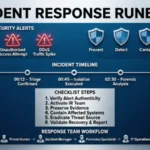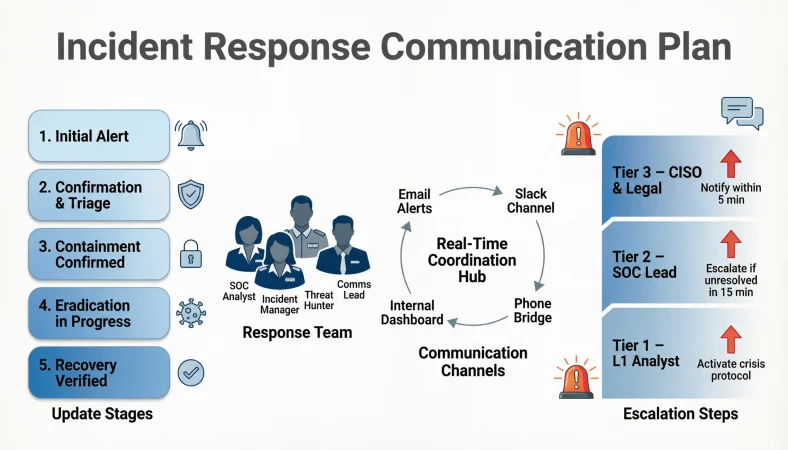
Quick Answer: An incident response communication plan explains who communicates during a security incident, what information they share, when they share it, and which channels they use. It helps teams stay coordinated, reduce confusion, and keep stakeholders informed.
Top alternatives: Incident communication strategy, cybersecurity communication plan, incident notification plan, crisis communication plan, security incident communication guide
When a security incident hits, communication can get messy fast. One person is posting updates in Slack, another is emailing leadership, someone else is calling customers, and suddenly nobody knows which version is official.
That is where an incident response communication plan becomes incredibly useful. Whether you are managing a phishing incident, ransomware event, data exposure, service outage, suspicious login, or another cybersecurity issue, clear communication helps everyone understand what is happening and what needs to happen next.
A strong plan is not just about sending messages. It defines responsibilities, approval paths, audiences, communication channels, timing, and escalation procedures. It also helps prevent speculation from spreading when pressure is high. Think of it as the communication playbook your team wishes it had before the alerts started lighting up.
Funny Incident Response Communication Messages
“We have an incident, so let’s keep the group chat from becoming an incident too.”
Use this when your team needs a light reminder to communicate carefully during an event.
Meaning: It encourages everyone to stay organized instead of creating additional confusion.
“One official update beats seventeen different versions.”
Use this when multiple people are sharing conflicting information.
Meaning: It emphasizes the importance of centralized communication.
“Please keep the panic in draft mode.”
Use this when emotions are rising during an incident.
Meaning: It encourages calm and professional communication.
“The incident is serious; the rumors do not need to be.”
Use this when speculation starts spreading internally.
Meaning: It reminds people to communicate verified information only.
“Let’s solve the problem before we write the sequel.”
Use this when the team is discussing unnecessary side issues.
Meaning: It encourages everyone to focus on the immediate incident.
“Official updates only, detective theories later.”
Use this when people are guessing about the cause.
Meaning: It discourages unsupported conclusions during an active incident.
“If you do not know, please do not improvise the answer.”
Use this when someone might communicate uncertain information externally.
Meaning: It reinforces accuracy and controlled messaging.
“One incident, one source of truth.”
Use this when communication channels are becoming fragmented.
Meaning: It promotes centralized and consistent updates.
“Let’s make the communication boring and the recovery exciting.”
Use this when you want to encourage disciplined messaging.
Meaning: It suggests that incident communication should be calm and predictable.
“No mystery novels in the incident channel.”
Use this when people are posting theories instead of facts.
Meaning: It encourages factual updates rather than speculation.
“Facts first, detective work second.”
Use this when discussing an uncertain incident.
Meaning: It separates confirmed information from investigation.
“Calm updates only. The alerts already have enough drama.”
Use this when the team is under pressure.
Meaning: It encourages measured communication during stressful events.
Direct Incident Response Communication Messages
“The incident has been identified and is currently under investigation.”
Use this for an initial internal notification.
Meaning: It confirms awareness without making unsupported claims.
“The response team is actively assessing the situation.”
Use this when investigation has started but details remain limited.
Meaning: It communicates that the issue is receiving attention.
“We are currently working to determine the scope and impact.”
Use this when the extent of an incident is not yet confirmed.
Meaning: It clearly communicates uncertainty.
“Additional updates will be shared as verified information becomes available.”
Use this when you expect the investigation to continue.
Meaning: It establishes a controlled update process.
“Please direct incident-related questions to the designated response team.”
Use this when communication needs a central point of contact.
Meaning: It reduces conflicting messages.
“Please avoid sharing unverified information about the incident.”
Use this when speculation is becoming a concern.
Meaning: It encourages responsible communication.
“The incident has been escalated according to our response procedures.”
Use this when additional teams or leadership have been involved.
Meaning: It confirms that the appropriate escalation path is active.
“We are assessing whether additional stakeholders need to be notified.”
Use this when notification requirements are still being evaluated.
Meaning: It communicates that stakeholder decisions are underway.
“The current priority is containment and impact assessment.”
Use this during the early response stage.
Meaning: It identifies the team’s immediate focus.
“We will provide the next update at the scheduled communication time.”
Use this when updates follow a defined schedule.
Meaning: It gives recipients a clear expectation.
“The investigation remains ongoing.”
Use this when there is no final conclusion yet.
Meaning: It avoids presenting incomplete information as fact.
“Please preserve relevant evidence and follow the established incident procedures.”
Use this when internal teams need to support the investigation.
Meaning: It reinforces disciplined incident handling.
Professional Incident Response Communication Messages
“We have identified a security incident and initiated the appropriate response procedures.”
Use this for formal internal communication.
Meaning: It confirms that the organization has activated its response process.
“The incident response team is currently assessing the nature and scope of the event.”
Use this when communicating with leadership.
Meaning: It provides a professional status update without overclaiming.
“At this stage, the available information remains preliminary.”
Use this when facts are still being verified.
Meaning: It clearly distinguishes early findings from confirmed conclusions.
“We are coordinating across the relevant technical and business teams.”
Use this when multiple departments are involved.
Meaning: It communicates coordinated response activity.
“We are prioritizing containment, investigation, and service continuity.”
Use this when explaining response priorities.
Meaning: It summarizes the team’s main operational objectives.
“The appropriate stakeholders have been notified based on current findings.”
Use this when stakeholder notification has begun.
Meaning: It confirms that communication responsibilities are being addressed.
“We will provide further information following the next assessment.”
Use this when another investigation checkpoint is planned.
Meaning: It sets expectations without promising unknown details.
“Please treat all incident information as confidential unless authorized for distribution.”
Use this when information sensitivity is important.
Meaning: It limits unauthorized disclosure.
“All external communications should follow the designated approval process.”
Use this when public statements require review.
Meaning: It establishes communication control.
“The incident remains under active management.”
Use this when an event has not yet been resolved.
Meaning: It communicates continued response activity.
“We are documenting relevant findings throughout the response.”
Use this when maintaining an incident record.
Meaning: It emphasizes accurate documentation.
“A post-incident review will follow once response activities are complete.”
Use this when planning lessons learned.
Meaning: It signals that the organization will review the response afterward.
Polite Incident Response Communication Messages
“Thank you for your patience while we investigate the issue.”
Use this when communicating with affected stakeholders.
Meaning: It acknowledges their patience during an uncertain situation.
“We appreciate your cooperation while the response team works through the investigation.”
Use this when requesting stakeholder cooperation.
Meaning: It combines appreciation with a clear request.
“We understand the importance of providing timely and accurate information.”
Use this when recipients are waiting for details.
Meaning: It acknowledges their need for reliable updates.
“We will share confirmed information as soon as it is available.”
Use this when details are still being verified.
Meaning: It balances transparency with accuracy.
“Thank you for bringing this issue to our attention.”
Use this when someone reports a suspicious event.
Meaning: It acknowledges their contribution to the response.
“Please let us know if you identify additional relevant information.”
Use this when collecting incident details.
Meaning: It invites useful information from stakeholders.
“We appreciate your assistance during the investigation.”
Use this when teams or individuals are supporting response activities.
Meaning: It recognizes their cooperation.
“We are continuing to monitor the situation closely.”
Use this when ongoing observation is required.
Meaning: It reassures recipients that the situation is being watched.
“We understand that this situation may cause concern.”
Use this when communicating about a potentially disruptive incident.
Meaning: It acknowledges stakeholder concerns respectfully.
“We will continue providing updates through the established communication channel.”
Use this when directing people to an official source.
Meaning: It keeps communication organized.
“Please contact the designated team if you have questions.”
Use this when providing a clear communication route.
Meaning: It makes it easier for recipients to seek clarification.
“Thank you for your understanding.”
Use this when an investigation requires time.
Meaning: It politely acknowledges stakeholder patience.
Creative Incident Response Communication Messages
“One clear message can cut through a room full of noise.”
Use this when explaining why structured incident communication matters.
Meaning: It highlights the value of clarity during stressful situations.
“When everything is moving fast, communication needs a steady rhythm.”
Use this when designing an incident update schedule.
Meaning: It emphasizes consistency during uncertainty.
“Give every update a job: inform, guide, or reassure.”
Use this when training incident communicators.
Meaning: It encourages purposeful communication.
“The best incident message answers the question people are about to ask.”
Use this when improving stakeholder updates.
Meaning: It encourages proactive communication.
“Clear beats clever when the stakes are high.”
Use this when reviewing incident messages.
Meaning: It prioritizes understandable language over creative wording.
“A good update reduces questions instead of creating new ones.”
Use this when evaluating communication quality.
Meaning: It encourages messages that provide useful context.
“Think of every update as a checkpoint, not a headline.”
Use this when building a communication schedule.
Meaning: It encourages factual progress updates rather than dramatic announcements.
“The communication plan is the map; the incident is the terrain.”
Use this when explaining the purpose of preparedness.
Meaning: It shows how planning helps teams navigate unpredictable events.
“When facts change, the message should change with them.”
Use this when new evidence affects the investigation.
Meaning: It encourages accurate updates based on verified findings.
“Make uncertainty visible without making it scary.”
Use this when communicating incomplete information.
Meaning: It encourages honest but measured language.
“Every audience needs the information that helps them act.”
Use this when designing stakeholder-specific updates.
Meaning: It focuses communication on practical needs.
“Good communication turns scattered reactions into coordinated action.”
Use this when explaining the broader purpose of an incident communication plan.
Meaning: It connects communication with effective response coordination.
Calm Incident Response Communication Messages
“We are aware of the issue and are actively investigating.”
Use this as an early status message.
Meaning: It confirms awareness without creating unnecessary alarm.
“The response process is underway.”
Use this when teams have activated their procedures.
Meaning: It communicates that action has begun.
“We are working from confirmed information and will update as findings develop.”
Use this when details are still evolving.
Meaning: It emphasizes evidence-based communication.
“There is currently no need for additional action from your team.”
Use this when stakeholders do not need to intervene.
Meaning: It prevents unnecessary activity.
“We will communicate any required actions clearly.”
Use this when future instructions may be necessary.
Meaning: It assures recipients that actionable guidance will be provided.
“The situation remains under review.”
Use this when the investigation is continuing.
Meaning: It provides a calm status update.
“We are following the established response process.”
Use this when reassuring leadership or staff.
Meaning: It confirms that predefined procedures are being followed.
“Please remain available for further instructions.”
Use this when additional participation may become necessary.
Meaning: It keeps relevant people prepared.
“There is no confirmed change to the current operating status.”
Use this when service or operations remain unchanged.
Meaning: It communicates current operational conditions carefully.
“We are coordinating the next response steps.”
Use this when the team is transitioning between response activities.
Meaning: It communicates controlled progress.
“We will avoid speculation until the investigation provides verified findings.”
Use this when uncertainty is high.
Meaning: It establishes a calm evidence-first approach.
“The next update will include any confirmed changes in status.”
Use this when establishing predictable communication.
Meaning: It tells recipients what to expect next.
Urgent Incident Response Communication Messages
“Immediate attention is required for this security incident.”
Use this when an incident requires rapid stakeholder action.
Meaning: It clearly signals urgency.
“Please follow the incident response instructions immediately.”
Use this when recipients have specific required actions.
Meaning: It prioritizes prompt compliance.
“The incident has been escalated due to its current impact.”
Use this when severity or consequences require additional attention.
Meaning: It explains why escalation has occurred.
“Do not share incident details outside the authorized response group.”
Use this when information must remain restricted.
Meaning: It limits unauthorized disclosure.
“Please preserve relevant logs, messages, files, and other evidence.”
Use this when evidence preservation is necessary.
Meaning: It helps protect information that may support investigation.
“Disconnect the affected system according to the approved response procedure.”
Use this when the response plan calls for isolation.
Meaning: It directs authorized personnel toward an established containment action.
“Report any related activity to the incident response team immediately.”
Use this when additional indicators may be important.
Meaning: It encourages rapid reporting.
“The incident channel is now the primary source for response updates.”
Use this when centralizing communication.
Meaning: It directs people to the official information stream.
“Please pause nonessential changes to affected systems.”
Use this when operational stability is important.
Meaning: It reduces unnecessary activity during investigation.
“Leadership notification has been initiated.”
Use this when escalation includes organizational leadership.
Meaning: It confirms that leadership communication is underway.
“The response team is prioritizing containment at this time.”
Use this when containment is the immediate objective.
Meaning: It explains the current response priority.
“Further instructions will follow as the situation develops.”
Use this when additional actions depend on investigation results.
Meaning: It prepares recipients for future updates.
Friendly Incident Response Communication Messages
“Quick update: the team is already looking into this.”
Use this for an informal internal update.
Meaning: It communicates awareness in approachable language.
“We have eyes on the issue and are checking what happened.”
Use this when communicating with a familiar team.
Meaning: It reassures people that investigation is active.
“We are checking the details before sharing a bigger update.”
Use this when information is still incomplete.
Meaning: It explains why a full answer is not available yet.
“Thanks for flagging this so quickly.”
Use this when someone reports a potential incident.
Meaning: It recognizes their prompt reporting.
“We are on it and will keep everyone posted.”
Use this when you want an approachable status message.
Meaning: It communicates active response and continued updates.
“For now, please stick with the official updates.”
Use this when informal speculation is spreading.
Meaning: It encourages people to rely on verified information.
“We are still connecting the dots.”
Use this when investigators are determining what happened.
Meaning: It communicates that the investigation is still developing.
“Nothing new to report yet, but the investigation is moving.”
Use this when there has been no major change.
Meaning: It provides reassurance without inventing progress.
“We will share the next update once we have something confirmed.”
Use this when facts are still being checked.
Meaning: It prioritizes accuracy over speed.
“Thanks for staying flexible while we work through this.”
Use this when an incident affects normal operations.
Meaning: It appreciates cooperation during disruption.
“If you notice anything unusual, please flag it.”
Use this when additional observations could help.
Meaning: It encourages people to report relevant information.
“We will keep the updates clear and easy to follow.”
Use this when setting communication expectations.
Meaning: It promises understandable status information.
Executive Incident Response Communication Messages
“We are actively managing the incident and assessing its organizational impact.”
Use this when briefing senior leadership.
Meaning: It summarizes active response and impact assessment.
“The current assessment remains preliminary.”
Use this when leadership needs to understand that facts may change.
Meaning: It prevents early findings from being treated as final.
“The response team has established an incident coordination structure.”
Use this when reporting organizational response activity.
Meaning: It confirms that responsibilities are being coordinated.
“Current priorities are containment, investigation, continuity, and stakeholder communication.”
Use this when presenting response priorities to leadership.
Meaning: It summarizes the main areas of focus.
“We are evaluating the incident against established escalation criteria.”
Use this when deciding whether additional notification is necessary.
Meaning: It explains that escalation decisions follow predefined standards.
“Relevant stakeholders are being identified based on the current impact assessment.”
Use this when stakeholder scope is still developing.
Meaning: It shows that communication is being matched to impact.
“We are maintaining an incident timeline as new information is verified.”
Use this when leadership needs reliable chronology.
Meaning: It emphasizes structured documentation.
“External communication remains subject to the designated approval process.”
Use this when public or customer-facing messaging is being considered.
Meaning: It reinforces communication governance.
“The investigation has not yet established a final root cause.”
Use this when leadership asks for a definitive explanation too early.
Meaning: It clearly communicates the current investigative limitation.
“We will provide leadership with updates at defined decision points.”
Use this when executives need structured information.
Meaning: It avoids unnecessary updates while preserving visibility.
“Response activities are being documented for subsequent review.”
Use this when preparing for post-incident analysis.
Meaning: It highlights accountability and learning.
“A post-incident assessment will address communication, response actions, and identified improvements.”
Use this after immediate response activities.
Meaning: It establishes a structured review process.
Customer-Facing Incident Response Communication Messages
“We are investigating an issue that may be affecting some customers.”
Use this when customer impact is suspected but not fully confirmed.
Meaning: It communicates the issue without overstating its scope.
“Our team is actively working to understand and address the situation.”
Use this when customers need reassurance.
Meaning: It confirms that response activity is underway.
“We are currently assessing the impact and will provide updates as more information is confirmed.”
Use this when the investigation remains active.
Meaning: It balances transparency with uncertainty.
“We understand the importance of keeping you informed.”
Use this when customers are waiting for information.
Meaning: It acknowledges the value of timely communication.
“We are prioritizing service stability while investigating the issue.”
Use this when an incident affects availability.
Meaning: It explains the immediate operational focus.
“We recommend following the instructions provided through our official communication channels.”
Use this when customers may receive further guidance.
Meaning: It directs them toward reliable information.
“We will notify affected customers if additional action is required.”
Use this when customer action may become necessary.
Meaning: It sets expectations for future notifications.
“We are continuing to monitor the situation closely.”
Use this when the issue remains active.
Meaning: It communicates ongoing oversight.
“Thank you for your patience while our teams work on this.”
Use this when customers experience disruption.
Meaning: It acknowledges their inconvenience.
“We are committed to providing accurate updates as the investigation progresses.”
Use this when facts are still developing.
Meaning: It emphasizes reliable communication.
“At this time, our investigation is ongoing.”
Use this when there is no final conclusion.
Meaning: It avoids making premature claims.
“We will share confirmed information through the appropriate customer communication channel.”
Use this when controlling external messaging.
Meaning: It tells customers where trustworthy updates will appear.
Concise Incident Response Communication Messages
“Incident identified. Investigation underway.”
Use this for a short internal alert.
Meaning: It communicates awareness and active investigation.
“Response process activated.”
Use this when the incident team has begun formal response.
Meaning: It confirms that procedures are in motion.
“Investigation ongoing.”
Use this when there is no final finding.
Meaning: It communicates that the situation remains under review.
“Impact assessment in progress.”
Use this when the scope is still being determined.
Meaning: It signals that impact analysis is underway.
“Containment activities underway.”
Use this when containment has become the immediate focus.
Meaning: It communicates active response action.
“Stakeholder notification initiated.”
Use this when relevant parties are beginning to receive updates.
Meaning: It confirms that communication has started.
“Next update scheduled.”
Use this when communication follows a defined timetable.
Meaning: It tells recipients when to expect more information.
“No confirmed additional impact at this time.”
Use this when current findings have not identified further impact.
Meaning: It communicates the present assessment without making absolute claims.
“Please use the official incident channel for updates.”
Use this when multiple communication channels are active.
Meaning: It directs people to the designated source of information.
“Further instructions pending investigation.”
Use this when actions depend on additional findings.
Meaning: It tells recipients that guidance is not yet final.
“Incident remains under active management.”
Use this when response activities are continuing.
Meaning: It confirms that the team remains engaged.
“Additional information will follow.”
Use this when more details are expected.
Meaning: It signals that communication will continue.
Clever Incident Response Communication Messages
“Communicate what you know, label what you do not.”
Use this when training teams to communicate during uncertainty.
Meaning: It encourages transparent distinction between facts and unknowns.
“Fast communication is useful; accurate communication is essential.”
Use this when discussing response priorities.
Meaning: It emphasizes that speed should not replace accuracy.
“Silence creates a vacuum, and speculation fills it quickly.”
Use this when explaining why regular updates matter.
Meaning: It highlights the communication risks of leaving stakeholders uninformed.
“A communication plan should answer who, what, when, where, and why.”
Use this when explaining the basic structure of an incident plan.
Meaning: It identifies the core questions communication should address.
“The right message to the wrong audience is still the wrong message.”
Use this when designing stakeholder communication.
Meaning: It emphasizes audience-specific information.
“Consistency builds trust during uncertainty.”
Use this when creating recurring incident updates.
Meaning: It connects reliable communication with stakeholder confidence.
“Do not let the communication channel become another incident.”
Use this when teams are overwhelmed by fragmented messages.
Meaning: It encourages centralized and organized communication.
“If everyone owns the message, nobody owns the message.”
Use this when assigning communication responsibilities.
Meaning: It highlights the need for clear ownership.
“A status update should make the next step easier to understand.”
Use this when reviewing communication quality.
Meaning: It focuses on actionable clarity.
“Every incident needs facts, owners, audiences, channels, and timing.”
Use this when outlining an incident communication framework.
Meaning: It identifies important planning components.
“Uncertainty is okay; pretending certainty is not.”
Use this when discussing incomplete incident information.
Meaning: It encourages honest communication.
“Good incident communication keeps everyone moving in the same direction.”
Use this when explaining the value of coordinated messaging.
Meaning: It connects communication with effective teamwork.
Post-Incident Communication Messages
“The incident has been contained, and response activities are moving into review.”
Use this when immediate response actions are complete.
Meaning: It signals a transition from active response to assessment.
“We are conducting a review of the incident and response activities.”
Use this when beginning a post-incident assessment.
Meaning: It communicates that the event is being formally evaluated.
“The investigation has identified areas for improvement.”
Use this when communicating lessons learned.
Meaning: It frames findings around future improvement.
“We are documenting lessons learned from the response.”
Use this after an incident has stabilized.
Meaning: It emphasizes organizational learning.
“Follow-up actions are being assigned to the relevant teams.”
Use this when corrective actions have been identified.
Meaning: It communicates that lessons are being converted into tasks.
“The incident timeline has been finalized for review.”
Use this when documentation is complete.
Meaning: It confirms that key events have been recorded.
“We are reviewing the effectiveness of our communication process.”
Use this when communication itself needs evaluation.
Meaning: It focuses on improving future incident messaging.
“Additional safeguards are being evaluated based on the findings.”
Use this when considering improvements after an incident.
Meaning: It communicates that findings may lead to preventive actions.
“Relevant stakeholders will receive updates on agreed follow-up actions.”
Use this when post-incident accountability matters.
Meaning: It establishes continued communication after containment.
“The response review will consider both technical and communication factors.”
Use this when conducting a comprehensive review.
Meaning: It recognizes that response success involves more than technical remediation.
“We are incorporating lessons from this event into future response planning.”
Use this when updating procedures.
Meaning: It connects experience with future preparedness.
“The incident response cycle is complete, with follow-up actions continuing.”
Use this when active response has ended but improvement work remains.
Meaning: It distinguishes response completion from ongoing remediation.
FAQs
What is an incident response communication plan?
An incident response communication plan is a structured guide explaining who communicates during an incident, what information is shared, which audiences receive it, which channels are used, and when updates occur.
Why is an incident response communication plan important?
It helps reduce confusion, establish communication ownership, coordinate stakeholders, limit speculation, and provide consistent information during stressful security events.
What should an incident response communication plan include?
It commonly includes communication roles, stakeholder groups, escalation procedures, approved channels, notification criteria, message templates, update schedules, approval requirements, and documentation responsibilities.
Who should be responsible for incident communication?
Responsibility depends on the organization. Common participants can include incident response teams, security leaders, IT teams, communications staff, legal representatives, executives, customer support, and other designated stakeholders.
What should you communicate during a cybersecurity incident?
Share verified information about the incident status, current impact, actions being taken, required stakeholder actions, relevant timelines, and the next expected update.
Should incident communication include uncertain information?
Uncertainty can be communicated when clearly identified. It is generally better to state that something is still being investigated than to present an unverified assumption as a confirmed fact.
What communication channels can be used during an incident?
Depending on the organization and incident, channels may include dedicated incident platforms, email, phone calls, collaboration systems, status pages, internal portals, or approved customer communication channels.
How often should incident updates be sent?
The frequency depends on incident severity, stakeholder needs, organizational procedures, and how quickly meaningful information changes. A predefined schedule can help prevent communication gaps.
What should you avoid saying during an incident?
Avoid speculation, unsupported conclusions, unnecessary technical jargon, blame, contradictory information, confidential details, and claims that have not been verified.
Can an incident response communication plan include templates?
Yes. Templates can help teams communicate faster and more consistently while still allowing messages to be adapted to the specific incident.
What should happen after the incident?
Organizations can review the timeline, communication effectiveness, stakeholder feedback, response actions, lessons learned, and improvement opportunities as part of a post-incident review.
How is incident response communication different from crisis communication?
Incident response communication generally focuses on coordinating information during a specific incident, while crisis communication can cover broader organizational reputation, public relations, and stakeholder concerns during a major crisis.
Conclusion
A strong incident response communication plan gives teams something incredibly valuable when pressure is high: clarity. Instead of everyone guessing who should speak, what should be shared, or when the next update is due, the plan creates a common communication path.
The best messages are clear, accurate, audience-focused, and easy to act on. Whether you are writing an internal alert, executive update, customer notification, or post-incident summary, the right wording can make a complicated situation much easier to manage.
Try different message styles, adapt them to your organization, and keep useful templates ready before an incident happens. Save this guide for your next communication planning session, share it with your team, and turn stressful moments into more organized responses.