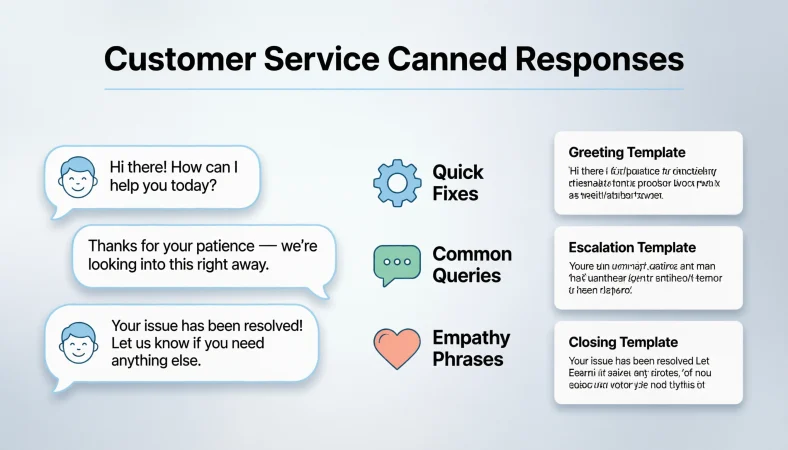
Quick Answer: Customer service canned responses are ready-to-use messages that help support teams answer common questions quickly while keeping communication consistent, helpful, and professional.
Top alternatives: “Thanks for reaching out,” “We’re happy to help,” “We’re looking into this,” “Thanks for your patience,” “Please let us know if you need anything else.”
Nobody wants to spend ten minutes writing the same customer service message for the hundredth time. Whether you are answering emails, website chats, DMs, support tickets, or social media comments, having reliable customer service canned responses can make everyday communication much easier. The trick is making them sound human instead of like a robot escaped from a corporate handbook.
A good canned response should save time while still making the customer feel heard, respected, and genuinely helped. From order updates and refunds to complaints, delays, technical problems, and simple thank-you messages, the right wording can completely change the tone of an interaction. These ready-to-use responses give you a practical library for common situations while leaving room to personalize each message. Think of them as your customer-service shortcuts, minus the awkward copy-and-paste energy.
Friendly Customer Service Responses
“Thanks for reaching out! We’re happy to help.”
Use this as a warm opening for general customer questions.
Meaning: You are welcoming the customer and showing that assistance is available.
“Absolutely! Let’s get this sorted for you.”
Use this when a customer needs help resolving an issue.
Meaning: You are showing confidence and willingness to assist.
“Thanks for getting in touch with us.”
Use this as a simple opening for email or chat support.
Meaning: You appreciate the customer taking the time to contact you.
“We’d be happy to look into that for you.”
Use this when you need to investigate a customer concern.
Meaning: You are reassuring the customer that their issue matters.
“We’ve got you covered.”
Use this when you want a friendly, reassuring tone.
Meaning: You are letting the customer know support is available.
“Thanks for bringing this to our attention.”
Use this when a customer reports a problem.
Meaning: You appreciate their feedback and are taking it seriously.
“Happy to help!”
Use this for quick questions or straightforward requests.
Meaning: You are keeping the interaction positive and efficient.
“Let’s see what we can do.”
Use this when the solution is not immediately obvious.
Meaning: You are willing to explore possible solutions.
“We appreciate you reaching out.”
Use this when opening a support conversation.
Meaning: You are acknowledging the customer respectfully.
“Thanks for letting us know.”
Use this after a customer provides useful information.
Meaning: You are confirming that their message was received.
“We’re here whenever you need us.”
Use this at the end of a friendly support interaction.
Meaning: You are offering continued assistance.
“We’ll do our best to make this easy for you.”
Use this when a customer is dealing with a frustrating process.
Meaning: You are promising a helpful and customer-focused approach.
Professional Customer Service Responses
“Thank you for contacting our support team.”
Use this for formal email or ticket communication.
Meaning: You are professionally acknowledging the customer.
“We appreciate your patience while we review your request.”
Use this when an investigation is taking time.
Meaning: You are politely asking the customer to allow time for resolution.
“We have received your request and are reviewing it.”
Use this after receiving a support ticket.
Meaning: You are confirming receipt and explaining the current status.
“We’ll provide an update as soon as we have more information.”
Use this when the issue remains under review.
Meaning: You are setting an expectation for future communication.
“Thank you for providing those details.”
Use this when a customer sends requested information.
Meaning: You are acknowledging their cooperation.
“We understand your concern and are reviewing the matter.”
Use this for a serious or formal complaint.
Meaning: You recognize the concern without making assumptions about the outcome.
“Please allow us some time to investigate this further.”
Use this when additional research is necessary.
Meaning: You are requesting reasonable time to determine what happened.
“We appreciate the opportunity to assist you.”
Use this for professional customer communications.
Meaning: You are maintaining a respectful and service-focused tone.
“Your request has been forwarded to the appropriate team.”
Use this when another department must handle the issue.
Meaning: You are explaining why another team will respond.
“We’ll keep you informed of any updates.”
Use this when the matter is ongoing.
Meaning: You are promising continued communication.
“Please let us know if you have any additional questions.”
Use this near the end of a formal response.
Meaning: You are keeping the communication channel open.
“Thank you for your understanding.”
Use this when explaining a delay or limitation.
Meaning: You are politely acknowledging the customer’s cooperation.
Empathetic Customer Service Responses
“I’m sorry you’ve had to deal with this.”
Use this when a customer describes a frustrating experience.
Meaning: You are acknowledging their difficulty with empathy.
“I understand why that would be frustrating.”
Use this when a customer is upset about an issue.
Meaning: You are validating their understandable frustration without escalating it.
“We appreciate you explaining what happened.”
Use this when a customer provides a detailed complaint.
Meaning: You are showing that you listened to their experience.
“I can see why you’d want this resolved quickly.”
Use this when the customer is dealing with an urgent concern.
Meaning: You recognize the importance of the situation to them.
“Thank you for your patience while we work through this.”
Use this when resolution takes longer than expected.
Meaning: You are appreciating their patience during the process.
“We’re sorry for the inconvenience this has caused.”
Use this for service disruptions or mistakes.
Meaning: You acknowledge the inconvenience without overexplaining.
“Your concern is important to us.”
Use this when a customer needs reassurance.
Meaning: You are communicating that their issue deserves attention.
“We understand that this wasn’t the experience you expected.”
Use this when service did not meet expectations.
Meaning: You recognize the gap between expectations and experience.
“Thank you for giving us the chance to address this.”
Use this after a complaint.
Meaning: You are framing the interaction around finding a solution.
“We’re taking your feedback seriously.”
Use this when customers share criticism.
Meaning: You are acknowledging that their feedback matters.
“I’m sorry this caused you extra hassle.”
Use this when an issue created additional work for the customer.
Meaning: You recognize the inconvenience personally and directly.
“Let’s focus on getting this resolved.”
Use this when the conversation needs to move toward a solution.
Meaning: You are shifting attention from frustration to practical action.
Apology Customer Service Responses
“We’re sorry for the inconvenience.”
Use this for a straightforward service issue.
Meaning: You are acknowledging the inconvenience caused.
“We sincerely apologize for the delay.”
Use this when an order or response is late.
Meaning: You are directly apologizing for the delay.
“We apologize for the confusion.”
Use this when information was unclear.
Meaning: You recognize that the communication created uncertainty.
“We’re sorry this happened.”
Use this when a customer reports an unexpected problem.
Meaning: You are expressing regret without making unsupported claims.
“Please accept our apologies for the trouble.”
Use this in more formal customer communication.
Meaning: You are offering a professional apology.
“We’re sorry we didn’t meet your expectations.”
Use this when a customer is disappointed with the experience.
Meaning: You acknowledge their dissatisfaction respectfully.
“We apologize for the frustration this caused.”
Use this when a service problem upset the customer.
Meaning: You recognize the emotional impact of the issue.
“We’re sorry for the inconvenience and appreciate your patience.”
Use this when resolution has taken time.
Meaning: You combine an apology with appreciation for cooperation.
“Thank you for bringing this issue to our attention, and we apologize for the trouble.”
Use this when responding to a reported problem.
Meaning: You acknowledge the report and apologize for the inconvenience.
“We regret that this caused you difficulty.”
Use this for a formal apology.
Meaning: You express professional regret about the customer’s experience.
“We understand the inconvenience and apologize for it.”
Use this when you want a concise apology.
Meaning: You acknowledge the problem and express regret.
“We appreciate the opportunity to make this right.”
Use this when you are actively resolving a complaint.
Meaning: You are focusing on correcting the experience.
Order And Shipping Responses
“Your order is currently being processed.”
Use this when an order has not shipped yet.
Meaning: The order is still moving through the fulfillment process.
“Your order has shipped and is on its way.”
Use this after receiving shipment confirmation.
Meaning: The package has left the fulfillment stage.
“We’re checking the latest tracking information for you.”
Use this when a customer asks about a package.
Meaning: You are reviewing available delivery information.
“Your tracking information should update soon.”
Use this when a shipment has recently been dispatched.
Meaning: The carrier may need additional time to display movement.
“We’re sorry your order has been delayed.”
Use this when delivery is taking longer than expected.
Meaning: You are acknowledging the shipping delay.
“We’ll investigate the delivery status for you.”
Use this when tracking information appears unusual.
Meaning: You are committing to checking the shipment.
“Please confirm your order number so we can take a closer look.”
Use this when you need order-specific information.
Meaning: You need identifying details to investigate accurately.
“Your order is still within the estimated delivery window.”
Use this when a customer is concerned about timing.
Meaning: The package has not necessarily exceeded the expected timeframe.
“We’ll update you once we receive more information from the carrier.”
Use this when the carrier has not provided enough detail.
Meaning: Further information depends on the delivery provider.
“Thanks for checking in about your order.”
Use this for a friendly shipping inquiry.
Meaning: You are acknowledging the customer’s concern.
“We’re working to get your order moving as quickly as possible.”
Use this when fulfillment is taking longer than usual.
Meaning: You are communicating active effort toward fulfillment.
“Please keep an eye on your tracking updates for the latest delivery information.”
Use this when tracking is available.
Meaning: The customer can monitor the carrier’s latest updates.
Refund And Return Responses
“We’d be happy to help with your return.”
Use this when a customer asks how to return an item.
Meaning: You are offering assistance with the return process.
“We’ve received your refund request.”
Use this after a refund request has been submitted.
Meaning: You are confirming receipt.
“Your refund is currently being processed.”
Use this when the refund has entered processing.
Meaning: The refund is moving through the relevant system.
“Please allow the standard processing time for your refund to appear.”
Use this when a refund has been issued but is not visible yet.
Meaning: Financial processing may require additional time.
“We can help you review the return options available for your order.”
Use this when a customer is unsure about the return process.
Meaning: You are offering guidance rather than assuming eligibility.
“Please provide your order number so we can review the request.”
Use this when account-specific details are needed.
Meaning: You need the order information before proceeding.
“We understand you’d like to return the item.”
Use this as an empathetic opening for return requests.
Meaning: You are acknowledging the customer’s request.
“Your return request has been received.”
Use this after receiving return documentation.
Meaning: You are confirming that the request is on record.
“We’ll review the details and let you know the next steps.”
Use this when a return requires review.
Meaning: You are setting expectations for follow-up.
“Thanks for your patience while we process the return.”
Use this when the return is taking time.
Meaning: You appreciate the customer’s patience.
“Once the return is completed, we’ll provide the relevant update.”
Use this when the process has several stages.
Meaning: You are explaining that further communication will follow.
“Please let us know if you need help with any part of the return process.”
Use this when the customer may need additional guidance.
Meaning: You are keeping support available throughout the process.
Complaint Responses
“Thank you for sharing your concern.”
Use this as a calm opening for a complaint.
Meaning: You are acknowledging the customer’s feedback respectfully.
“We take customer concerns seriously.”
Use this when responding to a complaint.
Meaning: You are communicating that the issue deserves attention.
“We’d like to understand exactly what happened.”
Use this when more information is needed.
Meaning: You want to gather facts before responding fully.
“Please share any relevant details so we can investigate.”
Use this when a complaint lacks necessary information.
Meaning: You are requesting details needed for review.
“We’re reviewing the situation carefully.”
Use this when an investigation is underway.
Meaning: You are communicating that the matter is being examined.
“Thank you for giving us the opportunity to review this.”
Use this when responding to criticism.
Meaning: You are keeping the conversation constructive.
“We understand that this experience was disappointing.”
Use this when a customer expresses dissatisfaction.
Meaning: You recognize their negative experience.
“We’re sorry that your experience did not meet expectations.”
Use this when the service fell short from the customer’s perspective.
Meaning: You acknowledge the mismatch between expectation and experience.
“We’re looking into the details now.”
Use this when a complaint needs investigation.
Meaning: The issue is actively being reviewed.
“We’ll share what we can once the review is complete.”
Use this when the investigation is still ongoing.
Meaning: You are setting a realistic communication expectation.
“Your feedback has been documented and shared with the relevant team.”
Use this when internal feedback needs to be passed along.
Meaning: You are confirming that the complaint has been recorded.
“Thank you for your honesty and feedback.”
Use this when a customer provides constructive criticism.
Meaning: You appreciate their willingness to explain the problem.
Technical Support Responses
“Let’s troubleshoot this together.”
Use this when a customer reports a technical issue.
Meaning: You are positioning support as a collaborative process.
“Could you please restart the device and try again?”
Use this when restarting may resolve the issue.
Meaning: You are suggesting a basic troubleshooting step.
“Please confirm which device and version you’re using.”
Use this when technical details affect troubleshooting.
Meaning: You need specific information to identify the issue.
“Thanks for those details. That helps us narrow this down.”
Use this after a customer provides technical information.
Meaning: Their information is useful for diagnosing the problem.
“We’re checking whether there is a known issue affecting this feature.”
Use this when the problem may be widespread.
Meaning: You are investigating whether the issue has already been identified.
“Please try clearing the cache and reopening the app.”
Use this when cached data may interfere with functionality.
Meaning: You are suggesting a common troubleshooting action.
“Could you send us a screenshot of the error?”
Use this when visual information would help.
Meaning: You need evidence of the issue to investigate it.
“We’re reviewing the technical details now.”
Use this when a support team needs additional time.
Meaning: The technical problem is being actively investigated.
“Please let us know whether the issue continues after trying these steps.”
Use this after providing troubleshooting instructions.
Meaning: You need the customer’s results to determine the next step.
“We appreciate your patience while we troubleshoot this.”
Use this when technical troubleshooting takes time.
Meaning: You are acknowledging the customer’s patience.
“We’ve identified the issue and are working on the next steps.”
Use this when the technical problem has been diagnosed.
Meaning: The team has moved from investigation toward resolution.
“If the problem continues, we’ll take a closer look.”
Use this when initial troubleshooting does not resolve the issue.
Meaning: Additional support remains available.
Response Templates For Delays
“Thanks for your patience. We’re still working on this.”
Use this when a request is taking longer than expected.
Meaning: You are acknowledging the delay and confirming continued work.
“We apologize for the wait.”
Use this when a response has taken too long.
Meaning: You are directly recognizing the delay.
“We need a little more time to complete our review.”
Use this when an investigation is still underway.
Meaning: You are setting a realistic expectation.
“We’ll update you as soon as we have something new to share.”
Use this when there is no immediate resolution.
Meaning: You promise to communicate when useful information becomes available.
“Thank you for bearing with us.”
Use this when a customer has waited patiently.
Meaning: You appreciate their patience during the delay.
“We’re continuing to work behind the scenes.”
Use this when progress is happening without a visible update.
Meaning: The issue is still receiving attention.
“We understand that waiting can be frustrating.”
Use this when a customer is unhappy about a delay.
Meaning: You acknowledge the frustration caused by waiting.
“We’re sorry this is taking longer than expected.”
Use this when the original timeframe has passed.
Meaning: You recognize that expectations were not met.
“We’re doing everything we can to move this forward.”
Use this when active work is continuing.
Meaning: You are communicating ongoing effort without promising a specific outcome.
“We appreciate your continued patience.”
Use this for longer-running cases.
Meaning: You are thanking the customer for staying patient.
“We’ll keep your request moving and provide an update when available.”
Use this when the case remains open.
Meaning: The request is still active.
“Thanks for checking in. We’re still on it.”
Use this for a casual support channel.
Meaning: You are giving a concise reassurance that the issue has not been forgotten.
Social Media Customer Service Responses
“Thanks for reaching out! Please send us a DM so we can help.”
Use this when a public comment requires private account details.
Meaning: You are moving the conversation to a more appropriate channel.
“We’re sorry to hear this. Please message us with your order details.”
Use this when someone reports a problem publicly.
Meaning: You are responding empathetically while requesting information privately.
“Thanks for flagging this for us.”
Use this when someone reports an issue in a comment.
Meaning: You appreciate them bringing the matter to your attention.
“We’d love to look into this for you.”
Use this when responding to a customer concern on social media.
Meaning: You are offering assistance without debating publicly.
“Please send us a private message so we can take a closer look.”
Use this when account information is required.
Meaning: You need private details to investigate.
“We appreciate the feedback!”
Use this for constructive comments.
Meaning: You acknowledge the customer’s opinion positively.
“Thanks for letting us know. We’re looking into it.”
Use this when a social comment identifies a problem.
Meaning: You confirm that the issue is being reviewed.
“We’re here to help. Please send us a message.”
Use this when a public interaction needs follow-up.
Meaning: You are inviting the customer into a support conversation.
“We understand your concern.”
Use this when a customer is frustrated publicly.
Meaning: You acknowledge the concern without escalating the discussion.
“Thanks for bringing this to our attention.”
Use this when someone highlights a service problem.
Meaning: You appreciate the report and intend to address it.
“We’ll be happy to help once we have a few more details.”
Use this when the public comment lacks enough information.
Meaning: Additional details are needed before support can proceed.
“We appreciate you taking the time to share this.”
Use this when responding to public feedback.
Meaning: You recognize the customer’s effort to provide feedback.
Positive Customer Feedback Responses
“Thank you so much for the kind words!”
Use this when a customer leaves a positive review.
Meaning: You genuinely appreciate their praise.
“We’re thrilled to hear that!”
Use this when a customer shares a positive experience.
Meaning: You are enthusiastically celebrating their satisfaction.
“That means a lot to our team.”
Use this when a customer compliments your service.
Meaning: Their feedback is personally meaningful to the team.
“Thanks for taking the time to share your experience.”
Use this for reviews or testimonials.
Meaning: You appreciate the effort behind their feedback.
“We’re so glad we could help.”
Use this after successfully assisting someone.
Meaning: You are happy that your support made a difference.
“We truly appreciate your support.”
Use this for loyal customers or positive feedback.
Meaning: You value their continued relationship with the business.
“It’s wonderful to hear that everything worked out.”
Use this after resolving an issue successfully.
Meaning: You are celebrating the positive outcome.
“Thanks for being part of our community.”
Use this for friendly public feedback.
Meaning: You are expressing appreciation for their connection to the brand.
“We’ll be sure to share your kind feedback with the team.”
Use this when a customer praises a specific employee or department.
Meaning: You intend to pass the recognition along.
“Your feedback made our day!”
Use this for cheerful social media interactions.
Meaning: Their positive words genuinely brightened the team’s day.
“We’re grateful you chose us.”
Use this when thanking a customer for their business.
Meaning: You appreciate their decision to support the company.
“Thanks again for the wonderful feedback!”
Use this as a closing response to a positive review.
Meaning: You are reinforcing your appreciation.
Responses For Angry Customers
“I understand that you’re frustrated, and I’m here to help.”
Use this when a customer is visibly upset.
Meaning: You acknowledge the emotion while moving toward assistance.
“Let’s work through this together.”
Use this when you want to lower tension.
Meaning: You are presenting the solution as a collaborative process.
“I appreciate you explaining what happened.”
Use this when a customer gives an emotional complaint.
Meaning: You are focusing on understanding the facts.
“I’m going to review the details and see what options are available.”
Use this when you need to investigate before offering a solution.
Meaning: You are taking a measured approach rather than making an unsupported promise.
“I understand why you’re asking for clarification.”
Use this when a customer is challenging a decision or policy.
Meaning: You recognize their desire for an explanation.
“Let me make sure I understand the issue correctly.”
Use this when emotions may have made the request unclear.
Meaning: You want to confirm the facts before responding.
“I’m sorry this has been frustrating.”
Use this when the customer has had a difficult experience.
Meaning: You acknowledge the emotional impact of the situation.
“We want to help get this resolved.”
Use this when you need to redirect a heated interaction.
Meaning: You are focusing attention on finding a practical solution.
“Thank you for giving us the opportunity to address this.”
Use this when responding to a serious complaint.
Meaning: You are keeping the interaction respectful and solution-focused.
“I’ll review what happened before giving you an answer.”
Use this when accuracy matters more than speed.
Meaning: You prefer to verify the situation before responding.
“Let’s focus on what we can do from here.”
Use this when the conversation is stuck on the problem.
Meaning: You are encouraging a practical next step.
“I’m listening, and I’ll do my best to help.”
Use this when a customer wants to feel heard.
Meaning: You are combining empathy with a willingness to assist.
Short And Simple Canned Responses
“Thanks for reaching out!”
Use this as a quick opening message.
Meaning: You are acknowledging the customer’s contact.
“Happy to help!”
Use this for simple requests.
Meaning: You are offering assistance in a friendly way.
“We’re checking now.”
Use this when an issue needs immediate review.
Meaning: You are confirming active investigation.
“We’ve received your message.”
Use this when confirming contact.
Meaning: The customer’s message has reached the support team.
“Thanks for the update!”
Use this when the customer provides new information.
Meaning: You appreciate their follow-up.
“We’ll look into it.”
Use this when more investigation is required.
Meaning: You are committing to reviewing the issue.
“We understand.”
Use this when acknowledging a customer’s concern.
Meaning: You are showing that their message has been heard.
“Please give us a moment.”
Use this when you need brief time to check something.
Meaning: You are asking the customer to wait while you investigate.
“We’re on it!”
Use this for a friendly, informal support channel.
Meaning: You are reassuring the customer that action is underway.
“Thanks for your patience.”
Use this during a delay.
Meaning: You appreciate the customer waiting.
“Please let us know how we can help.”
Use this as a general support opener.
Meaning: You are inviting the customer to explain their needs.
“We’re here if you need us.”
Use this as a friendly closing line.
Meaning: You are offering continued support.
Closing Customer Service Responses
“Is there anything else we can help with?”
Use this when the main issue appears resolved.
Meaning: You are checking whether the customer has additional needs.
“Please let us know if anything else comes up.”
Use this after resolving a support request.
Meaning: You are keeping the support channel open.
“Thanks again for contacting us!”
Use this at the end of a friendly interaction.
Meaning: You appreciate the customer reaching out.
“We appreciate your business.”
Use this for a professional closing.
Meaning: You value the customer’s relationship with the company.
“Thanks for choosing us.”
Use this when closing a completed support interaction.
Meaning: You appreciate the customer’s decision to use your service.
“We’re glad we could help.”
Use this after resolving an issue.
Meaning: You are highlighting the successful support outcome.
“Have a wonderful day!”
Use this for a cheerful closing.
Meaning: You are ending the interaction on a positive note.
“Take care, and thanks again!”
Use this for a warm conversational closing.
Meaning: You are ending the interaction politely and personally.
“We appreciate your patience and understanding.”
Use this after a complicated support case.
Meaning: You recognize the customer’s cooperation.
“Thank you for giving us the opportunity to assist.”
Use this for formal customer communication.
Meaning: You are ending the interaction respectfully.
“We hope everything is sorted now.”
Use this after resolving a problem.
Meaning: You are checking that the customer can move forward comfortably.
“We’re always happy to help.”
Use this when ending a positive interaction.
Meaning: You are reinforcing the availability of future support.
Clever And Human-Sounding Responses
“Let’s get this mystery solved.”
Use this when an unusual customer issue needs investigation.
Meaning: You are making support feel more conversational.
“We’ll get to the bottom of this.”
Use this when a problem requires research.
Meaning: You are reassuring the customer that the issue deserves investigation.
“Thanks for spotting that.”
Use this when a customer catches an error or inconsistency.
Meaning: You appreciate their attention and feedback.
“Good question. Let me check that for you.”
Use this when you do not immediately know the answer.
Meaning: You are being honest while offering to find accurate information.
“Let’s untangle this together.”
Use this when the situation is confusing.
Meaning: You are using friendly language to make the problem feel manageable.
“We’ll take a closer look.”
Use this when an issue requires additional review.
Meaning: You are promising careful attention.
“Thanks for catching that before it went unnoticed.”
Use this when a customer identifies an important issue.
Meaning: You recognize the usefulness of their feedback.
“Let’s figure out the next best step.”
Use this when multiple solutions may exist.
Meaning: You are focusing on practical progress.
“You’ve given us exactly what we needed to investigate.”
Use this when a customer provides useful details.
Meaning: Their information has helped move the case forward.
“We’re putting the pieces together now.”
Use this when investigating a complicated issue.
Meaning: You are communicating that the team is actively analyzing the situation.
“Thanks for helping us get the full picture.”
Use this when customer details clarify a problem.
Meaning: Their explanation has improved your understanding.
“We’ll keep things moving from here.”
Use this after gathering the necessary information.
Meaning: You are signaling that the case can proceed.
Canned Responses For Follow-Ups
“Just checking in with a quick update.”
Use this when following up on an open request.
Meaning: You are proactively communicating progress.
“We wanted to keep you updated on your request.”
Use this when a case remains active.
Meaning: You are showing that the customer has not been forgotten.
“We’re still reviewing the details.”
Use this when there is no final resolution yet.
Meaning: The investigation remains ongoing.
“We have a little more information to share.”
Use this when new details become available.
Meaning: You are preparing the customer for an update.
“Thanks for checking back with us.”
Use this when the customer follows up.
Meaning: You appreciate their continued communication.
“Your request is still being handled.”
Use this when the customer asks for status.
Meaning: The case remains active.
“We’re waiting for one more detail before proceeding.”
Use this when information is missing.
Meaning: A specific piece of information is needed to move forward.
“We’ve followed up with the relevant team.”
Use this when another department is involved.
Meaning: You have taken an additional step internally.
“We’ll contact you again when we have an update.”
Use this when further information is pending.
Meaning: You are setting an expectation for future communication.
“Thanks for staying in touch while we work through this.”
Use this during an extended support case.
Meaning: You appreciate the customer’s continued cooperation.
“We appreciate your patience while the request remains under review.”
Use this for longer investigations.
Meaning: You acknowledge the time involved.
“We haven’t forgotten about your request.”
Use this when the customer has waited for an update.
Meaning: You reassure them that the case is still being handled.
FAQs
What are customer service canned responses?
Customer service canned responses are prewritten messages used for common support situations such as questions, complaints, refunds, delays, and order updates.
Why use canned responses in customer service?
They save time, improve consistency, and help support teams respond quickly to frequently asked questions.
Should canned responses sound personalized?
Yes. A good template should leave room for the customer’s name, order details, specific problem, and relevant solution.
Are canned responses professional?
They can be. The quality depends on the wording and how appropriately the template is personalized.
How do you make canned responses sound less robotic?
Use natural language, acknowledge the customer’s specific concern, avoid unnecessary corporate jargon, and add relevant details.
What is a good canned response for an angry customer?
“I understand that you’re frustrated, and I’m here to help” is a calm starting point that acknowledges the customer’s feelings.
What should you say when a customer has to wait?
Try “Thanks for your patience. We’re still working on this” to acknowledge the delay and communicate that the request remains active.
Can canned responses be used on social media?
Yes. Short, friendly templates can work well for comments and DMs, especially when they direct customers to private channels for account-specific information.
What is a good customer service closing response?
“Is there anything else we can help with?” is a useful closing because it checks whether the customer needs additional assistance.
Should every customer receive the exact same canned response?
Not necessarily. Templates work best as starting points that are adapted to the customer’s specific situation.
Can humor be used in customer service responses?
Light humor can work in casual situations, but it should never minimize a serious complaint, financial issue, or frustrating experience.
What makes a good canned response?
A good response is clear, relevant, respectful, concise, and easy to personalize.
Conclusion
Great customer service is not about sending more messages. It is about sending the right message with the right tone at the right moment. Customer service canned responses can save valuable time while helping teams stay consistent across emails, chats, tickets, social media, and other support channels.
The key is to treat every template as a starting point, not a copy-and-paste substitute for genuine communication. Add the customer’s details, acknowledge their specific situation, and keep the language natural. Try different templates for complaints, compliments, delays, refunds, orders, and everyday questions. Save this collection for your next support shift, share it with your team, and turn repetitive replies into smoother conversations.