Data breach response time refers to how quickly an organization detects, investigates, contains, and responds to a data breach. A fast, organized response helps limit damage, protect sensitive information, and maintain customer trust.
5 Key Alternatives: Incident response speed, breach detection time, security incident response time, breach containment time, cybersecurity response time.
Imagine logging into your email and discovering that customer information has been exposed. Your inbox fills with urgent messages, your team starts asking questions, and everyone wants to know one thing: how quickly can you respond?
That is where data breach response time becomes incredibly important. Whether you manage a small business, work in IT security, oversee customer data, or simply want to understand cybersecurity better, response speed can make a significant difference.
A delayed response can give attackers more time to access information, while a coordinated response can help contain the incident and reduce its impact. However, speed alone is not enough. Teams also need accurate information, clear communication, and a practical recovery plan.
In this guide, we explore 180+ data breach response time examples, practical strategies, professional communication templates, and useful tips. Think of it as your cybersecurity cheat sheet, minus the unnecessary jargon.
1. Quick and Direct Data Breach Response Time Examples
When a breach occurs, teams need clear language that communicates urgency without creating unnecessary panic. These examples work well in incident reports, internal messages, and security discussions.
- Respond immediately to contain the breach. Example: Use this in an internal alert when suspicious access is confirmed.
Meaning: It emphasizes immediate action to limit further exposure. - Every minute counts during a data breach. Example: Use this during an urgent cybersecurity team briefing.
Meaning: It highlights the importance of acting quickly. - Prioritize containment before normal operations resume. Example: Use this when discussing incident priorities with management.
Meaning: It places security ahead of routine business activities. - Start the incident response process without delay. Example: Use this in an emergency response checklist.
Meaning: It encourages teams to follow established procedures promptly. - Investigate the incident as soon as possible. Example: Use this when assigning an investigation to security staff.
Meaning: It communicates the need for timely fact-finding. - Act quickly, but verify every critical detail. Example: Use this when reviewing suspicious login activity.
Meaning: It balances urgency with accuracy. - Contain the threat and protect affected systems. Example: Use this in a technical incident update.
Meaning: It focuses attention on limiting the breach. - Escalate confirmed incidents immediately. Example: Use this when notifying the incident response lead.
Meaning: It ensures the right people become involved quickly. - Begin recovery once the environment is safe. Example: Use this when planning restoration after containment.
Meaning: It makes recovery dependent on adequate security checks. - Document every action taken during the response. Example: Use this in an incident management procedure.
Meaning: It supports accountability and later investigation. - Keep response times short and communication clear. Example: Use this in a security team meeting.
Meaning: It promotes efficiency and understandable updates. - Measure response speed from detection to containment. Example: Use this when reviewing incident performance.
Meaning: It encourages tracking meaningful response milestones.
2. Professional Data Breach Response Statements
Professional communication is essential when security incidents affect customers, employees, business partners, or leadership teams. The right wording keeps updates factual and focused.
- We are investigating the reported security incident. Example: Use this in an initial internal announcement.
Meaning: It confirms that the organization is examining the issue. - Our security team is assessing the potential impact. Example: Use this in a management status update.
Meaning: It communicates that the scope of the incident remains under review. - Immediate containment measures are underway. Example: Use this when informing stakeholders about active response efforts.
Meaning: It indicates that steps are being taken to limit the incident. - We are following our established incident response procedures. Example: Use this in a formal business communication.
Meaning: It demonstrates a structured approach to incident handling. - The investigation remains our immediate priority. Example: Use this during a leadership briefing.
Meaning: It emphasizes the importance of determining what happened. - We will provide verified updates as information becomes available. Example: Use this when details are still being confirmed.
Meaning: It sets expectations for accurate communication. - Our team is working to restore secure operations. Example: Use this in an operational status report.
Meaning: It communicates progress toward safe recovery. - We are reviewing the incident timeline and response actions. Example: Use this in a post-incident review.
Meaning: It supports a clearer understanding of the response. - Affected systems are undergoing additional security checks. Example: Use this before restoring access to a system.
Meaning: It indicates that security verification is taking place. - We are coordinating with the appropriate stakeholders. Example: Use this when several departments are involved.
Meaning: It highlights collaboration during incident management. - Response milestones are being recorded for review. Example: Use this in a compliance report.
Meaning: It supports accurate documentation of response performance. - Our priority is to reduce risk and protect sensitive information. Example: Use this in an executive incident summary.
Meaning: It reinforces the organization’s security objectives.
3. Urgent Data Breach Response Messages
Urgent messages should identify the issue, explain the immediate action required, and direct recipients to the correct response channel.
- Urgent: Investigate the suspected data exposure. Example: Use this as an internal security alert.
Meaning: It communicates that the potential breach requires prompt investigation. - Escalate this incident to the security response team now. Example: Use this when a report meets escalation criteria.
Meaning: It directs the issue to the responsible specialists. - Restrict suspicious access while the investigation proceeds. Example: Use this when unauthorized access is suspected.
Meaning: It encourages limiting potentially harmful activity. - Preserve relevant logs and evidence immediately. Example: Use this when an incident investigation begins.
Meaning: It helps prevent the loss of important investigative information. - Notify the incident lead through the approved channel. Example: Use this in an internal response checklist.
Meaning: It ensures the appropriate person receives the alert. - Check whether additional accounts are affected. Example: Use this after identifying a compromised account.
Meaning: It encourages investigation beyond the initial discovery. - Confirm the scope before announcing conclusions. Example: Use this during an active investigation.
Meaning: It discourages unsupported claims about the incident. - Activate the incident response plan if the criteria are met. Example: Use this when a security alert is validated.
Meaning: It connects the incident to established procedures. - Review critical systems for signs of continued access. Example: Use this after detecting unauthorized activity.
Meaning: It helps identify whether the threat remains active. - Coordinate containment actions across affected teams. Example: Use this during a multi-department incident.
Meaning: It promotes consistent and organized action. - Keep the response channel focused on verified information. Example: Use this in a busy incident chat.
Meaning: It reduces confusion caused by speculation. - Record the incident start time and all key milestones. Example: Use this when opening an incident record.
Meaning: It establishes a reliable timeline for analysis.
4. Funny but Workplace-Friendly Cybersecurity Responses
A little humor can make cybersecurity discussions more approachable, especially during training. During a real breach, however, jokes should never replace clear instructions or minimize the seriousness of the incident.
- Hackers picked the wrong day to test our security. Example: Use this in a lighthearted security awareness presentation.
Meaning: It conveys confidence in the team’s preparedness. - Our incident response plan is officially clocking in. Example: Use this when introducing a practice exercise.
Meaning: It makes the response plan sound active and ready. - The security team has entered detective mode. Example: Use this during a training simulation.
Meaning: It presents investigation as a focused problem-solving task. - Let’s fix the problem before it becomes a season finale. Example: Use this in an informal team discussion.
Meaning: It encourages early action before the situation escalates. - Our logs have entered the group chat. Example: Use this when explaining why system logs matter.
Meaning: It humorously emphasizes the value of technical evidence. - No panic, just a very organized checklist. Example: Use this during a low-stakes practice exercise.
Meaning: It promotes calm, structured incident handling. - The response clock is ticking, team. Example: Use this in a tabletop exercise.
Meaning: It reminds participants that response milestones matter. - Less guessing, more investigating. Example: Use this when reviewing an unclear security alert.
Meaning: It encourages evidence-based decisions. - We came prepared, not just password-protected. Example: Use this during a cybersecurity awareness session.
Meaning: It highlights the importance of broader security preparation. - Time to turn our incident plan into action. Example: Use this before a simulated response drill.
Meaning: It encourages practical execution rather than theoretical planning. - The spreadsheet is ready for its moment of glory. Example: Use this when introducing an incident timeline tracker.
Meaning: It makes organized documentation feel less intimidating. - Our best plot twist is a successful recovery. Example: Use this when wrapping up a training exercise.
Meaning: It celebrates a positive, well-managed outcome.
5. Customer-Focused Data Breach Response Messages
When customers may be affected by a breach, communication should be transparent, considerate, and based on verified facts. Never promise that information is safe until the investigation supports that conclusion.
- We are investigating a potential security incident. Example: Use this in an initial customer notice when the facts are incomplete.
Meaning: It acknowledges the issue without making unsupported claims. - Protecting your information remains our priority. Example: Use this in a customer support response.
Meaning: It reinforces the organization’s commitment to data protection. - We will share relevant information as it is confirmed. Example: Use this when the investigation is ongoing.
Meaning: It sets a reasonable expectation for future updates. - We understand that security concerns can be unsettling. Example: Use this when responding to a worried customer.
Meaning: It acknowledges the customer’s concerns with empathy. - Our team is reviewing the scope of the incident. Example: Use this in an initial customer service update.
Meaning: It explains that the extent of the incident is still being assessed. - We will explain any recommended protective steps clearly. Example: Use this when preparing customer guidance.
Meaning: It promises practical instructions when appropriate. - Please follow the security instructions in our verified notice. Example: Use this when directing customers to an official communication.
Meaning: It encourages customers to use trusted information. - We are working to address the incident responsibly. Example: Use this in a customer-facing statement.
Meaning: It communicates accountability without overstating progress. - We are assessing whether personal information was affected. Example: Use this when exposure has not been confirmed.
Meaning: It distinguishes a potential impact from a verified one. - We appreciate your patience while we investigate. Example: Use this during a customer support interaction.
Meaning: It thanks customers for allowing time for fact-finding. - We will contact affected individuals when appropriate. Example: Use this in a general incident update.
Meaning: It communicates an intention to provide relevant notifications. - Your concerns deserve accurate and timely answers. Example: Use this when acknowledging customer questions.
Meaning: It emphasizes respectful and reliable communication.
6. Data Breach Response Time Metrics and Reporting Examples
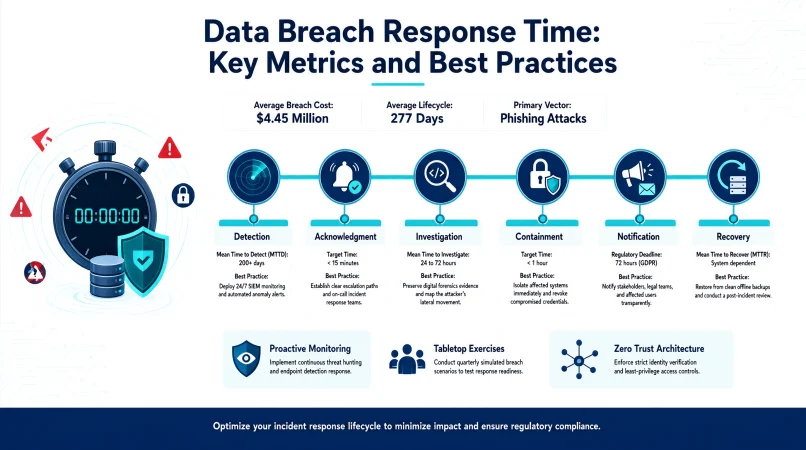
Tracking response time helps organizations understand how effectively they identify, investigate, and contain security incidents. Each metric should have a clear start point and end point.
- Mean time to detect (MTTD). Example: Use this when evaluating how long it takes to identify security incidents.
Meaning: It measures the average time required to detect incidents under the chosen methodology. - Mean time to acknowledge (MTTA). Example: Use this when reviewing how quickly teams recognize alerts.
Meaning: It measures the average time between an alert and its acknowledgment. - Mean time to respond (MTTR). Example: Use this when reporting incident response performance.
Meaning: It measures a defined response interval, although organizations use MTTR for different milestones. - Mean time to contain. Example: Use this when reviewing how quickly an incident is brought under control.
Meaning: It measures the time needed to contain an incident according to the organization’s criteria. - Time to investigate. Example: Use this when assessing the speed of incident analysis.
Meaning: It measures the duration of the investigation phase. - Time to recover. Example: Use this when tracking the restoration of affected services.
Meaning: It measures how long recovery takes under the selected definition. - Time to notify. Example: Use this when assessing how quickly required notifications are made.
Meaning: It measures the interval between a defined trigger and notification. - Time to escalate. Example: Use this when evaluating incident handoffs.
Meaning: It measures how long it takes to refer an incident to the appropriate team. - Time to assign an incident owner. Example: Use this when reviewing responsibility for new alerts.
Meaning: It measures how quickly an accountable responder is identified. - Time to verify containment. Example: Use this when evaluating the checks performed after containment.
Meaning: It measures the time required to confirm that containment measures are effective. - Time to close an incident. Example: Use this in monthly security performance reporting.
Meaning: It measures the time between a defined incident opening and formal closure. - Response SLA compliance. Example: Use this when comparing performance against internal service targets.
Meaning: It measures whether incidents meet established response commitments.
7. Professional Responses About Delayed Breach Handling
Sometimes a team takes longer than expected to respond. The best communication acknowledges the delay, explains the current status, and focuses on corrective action.
- We recognize that the response took longer than expected. Example: Use this in a post-incident review.
Meaning: It acknowledges the delay without making excuses. - We are reviewing the factors that contributed to the delay. Example: Use this when examining incident handling.
Meaning: It communicates a commitment to identifying underlying causes. - The incident timeline is being reviewed for improvement opportunities. Example: Use this in a management report.
Meaning: It focuses on lessons that could improve future response times. - We are addressing the gaps identified during the review. Example: Use this when corrective actions have been assigned.
Meaning: It shows that the organization is acting on its findings. - Our response procedures are being reassessed. Example: Use this after discovering weaknesses in escalation.
Meaning: It indicates that existing processes are under review. - We are clarifying responsibilities for future incidents. Example: Use this after confusion about incident ownership.
Meaning: It emphasizes clear accountability. - Alert escalation criteria are being reviewed. Example: Use this when important alerts were not escalated promptly.
Meaning: It targets a possible cause of response delays. - We are improving visibility into incident status. Example: Use this when teams struggled to track progress.
Meaning: It highlights the need for clearer operational information. - The team is reviewing resource and staffing constraints. Example: Use this when limited capacity affected response efforts.
Meaning: It recognizes operational factors that may require attention. - Corrective actions will be tracked through completion. Example: Use this in a formal remediation report.
Meaning: It emphasizes follow-through and accountability. - We are updating the response plan based on documented findings. Example: Use this after completing an incident review.
Meaning: It connects lessons learned to future preparedness. - Our goal is to make future responses faster and more reliable. Example: Use this in a closing statement for a review meeting.
Meaning: It expresses a commitment to measurable improvement.
8. Confident Cybersecurity Incident Responses
Confidence is useful during an incident, but it should come from preparation and evidence rather than assumptions. These statements help teams communicate control without promising a specific outcome prematurely.
- We have activated the appropriate response procedures. Example: Use this after an incident meets escalation criteria.
Meaning: It communicates that the formal response process has begun. - Our team is working from verified incident information. Example: Use this during a security briefing.
Meaning: It reinforces evidence-based decision-making. - Containment and investigation are progressing in parallel where appropriate. Example: Use this in a technical status update.
Meaning: It describes coordinated work across response activities. - Each response action has an assigned owner. Example: Use this in an incident coordination meeting.
Meaning: It establishes accountability for tasks. - We are tracking progress against defined milestones. Example: Use this in an executive report.
Meaning: It demonstrates structured incident management. - The team is prioritizing the highest-risk exposures. Example: Use this when multiple systems may be affected.
Meaning: It explains how response resources are being prioritized. - We will adjust our actions as verified evidence develops. Example: Use this during an evolving investigation.
Meaning: It shows flexibility without abandoning sound procedures. - Our response decisions are being documented. Example: Use this in a regulated environment.
Meaning: It supports accountability and later review. - We are checking the effectiveness of containment measures. Example: Use this before declaring an incident controlled.
Meaning: It emphasizes verification rather than assumption. - Recovery will follow the required security checks. Example: Use this when discussing restoration plans.
Meaning: It prioritizes safe recovery over speed alone. - We are coordinating actions across the response team. Example: Use this in a multi-team incident.
Meaning: It communicates organized collaboration. - We are focused on evidence, containment, and recovery. Example: Use this in a concise status briefing.
Meaning: It summarizes the team’s key priorities.
9. Calm and Reassuring Responses During a Data Breach
Incidents can create uncertainty for employees, customers, and leadership. Calm communication helps people understand what is known, what is being investigated, and what happens next.
- We are taking the report seriously. Example: Use this when acknowledging a colleague’s security concern.
Meaning: It validates the concern without jumping to conclusions. - The situation is being assessed carefully. Example: Use this in an early status update.
Meaning: It communicates that the response is underway. - We will share confirmed details when they are available. Example: Use this when the facts remain uncertain.
Meaning: It encourages patience while protecting accuracy. - There is no need to speculate before the evidence is reviewed. Example: Use this in an internal incident channel.
Meaning: It discourages rumors and unsupported conclusions. - The response team is following the established process. Example: Use this when colleagues ask how the issue is being handled.
Meaning: It reinforces the value of a structured approach. - We are reviewing the available evidence step by step. Example: Use this during an investigation update.
Meaning: It presents the investigation as careful and methodical. - Questions will be addressed as the investigation progresses. Example: Use this when employees request additional details.
Meaning: It sets realistic expectations for communication. - Our immediate focus is reducing potential harm. Example: Use this in an internal briefing.
Meaning: It prioritizes protective action. - We are separating confirmed facts from open questions. Example: Use this when discussing an uncertain incident.
Meaning: It helps prevent misinformation. - Updates will reflect what we can verify. Example: Use this in a customer communication plan.
Meaning: It commits to fact-based updates. - We are documenting the response for accountability. Example: Use this when explaining incident management to leadership.
Meaning: It highlights transparency and recordkeeping. - We will review the lessons once the incident is resolved. Example: Use this when discussing future improvements.
Meaning: It emphasizes learning after immediate risks are addressed.
10. Data Breach Response Time for Small Businesses
Small businesses may have limited IT resources, but a practical response plan can still help them act efficiently. These statements support planning, prioritization, and coordination.
- Assign a clear owner for every security incident. Example: Use this in a small-business security policy.
Meaning: It prevents confusion about responsibility. - Keep emergency security contacts up to date. Example: Use this during a quarterly preparedness review.
Meaning: It helps staff reach the right people quickly. - Document the first steps before an incident occurs. Example: Use this when creating an incident response checklist.
Meaning: It reduces uncertainty during an emergency. - Prioritize systems that hold sensitive customer information. Example: Use this when reviewing business assets.
Meaning: It directs attention toward high-impact systems. - Know when to contact an external security specialist. Example: Use this in a small-business incident plan.
Meaning: It encourages timely escalation when internal skills are insufficient. - Maintain secure backups and test the recovery process. Example: Use this during a business continuity review.
Meaning: It helps ensure that backups can support recovery. - Create a clear process for reporting suspicious activity. Example: Use this in employee security training.
Meaning: It makes reporting easier and more consistent. - Review access permissions regularly. Example: Use this during routine account maintenance.
Meaning: It reduces unnecessary access to business information. - Know which systems can be isolated safely. Example: Use this when planning technical containment procedures.
Meaning: It prepares the business to limit exposure without unnecessary disruption. - Set response targets that match your actual capabilities. Example: Use this when defining internal security expectations.
Meaning: It encourages realistic and measurable commitments. - Prepare a customer communication process in advance. Example: Use this when drafting a business continuity plan.
Meaning: It makes external communication easier during an incident. - Practice the plan before an emergency happens. Example: Use this during an annual tabletop exercise.
Meaning: It helps staff understand their roles before a real breach.
11. Data Breach Response Time for IT and Security Teams
Security teams need defined responsibilities, reliable monitoring, and repeatable processes. These examples help communicate the technical work involved in incident response.
- Validate the alert before classifying the incident. Example: Use this in a security operations procedure.
Meaning: It encourages responders to assess the available evidence. - Prioritize incidents according to risk and impact. Example: Use this when several alerts arrive simultaneously.
Meaning: It helps teams allocate attention appropriately. - Correlate relevant logs across affected systems. Example: Use this during a technical investigation.
Meaning: It supports a more complete view of suspicious activity. - Preserve evidence before making disruptive changes when feasible. Example: Use this in an investigation involving potentially compromised systems.
Meaning: It balances evidence preservation with containment needs. - Revoke compromised credentials when appropriate. Example: Use this after unauthorized credential use is confirmed.
Meaning: It helps prevent further access through compromised accounts. - Review network activity for signs of continued compromise. Example: Use this during threat containment.
Meaning: It helps identify ongoing malicious activity. - Isolate affected systems according to the response plan. Example: Use this when a system poses a continuing security risk.
Meaning: It limits potential spread while following approved procedures. - Coordinate forensic analysis with containment decisions. Example: Use this during a complex security incident.
Meaning: It helps preserve investigative value while reducing risk. - Verify remediation before restoring normal access. Example: Use this before returning an affected service to production.
Meaning: It reduces the risk of restoring an unsafe system. - Review detection rules after the incident. Example: Use this during a post-incident technical review.
Meaning: It identifies opportunities to improve future detection. - Track technical actions against the incident timeline. Example: Use this when compiling an investigation report.
Meaning: It creates a clearer record of response activity. - Test recovery systems before closing the incident. Example: Use this when restoring affected services.
Meaning: It verifies that recovery has been successful.
12. Data Breach Response Time and Legal Compliance
Organizations may have legal, regulatory, contractual, and industry-specific obligations after a data breach. Response timelines depend on the applicable requirements and the circumstances of the incident.
- Identify the applicable notification requirements. Example: Use this when a breach may involve regulated personal information.
Meaning: It directs the organization to determine which rules apply. - Record when the incident was discovered. Example: Use this when opening a formal incident record.
Meaning: It establishes an important reference point for timeline analysis. - Consult qualified legal counsel when required. Example: Use this when assessing legal obligations after an incident.
Meaning: It supports informed decisions about compliance. - Determine whether the incident meets the relevant reporting threshold. Example: Use this during a regulatory assessment.
Meaning: It distinguishes reportable incidents from other security events. - Document the basis for notification decisions. Example: Use this in a compliance investigation file.
Meaning: It creates a record of how the decision was reached. - Coordinate security findings with compliance personnel. Example: Use this when technical and legal teams must work together.
Meaning: It encourages consistent handling of the incident. - Track applicable deadlines from the correct trigger point. Example: Use this when managing reporting obligations.
Meaning: It reduces the risk of misunderstanding notification timelines. - Prepare accurate records of affected information. Example: Use this when determining the potential scope of exposure.
Meaning: It supports evidence-based compliance assessments. - Keep a record of required notifications. Example: Use this after sending a legally required notice.
Meaning: It helps demonstrate that notification actions were documented. - Review contractual reporting obligations. Example: Use this when a breach may affect business partners.
Meaning: It identifies additional duties that may apply. - Ensure public statements are reviewed appropriately. Example: Use this before releasing an incident announcement.
Meaning: It helps maintain accuracy and consistency. - Reassess reporting obligations as new facts emerge. Example: Use this when an investigation changes the understanding of the incident.
Meaning: It recognizes that compliance decisions may need updating.
13. Creative Ways to Explain Data Breach Response Time
Explaining cybersecurity concepts in plain language helps nontechnical audiences understand why response speed matters. These examples work well in presentations, awareness campaigns, and training materials.
- A fast response is the first step toward limiting damage. Example: Use this in a cybersecurity awareness presentation.
Meaning: It connects response speed with risk reduction. - Detection finds the problem; response starts the action. Example: Use this when explaining incident management basics.
Meaning: It distinguishes identifying an issue from acting on it. - A clear timeline turns confusion into useful evidence. Example: Use this during incident response training.
Meaning: It highlights the value of organized records. - The first alert starts the clock, but the definition matters. Example: Use this in a discussion about response metrics.
Meaning: It emphasizes the need for consistent measurement rules. - Containment is a milestone, not the finish line. Example: Use this when explaining the stages of incident handling.
Meaning: It reminds teams that investigation and recovery may still be necessary. - Speed matters most when it supports the right action. Example: Use this during a response planning workshop.
Meaning: It balances urgency with good judgment. - A practiced plan beats last-minute guesswork. Example: Use this in an employee security awareness campaign.
Meaning: It encourages preparation before an incident occurs. - Every clear handoff can reduce avoidable delays. Example: Use this in a team coordination session.
Meaning: It highlights the importance of effective communication. - Good records make response improvements possible. Example: Use this in a post-incident review.
Meaning: It connects documentation with future performance. - Recovery begins with understanding what is safe to restore. Example: Use this in a business continuity presentation.
Meaning: It prioritizes secure restoration over premature reopening. - Response targets need a stopwatch and a definition. Example: Use this when introducing security performance metrics.
Meaning: It stresses consistent measurement. - Prepared teams can make better decisions under pressure. Example: Use this during a cybersecurity training session.
Meaning: It emphasizes the value of readiness.
14. Data Breach Response Time Improvement Strategies
Improving response time requires more than telling a team to work faster. Organizations need to identify bottlenecks, automate appropriate tasks, and evaluate results consistently.
- Create a documented incident response playbook. Example: Use this when planning improvements to security operations.
Meaning: It provides responders with repeatable instructions. - Define incident severity levels clearly. Example: Use this when reviewing security alert handling.
Meaning: It helps teams prioritize incidents consistently. - Establish escalation rules for urgent alerts. Example: Use this when designing an incident workflow.
Meaning: It clarifies when an issue should be referred to senior responders. - Automate repetitive, low-risk response tasks where appropriate. Example: Use this when reviewing security operations workflows.
Meaning: It can reduce manual effort while preserving necessary safeguards. - Improve visibility across security monitoring systems. Example: Use this when teams struggle to understand incident scope.
Meaning: It helps responders access relevant information efficiently. - Run regular incident response exercises. Example: Use this when building an annual security training program.
Meaning: It helps teams practice their responsibilities. - Measure detection and containment separately. Example: Use this when improving a security performance dashboard.
Meaning: It prevents distinct response stages from being confused. - Review delays after every significant incident. Example: Use this during a post-incident review meeting.
Meaning: It identifies specific opportunities for improvement. - Maintain reliable incident contact information. Example: Use this during routine security planning.
Meaning: It helps responders reach the right people without unnecessary delay. - Reduce unnecessary approval bottlenecks. Example: Use this when reviewing incident escalation procedures.
Meaning: It encourages timely decisions while retaining appropriate authorization. - Test backups and recovery procedures regularly. Example: Use this during a business resilience exercise.
Meaning: It helps teams discover recovery problems before a real incident. - Turn response findings into measurable action items. Example: Use this when documenting improvement plans.
Meaning: It converts lessons learned into trackable changes.
15. Short Data Breach Response Time Statements for Reports and Presentations
Sometimes you need a concise statement rather than a full explanation. These examples are useful for slide decks, executive summaries, incident dashboards, and security reports.
- Response time affects incident management effectiveness. Example: Use this as a presentation heading.
Meaning: It highlights the operational importance of timely action. - Early detection supports faster investigation. Example: Use this in a security performance report.
Meaning: It links detection capability with investigation readiness. - Containment time should be measured consistently. Example: Use this in a security metrics dashboard.
Meaning: It promotes reliable comparisons between incidents. - Every incident needs a documented timeline. Example: Use this in an incident management policy.
Meaning: It reinforces the importance of accurate records. - Response targets should reflect incident severity. Example: Use this in a security governance presentation.
Meaning: It encourages risk-based prioritization. - Clear ownership reduces coordination delays. Example: Use this in an operational improvement report.
Meaning: It emphasizes accountability during response activities. - Fast action must be supported by verified evidence. Example: Use this in a security training slide.
Meaning: It balances urgency with accuracy. - Incident reviews reveal opportunities for improvement. Example: Use this in a post-incident summary.
Meaning: It encourages learning from previous events. - Recovery requires appropriate security validation. Example: Use this in a technical status report.
Meaning: It reinforces safe restoration practices. - Notification deadlines depend on applicable requirements. Example: Use this in a compliance presentation.
Meaning: It highlights the need to assess the relevant legal rules. - Consistent metrics make performance easier to evaluate. Example: Use this in a management dashboard.
Meaning: It explains why standard measurement methods matter. - Preparedness supports more effective incident response. Example: Use this in a business continuity report.
Meaning: It summarizes the value of planning and practice.
FAQs
What Does Data Breach Response Time Mean?
Data breach response time measures how quickly an organization acts after detecting or identifying a potential breach.
Why Is Data Breach Response Time Important?
A timely response can limit exposure, support investigations, and reduce the potential impact of a security incident.
What Is a Good Data Breach Response Time?
There is no universal target. Response goals depend on risk, incident severity, resources, and applicable requirements.
Is Detection Time the Same as Response Time?
No. Detection time measures how long it takes to identify an incident, while response time measures a defined response interval.
What Is Mean Time to Respond?
Mean time to respond is an average response metric, but its exact meaning depends on the organization’s measurement method.
How Can Businesses Improve Data Breach Response Time?
Businesses can improve response times through clear playbooks, effective monitoring, defined escalation rules, and regular exercises.
Does Faster Response Always Mean Better Security?
No. Speed matters, but actions must also be accurate, coordinated, documented, and appropriate to the incident.
Are There Legal Deadlines for Reporting Data Breaches?
Yes, some laws and regulations impose notification deadlines that vary by jurisdiction, incident type, and applicable circumstances.
Should Organizations Tell Customers About Every Security Alert?
Not necessarily. Notification depends on verified facts, applicable legal requirements, and the nature of the incident.
Is Humor Appropriate During a Data Breach?
Humor may suit training or informal discussions, but actual incidents require serious, clear, and empathetic communication.
How Often Should Organizations Test Their Response Plans?
Organizations should exercise their plans regularly and after significant changes, using risk and regulatory requirements to guide frequency.
Which Metrics Help Measure Data Breach Response Time?
Useful metrics include detection, acknowledgment, containment, escalation, notification, and recovery times.
Conclusion
Data breach response time is more than a number on a security dashboard. It reflects how prepared an organization is to identify threats, coordinate its team, protect sensitive information, and recover safely. From quick incident messages to detailed performance metrics, clear communication helps everyone understand what needs to happen next.
Remember, the goal is not simply to respond faster. It is to respond faster and more effectively, with accurate information, appropriate containment, and well-documented decisions. Whether you are improving a business security plan or learning cybersecurity terminology, start with clear responsibilities and measurable targets.
Save this guide for your next security review, share it with your team, and keep building a stronger incident response strategy. Better preparation today can make tomorrow’s response more effective.