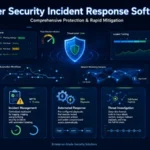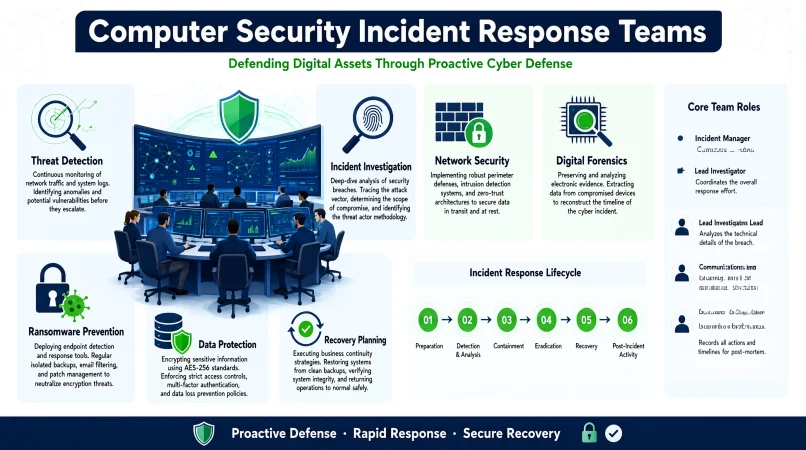
Computer security incident response teams are groups of cybersecurity professionals who detect, investigate, contain, and recover from security incidents such as malware infections, data breaches, and ransomware attacks. They help organizations minimize damage, protect sensitive information, and restore normal operations.
Top alternatives: Computer Security Incident Response Team (CSIRT), Computer Emergency Response Team (CERT), Security Incident Response Team (SIRT), Cyber Incident Response Team (CIRT), Incident Response Team (IRT).
Imagine discovering that your company’s customer database has been exposed, suspicious login attempts are flooding your systems, or ransomware has suddenly locked important files. Who steps in when cybersecurity problems turn into real emergencies? That’s where computer security incident response teams make a difference.
These specialized teams investigate digital threats, contain security incidents, and help organizations get back on track before a bad day becomes a business disaster. From small businesses dealing with phishing attacks to large enterprises managing sophisticated cyberattacks, having the right response team can make all the difference.
But what exactly do these teams do, who belongs to them, and how do they respond when something goes wrong? Understanding computer security incident response teams helps businesses choose appropriate security strategies, clarify responsibilities, and prepare for unexpected threats. Think of them as digital emergency responders, except their emergencies involve suspicious files, compromised accounts, and hackers instead of flashing lights and sirens.
1. Essential Computer Security Incident Response Teams Examples
- Computer Security Incident Response Team (CSIRT)
Example: A company establishes a dedicated CSIRT to investigate reported cybersecurity incidents.
Meaning: A CSIRT coordinates the detection, investigation, containment, and recovery of security incidents. - Computer Emergency Response Team (CERT)
Example: A national cybersecurity organization shares warnings about newly discovered vulnerabilities.
Meaning: A CERT provides cybersecurity expertise, incident coordination, and threat information. - Security Incident Response Team (SIRT)
Example: A technology company assigns security specialists to investigate suspicious activity.
Meaning: A SIRT manages security incidents and coordinates appropriate responses. - Cyber Incident Response Team (CIRT)
Example: A financial institution activates its CIRT after detecting unauthorized account access.
Meaning: A CIRT focuses on investigating and managing cyber incidents. - Incident Response Team (IRT)
Example: An organization brings together security experts after discovering malware.
Meaning: An IRT coordinates the organization’s response to security incidents. - Enterprise CSIRT
Example: A multinational company creates one response team for its global operations.
Meaning: An enterprise CSIRT manages incidents across an organization’s departments and locations. - National CSIRT
Example: A government-supported team coordinates responses to threats affecting national infrastructure.
Meaning: A national CSIRT supports cybersecurity incident management across a country. - Sector-Based CSIRT
Example: Healthcare organizations receive coordinated guidance about a threat targeting hospital systems.
Meaning: A sector-based CSIRT focuses on cybersecurity challenges within a particular industry. - Managed Incident Response Team
Example: A business hires an external cybersecurity provider to investigate suspicious network activity.
Meaning: A managed team supplies incident response expertise as a service. - Cloud Incident Response Team
Example: Security specialists investigate compromised cloud administrator credentials.
Meaning: A cloud incident response team addresses incidents involving cloud infrastructure and services.
2. Funny Computer Security Incident Response Team Descriptions
- The Digital Firefighters
Example: A team receives this nickname after containing several malware outbreaks.
Meaning: The phrase humorously describes professionals who put out digital fires. - The Ctrl+Alt+Defenders
Example: Security colleagues use this nickname for their incident response team.
Meaning: It combines a familiar keyboard shortcut with the idea of defending computer systems. - The Malware Cleanup Crew
Example: Employees give the response team this name after a difficult ransomware investigation.
Meaning: It humorously emphasizes the team’s responsibility for handling malicious software incidents. - The Cybersecurity Avengers
Example: A company uses the nickname in an internal security awareness presentation.
Meaning: It portrays the team as heroes protecting digital systems. - The Firewall Fan Club
Example: A security department jokingly names its incident response group.
Meaning: The phrase pokes fun at how much security professionals rely on defensive controls. - The Panic Prevention Department
Example: Employees use this name when the team calmly manages a security alert.
Meaning: It highlights the team’s role in reducing confusion during incidents. - The Password Police
Example: Staff jokingly refer to security specialists who investigate compromised credentials.
Meaning: It humorously describes professionals responsible for protecting accounts and access. - The Phishing Catchers
Example: A team receives this nickname after identifying a convincing fraudulent email campaign.
Meaning: The phrase celebrates the team’s ability to recognize phishing attempts. - The Suspicious Click Squad
Example: Employees use the nickname after a phishing simulation.
Meaning: It describes a team that investigates risky clicks and related security incidents. - The Server Stress Squad
Example: A department uses this name for specialists who investigate server security problems.
Meaning: It adds humor to the team’s responsibility for protecting critical systems.
3. Professional Computer Security Incident Response Team Descriptions
- Dedicated Incident Management
Example: A business assigns trained professionals to manage reported security incidents.
Meaning: It describes a formal approach to investigating and resolving cybersecurity problems. - Structured Incident Coordination
Example: Multiple departments work together under a documented incident response process.
Meaning: It emphasizes organized communication and clearly assigned responsibilities. - Threat Detection and Investigation
Example: Security analysts investigate unusual login patterns across company accounts.
Meaning: It describes identifying suspicious activity and determining its cause. - Incident Containment and Recovery
Example: Responders isolate an infected device before restoring affected services.
Meaning: It focuses on limiting damage and safely returning systems to operation. - Security Incident Classification
Example: Analysts classify a suspicious event according to severity and business impact.
Meaning: It describes assigning incident categories to guide response priorities. - Evidence Preservation
Example: Investigators preserve system logs after discovering unauthorized access.
Meaning: It involves protecting relevant evidence for technical investigation and possible legal proceedings. - Incident Escalation Procedures
Example: A security analyst reports a suspected major breach to the incident commander.
Meaning: It defines when and how incidents are transferred to higher-level responders. - Cross-Functional Response
Example: IT, legal, communications, and security teams coordinate after a data breach.
Meaning: It describes cooperation among departments with different incident management responsibilities. - Executive Incident Reporting
Example: Security leaders brief management about an ongoing cyberattack.
Meaning: It provides decision-makers with relevant information about incident status and impact. - Documented Response Procedures
Example: Responders follow an approved playbook during a malware outbreak.
Meaning: It establishes consistent steps for managing known incident types. - Post-Incident Evaluation
Example: A company reviews its response after restoring affected systems.
Meaning: It identifies lessons that can improve future incident handling. - Continuous Response Improvement
Example: A security department updates its playbooks after a cybersecurity exercise.
Meaning: It describes regularly improving incident response capabilities through testing and review.
4. Creative Computer Security Incident Response Team Ideas
- Digital Defense Command
Example: A growing organization creates a centralized team for coordinating security incidents.
Meaning: It presents incident response as a coordinated defensive operation. - CyberShield Response Group
Example: A business gives its incident response department a memorable internal name.
Meaning: It suggests protection, preparedness, and organized security support. - Threat Response Hub
Example: Analysts from multiple departments coordinate investigations through one central team.
Meaning: It describes a central point for managing cybersecurity incident response. - Digital Rescue Unit
Example: Employees use this informal name for specialists restoring compromised systems.
Meaning: It highlights the team’s role in helping affected systems recover. - Cyber Sentinel Team
Example: A security department adopts the name for its monitoring and response function.
Meaning: It conveys vigilance and protection against digital threats. - Incident Response Command Center
Example: Security leaders coordinate a major incident through a dedicated operations room.
Meaning: It describes a central location or function for directing incident response. - Threat Intelligence Response Group
Example: Analysts investigate an attack using information about known threat actors.
Meaning: It combines threat intelligence with incident investigation and response. - Digital Risk Response Team
Example: A company assigns specialists to investigate incidents that threaten important business operations.
Meaning: It emphasizes responding to cybersecurity events that create operational or financial risks. - Cyber Recovery Team
Example: Specialists help restore systems after a destructive malware incident.
Meaning: It highlights the recovery aspect of cybersecurity incident management. - Security Operations Response Unit
Example: A business coordinates security monitoring and incident handling through one department.
Meaning: It describes an operational team responsible for managing security alerts and incidents.
5. Sarcastic Computer Security Incident Response Team Descriptions
- Another Day, Another Security Alert
Example: An analyst uses this phrase after investigating several alerts in one shift.
Meaning: It humorously captures the repetitive nature of security monitoring. - Because Someone Clicked the Link
Example: A team uses the phrase during a phishing awareness presentation.
Meaning: It pokes fun at how one unsafe click can trigger a security investigation. - Password123 Strikes Again
Example: Security staff use this joke when discussing weak passwords.
Meaning: It highlights the risks associated with predictable credentials. - Trust Nothing, Verify Everything
Example: An organization uses the phrase when explaining its zero-trust security approach.
Meaning: It emphasizes verifying access rather than automatically trusting users or devices. - The Alert Is Probably Nothing
Example: An analyst says this jokingly before beginning a legitimate investigation.
Meaning: It reflects the uncertainty responders face when assessing security alerts. - Please Stop Feeding the Phishing Emails
Example: A security team uses this reminder after a phishing exercise.
Meaning: It encourages employees to avoid interacting with suspicious messages. - Have You Tried Reading the Security Policy?
Example: An employee asks for help with a procedure already documented internally.
Meaning: It humorously encourages people to consult established security guidance. - Unexpected Login? Of Course
Example: Analysts use this phrase after receiving another unusual sign-in alert.
Meaning: It captures the recurring surprises involved in account security. - The Firewall Is Not a Force Field
Example: A security trainer uses this line when explaining layered security.
Meaning: It reminds people that firewalls cannot prevent every type of attack. - Security First, Convenience Second
Example: A company explains why certain risky access requests cannot be approved.
Meaning: It prioritizes security requirements over unnecessary convenience.
6. Short Computer Security Incident Response Team Descriptions
- Cyber Incident Experts
Example: A business introduces its specialists on an internal directory.
Meaning: It describes professionals who investigate and manage cyber incidents. - Security Response Specialists
Example: A job listing identifies the role of a dedicated incident responder.
Meaning: It refers to professionals trained to handle cybersecurity incidents. - Digital Threat Investigators
Example: A company introduces the analysts who investigate suspicious system activity.
Meaning: It emphasizes the investigative side of incident response. - Incident Management Professionals
Example: An organization describes the staff responsible for coordinating incident handling.
Meaning: It highlights professional incident management expertise. - Cybersecurity Emergency Responders
Example: A security department explains its role during a major cyberattack.
Meaning: It describes specialists who respond to urgent cybersecurity threats. - Threat Containment Experts
Example: A company highlights its ability to isolate affected systems.
Meaning: It focuses on limiting the spread and impact of an attack. - Security Recovery Specialists
Example: A business introduces the team responsible for helping restore affected services.
Meaning: It emphasizes recovery after a security incident. - Incident Analysis Team
Example: Analysts review suspicious events to determine what happened.
Meaning: It describes professionals who examine security incidents. - Cyber Defense Professionals
Example: A company explains the expertise of its security response department.
Meaning: It refers broadly to professionals who protect systems and respond to threats. - Digital Forensics Investigators
Example: Specialists examine a compromised laptop for evidence of malicious activity.
Meaning: It describes professionals who investigate digital evidence. - Security Crisis Coordinators
Example: A business assigns a leader to coordinate departments during a major breach.
Meaning: It highlights incident communication and coordination responsibilities. - Cyber Threat Response Experts
Example: An organization introduces professionals responsible for managing serious threats.
Meaning: It describes specialists who investigate and respond to cyber threats.
7. Computer Security Incident Response Team Roles and Responsibilities
- Incident Response Manager
Example: A manager coordinates technical teams during a significant security incident.
Meaning: This role oversees response activities and ensures responsibilities are clear. - Incident Commander
Example: An incident commander prioritizes actions during a major cybersecurity emergency.
Meaning: This person coordinates decisions and response efforts during an incident. - Security Analyst
Example: An analyst investigates suspicious authentication activity.
Meaning: Security analysts examine alerts and identify potential threats. - Digital Forensics Specialist
Example: A specialist examines disk images and system logs after a breach.
Meaning: This professional gathers and analyzes digital evidence. - Threat Hunter
Example: A threat hunter searches for signs of attackers that automated alerts missed.
Meaning: This specialist proactively looks for hidden malicious activity. - Malware Analyst
Example: A specialist examines a suspicious executable file in a controlled environment.
Meaning: This professional investigates malicious software and its behavior. - Network Security Engineer
Example: An engineer isolates a compromised network segment.
Meaning: This role helps secure network infrastructure during incidents. - Cloud Security Specialist
Example: A specialist investigates unauthorized access to cloud resources.
Meaning: This professional addresses incidents involving cloud platforms and configurations. - Threat Intelligence Analyst
Example: An analyst correlates indicators of compromise with known threat activity.
Meaning: This role provides information that helps responders understand potential attackers. - Legal Advisor
Example: A lawyer advises the organization about evidence handling and notification obligations.
Meaning: Legal support helps ensure incident decisions comply with applicable requirements. - Communications Specialist
Example: A communications professional prepares approved updates following a confirmed breach.
Meaning: This role helps communicate accurate information to affected audiences. - IT Recovery Specialist
Example: An IT specialist restores verified clean systems from trusted backups.
Meaning: This role supports safe technical recovery after an incident.
8. Computer Security Incident Response Team Tools and Technologies
- Security Information and Event Management (SIEM)
Example: Analysts correlate authentication logs with endpoint security alerts.
Meaning: SIEM technology collects and analyzes security data from multiple sources. - Endpoint Detection and Response (EDR)
Example: Responders investigate suspicious processes on an employee’s laptop.
Meaning: EDR tools monitor endpoints and support threat investigation and containment. - Extended Detection and Response (XDR)
Example: Analysts investigate related activity across endpoints, email, and network systems.
Meaning: XDR combines security signals from multiple environments to support detection and response. - Security Orchestration, Automation, and Response (SOAR)
Example: A workflow automatically enriches an alert with relevant threat intelligence.
Meaning: SOAR helps coordinate and automate repeatable security response tasks. - Digital Forensics Software
Example: Investigators examine a disk image for evidence of unauthorized access.
Meaning: Forensics software helps collect and analyze digital evidence. - Threat Intelligence Platforms
Example: Analysts compare suspicious indicators against trusted threat intelligence sources.
Meaning: These platforms organize threat information for investigation and decision-making. - Case Management Systems
Example: A response team records incident timelines, evidence, and assigned tasks.
Meaning: Case management systems organize incident records and team workflows. - Network Detection and Response (NDR)
Example: Security analysts investigate unusual connections between internal systems.
Meaning: NDR technology helps identify suspicious activity across network traffic. - Vulnerability Management Systems
Example: A team checks whether an exploited vulnerability affects its servers.
Meaning: These systems identify and prioritize weaknesses that may contribute to incidents. - Secure Backup Solutions
Example: An organization restores clean files after a ransomware attack.
Meaning: Backup systems provide recovery options when data becomes unavailable or compromised. - Identity and Access Management (IAM)
Example: Responders revoke suspicious access and review compromised accounts.
Meaning: IAM systems manage identities, permissions, and access to organizational resources. - Incident Response Playbooks
Example: Analysts follow approved steps when investigating a suspected phishing incident.
Meaning: Playbooks document repeatable procedures for common security scenarios.
9. Computer Security Incident Response Team Procedures
- Incident Identification
Example: An analyst notices unusual account activity and reports a potential incident.
Meaning: Identification establishes that a security event may require investigation. - Initial Triage
Example: Responders assess whether an alert indicates a genuine security threat.
Meaning: Triage helps determine incident severity and immediate priorities. - Incident Classification
Example: A security team categorizes a confirmed malware infection according to its impact.
Meaning: Classification provides a consistent way to organize incidents. - Incident Prioritization
Example: Responders prioritize a compromised production server over a low-impact isolated alert.
Meaning: Prioritization directs resources toward the most urgent risks. - Evidence Collection
Example: Investigators preserve relevant logs and system information.
Meaning: Evidence collection supports accurate investigation and later review. - Threat Containment
Example: Responders isolate a compromised endpoint from the corporate network.
Meaning: Containment limits further damage while the investigation continues. - Root Cause Analysis
Example: Analysts determine how an attacker obtained access to a server.
Meaning: Root cause analysis identifies the underlying reason an incident occurred. - Threat Eradication
Example: Specialists remove malicious components and address the exploited weakness.
Meaning: Eradication removes the threat and its relevant causes from affected systems. - System Recovery
Example: IT staff restore verified clean services and monitor them for suspicious activity.
Meaning: Recovery returns affected systems to secure operation. - Incident Documentation
Example: The team records important decisions, evidence, and recovery milestones.
Meaning: Documentation creates an accurate record of the response. - Stakeholder Notification
Example: The organization informs appropriate leaders about a significant incident.
Meaning: Notification ensures relevant people receive timely, accurate updates. - Lessons Learned
Example: The team reviews an incident to improve detection and response procedures.
Meaning: This process identifies changes that can prevent or reduce future incidents.
10. Computer Security Incident Response Team Training and Certifications
- Incident Response Fundamentals
Example: A new analyst studies incident identification, containment, and recovery.
Meaning: Foundational training teaches the essential stages of incident management. - Digital Forensics Training
Example: An investigator learns how to preserve and examine digital evidence.
Meaning: This training develops skills for evidence collection and analysis. - Malware Analysis Training
Example: A security professional studies malicious file behavior in a controlled lab.
Meaning: It develops the ability to understand and investigate malware. - Threat Hunting Exercises
Example: Analysts practice finding suspicious activity in simulated network logs.
Meaning: These exercises improve proactive threat detection skills. - Tabletop Exercises
Example: Department leaders discuss how they would respond to a simulated ransomware attack.
Meaning: Tabletop exercises test decision-making and coordination without disrupting live systems. - Cybersecurity Incident Simulations
Example: A team practices responding to a simulated account compromise.
Meaning: Simulations help responders rehearse practical incident handling. - Security Operations Training
Example: A new employee learns how to investigate and escalate security alerts.
Meaning: This training develops skills needed for security monitoring and response. - Cloud Incident Response Training
Example: Specialists practice investigating compromised cloud credentials.
Meaning: It prepares responders to handle incidents in cloud environments. - Incident Command Training
Example: A team leader practices coordinating multiple departments during a cyber emergency.
Meaning: This training improves leadership and response coordination. - Communication and Reporting Training
Example: Analysts practice presenting incident findings to nontechnical managers.
Meaning: It improves the clarity and usefulness of incident communications. - Security Certification Preparation
Example: A professional studies for an industry-recognized incident response certification.
Meaning: Certification preparation can help validate relevant cybersecurity knowledge and skills. - Post-Incident Review Workshops
Example: A team evaluates its response after a simulated data breach.
Meaning: These workshops help identify performance gaps and improve future responses.
11. Computer Security Incident Response Team Communication Examples
- Initial Incident Alert
Example: The security team notifies relevant staff about a suspected compromise.
Meaning: This message alerts stakeholders that an investigation has begun. - Incident Confirmation Notice
Example: Analysts confirm that unauthorized access occurred on a company device.
Meaning: This update distinguishes a confirmed incident from an unverified alert. - Containment Update
Example: Responders report that the affected endpoint has been isolated.
Meaning: This communication explains which immediate protective measures have been completed. - Executive Status Report
Example: Security leaders summarize incident scope, business impact, and response priorities.
Meaning: This report gives decision-makers a concise overview of the situation. - Technical Investigation Update
Example: Analysts share verified findings with the incident response team.
Meaning: It keeps technical responders informed about investigation progress. - Service Disruption Notice
Example: An organization informs employees that a service is temporarily unavailable during containment.
Meaning: This message explains an operational disruption related to security response. - Credential Reset Notification
Example: The IT team asks affected employees to reset potentially compromised passwords.
Meaning: It communicates an account protection measure. - Recovery Progress Update
Example: Responders report that affected systems are being restored from clean backups.
Meaning: This update explains progress toward returning services to normal. - Incident Closure Report
Example: A team summarizes the investigation after resolving a confirmed incident.
Meaning: It documents the outcome and remaining follow-up actions. - Customer Security Notice
Example: A company provides affected customers with verified information about a data incident.
Meaning: It communicates relevant impact and recommended protective actions. - Regulatory Escalation Notice
Example: Legal and compliance teams assess whether an incident requires formal notification.
Meaning: It initiates review of applicable reporting obligations. - Lessons-Learned Summary
Example: A manager shares improvements identified during the incident review.
Meaning: It turns response experience into practical recommendations.
12. Computer Security Incident Response Team Challenges
- Alert Fatigue
Example: Analysts receive hundreds of low-priority alerts during a single shift.
Meaning: Excessive notifications can make important threats harder to recognize. - Limited Staffing
Example: A small organization has only one security analyst available overnight.
Meaning: Insufficient staffing can slow investigation and response. - Incomplete Visibility
Example: Investigators cannot access important logs from an unmanaged device.
Meaning: Missing telemetry makes it harder to understand what happened. - Unclear Responsibilities
Example: Two departments assume the other team is handling a suspected breach.
Meaning: Poor role definition can delay important response actions. - Communication Delays
Example: Responders wait for approval before isolating an affected business system.
Meaning: Slow communication can increase incident impact. - Complex Cloud Environments
Example: Analysts investigate an incident spanning several cloud accounts.
Meaning: Distributed infrastructure can complicate investigation and coordination. - Third-Party Dependencies
Example: A supplier’s compromised system creates risks for a business partner.
Meaning: External relationships can introduce security risks beyond direct organizational control. - Evidence Preservation Issues
Example: A device is restarted before volatile evidence is collected.
Meaning: Poor evidence handling can reduce the information available for investigation. - Slow Recovery Processes
Example: An organization discovers that its backups have not been tested recently.
Meaning: Unverified recovery procedures can prolong service disruptions. - Insufficient Preparation
Example: A company discovers that its incident response plan contains outdated contact details.
Meaning: Weak preparation can create confusion during a real incident. - Evolving Threats
Example: Attackers change their techniques to evade existing detection rules.
Meaning: Incident responders must adapt to changing attack methods. - Post-Incident Workload
Example: Analysts must document findings while preparing new detection rules.
Meaning: Follow-up work can strain teams after an incident has been contained.
13. Computer Security Incident Response Team Best Practices
- Maintain an Updated Response Plan
Example: A company reviews its incident response plan after major infrastructure changes.
Meaning: Regular updates help ensure response procedures remain practical and accurate. - Define Team Responsibilities
Example: The organization documents who leads investigations and approves major decisions.
Meaning: Clear ownership reduces confusion during security incidents. - Prioritize High-Impact Threats
Example: Responders focus first on an active compromise affecting sensitive systems.
Meaning: Risk-based prioritization directs attention toward the most serious incidents. - Preserve Evidence Carefully
Example: Investigators record evidence sources and maintain appropriate handling procedures.
Meaning: Careful preservation supports reliable analysis and accountability. - Practice Incident Scenarios
Example: Teams rehearse a ransomware response before an actual attack occurs.
Meaning: Regular exercises help identify gaps in readiness. - Automate Repeatable Tasks
Example: An approved workflow enriches security alerts with asset information.
Meaning: Appropriate automation reduces manual work and improves consistency. - Keep Contact Lists Current
Example: A response manager updates emergency contacts for technical and legal teams.
Meaning: Accurate contact details help speed up coordination. - Monitor Critical Systems
Example: Analysts review security telemetry from important servers and identity systems.
Meaning: Visibility into critical assets improves detection and investigation. - Test Backup Recovery
Example: IT staff regularly verify that important data can be restored successfully.
Meaning: Tested backups improve confidence in recovery capabilities. - Coordinate With Legal and Compliance Teams
Example: Responders consult relevant specialists before making required incident notifications.
Meaning: Coordination helps ensure decisions reflect legal and regulatory obligations. - Review Every Significant Incident
Example: A team documents lessons after resolving a serious compromise.
Meaning: Post-incident reviews help strengthen future response performance. - Measure Response Effectiveness
Example: Security leaders track detection delays and containment times.
Meaning: Meaningful metrics help identify opportunities for improvement.
14. Computer Security Incident Response Team Examples by Industry
- Healthcare CSIRT
Example: A hospital investigates suspicious access to patient records.
Meaning: Healthcare response teams address incidents involving clinical systems and sensitive medical information. - Banking Incident Response Team
Example: A bank investigates unauthorized access to internal financial systems.
Meaning: Banking response teams help protect financial operations and confidential data. - Government CSIRT
Example: A government department responds to a cyberattack targeting public services.
Meaning: Government response teams protect public-sector systems and support incident coordination. - Retail Incident Response Team
Example: A retailer investigates suspicious activity involving its online shopping platform.
Meaning: Retail response teams address threats affecting customer accounts, payment environments, and business operations. - Education CSIRT
Example: A university investigates a ransomware incident affecting campus servers.
Meaning: Education response teams protect learning systems and institutional information. - Manufacturing Response Team
Example: A manufacturer investigates suspicious activity affecting production infrastructure.
Meaning: Manufacturing response teams address threats to operational technology and industrial systems. - Telecommunications Response Team
Example: A provider investigates a security incident affecting network management systems.
Meaning: Telecommunications response teams protect communications infrastructure and supporting services. - Energy Sector CSIRT
Example: Energy specialists investigate suspicious access to utility systems.
Meaning: These teams address cybersecurity incidents affecting energy infrastructure. - E-Commerce Security Team
Example: An online retailer investigates compromised customer accounts.
Meaning: E-commerce response teams help protect digital storefronts and customer information. - Technology Company CSIRT
Example: A software company investigates a compromise affecting development systems.
Meaning: Technology response teams protect software infrastructure, products, and internal systems. - Transportation Incident Response Team
Example: A transport operator investigates suspicious activity involving scheduling systems.
Meaning: Transportation response teams help maintain the security and availability of transport services. - Small Business Response Team
Example: A small company assigns IT staff and an external security provider to handle incidents.
Meaning: Small businesses can combine internal responsibilities with outside expertise to build response capabilities.
15. How to Choose the Right Computer Security Incident Response Team
- Assess Your Security Needs
Example: A business evaluates its most important systems and likely cyber risks.
Meaning: Understanding risk helps determine the incident response capabilities required. - Check Relevant Experience
Example: A company evaluates whether a provider has handled incidents in similar environments.
Meaning: Relevant experience can indicate familiarity with the organization’s security challenges. - Confirm Response Availability
Example: A business asks whether support is available outside normal working hours.
Meaning: Availability determines when the team can respond to incidents. - Review Incident Escalation Procedures
Example: A provider explains how critical incidents reach senior responders.
Meaning: Clear escalation processes help ensure serious threats receive appropriate attention. - Evaluate Technical Expertise
Example: A company checks the team’s experience with cloud systems and digital forensics.
Meaning: Appropriate technical skills support effective investigation and recovery. - Understand Service Scope
Example: A business confirms whether incident containment and recovery are included in a contract.
Meaning: Clear service boundaries prevent misunderstandings during an emergency. - Review Communication Practices
Example: A provider demonstrates how it delivers incident updates to clients.
Meaning: Reliable communication helps stakeholders make informed decisions. - Check Evidence Handling Procedures
Example: A company asks how a provider preserves forensic evidence.
Meaning: Proper procedures help protect evidence integrity and investigative value. - Assess Regulatory Knowledge
Example: A healthcare organization evaluates a provider’s understanding of relevant reporting obligations.
Meaning: Regulatory awareness helps support compliant incident management. - Ask About Recovery Support
Example: A company checks whether a response provider helps restore affected services.
Meaning: Recovery support can be important when returning systems to normal operation.
FAQs
What does a computer security incident response team do?
It investigates cybersecurity incidents, limits damage, removes threats, and helps restore affected systems.
What does CSIRT stand for?
CSIRT stands for Computer Security Incident Response Team.
Is a CSIRT the same as a SOC?
No. A SOC focuses on security monitoring, while a CSIRT coordinates incident handling and recovery.
What is the difference between CSIRT and CERT?
Both support incident response, but their names and responsibilities vary by organization and context.
Who works on a computer security incident response team?
Members may include security analysts, forensic investigators, incident managers, engineers, and legal advisors.
Do small businesses need an incident response team?
Yes. Small businesses can assign internal responsibilities or use external incident response providers.
When should an incident response team be activated?
Activate it when a security event meets your organization’s incident criteria or requires coordinated investigation.
Can a CSIRT prevent cyberattacks?
It mainly handles incidents, but its findings can improve security controls and help prevent future attacks.
Are computer security incident response teams available 24/7?
Some provide round-the-clock coverage, while others operate during business hours or use external support.
What skills should incident responders have?
Useful skills include investigation, network security, digital forensics, threat analysis, communication, and problem-solving.
What is the difference between an IRT and a CSIRT?
IRT is a broad term for an incident response team; CSIRT specifically refers to computer security incident response.
How can an organization improve its incident response team?
Regular exercises, clear responsibilities, updated playbooks, reliable monitoring, and post-incident reviews can help.
Conclusion
Computer security incident response teams play an essential role in protecting organizations when cyber threats become real problems. From investigating suspicious logins and containing malware to coordinating recovery after a data breach, these teams help businesses respond with greater confidence and less confusion.
The strongest response capabilities combine technical expertise, clear communication, documented procedures, and regular practice. Whether you’re building an internal CSIRT, evaluating a managed response provider, or simply learning cybersecurity fundamentals, understanding these teams is a valuable starting point.