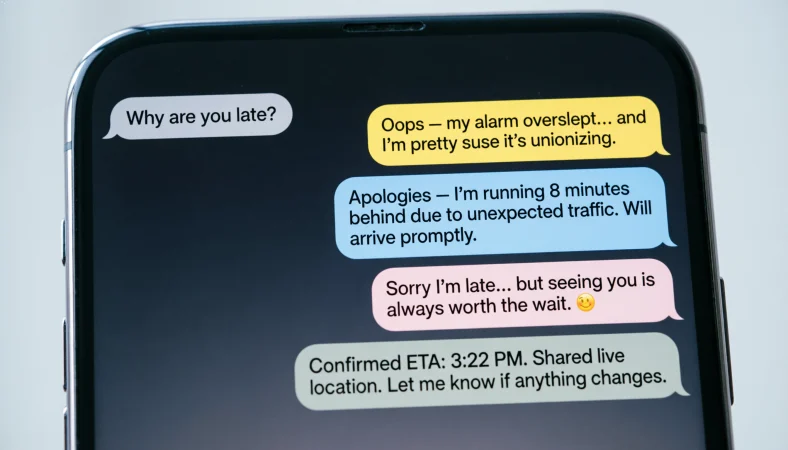
Quick Answer: When someone asks “Why are you late?”, the best response depends on whether you need to be honest, funny, apologetic, professional, or a little cheeky. Keep it natural, own the delay when necessary, and avoid turning a two-minute explanation into a documentary.
Top alternatives: Sorry, I got held up, Traffic was awful, I lost track of time, My bad, I’m on my way, I had an unexpected delay
“Why are you late?” is one of those questions that can sound completely harmless or like the opening scene of a courtroom drama, depending on who is asking. A friend may be teasing you, a coworker may genuinely need an explanation, or your crush may be wondering whether you forgot about them. Even in a quick text or DM, your answer can change the entire mood. Knowing how to respond to why are you late gives you options for every situation, from honest apologies and professional explanations to funny excuses and playful comebacks. The key is matching your response to the person and the situation. Sometimes you need accountability. Sometimes you need humor. And sometimes your only defense is that you underestimated how long it takes to find your keys. Here are plenty of ready-to-send replies for every vibe.
Funny Responses
“Because apparently time moves faster when I’m getting ready.”
Use this when a friend is teasing you about your arrival time.
Meaning: You are joking about losing track of time.
“I was personally victimized by traffic.”
Use this when traffic genuinely delayed you.
Meaning: You are turning a frustrating delay into a joke.
“I took the scenic route without planning to.”
Use this when you want a lighthearted excuse for being delayed.
Meaning: You are joking about an unnecessarily long journey.
“My punctuality took the day off.”
Use this when you know you are running noticeably late.
Meaning: You are playfully admitting that you were not on time.
“Time and I had a disagreement.”
Use this when you want a short, witty response.
Meaning: You are humorously blaming your poor timing.
“I underestimated the power of getting distracted.”
Use this when you got sidetracked before leaving.
Meaning: You are admitting that distractions slowed you down.
“My schedule looked optimistic on paper.”
Use this when your plans were clearly too ambitious.
Meaning: You are joking about misjudging how long everything would take.
“I was ready emotionally, just not physically.”
Use this when you want a relatable excuse.
Meaning: You are joking about taking too long to actually leave.
“My five-minute task turned into a full side quest.”
Use this when one small task delayed you.
Meaning: You are humorously describing an unexpected detour.
“I blame the clock for moving suspiciously fast.”
Use this when you want playful self-defense.
Meaning: You are jokingly shifting blame to time.
“I had a brief encounter with poor time management.”
Use this when you want clever self-deprecating humor.
Meaning: You are admitting the delay without sounding too serious.
“I arrived eventually, and that’s what matters.”
Use this when your friends are joking about your lateness.
Meaning: You are playfully focusing on the fact that you showed up.
Polite Responses
“I’m sorry, I got held up.”
Use this when you want a simple and respectful apology.
Meaning: You are acknowledging the delay without unnecessary details.
“Sorry for being late, I didn’t mean to keep you waiting.”
Use this when someone has been waiting for you.
Meaning: You are showing consideration for their time.
“My apologies, I underestimated how long it would take.”
Use this when the delay was your responsibility.
Meaning: You are taking ownership of your poor timing.
“I’m really sorry, something unexpected came up.”
Use this when an unforeseen issue caused the delay.
Meaning: You are politely explaining that the lateness was not planned.
“Sorry about the delay, and thank you for waiting.”
Use this when someone has been patiently waiting.
Meaning: You are combining an apology with appreciation.
“I apologize for arriving late.”
Use this when you need a formal but straightforward response.
Meaning: You are directly acknowledging your lateness.
“Sorry, I got delayed on the way here.”
Use this when travel caused the problem.
Meaning: You are giving a simple explanation without overexplaining.
“I’m sorry for keeping you waiting.”
Use this when you feel genuinely bad about the delay.
Meaning: You are recognizing the inconvenience you caused.
“Please forgive the delay.”
Use this when you want a short and courteous apology.
Meaning: You are respectfully asking them to overlook your lateness.
“Sorry, I should have planned better.”
Use this when the delay was preventable.
Meaning: You are accepting responsibility honestly.
“I’m sorry, and I appreciate your patience.”
Use this when you want to sound especially considerate.
Meaning: You are apologizing while recognizing their patience.
“Sorry I’m late. I’ll make sure I plan better next time.”
Use this after a recurring punctuality issue.
Meaning: You are showing accountability and a willingness to improve.
Professional Responses
“Apologies for the delay. I was unexpectedly held up.”
Use this when responding to a manager or colleague.
Meaning: You are giving a concise professional explanation.
“I’m sorry for arriving late. An unexpected delay affected my journey.”
Use this when travel issues caused your lateness.
Meaning: You are explaining the situation respectfully.
“My apologies. I underestimated the time needed to get here.”
Use this when the delay was caused by poor planning.
Meaning: You are taking professional responsibility.
“Sorry for keeping you waiting. I appreciate your understanding.”
Use this when someone has been waiting for a meeting.
Meaning: You are apologizing while remaining courteous.
“Apologies, I was delayed by circumstances outside my control.”
Use this when an external issue genuinely caused the delay.
Meaning: You are explaining that the situation was not easily avoidable.
“I apologize for the late arrival and any inconvenience caused.”
Use this in a formal workplace situation.
Meaning: You are acknowledging both the delay and its impact.
“I’m sorry, I encountered an unexpected delay.”
Use this when you need a neutral explanation.
Meaning: You are giving relevant information without unnecessary personal detail.
“Apologies for being late. I’ll make sure this does not affect the schedule.”
Use this when punctuality matters to the meeting or appointment.
Meaning: You are showing accountability and professionalism.
“I’m sorry for the delay. Thank you for your patience.”
Use this when you want a polished professional response.
Meaning: You are apologizing while showing appreciation.
“I apologize. I should have allowed more time for the journey.”
Use this when you underestimated travel time.
Meaning: You are taking ownership of the mistake.
“Sorry for the delay. I’m ready to get started now.”
Use this when arriving late to a meeting.
Meaning: You are acknowledging the lateness and moving the conversation forward.
“My apologies for arriving late. Thank you for accommodating me.”
Use this when someone has adjusted their schedule for you.
Meaning: You are showing respect for their flexibility.
Chill And Casual Responses
“Oops, I got held up.”
Use this when a friend casually asks why you are late.
Meaning: You are giving a relaxed explanation.
“My bad, I lost track of time.”
Use this when you simply forgot to watch the clock.
Meaning: You are casually accepting responsibility.
“I’m late, but I’m here now!”
Use this when you want to keep the mood positive.
Meaning: You are acknowledging the delay while focusing on your arrival.
“Sorry, things took longer than expected.”
Use this when your plans ran over.
Meaning: You are giving a simple explanation without drama.
“Got delayed for a bit.”
Use this when you want a very short response.
Meaning: You are saying something slowed you down.
“My timing was slightly questionable today.”
Use this when you want gentle self-deprecating humor.
Meaning: You are admitting your timing was not great.
“Running late, but making an entrance.”
Use this when joking with friends.
Meaning: You are turning lateness into playful confidence.
“I got distracted. It happens.”
Use this when you genuinely got sidetracked.
Meaning: You are casually explaining the delay.
“Honestly, I just misjudged the time.”
Use this when you want to be straightforward.
Meaning: You are admitting that poor planning caused the delay.
“Long story short, I’m late.”
Use this when the explanation is complicated but unnecessary.
Meaning: You are keeping things simple.
“The clock and I were not on the same page.”
Use this when you want a light joke.
Meaning: You are playfully describing poor time management.
“I’m blaming the morning for this one.”
Use this when a slow start caused the delay.
Meaning: You are jokingly blaming the circumstances.
Sarcastic Responses
“Because punctuality apparently wasn’t on today’s agenda.”
Use this when you want self-aware sarcasm.
Meaning: You are joking about failing to arrive on time.
“I thought I’d make an unforgettable entrance.”
Use this when your lateness is obvious.
Meaning: You are humorously pretending the delay was intentional.
“Because I enjoy keeping everyone in suspense.”
Use this when teasing close friends.
Meaning: You are joking that your lateness created anticipation.
“The universe had other scheduling plans.”
Use this when circumstances genuinely disrupted your timing.
Meaning: You are humorously blaming fate.
“I was busy demonstrating why alarms exist.”
Use this when you overslept.
Meaning: You are making fun of your own poor planning.
“I decided arriving on time was too predictable.”
Use this when you want playful sarcasm.
Meaning: You are jokingly presenting lateness as a deliberate choice.
“Apparently, I misunderstood the concept of ‘on time.’”
Use this when you know you are clearly late.
Meaning: You are admitting the mistake through sarcasm.
“I wanted to give you time to miss me.”
Use this when flirting or joking with someone close.
Meaning: You are turning lateness into playful affection.
“Because my internal clock has resigned.”
Use this when you have terrible timekeeping.
Meaning: You are joking about being unable to manage time.
“I was conducting important research on how late is too late.”
Use this when you want absurd humor.
Meaning: You are playfully exaggerating your lateness.
“I’m testing your patience. Results are promising.”
Use this only with someone who enjoys teasing.
Meaning: You are making fun of the situation.
“I figured you needed a little character development.”
Use this when joking with a close friend.
Meaning: You are playfully suggesting your lateness gave them a challenge.
Flirty Responses
“Because I wanted to make an entrance you’d remember.”
Use this when flirting with someone who is teasing you.
Meaning: You are turning your lateness into playful charm.
“Maybe I was hoping you’d miss me a little.”
Use this when you want a soft romantic tease.
Meaning: You are suggesting that being missed was part of the fun.
“I got distracted thinking about you.”
Use this when the relationship already has romantic energy.
Meaning: You are using a sweet excuse to flirt.
“Worth the wait, though, right?”
Use this when you want confident playful flirting.
Meaning: You are suggesting your arrival made the wait worthwhile.
“I wanted to give you something to look forward to.”
Use this when you want a charming response.
Meaning: You are playfully framing your arrival as a treat.
“Because apparently I needed a dramatic entrance.”
Use this when you want flirtation without being too serious.
Meaning: You are turning the delay into playful charm.
“I was making sure you had enough time to think about me.”
Use this when teasing someone you like.
Meaning: You are using the delay as a romantic joke.
“Sorry, beautiful people take time.”
Use this when you want confident humor.
Meaning: You are playfully complimenting yourself.
“I’m late, but at least I’m cute.”
Use this when the relationship is comfortable and playful.
Meaning: You are using confidence to soften the lateness.
“Because I knew you’d wait for me.”
Use this when the other person is clearly affectionate.
Meaning: You are teasing them about their patience.
“I got held up, but I’m here now, just for you.”
Use this when you want warm romantic energy.
Meaning: You are emphasizing that you made it for them.
“Maybe the universe wanted our reunion to feel dramatic.”
Use this when you want playful romantic exaggeration.
Meaning: You are turning a delay into a cute moment.
Cute Responses
“Sorry, I got a little distracted.”
Use this when you want a soft, innocent explanation.
Meaning: You are acknowledging the delay without making it heavy.
“I promise I wasn’t trying to keep you waiting.”
Use this when someone feels mildly annoyed.
Meaning: You are reassuring them that the delay was not intentional.
“Oops, my timing needs a tiny hug.”
Use this when you want a cute humorous response.
Meaning: You are playfully admitting your timing was off.
“I got delayed, but I hurried as soon as I could.”
Use this when you want to sound sincere and caring.
Meaning: You are showing that you made an effort to arrive.
“Sorry, I’m a little late, sweetheart.”
Use this with someone you have an affectionate relationship with.
Meaning: You are combining an apology with warmth.
“My bad, I promise I’m here now.”
Use this when you want to reassure someone.
Meaning: You are acknowledging the mistake while emphasizing that you arrived.
“I owe you a little apology.”
Use this when you want a gentle opening.
Meaning: You are admitting that your lateness deserves acknowledgment.
“I got caught up, but I’m finally here.”
Use this when you want something warm and casual.
Meaning: You are explaining the delay without overdoing it.
“Sorry for making you wait!”
Use this when someone has been waiting patiently.
Meaning: You are showing that you appreciate their time.
“I’m late, but I brought good vibes.”
Use this when you want to lighten the mood.
Meaning: You are using positivity to soften the delay.
“Please forgive my terrible timing.”
Use this when you want a sweet self-deprecating reply.
Meaning: You are asking them to overlook your lateness.
“I’m here now, and I’m very sorry.”
Use this when you want sincere but gentle wording.
Meaning: You are taking responsibility without becoming overly serious.
Confident Responses
“I’m late, but I made it.”
Use this when you want to acknowledge the delay without apologizing excessively.
Meaning: You are confidently focusing on being present.
“I got delayed, but everything is handled now.”
Use this when you want to sound composed.
Meaning: You are showing that the delay did not derail you.
“A little late, still right on track.”
Use this when the delay has not affected your plans.
Meaning: You are keeping a confident perspective.
“I misjudged the timing, and I own that.”
Use this when you want honest confidence.
Meaning: You are taking responsibility without being defensive.
“Late arrival, no excuses, just a timing fail.”
Use this when you want direct accountability.
Meaning: You are admitting the mistake confidently.
“I’m here now. Let’s make the most of it.”
Use this when you want to move past the delay.
Meaning: You are focusing on what happens next.
“I got held up, but I handled it.”
Use this when an unexpected issue caused the delay.
Meaning: You are showing composure despite the setback.
“Yes, I’m late. No, I’m not panicking.”
Use this when someone is making a big deal about the delay.
Meaning: You are responding calmly and confidently.
“The timing was off, but the plan is still happening.”
Use this when the delay has not ruined your plans.
Meaning: You are showing that you remain in control.
“I’m running behind, not falling apart.”
Use this when you want a confident humorous response.
Meaning: You are separating lateness from failure.
“I’ll take responsibility for the timing.”
Use this when you want mature confidence.
Meaning: You are openly owning your mistake.
“Late, yes. Unprepared, absolutely not.”
Use this when you want a confident twist.
Meaning: You are saying your lateness does not reflect your readiness.
Dramatic Responses
“I have battled traffic, time, and my own poor decisions.”
Use this when joking about a difficult journey.
Meaning: You are exaggerating your delay for humor.
“It has been a long and unnecessary journey.”
Use this when you want mock-drama.
Meaning: You are humorously describing the delay as an epic adventure.
“I fought valiantly against the clock and lost.”
Use this when you want theatrical humor.
Meaning: You are admitting that time won.
“The journey was not kind to me today.”
Use this when travel problems delayed you.
Meaning: You are dramatically blaming the circumstances.
“I regret to announce that I am late.”
Use this when you want mock-formal humor.
Meaning: You are making a simple delay sound like major news.
“A series of unfortunate events occurred.”
Use this when several small problems caused the delay.
Meaning: You are joking that everything went wrong at once.
“Time betrayed me at the worst possible moment.”
Use this when you want dramatic exaggeration.
Meaning: You are playfully blaming time.
“I have arrived after an epic battle with punctuality.”
Use this when you want a theatrical response.
Meaning: You are making fun of your lateness.
“The clock showed no mercy.”
Use this when you want a short dramatic line.
Meaning: You are joking that time worked against you.
“I was delayed by forces beyond my dramatic control.”
Use this when you want playful exaggeration.
Meaning: You are pretending the delay was an epic event.
“My arrival has been delayed by an unexpected plot twist.”
Use this when you want storytelling humor.
Meaning: You are turning the delay into a funny narrative.
“And after all that, I have finally appeared.”
Use this when your arrival is noticeably late.
Meaning: You are making a dramatic entrance out of the situation.
Honest Responses
“Honestly, I lost track of time.”
Use this when you simply forgot to watch the clock.
Meaning: You are giving a direct and truthful explanation.
“I underestimated how long everything would take.”
Use this when poor planning caused the delay.
Meaning: You are accepting responsibility honestly.
“I overslept, and that’s completely on me.”
Use this when sleeping late caused the problem.
Meaning: You are openly owning the mistake.
“Traffic was worse than I expected.”
Use this when road conditions delayed you.
Meaning: You are explaining an external cause.
“I had an unexpected issue before leaving.”
Use this when a personal problem delayed you.
Meaning: You are giving enough information without oversharing.
“I got caught up with something and lost track of time.”
Use this when another task distracted you.
Meaning: You are honestly explaining how the delay happened.
“I should have left earlier.”
Use this when the delay was preventable.
Meaning: You are acknowledging that better planning was needed.
“I miscalculated the journey time.”
Use this when travel took longer than expected.
Meaning: You are admitting that your timing was inaccurate.
“I was running behind from the start.”
Use this when several small delays added up.
Meaning: You are explaining that the lateness built gradually.
“I had a last-minute problem to sort out.”
Use this when something unexpected needed attention.
Meaning: You are explaining that an urgent issue caused the delay.
“I genuinely thought I had more time.”
Use this when you want to be candid.
Meaning: You are admitting that your time estimate was wrong.
“There’s no great excuse. I just managed my time badly.”
Use this when you want complete accountability.
Meaning: You are honestly admitting that the delay was your fault.
Clever Responses
“Because my estimated arrival time was clearly fiction.”
Use this when you want witty self-awareness.
Meaning: You are joking about making an inaccurate time estimate.
“I underestimated the journey and overestimated myself.”
Use this when poor planning caused your lateness.
Meaning: You are cleverly admitting that you misjudged the situation.
“I briefly entered a different time zone mentally.”
Use this when you completely lost track of time.
Meaning: You are joking about being disconnected from the clock.
“My schedule and reality had different opinions.”
Use this when your plans did not go as expected.
Meaning: You are highlighting the gap between planning and reality.
“Punctuality was the goal. Execution was less impressive.”
Use this when you want self-aware humor.
Meaning: You are admitting that your plan did not work.
“The mathematics of my morning betrayed me.”
Use this when you calculated your timing badly.
Meaning: You are joking about poor time estimation.
“I made the classic mistake of believing everything would go smoothly.”
Use this when several things delayed you.
Meaning: You are humorously admitting that your plan was too optimistic.
“My timeline looked excellent until reality joined the meeting.”
Use this when plans fell apart unexpectedly.
Meaning: You are joking about real life disrupting your schedule.
“I had a scheduling glitch in human form.”
Use this when you want quirky humor.
Meaning: You are playfully describing your own poor timing.
“I planned according to hope rather than actual minutes.”
Use this when you want witty honesty.
Meaning: You are admitting that your timing was overly optimistic.
“My ETA was more of a creative suggestion.”
Use this when your estimated arrival was wildly inaccurate.
Meaning: You are joking about giving an unreliable time estimate.
“The clock provided information I chose not to process.”
Use this when you want dry humor.
Meaning: You are joking that you ignored the passing time.
Sweet And Caring Responses
“I’m sorry I kept you waiting.”
Use this when you genuinely care about the person’s time.
Meaning: You are showing consideration and regret.
“I know you were waiting, and I’m really sorry.”
Use this when the delay affected someone you care about.
Meaning: You are acknowledging their feelings.
“Thank you for being patient with me.”
Use this when someone waited without making a fuss.
Meaning: You are expressing appreciation for their patience.
“I’m sorry, I know being kept waiting isn’t nice.”
Use this when you want to validate their frustration.
Meaning: You are recognizing the inconvenience honestly.
“I promise I wasn’t trying to make you wait.”
Use this when you want to reassure someone.
Meaning: You are making it clear that the delay was not intentional.
“Sorry for the delay. I’m glad you’re still here.”
Use this when you want a warm response after arriving.
Meaning: You are showing gratitude that they waited.
“I really appreciate you waiting for me.”
Use this when someone has been especially patient.
Meaning: You are showing genuine gratitude.
“I’m sorry, you deserved better timing from me.”
Use this when you want heartfelt accountability.
Meaning: You are recognizing that they deserved more consideration.
“Thank you for understanding, it means a lot.”
Use this when the other person responds kindly to your delay.
Meaning: You are appreciating their compassion.
“I’ll make it up to you.”
Use this when you want to show that you care.
Meaning: You are promising to make amends for the inconvenience.
“I’m sorry I was late, but I’m really happy to see you.”
Use this when arriving late to meet someone you care about.
Meaning: You are pairing accountability with genuine affection.
“Thanks for waiting for me, you’re a gem.”
Use this when someone has been especially patient.
Meaning: You are warmly complimenting their patience.
Short And Text-Ready Responses
“Sorry, got held up!”
Use this when you need a fast explanation by text.
Meaning: Something unexpectedly delayed you.
“My bad, running late.”
Use this when you are still on the way.
Meaning: You are acknowledging the delay casually.
“Lost track of time 😭.”
Use this when you want a relatable text-style response.
Meaning: You forgot to keep an eye on the clock.
“Traffic got me.”
Use this when traffic caused the delay.
Meaning: Road conditions slowed you down.
“Sorry! Be there soon.”
Use this when you are already on your way.
Meaning: You are apologizing and reassuring them that you are close.
“Got delayed, sorry!”
Use this when you want a simple explanation.
Meaning: Something caused an unexpected delay.
“I underestimated the time.”
Use this when poor planning was the reason.
Meaning: You are honestly accepting responsibility.
“Running behind, my bad.”
Use this when you want a casual apology.
Meaning: You recognize that you are late.
“Oops, timing fail.”
Use this when you want a humorous short reply.
Meaning: You are admitting your timing went wrong.
“Sorry, I’m on my way!”
Use this when someone is waiting for you.
Meaning: You are apologizing while reassuring them.
“Got caught up. Sorry!”
Use this when another task delayed you.
Meaning: Something distracted or occupied you.
“I’m late. No excuses 😅.”
Use this when you want direct accountability with humor.
Meaning: You are admitting the delay without inventing an excuse.
When You Want To Shut Down The Question
“I got delayed, but everything’s okay.”
Use this when you want to reassure someone without details.
Meaning: You are confirming that nothing serious happened.
“Nothing dramatic, I just got held up.”
Use this when someone seems concerned.
Meaning: You are minimizing the issue while explaining the delay.
“Just a timing issue, nothing to worry about.”
Use this when you want to keep your explanation private.
Meaning: You are giving reassurance without sharing personal details.
“I was delayed, but I’m good now.”
Use this when you want to move on quickly.
Meaning: You are confirming that the situation is fine.
“It was just one of those days.”
Use this when you do not want to explain every detail.
Meaning: Several small issues probably contributed to the delay.
“Long story, but I’m here now.”
Use this when the explanation would take too long.
Meaning: You are choosing to focus on your arrival.
“Nothing worth a full explanation, promise.”
Use this when someone is asking too many questions.
Meaning: You are politely signaling that the details are unnecessary.
“Just a little delay, that’s all.”
Use this when you want a neutral response.
Meaning: The lateness was minor and not serious.
“Everything is fine, I just got behind schedule.”
Use this when someone assumes something went wrong.
Meaning: You are reassuring them while giving a basic reason.
“I’ll explain later, but I’m okay.”
Use this when you genuinely need to discuss the details another time.
Meaning: You are prioritizing reassurance over explanation.
“Nothing serious, just bad timing.”
Use this when you want to close the topic.
Meaning: You are saying the delay was ordinary rather than significant.
“I appreciate you asking, but everything’s fine.”
Use this when you want to politely avoid details.
Meaning: You are acknowledging their concern while maintaining privacy.
FAQs
What does “Why are you late?” mean?
Usually, it is a straightforward question asking for an explanation for someone’s delay. Depending on tone, it can also express frustration, concern, teasing, or curiosity.
What is the best response to “Why are you late?”
A simple honest answer usually works best, such as “Sorry, I got held up” or “I lost track of time.” Match the level of detail to the situation.
How do I respond to “Why are you late?” from my crush?
If the mood is playful, you can use a light flirty response such as “Maybe I wanted to make an entrance you’d remember.” Keep it natural and avoid forcing the flirt.
What if “Why are you late?” sounds angry?
Stay calm and acknowledge the delay. A response like “I’m sorry, I know you were waiting. I should have planned better” can lower the tension.
How should I answer “Why are you late?” at work?
Keep it brief, factual, and professional. For example, “Apologies for the delay. I encountered an unexpected issue on the way here.”
What if I do not actually have a good reason for being late?
Honesty is usually better than inventing an elaborate excuse. Try “I underestimated how long it would take, and that’s on me.”
Can humor be appropriate when someone asks why you are late?
Yes, if you know the person and the situation is relaxed. Humor works best when the delay is minor and the other person is not genuinely upset.
How do I respond without giving personal details?
You can keep it simple with “I got delayed by something unexpected, but everything is okay.” You are not obligated to share private information.
Is “Sorry, traffic” enough?
If traffic genuinely caused the delay, it can be enough for a casual conversation. In a professional situation, adding a quick acknowledgment of the inconvenience can sound more considerate.
Should I apologize even if the delay was not my fault?
A brief apology for keeping someone waiting can still be courteous, even when the cause was outside your control. You can explain the reason without taking unnecessary blame.
Conclusion
Being asked “Why are you late?” does not have to turn into an awkward explanation or a defensive speech. The best reply depends on the situation, the person asking, and how serious the delay actually is. Choose honesty when accountability matters, professionalism when work is involved, and humor when you know the other person will appreciate it. If someone you like is asking, a little playful charm can work too. Most importantly, own your timing without beating yourself up over it. A confident, thoughtful response can quickly reset the mood and keep the conversation moving. Save these replies for your next delayed arrival, share them with your chronically late friend, and keep a few favorites ready to send!