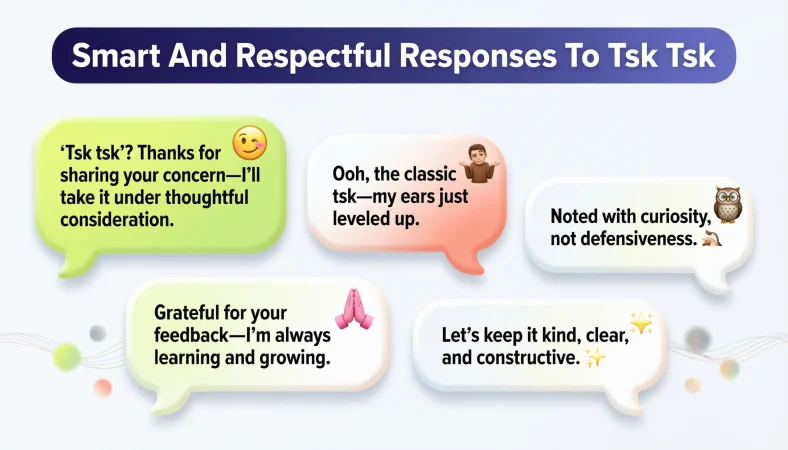
Quick Answer: The best smart and respectful responses to “tsk tsk” acknowledge the playful disapproval without turning the moment awkward or hostile. Choose a response that matches the situation, whether you want to stay funny, calm, confident, cute, or politely push back.
Top alternatives: “I’ll take that as constructive criticism,” “Noted, but I stand by it,” “Fair enough, I’ll behave,” “That sounded judgmental 😂,” “I respect the tsk, but I disagree”
Few sounds can communicate so much with so little effort. “Tsk tsk” can mean playful disapproval, mild disappointment, teasing, concern, or a dramatic little judgment session packed into two syllables. You might see it in a text from a friend, a DM from your crush, a comment from a sibling, or even hear it at work when someone thinks you made a questionable choice. The tricky part is figuring out how to respond without sounding defensive or unnecessarily rude. That is where smart and respectful responses to “tsk tsk” come in. A good comeback can acknowledge the teasing, keep your dignity intact, and even make the other person laugh. Whether you want to be witty, polite, confident, or slightly cheeky, the right response turns a tiny sound of disapproval into a fun conversation.
Funny Responses
I’ll take that tsk as a standing ovation.
Use this when a friend playfully disapproves of something harmless.
Meaning: You are turning their judgment into exaggerated praise.
Was that a tsk or a tiny judgment parade? 😂
Use this when someone is clearly teasing you.
Meaning: You are jokingly calling out their disapproval.
Tsk tsk right back at you.
Use this with someone who enjoys playful banter.
Meaning: You are returning the teasing without being aggressive.
Okay, okay, I hear the disappointment.
Use this when someone reacts dramatically to your decision.
Meaning: You are acknowledging their reaction with humor.
My reputation survives another tsk.
Use this when you regularly get teased by friends.
Meaning: You are confidently laughing at the situation.
That tsk had subtitles.
Use this when someone’s reaction is extremely obvious.
Meaning: You are joking that their expression said everything.
I feel judged, but stylishly.
Use this when someone gives you a playful reaction.
Meaning: You are making light of their disapproval.
Someone woke up fluent in disappointment.
Use this when a friend is being dramatically judgmental.
Meaning: You are teasing them about their reaction.
Not the double tsk! 😭
Use this when someone seems extra disappointed.
Meaning: You are playfully exaggerating the seriousness of their reaction.
I accept your tiny courtroom verdict.
Use this when someone acts like a judge.
Meaning: You are humorously accepting their judgment.
That tsk was louder than words.
Use this when their reaction is obvious.
Meaning: You are pointing out how expressive the sound was.
Okay, Judge Judy, noted. 😂
Use this with someone who loves giving opinions.
Meaning: You are playfully comparing them to a dramatic judge.
Polite Responses
Fair enough, I understand your point.
Use this when someone expresses mild disapproval.
Meaning: You are acknowledging their perspective respectfully.
I hear you, and I appreciate the concern.
Use this when their “tsk tsk” comes from genuine concern.
Meaning: You are responding with maturity rather than defensiveness.
Noted, thank you.
Use this when you want a short and respectful response.
Meaning: You have heard what they are saying.
I understand why you reacted that way.
Use this when the situation is slightly serious.
Meaning: You are showing empathy toward their reaction.
I appreciate your honesty.
Use this when their disapproval is sincere.
Meaning: You value their willingness to express an opinion.
Point taken.
Use this when you want to acknowledge criticism calmly.
Meaning: You accept that their comment has some validity.
I’ll keep that in mind.
Use this when you do not want an argument.
Meaning: You are respectfully acknowledging their opinion.
That’s fair, I can see where you’re coming from.
Use this when someone has a reasonable concern.
Meaning: You are recognizing their perspective.
I respect your opinion.
Use this when you disagree but want to stay civil.
Meaning: You are separating respect for the person from agreement with their view.
Thanks for letting me know.
Use this in a calm conversation where someone reacts negatively.
Meaning: You appreciate their feedback without escalating things.
I understand the message.
Use this when their “tsk tsk” clearly communicates disapproval.
Meaning: You have understood what they meant.
No worries, I appreciate the feedback.
Use this when you want to keep things positive.
Meaning: You are accepting their comment gracefully.
Professional Responses
I understand your concern.
Use this when a colleague reacts negatively to a decision.
Meaning: You are acknowledging their concern professionally.
I appreciate the feedback and will consider it.
Use this when the reaction comes from a workplace discussion.
Meaning: You are showing openness without automatically agreeing.
That’s worth considering.
Use this when someone raises a valid point.
Meaning: You are respectfully recognizing their perspective.
I’ll take that into account.
Use this when you want a polished workplace response.
Meaning: You are acknowledging their feedback professionally.
Understood. I’ll keep it in mind.
Use this when someone expresses mild concern.
Meaning: You are responding calmly and respectfully.
I see your point.
Use this when you want to avoid unnecessary debate.
Meaning: You recognize their reasoning.
Thanks for flagging that.
Use this when a coworker points out an issue.
Meaning: You appreciate being made aware of the concern.
I appreciate you bringing that up.
Use this when someone reacts critically to your decision.
Meaning: You are encouraging respectful communication.
Let’s look at it from both perspectives.
Use this when a discussion needs more nuance.
Meaning: You want to move beyond a simple judgment.
I’ll review the situation.
Use this when the issue deserves consideration.
Meaning: You are promising to evaluate what happened.
That’s a reasonable observation.
Use this when someone gives constructive criticism.
Meaning: You are responding thoughtfully rather than defensively.
Thanks, I’ll consider your perspective.
Use this when you want to keep workplace communication positive.
Meaning: You respect their input even if you may disagree.
Sarcastic Responses
Oh no, the tsk has arrived.
Use this when a friend is dramatically disapproving.
Meaning: You are humorously acknowledging their judgment.
Should I prepare my apology speech?
Use this when someone reacts dramatically to something minor.
Meaning: You are exaggerating their disappointment for comedic effect.
I shall reflect deeply upon this tsk.
Use this when someone playfully criticizes you.
Meaning: You are pretending their reaction requires serious reflection.
Your disappointment has been officially recorded.
Use this when you want playful sarcasm.
Meaning: You are jokingly treating their reaction like an official complaint.
I’ll alert the authorities immediately.
Use this when their “tsk tsk” is clearly playful.
Meaning: You are exaggerating the situation for humor.
The judgment committee has spoken.
Use this when several people are teasing you.
Meaning: You are joking about being collectively judged.
I’ll try to recover from this devastating tsk.
Use this when the criticism is obviously minor.
Meaning: You are pretending to be dramatically wounded.
Your tsk has been received loud and clear.
Use this when you want dry humor.
Meaning: You understand their message but are keeping the mood playful.
Thank you for your official disappointment.
Use this when someone is acting overly serious.
Meaning: You are playfully mocking the dramatic reaction.
I’ll add that to my list of imaginary problems.
Use this when their criticism is harmless.
Meaning: You are showing that you are not taking the comment too seriously.
Noted for absolutely no reason.
Use this with a close friend who is teasing you.
Meaning: You are jokingly dismissing their playful judgment.
That tsk deserves its own press conference.
Use this when their reaction is hilariously dramatic.
Meaning: You are exaggerating the importance of their disapproval.
Cute Responses
Okay, okay, I’ll behave. 😊
Use this when someone playfully tells you off.
Meaning: You are responding sweetly without taking offense.
Aww, don’t tsk at me.
Use this when someone close to you pretends to be disappointed.
Meaning: You are asking for affection in a playful way.
Fine, I’ll be good.
Use this when the conversation has a playful tone.
Meaning: You are accepting their teasing with charm.
You’re cute when you’re disappointed.
Use this when you are comfortable being affectionate.
Meaning: You are turning their disapproval into a compliment.
Okay, I’ll take the hint.
Use this when someone gives you a playful reaction.
Meaning: You understand their message without making things serious.
Don’t give me that little tsk face.
Use this when someone is visibly teasing you.
Meaning: You are playfully calling attention to their expression.
I promise I’m trying. 🥹
Use this when someone is gently correcting you.
Meaning: You are asking them to respond with patience.
Fine, you win this round.
Use this when someone has successfully teased you.
Meaning: You are admitting defeat in a playful way.
Okay, you made your point. ❤️
Use this when you want to stay warm and affectionate.
Meaning: You accept their message while keeping the interaction sweet.
I’ll try to make you proud.
Use this when someone close to you is playfully disappointed.
Meaning: You are turning the moment into something affectionate.
No more tsking, please. I’m sensitive. 😂
Use this when you want playful vulnerability.
Meaning: You are exaggerating your sensitivity for humor.
Okay, okay, I’ll be nice.
Use this when someone playfully disapproves of your behavior.
Meaning: You are promising to behave in a lighthearted way.
Flirty Responses
Careful, that tsk is dangerously cute.
Use this when a crush playfully disapproves of you.
Meaning: You are turning their reaction into a flirt.
Are you tsking because you secretly care? 😉
Use this when you want to tease someone romantically.
Meaning: You are suggesting their disapproval comes from affection.
That little tsk almost made me behave. Almost.
Use this when the conversation is playful.
Meaning: You are flirting while pretending not to listen.
You can tsk at me anytime.
Use this when you already have comfortable chemistry.
Meaning: You are playfully inviting more attention.
I think you enjoy judging me. 😏
Use this when someone frequently teases you.
Meaning: You are turning their teasing into flirtation.
That sounded suspiciously affectionate.
Use this when their “tsk” feels playful.
Meaning: You are teasing them about secretly caring.
If you wanted my attention, you could’ve just said so.
Use this when someone playfully reacts to you.
Meaning: You are turning their reaction into a flirtatious opening.
You tsk, I smile. Seems fair.
Use this when you want a cute flirt.
Meaning: Their reaction makes you happy.
I’ll behave if you ask nicely.
Use this when you want playful romantic tension.
Meaning: You are inviting them to continue the teasing.
Is that disapproval or flirting in disguise?
Use this when the chemistry is obvious.
Meaning: You are playfully questioning their intentions.
That tsk has way too much personality.
Use this when you find their reaction charming.
Meaning: You are complimenting their playful behavior.
Keep judging me like that and I might start enjoying it.
Use this when the conversation is already flirtatious.
Meaning: You are confidently turning teasing into romantic banter.
Clever Responses
I’ll interpret that as constructive criticism.
Use this when someone gives you a playful “tsk tsk.”
Meaning: You are reframing disapproval in a positive way.
Interesting feedback. I’ll review the evidence.
Use this when a friend dramatically judges your decision.
Meaning: You are pretending to approach their reaction scientifically.
Message received. Context still pending.
Use this when you want a witty response.
Meaning: You acknowledge their reaction without accepting their judgment.
I recognize the tone, even without the words.
Use this when someone’s “tsk” says everything.
Meaning: You understand their implied message.
Your tsk has been added to the case file.
Use this when you want playful cleverness.
Meaning: You are joking that their reaction is evidence.
Noted. I’ll consider the implications.
Use this when you want dry, intelligent humor.
Meaning: You are pretending their tiny reaction requires deep analysis.
A fascinating use of two syllables.
Use this when someone gives you a dramatic “tsk tsk.”
Meaning: You are humorously analyzing their reaction.
I see the objection, counselor.
Use this when someone acts like a judge.
Meaning: You are playfully treating their reaction like a courtroom argument.
Your concern has been acknowledged by management.
Use this when joking with a close friend.
Meaning: You are pretending to handle their criticism officially.
I’ll add that to today’s research findings.
Use this when their reaction is amusingly dramatic.
Meaning: You are turning the moment into a fake academic discovery.
That’s one opinion. Mine remains under consideration.
Use this when you want to disagree politely.
Meaning: You acknowledge their view while keeping your own position.
A bold tsk. I respect the commitment.
Use this when someone strongly expresses disapproval.
Meaning: You appreciate their dramatic delivery while staying playful.
Confident Responses
I hear you, but I’m comfortable with my decision.
Use this when someone disapproves of a choice you made.
Meaning: You respect their opinion without abandoning your own judgment.
I appreciate the concern, but I’ve got this.
Use this when someone worries about your decision.
Meaning: You are confidently reassuring them.
You’re allowed to disagree. I’m still okay with it.
Use this when someone clearly disapproves.
Meaning: You are calmly standing by your decision.
I respect your opinion, but I trust my judgment.
Use this when you want a mature response.
Meaning: You value their view while maintaining confidence.
Fair reaction, but I stand by it.
Use this when someone gives you a disapproving response.
Meaning: You acknowledge their feelings without changing your position.
I’ll take the tsk, but I’m keeping my choice.
Use this when the disagreement is harmless.
Meaning: You are confidently accepting their reaction.
I know what I’m doing.
Use this when someone doubts your decision.
Meaning: You are calmly expressing self-confidence.
You can disagree without changing my mind.
Use this when someone keeps pushing their opinion.
Meaning: You are establishing a respectful boundary.
I understand the concern, but I’m good.
Use this when someone worries about your choice.
Meaning: You appreciate their concern while remaining confident.
I’ll consider it, but I won’t overthink it.
Use this when you want to stay balanced.
Meaning: You are open to feedback without becoming defensive.
Thanks for the concern. I trust myself here.
Use this when someone questions your judgment.
Meaning: You are responding with calm self-assurance.
The tsk has been heard. The decision remains.
Use this when you want a witty confident reply.
Meaning: You acknowledge their disapproval without backing down.
Chill And Casual Responses
Haha, fair enough.
Use this when someone lightly disapproves of you.
Meaning: You are keeping the interaction relaxed.
Okay, I get it. 😂
Use this when a friend gives you a playful tsk.
Meaning: You understand their reaction without taking it seriously.
Noted, noted.
Use this when you want a casual acknowledgment.
Meaning: You have heard them.
I know, I know.
Use this when someone reminds you of something obvious.
Meaning: You are acknowledging their point casually.
Fair point.
Use this when their criticism has some truth behind it.
Meaning: You are willing to admit they may be right.
Haha, you got me.
Use this when someone catches you doing something questionable.
Meaning: You are admitting it without embarrassment.
Okay, guilty.
Use this when the tsk is deserved but playful.
Meaning: You are jokingly admitting fault.
Yeah, yeah, I hear you.
Use this when a friend is giving you a familiar lecture.
Meaning: You are acknowledging them while keeping things casual.
Alright, alright.
Use this when you want to move past the teasing.
Meaning: You are accepting the message in a relaxed way.
Can’t argue with that.
Use this when their reaction is reasonable.
Meaning: You are admitting their point has merit.
Haha, I’ll take the hint.
Use this when someone indirectly tells you to stop.
Meaning: You understand what they are implying.
Okay, I’ll behave.
Use this when someone playfully disapproves of your actions.
Meaning: You are keeping the moment friendly.
Respectful But Playful Responses
I respect the tsk, even if I don’t agree with it.
Use this when you disagree with a friend’s opinion.
Meaning: You can disagree without becoming disrespectful.
Fair reaction, but let’s not get dramatic. 😂
Use this when someone overreacts playfully.
Meaning: You acknowledge their feelings while gently teasing them.
I’ll accept the criticism with dignity.
Use this when someone playfully calls you out.
Meaning: You are responding maturely with a humorous touch.
Point taken, your honor.
Use this when someone acts like a judge.
Meaning: You acknowledge their criticism while keeping the mood light.
I hear the concern loud and clear.
Use this when someone genuinely disapproves.
Meaning: You want them to know you understand.
Your opinion has been respectfully received.
Use this when you want playful formal humor.
Meaning: You acknowledge their opinion without promising agreement.
I understand the tsk, but I have my reasons.
Use this when someone questions your choice.
Meaning: You are respectfully defending your decision.
I appreciate the honesty, even if it came with sound effects.
Use this when someone gives criticism through a “tsk.”
Meaning: You appreciate their honesty while joking about the delivery.
I’ll consider the message behind the noise.
Use this when someone reacts indirectly.
Meaning: You are focusing on their actual concern.
I accept the feedback with minimal emotional damage.
Use this when the criticism is harmless.
Meaning: You are keeping things humorous and relaxed.
You make a fair point, and I’ll think about it.
Use this when someone has a legitimate concern.
Meaning: You are showing maturity and openness.
Respectfully received, dramatically delivered.
Use this when their reaction is exaggerated.
Meaning: You appreciate their message while teasing their delivery.
Dramatic Responses
Oh no, not the tsk tsk. My career is over.
Use this when someone playfully disapproves of you.
Meaning: You are dramatically exaggerating a harmless reaction.
I may never recover from this disappointment.
Use this when the situation is clearly minor.
Meaning: You are joking about feeling devastated.
Someone alert the emotional support team.
Use this when a friend gives you a dramatic tsk.
Meaning: You are pretending their reaction has deeply affected you.
My reputation has officially collapsed.
Use this when someone teases you about a mistake.
Meaning: You are exaggerating the consequences for humor.
This tsk will haunt me forever.
Use this when the moment is playful.
Meaning: You are making their reaction sound hilariously serious.
I shall remember this judgment until the end of time.
Use this when someone dramatically disapproves.
Meaning: You are playfully exaggerating their influence.
How will I ever face society again?
Use this when someone catches you doing something silly.
Meaning: You are pretending a tiny mistake is catastrophic.
My ancestors felt that tsk.
Use this when you want an absurd dramatic comeback.
Meaning: You are exaggerating how powerful their reaction was.
The disappointment is almost cinematic.
Use this when someone reacts dramatically.
Meaning: You are comparing their reaction to an emotional movie scene.
I accept my fate.
Use this when someone playfully judges you.
Meaning: You are humorously surrendering to their criticism.
This is my villain origin story.
Use this when someone gives you a playful tsk.
Meaning: You are joking that their reaction has changed your entire life.
Roll the credits. I have been judged.
Use this when you want an exaggerated ending.
Meaning: You are pretending the conversation has reached a dramatic conclusion.
Emotional And Thoughtful Responses
I know you mean well, and I appreciate that.
Use this when someone’s disapproval comes from genuine concern.
Meaning: You recognize the care behind their reaction.
I understand why that bothered you.
Use this when someone is sincerely disappointed.
Meaning: You are showing empathy rather than immediately defending yourself.
Thanks for caring enough to say something.
Use this when someone expresses concern about your behavior.
Meaning: You appreciate their involvement.
I’ll think about what you said.
Use this when you need time to process their reaction.
Meaning: You are open to reflection.
I don’t want you to feel ignored, so I hear you.
Use this when someone wants their opinion acknowledged.
Meaning: You are showing that their feelings matter.
I appreciate your honesty, genuinely.
Use this when their reaction is sincere.
Meaning: You value honest communication.
I may see it differently, but I understand your feelings.
Use this when you disagree respectfully.
Meaning: You separate disagreement from emotional invalidation.
I’ll take some time to reflect on that.
Use this when the issue is more serious.
Meaning: You are willing to consider their concerns thoughtfully.
I understand the message behind the reaction.
Use this when their “tsk” communicates disappointment.
Meaning: You recognize what they are trying to express.
Thanks for being honest with me.
Use this when their reaction comes from genuine concern.
Meaning: You value direct communication.
I respect where you’re coming from.
Use this when you want to acknowledge someone’s emotions.
Meaning: You are showing empathy without necessarily agreeing.
I’ll do better if I genuinely need to.
Use this when you recognize that you made a mistake.
Meaning: You are willing to take responsibility.
Sweet Responses
I know, I know. But thank you for caring.
Use this when someone close to you playfully complains.
Meaning: You recognize their concern as affection.
Your little tsk actually made me smile.
Use this when someone you care about reacts playfully.
Meaning: Their attention makes you happy.
I’ll take it as a reminder from someone who cares.
Use this when their disapproval is affectionate.
Meaning: You interpret their reaction positively.
You’re sweet, even when you’re judging me.
Use this when someone close to you teases you.
Meaning: You are turning criticism into affection.
Okay, okay, I know you mean well.
Use this when someone gently corrects you.
Meaning: You understand their concern comes from a good place.
Thanks for looking out for me.
Use this when someone expresses genuine concern.
Meaning: You appreciate their protective or supportive attitude.
I appreciate you caring enough to notice.
Use this when someone pays attention to your behavior.
Meaning: You are expressing sincere gratitude.
You always know how to keep me in check.
Use this with someone who regularly keeps you accountable.
Meaning: You appreciate their honest support.
Fine, I’ll listen this time. ❤️
Use this when someone close to you gives advice.
Meaning: You are accepting their guidance affectionately.
Your concern is noted and appreciated.
Use this when you want to sound warm but composed.
Meaning: You respect the person’s intention.
Okay, I’ll take the hint from my favorite critic.
Use this with a close friend or romantic interest.
Meaning: You are playfully showing affection while accepting their reaction.
I may pretend to ignore you, but I do listen.
Use this when someone close to you often gives advice.
Meaning: You are admitting that their words matter to you.
Lightly Clever Responses
I respect the tsk, but I’m still doing it.
Use this when a friend disagrees with your harmless choice.
Meaning: You acknowledge their opinion while staying firm.
You can tsk all you want. I know my reasons.
Use this when someone keeps questioning you.
Meaning: You are confidently defending your decision.
Disapproval noted, confidence untouched.
Use this when you want a polished comeback.
Meaning: Their reaction does not affect your self-confidence.
I hear you, but I’m not easily persuaded.
Use this when someone tries to change your mind.
Meaning: You are respectfully standing firm.
That tsk won’t change the facts.
Use this when you are confident about a situation.
Meaning: You are separating emotion from reality.
Cute reaction. Still not changing my mind.
Use this when someone playfully challenges you.
Meaning: You are confident while keeping the tone light.
I appreciate the drama, but I’m good.
Use this when someone overreacts.
Meaning: You are gently dismissing unnecessary negativity.
Your tsk has been considered and declined.
Use this when you want clever humor.
Meaning: You are jokingly rejecting their criticism.
Nice tsk. Unfortunately, I’m still unconvinced.
Use this when someone tries to pressure you.
Meaning: You remain open but confident in your position.
Respectfully, I’ll keep doing me.
Use this when you want a calm but firm comeback.
Meaning: You are choosing authenticity over approval.
I value your opinion, not necessarily your verdict.
Use this when someone acts overly authoritative.
Meaning: You respect their perspective but reject the idea that they control your choice.
I’ll survive your disappointment somehow.
Use this when the situation is playful rather than serious.
Meaning: You are confidently brushing off their reaction.
Clever And Respectful Comebacks
I’ll accept the tsk as a gentle reminder, not a final verdict.
Use this when someone criticizes your decision.
Meaning: You are open to feedback without treating it as absolute truth.
A reaction is information, not necessarily instruction.
Use this when someone expects you to change your behavior.
Meaning: You can listen without automatically obeying.
I respect the concern, and I’ll decide what works for me.
Use this when someone gives unsolicited advice.
Meaning: You appreciate their intention while maintaining independence.
I hear the message behind the sound effect.
Use this when their “tsk tsk” clearly communicates concern.
Meaning: You understand what they really mean.
Let’s separate the tsk from the actual argument.
Use this when a disagreement becomes emotional.
Meaning: You want to focus on the substance rather than the reaction.
Your reaction is noted; my perspective is still valid.
Use this when you disagree respectfully.
Meaning: You recognize their feelings while defending your own viewpoint.
I can respect your concern without adopting your conclusion.
Use this when someone makes a judgment about your choice.
Meaning: You are showing mature disagreement.
Fair criticism deserves consideration, not panic.
Use this when someone points out a mistake.
Meaning: You are choosing thoughtful reflection over defensiveness.
I’ll take the lesson without taking the offense.
Use this when feedback is delivered awkwardly.
Meaning: You are choosing to learn without becoming personally upset.
Respectfully noted, thoughtfully considered.
Use this when you want a concise mature response.
Meaning: You are acknowledging their input seriously.
I appreciate the perspective, even when it challenges mine.
Use this when someone offers a different opinion.
Meaning: You value healthy disagreement.
We can disagree and still keep the conversation respectful.
Use this when the exchange starts becoming tense.
Meaning: You are setting a mature boundary.
FAQs
What Does “Tsk Tsk” Mean?
“Tsk tsk” is usually a sound of disapproval, disappointment, concern, or playful judgment. Its meaning depends heavily on context and tone.
Is “Tsk Tsk” Always Negative?
No. Friends, siblings, couples, and people who enjoy teasing may use it playfully. In other situations, it can signal genuine disappointment or concern.
What Is A Smart Response To “Tsk Tsk”?
Try “I’ll take that tsk as constructive criticism.” It is clever, calm, and does not immediately create conflict.
What Is A Respectful Response To “Tsk Tsk”?
Try “I hear you, and I appreciate the concern.” This works especially well when the person genuinely cares about the situation.
Can “Tsk Tsk” Be Flirty?
Yes. Between people with chemistry, it can be playful teasing rather than actual disapproval. A response like “Are you tsking because you secretly care? 😉” can add a flirtatious twist.
What If I Don’t Actually Mean My “Tsk Tsk”?
If you accidentally sound judgmental, clarify with something simple like “I’m teasing, don’t take it seriously.” Clear communication prevents unnecessary misunderstandings.
Can I Use Humor In Response To “Tsk Tsk”?
Absolutely, especially with friends or someone who is clearly joking. Avoid sarcasm if the person is genuinely upset or the situation is serious.
What Is A Professional Response To “Tsk Tsk”?
In a professional setting, it is better to respond to the underlying concern rather than the sound itself. Try “I understand your concern” or “I appreciate the feedback.”
How Do I Respond Without Sounding Defensive?
Acknowledge the person’s perspective first. Phrases like “Fair enough”, “I hear you”, and “Point taken” keep your response calm.
What Is A Funny Reply To “Tsk Tsk”?
Try “Was that a tsk or a tiny judgment parade?” It works best when the other person is being playful.
What Is A Confident Reply To “Tsk Tsk”?
Try “I respect your opinion, but I trust my judgment.” It shows confidence without becoming unnecessarily rude.
What Is The Best Overall Response To “Tsk Tsk”?
“I hear you, but I’m comfortable with my decision.” It is respectful, confident, and suitable for many situations.
Conclusion
“Tsk tsk” might only take a second to type or say, but your response can completely change the energy of the moment. You can laugh it off, respond with confidence, acknowledge genuine concern, or add a little playful sass without crossing the line into unnecessary rudeness. The smartest response depends on who said it and why. With a friend, humor usually works beautifully. At work, keep it polished. With someone you like, a little flirtation can turn the judgment into banter. Most importantly, do not feel pressured to match someone’s negativity. Stay calm, keep your personality, and choose a response that feels natural to you. Save this list, share your favorite comeback, and keep those conversations interesting!