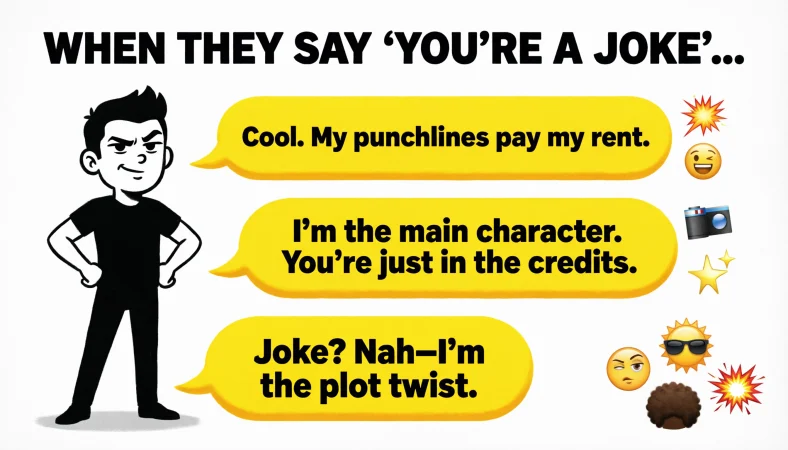
Quick Answer: When someone calls you a joke, the best response depends on whether you want to laugh it off, clap back, flirt, or calmly set a boundary. A clever reply can turn an awkward insult into your best comeback moment.
Top alternatives: “Glad I could entertain you,” “Care to explain the punchline?”, “At least I’m memorable,” “That’s cute coming from you,” “Keep laughing, I’m doing just fine.”
Someone calling you a joke can catch you completely off guard. Maybe it happens in a group chat, during a playful roast with friends, in an Instagram DM, at work, or even during an argument with someone who suddenly decides they are a comedian. Your response can change the entire vibe. You can laugh it off, deliver a clever comeback, stay completely unbothered, or make them regret opening their mouth in the first place. The trick is knowing what fits the moment. A funny response works when the comment is playful, while a confident response works better when someone is genuinely trying to disrespect you. This guide gives you plenty of ways to respond when someone calls you a joke, from clever one-liners to sarcastic burns, cute comebacks, and calm responses that say, “Nice try.”
Funny Responses
“Glad I could entertain you.”
Use this when someone calls you a joke but you want to keep things light.
Meaning: You are turning their insult into free entertainment.
“At least I’m funny.”
Use this when you want a playful comeback among friends.
Meaning: You are refusing to take the insult seriously.
“Where’s my comedy special?”
Use this when someone seems overly impressed by their own joke.
Meaning: You are exaggerating the situation for laughs.
“Five stars for audience participation.”
Use this when their comment deserves a humorous response.
Meaning: You are playfully acting like they are part of your show.
“Glad you finally found your sense of humor.”
Use this when someone rarely jokes around.
Meaning: You are teasing them right back.
“And yet you’re still watching.”
Use this when they keep paying attention to you.
Meaning: You are joking about their obvious interest.
“Careful, I charge for comedy.”
Use this when someone keeps making jokes at your expense.
Meaning: You are playfully claiming ownership of the entertainment.
“That joke needs a refund.”
Use this when their insult was weak.
Meaning: You are saying their comeback was not funny.
“I accept applause.”
Use this after someone reacts dramatically to you.
Meaning: You are pretending their reaction proves you are hilarious.
“I was going for iconic.”
Use this when someone says something about you is ridiculous.
Meaning: You are confidently reframing their criticism.
“You laughed, so technically I won.”
Use this when they clearly enjoyed the exchange.
Meaning: You are turning their reaction into your victory.
“Thanks for the review.”
Use this when someone gives you an unnecessary opinion.
Meaning: You are dismissing their comment with playful sarcasm.
Brutal Responses
“Funny, I was thinking the same about your opinion.”
Use this when someone comes at you unnecessarily.
Meaning: You are returning the insult without overexplaining.
“That was supposed to hurt?”
Use this when their insult completely misses the mark.
Meaning: You are showing that you are unaffected.
“You tried. That’s what matters.”
Use this when their comeback is painfully weak.
Meaning: You are sarcastically praising an unsuccessful attempt.
“Keep talking. You’re proving my point.”
Use this during a heated argument.
Meaning: You are suggesting their behavior exposes them.
“I’d take that seriously if it came from someone relevant.”
Use this when someone tries to put you down.
Meaning: You are refusing to value their criticism.
“That sounded better in your head, didn’t it?”
Use this after a weak insult.
Meaning: You are pointing out how unimpressive their comment was.
“Your confidence is impressive for someone this wrong.”
Use this when someone is confidently insulting you.
Meaning: You are criticizing both their attitude and accuracy.
“You really thought you did something there.”
Use this when their comeback falls flat.
Meaning: You are calling out their failed attempt to embarrass you.
“I’ve heard better insults from autocorrect.”
Use this when you want a humorous but sharp comeback.
Meaning: You are saying their insult was extremely weak.
“If that’s your best, I’m disappointed.”
Use this when someone tries to roast you.
Meaning: You are challenging them to do better.
“That insult had no plot.”
Use this when their comment makes little sense.
Meaning: You are mocking how poorly constructed their insult was.
“You brought a butter knife to a roast.”
Use this when someone tries to verbally challenge you.
Meaning: You are suggesting they are completely unprepared.
Flirty Responses
“Maybe I’m your favorite joke.”
Use this when someone teasingly calls you a joke.
Meaning: You are turning the insult into playful flirting.
“You keep talking about me, though.”
Use this when someone clearly enjoys teasing you.
Meaning: You are hinting that their attention reveals interest.
“Careful, teasing me is how crushes start.”
Use this when the conversation already feels flirty.
Meaning: You are playfully suggesting romantic chemistry.
“Then why are you smiling?”
Use this when you can tell they are enjoying the interaction.
Meaning: You are teasing them about their reaction.
“Only because you like me.”
Use this when someone playfully insults you.
Meaning: You are confidently turning their teasing into flirting.
“I’d rather be your favorite joke than your boring conversation.”
Use this when you want a charming comeback.
Meaning: You are showing confidence while keeping things playful.
“You’re giving me a lot of attention for a joke.”
Use this when they keep focusing on you.
Meaning: You are flirting by pointing out their interest.
“Admit it, you think I’m cute.”
Use this when the teasing feels obviously playful.
Meaning: You are confidently challenging them to admit attraction.
“Keep teasing me and see where this goes.”
Use this when the chemistry is strong.
Meaning: You are inviting playful romantic tension.
“If I’m a joke, why am I living rent-free in your head?”
Use this when they keep bringing you up.
Meaning: You are teasing them about their attention.
“You flirt strangely, but I respect the effort.”
Use this when teasing clearly feels like flirting.
Meaning: You are playfully calling out their behavior.
“I think you just found an excuse to talk to me.”
Use this when someone uses teasing to start a conversation.
Meaning: You are suggesting their teasing is secretly interest.
Polite Responses
“I’ll take that as your opinion.”
Use this when you want to stay calm during an awkward exchange.
Meaning: You are acknowledging them without accepting their judgment.
“We clearly see things differently.”
Use this when someone insults you casually.
Meaning: You are choosing maturity instead of escalating.
“I’m comfortable with who I am.”
Use this when someone questions your personality.
Meaning: You are confidently standing by yourself.
“You’re entitled to your opinion.”
Use this when you do not want an argument.
Meaning: You are setting distance without being rude.
“I don’t think that was necessary.”
Use this when the comment crosses a line.
Meaning: You are calmly identifying disrespect.
“Let’s keep things respectful.”
Use this when someone becomes unnecessarily insulting.
Meaning: You are setting a clear boundary.
“I’d rather keep this conversation positive.”
Use this when the discussion starts becoming negative.
Meaning: You are refusing to participate in unnecessary drama.
“That’s not how I see myself.”
Use this when someone makes a personal insult.
Meaning: You are separating their opinion from your identity.
“No worries, we can disagree.”
Use this when you want to move on.
Meaning: You are choosing peace over an argument.
“I appreciate your honesty, even if I disagree.”
Use this when someone gives harsh feedback.
Meaning: You are responding maturely without surrendering your position.
“I’m not offended, but I’d prefer respect.”
Use this when you want to address the issue directly.
Meaning: You are calmly asking for better treatment.
“Let’s leave it there.”
Use this when the conversation is going nowhere.
Meaning: You are ending the exchange without unnecessary drama.
Professional Responses
“I’d prefer we keep the conversation constructive.”
Use this when a coworker makes a personal remark.
Meaning: You are redirecting the conversation toward professionalism.
“Let’s focus on the actual issue.”
Use this during a workplace disagreement.
Meaning: You are refusing to engage with personal insults.
“Personal comments are unnecessary here.”
Use this when someone crosses a professional boundary.
Meaning: You are calmly identifying inappropriate behavior.
“I’m happy to discuss the work, not personal opinions.”
Use this when criticism becomes personal.
Meaning: You are separating professional feedback from insults.
“Let’s keep this respectful.”
Use this when someone becomes rude in a meeting.
Meaning: You are setting a professional boundary.
“If there’s feedback, I’m open to hearing it.”
Use this when someone makes a dismissive comment.
Meaning: You are inviting useful criticism instead of insults.
“Could you clarify what you mean?”
Use this when someone makes a vague personal remark.
Meaning: You are calmly asking them to take responsibility for their words.
“I’d appreciate keeping personal remarks out of this.”
Use this when the conversation becomes uncomfortable.
Meaning: You are clearly protecting the professional tone.
“Let’s address the facts.”
Use this during a disagreement.
Meaning: You are moving attention away from personal attacks.
“I’m here to solve the problem, not argue.”
Use this when someone becomes confrontational.
Meaning: You are emphasizing cooperation.
“That comment doesn’t contribute to the discussion.”
Use this when someone insults you during a serious conversation.
Meaning: You are calmly dismissing irrelevant negativity.
“Let’s move forward.”
Use this when you want to end an unproductive exchange.
Meaning: You are choosing progress instead of conflict.
Creative Responses
“Apparently I’m today’s plot twist.”
Use this when someone calls you a joke unexpectedly.
Meaning: You are turning the moment into playful storytelling.
“The comedy department has spoken.”
Use this when someone makes a dramatic insult.
Meaning: You are humorously treating their comment like an official announcement.
“Interesting character review.”
Use this when someone gives you an unsolicited opinion.
Meaning: You are playfully treating their insult as a review.
“And now for the next episode.”
Use this when the exchange starts getting dramatic.
Meaning: You are turning the situation into entertainment.
“I prefer limited-edition chaos.”
Use this when someone calls your personality ridiculous.
Meaning: You are embracing your individuality.
“Plot twist: I’m still unbothered.”
Use this when someone expects you to react.
Meaning: You are emphasizing your calm confidence.
“Congratulations, you unlocked my comedy era.”
Use this when someone starts roasting you.
Meaning: You are turning the situation into a playful challenge.
“That belongs in the rejected insults folder.”
Use this when their comeback is weak.
Meaning: You are humorously dismissing their attempt.
“Character development incoming.”
Use this when you are being teased about a mistake.
Meaning: You are jokingly framing the moment as personal growth.
“I’ll add that to my fictional biography.”
Use this when someone makes an exaggerated claim about you.
Meaning: You are mocking how unrealistic their statement sounds.
“Bold statement from a guest star.”
Use this when someone acts overly important.
Meaning: You are playfully questioning their authority.
“Thank you for contributing to the lore.”
Use this when someone adds unnecessary drama to your story.
Meaning: You are jokingly treating their comment as part of your personal mythology.
Sarcastic Responses
“Wow, groundbreaking comedy.”
Use this when someone makes an obvious insult.
Meaning: You are sarcastically pretending they said something brilliant.
“Should I laugh now or wait?”
Use this when their joke falls flat.
Meaning: You are mocking the lack of humor.
“You must be so proud of that one.”
Use this when someone looks pleased with their insult.
Meaning: You are sarcastically highlighting their confidence.
“Comedy gold. Truly.”
Use this when their comment is anything but funny.
Meaning: You are using exaggerated praise to mock them.
“I’ll alert the comedy critics.”
Use this when someone thinks they delivered a legendary comeback.
Meaning: You are sarcastically overstating their achievement.
“Wow, you really rehearsed that.”
Use this when the insult sounds prepared.
Meaning: You are teasing them for trying too hard.
“Oscar-worthy delivery.”
Use this when someone dramatically insults you.
Meaning: You are sarcastically praising their performance.
“Somebody give this person a microphone.”
Use this when they keep making jokes.
Meaning: You are exaggerating their confidence for comedic effect.
“I’m shaking in my imaginary boots.”
Use this when someone expects their insult to scare you.
Meaning: You are making it clear you are completely unbothered.
“Please, save some comedy for everyone else.”
Use this when someone keeps trying to roast you.
Meaning: You are sarcastically acting impressed.
“And the award for trying too hard goes to…”
Use this when their insult feels forced.
Meaning: You are joking about their lack of subtlety.
“I’ll pretend that was devastating.”
Use this when their insult does not affect you.
Meaning: You are confidently refusing to give them a reaction.
Cute Responses
“Aww, you think about me that much?”
Use this when a friend playfully calls you a joke.
Meaning: You are turning their teasing into affection.
“That’s cute coming from you.”
Use this when you want a soft comeback.
Meaning: You are teasing them without being harsh.
“you’re lucky you’re funny.”
Use this when someone you like is teasing you.
Meaning: You are playfully pretending to be annoyed.
“I’ll let that one slide.”
Use this when you want to keep the mood friendly.
Meaning: You are jokingly forgiving their comment.
“You’re making me blush with all this attention.”
Use this when someone keeps focusing on you.
Meaning: You are turning teasing into playful affection.
“Okay, comedian.”
Use this when a friend makes a silly comment.
Meaning: You are lightly teasing them back.
“I know you love my chaos.”
Use this when someone comments on your personality.
Meaning: You are confidently embracing your quirks.
“You say that like it’s a bad thing.”
Use this when someone calls you funny or ridiculous.
Meaning: You are reframing their criticism positively.
“At least I keep life interesting.”
Use this when someone teases you for being unpredictable.
Meaning: You are celebrating your personality.
“You secretly enjoy this, admit it.”
Use this when someone keeps joking about you.
Meaning: You are playfully suggesting they like the attention.
“Okay, I’ll pretend I’m offended.”
Use this when the teasing is clearly harmless.
Meaning: You are keeping the exchange playful.
“You’re adorable when you try to roast me.”
Use this with someone you have a playful relationship with.
Meaning: You are turning their insult into a compliment.
Dramatic Responses
“My reputation will never recover.”
Use this when friends tease you in a group chat.
Meaning: You are exaggerating the situation for comedy.
“I cannot believe you would betray me like this.”
Use this when someone makes a harmless joke.
Meaning: You are pretending the teasing is a dramatic betrayal.
“After everything we’ve been through?”
Use this when a friend roasts you.
Meaning: You are playfully acting deeply wounded.
“This is the beginning of my villain era.”
Use this when someone jokingly insults you.
Meaning: You are dramatically threatening fictional revenge.
“I need a moment to process this tragedy.”
Use this when someone makes fun of you.
Meaning: You are exaggerating your reaction for laughs.
“My ancestors felt that.”
Use this when the insult is unexpectedly funny.
Meaning: You are pretending the roast was historically devastating.
“I shall never trust again.”
Use this after playful teasing from a friend.
Meaning: You are creating mock emotional drama.
“Someone call the emotional support team.”
Use this when you want to exaggerate your reaction.
Meaning: You are jokingly portraying yourself as devastated.
“Cancel everything. I have been roasted.”
Use this when someone actually lands a funny joke.
Meaning: You are admitting defeat in a dramatic way.
“My entire character arc just changed.”
Use this when someone catches you off guard.
Meaning: You are exaggerating the impact of their comment.
“This betrayal deserves a documentary.”
Use this when someone jokes about you.
Meaning: You are turning minor teasing into fake history.
“I will be recovering from this for approximately three business days.”
Use this when a roast is funny but harmless.
Meaning: You are dramatically pretending the comment damaged you.
Chill And Casual Responses
“Lol, okay.”
Use this when you genuinely do not care about the comment.
Meaning: You are keeping your response relaxed.
“Whatever helps you sleep.”
Use this when someone wants a reaction.
Meaning: You are casually dismissing their opinion.
“You’re funny.”
Use this when you want to brush off the insult.
Meaning: You are refusing to take their comment seriously.
“Sure, if you say so.”
Use this when you do not want to argue.
Meaning: You are calmly disagreeing without escalating.
“I’ll survive.”
Use this when someone makes a minor insult.
Meaning: You are showing that their words do not bother you.
“Noted.”
Use this when you want a short, detached reply.
Meaning: You are acknowledging the comment without giving it power.
“That’s one way to look at it.”
Use this when you disagree but want to stay relaxed.
Meaning: You are showing that their opinion is only one perspective.
“Cool story.”
Use this when someone is being unnecessarily dramatic.
Meaning: You are casually dismissing their comment.
“I’m good, honestly.”
Use this when someone expects you to feel embarrassed.
Meaning: You are signaling emotional confidence.
“No stress.”
Use this when you want to move past the comment.
Meaning: You are refusing to create unnecessary drama.
“Anyway, moving on.”
Use this when you want to change the subject.
Meaning: You are showing that their insult is not worth your attention.
“Life goes on.”
Use this when someone tries to offend you.
Meaning: You are calmly communicating that their comment does not matter.
Confident Responses
“I know who I am.”
Use this when someone tries to define you negatively.
Meaning: You are grounding your confidence in your own identity.
“Your opinion doesn’t define me.”
Use this when someone makes a personal insult.
Meaning: You are separating yourself from their judgment.
“I’m comfortable being myself.”
Use this when someone criticizes your personality.
Meaning: You are showing self-assurance.
“I don’t need your approval.”
Use this when someone expects you to feel insecure.
Meaning: You are making your independence clear.
“You can think that. I’ll still be me.”
Use this when someone tries to change your behavior.
Meaning: You are confidently standing your ground.
“I’m not here to impress you.”
Use this when someone judges you unnecessarily.
Meaning: You are rejecting the need for their validation.
“I like myself just fine.”
Use this when someone tries to make you feel bad.
Meaning: You are protecting your self-confidence.
“That says more about you than me.”
Use this when someone repeatedly insults you.
Meaning: You are refusing to internalize their negativity.
“I’m not embarrassed by who I am.”
Use this when someone tries to shame you.
Meaning: You are showing emotional resilience.
“You don’t have to understand me.”
Use this when someone criticizes your choices.
Meaning: You are accepting that not everyone will relate to you.
“I’m still doing just fine.”
Use this when someone expects you to feel defeated.
Meaning: You are calmly showing that their words changed nothing.
“Confidence looks different on everyone.”
Use this when someone mistakes confidence for arrogance.
Meaning: You are defending your self-assurance without becoming aggressive.
Emotional Responses
“That actually hurt more than you probably realize.”
Use this when the comment comes from someone you care about.
Meaning: You are honestly communicating emotional impact.
“I’d rather you tell me what you really mean.”
Use this when an insult seems to hide a deeper issue.
Meaning: You are inviting honest communication.
“I know you may be joking, but that felt personal.”
Use this when a joke crosses a boundary.
Meaning: You are expressing your feelings without attacking them.
“I don’t want our conversations to become hurtful.”
Use this when the relationship matters to you.
Meaning: You are asking for healthier communication.
“I can handle jokes, but respect still matters.”
Use this when teasing goes too far.
Meaning: You are balancing humor with boundaries.
“I’d rather laugh with you than be laughed at.”
Use this when someone repeatedly makes you the target.
Meaning: You are asking for mutual respect.
“That comment made me uncomfortable.”
Use this when you need to be direct.
Meaning: You are clearly communicating your emotional boundary.
“I’m trying to understand why you said that.”
Use this when the comment seems unusually harsh.
Meaning: You are seeking clarity instead of immediately fighting back.
“I hope you didn’t mean that the way it sounded.”
Use this when you want to give someone the benefit of the doubt.
Meaning: You are leaving room for them to clarify.
“I value our relationship more than winning an argument.”
Use this when you want to de-escalate.
Meaning: You are prioritizing connection over being right.
“Let’s not make jokes at each other’s expense.”
Use this when teasing becomes repetitive.
Meaning: You are setting a healthy boundary.
“I’m okay, but I wanted you to know that wasn’t easy to hear.”
Use this when you want to be honest without creating drama.
Meaning: You are acknowledging your feelings calmly.
Sweet Responses
“I know you’re joking, and I still appreciate you.”
Use this when a close friend teases you.
Meaning: You are keeping affection at the center of the exchange.
“You always know how to make things interesting.”
Use this when someone jokes about you playfully.
Meaning: You are responding warmly instead of defensively.
“I’ll forgive you this time.”
Use this when you want a playful but affectionate reply.
Meaning: You are pretending to be annoyed while keeping things sweet.
“You’re lucky I like you.”
Use this with someone close to you.
Meaning: You are expressing affection through playful teasing.
“I know there’s love behind that roast.”
Use this when a friend jokes harshly but harmlessly.
Meaning: You are acknowledging the affection behind the humor.
“You make being roasted almost worth it.”
Use this when someone you like teases you.
Meaning: You are turning the moment into a compliment.
“I’ll take it as your weird way of showing affection.”
Use this when someone has a teasing personality.
Meaning: You are interpreting their comment warmly.
“Okay, okay, I still love you.”
Use this when a playful argument gets dramatic.
Meaning: You are keeping the relationship more important than the disagreement.
“You’re impossible, but I’ll allow it.”
Use this when a close friend jokes at your expense.
Meaning: You are teasing them affectionately.
“That was rude, but I’m still smiling.”
Use this when the insult is harmless.
Meaning: You are showing that affection outweighs the teasing.
“You know exactly how to get a reaction out of me.”
Use this when someone knows your personality well.
Meaning: You are acknowledging their playful connection with you.
“Fine, comedian. You win this round.”
Use this when someone lands a genuinely funny roast.
Meaning: You are admitting playful defeat without taking offense.
Clever Responses
“If I’m the joke, why are you still discussing me?”
Use this when someone keeps bringing you up.
Meaning: You are pointing out their unexpected attention.
“A joke with this much attention must be doing something right.”
Use this when someone is clearly focused on you.
Meaning: You are confidently turning attention into an advantage.
“Interesting. I was going to call you an audience member.”
Use this when someone keeps reacting to you.
Meaning: You are cleverly reversing the roles.
“Every good joke needs an audience.”
Use this when someone keeps engaging with your teasing.
Meaning: You are suggesting they are helping make you entertaining.
“If you understood me, you’d know the joke is intentional.”
Use this when someone misunderstands your personality.
Meaning: You are confidently embracing your unconventional side.
“Being misunderstood is hardly the same as being ridiculous.”
Use this when someone makes a serious judgment about you.
Meaning: You are calmly challenging their assumption.
“You call it a joke. I call it personality.”
Use this when someone criticizes your quirks.
Meaning: You are reframing their insult as individuality.
“I’d rather be memorable than predictable.”
Use this when someone calls your behavior ridiculous.
Meaning: You are celebrating originality.
“Your punchline says more than you realize.”
Use this when someone makes a revealing insult.
Meaning: You are suggesting their words reveal their own attitude.
“Not every audience deserves the full performance.”
Use this when someone does not appreciate your personality.
Meaning: You are confidently saying you do not need everyone’s approval.
“I’m apparently your favorite topic.”
Use this when someone keeps talking about you.
Meaning: You are playfully pointing out their focus on you.
“Funny how the joke became the conversation.”
Use this when someone keeps discussing you.
Meaning: You are highlighting how much attention they are giving you.
clever But Playful Responses
“You call me a joke, yet here you are delivering a whole monologue about me.”
Use this when someone keeps talking about you.
Meaning: You are mocking how much attention they are giving you.
“That insult had more confidence than content.”
Use this when someone delivers a weak roast.
Meaning: You are calling out their empty confidence.
“I’d clap back, but you already embarrassed yourself.”
Use this when someone goes too far.
Meaning: You are suggesting they defeated themselves.
“You really woke up and chose low-effort insults.”
Use this when their comeback is lazy.
Meaning: You are criticizing the lack of creativity.
“That was cute. Try again with substance.”
Use this when someone gives you a weak insult.
Meaning: You are challenging them without losing composure.
“I expected better from someone who talks this much.”
Use this when someone constantly boasts.
Meaning: You are calling their performance disappointing.
“You brought attitude, but forgot the argument.”
Use this during an argument.
Meaning: You are pointing out that confidence does not equal being correct.
“That comeback needs a software update.”
Use this when someone uses an outdated insult.
Meaning: You are joking that their comeback is old and ineffective.
“You’re confusing confidence with volume.”
Use this when someone gets louder instead of making sense.
Meaning: You are distinguishing assertiveness from actual substance.
“You had the whole stage and still missed the punchline.”
Use this when someone tries to embarrass you publicly.
Meaning: You are turning their failed attempt back on them.
“I’d be offended if that made sense.”
Use this when the insult is confusing.
Meaning: You are dismissing it because it lacks logic.
“That was a lot of words for absolutely nothing.”
Use this when someone gives a long insult.
Meaning: You are saying their effort produced no meaningful result.
Witty One-Liners
“Guess I’m unforgettable.”
Use this when someone keeps commenting on you.
Meaning: You are turning their attention into a compliment.
“At least I’m not boring.”
Use this when someone calls your personality ridiculous.
Meaning: You are proudly embracing your uniqueness.
“I prefer entertaining over predictable.”
Use this when someone criticizes your behavior.
Meaning: You are presenting originality as a strength.
“Thanks for the free publicity.”
Use this when someone keeps talking about you.
Meaning: You are joking that their attention benefits you.
“Keep watching.”
Use this when someone seems obsessed with your actions.
Meaning: You are confidently embracing their attention.
“I’ll autograph that opinion later.”
Use this when someone dramatically criticizes you.
Meaning: You are playfully acting like their opinion is valuable.
“And somehow I’m still the main character.”
Use this when someone keeps focusing on you.
Meaning: You are joking about remaining the center of attention.
“That’s one way to admit I’m interesting.”
Use this when someone spends time discussing you.
Meaning: You are turning their criticism into evidence of interest.
“I’ve been called worse by better.”
Use this when you want a classic confident comeback.
Meaning: You are showing that their insult does not carry much weight.
“I’ll add that to my collection.”
Use this when someone insults you playfully.
Meaning: You are showing that you are not bothered.
“Your opinion has been received and ignored.”
Use this when you want a sharp but humorous reply.
Meaning: You are confidently dismissing their judgment.
“I’ll survive your comedy career.”
Use this when someone keeps trying to roast you.
Meaning: You are playfully questioning their talent.
Unbothered Responses
“Okay, and?”
Use this when someone expects you to be offended.
Meaning: You are showing complete indifference.
“Does that change anything?”
Use this when someone tries to insult you.
Meaning: You are challenging the relevance of their comment.
“I’m still good.”
Use this when someone expects you to feel embarrassed.
Meaning: You are calmly showing emotional stability.
“Noted, but not important.”
Use this when you want to dismiss the comment.
Meaning: You are refusing to give their words power.
“You’re entitled to that thought.”
Use this when you do not want an argument.
Meaning: You acknowledge their opinion without accepting it.
“That’s fine by me.”
Use this when someone tries to provoke you.
Meaning: You are making it clear that their insult failed.
“I’ll sleep just fine tonight.”
Use this when someone expects their words to bother you.
Meaning: You are showing that you are unaffected.
“Cool. Moving on.”
Use this when you want to end the conversation.
Meaning: You are refusing to waste energy on the insult.
“I’ve got bigger things to worry about.”
Use this when someone tries to drag you into drama.
Meaning: You are communicating that their comment is insignificant.
“That doesn’t really concern me.”
Use this when someone makes a judgment about you.
Meaning: You are creating emotional distance.
“You can keep that opinion.”
Use this when you want a detached response.
Meaning: You are making it clear that you do not need to argue.
“Anyway, I’m having a good day.”
Use this when someone tries to ruin your mood.
Meaning: You are refusing to let them control your emotions.
Boundary-Setting Responses
“Jokes are fine, disrespect isn’t.”
Use this when teasing crosses a line.
Meaning: You are clearly separating humor from disrespect.
“You can joke without insulting me.”
Use this when someone repeatedly targets you.
Meaning: You are asking for more respectful humor.
“That comment crossed a line for me.”
Use this when the remark genuinely hurts.
Meaning: You are communicating a firm personal boundary.
“I’m not okay with being spoken to that way.”
Use this when someone becomes openly disrespectful.
Meaning: You are clearly stating what you will not accept.
“If we’re joking, keep it mutual.”
Use this when someone makes you the only target.
Meaning: You are asking for balanced humor.
“Let’s keep personal insults out of this.”
Use this during an argument.
Meaning: You are redirecting the conversation toward the actual issue.
“You can disagree with me without disrespecting me.”
Use this when criticism becomes insulting.
Meaning: You are defending respectful communication.
“I’m happy to talk when we can be respectful.”
Use this when someone is angry or insulting.
Meaning: You are making respectful communication a condition for continuing.
“That kind of comment isn’t necessary.”
Use this when you want to address the issue calmly.
Meaning: You are rejecting unnecessary negativity.
“I won’t engage with insults.”
Use this when someone repeatedly attacks you.
Meaning: You are refusing to participate in hostile communication.
“If you have an issue, say it directly.”
Use this when someone hides criticism behind jokes.
Meaning: You are asking for honest communication.
“Let’s talk about the actual problem.”
Use this when someone uses insults to avoid the real issue.
Meaning: You are bringing the conversation back to substance.
Friendly Responses
“You’re ridiculous.”
Use this when a close friend makes a harmless joke.
Meaning: You are playfully calling them out without hostility.
“Okay, roast master.”
Use this when a friend thinks they delivered a legendary burn.
Meaning: You are teasing them back.
“You really woke up funny today.”
Use this when someone is especially playful.
Meaning: You are acknowledging their joking mood.
“I’ll give you that one.”
Use this when their joke is genuinely funny.
Meaning: You are admitting they got a good one.
“Not bad, comedian.”
Use this when a friend’s comeback lands.
Meaning: You are giving playful credit.
“You got me there.”
Use this when their joke catches you off guard.
Meaning: You are admitting temporary defeat.
“Okay, that was actually funny.”
Use this when the insult genuinely makes you laugh.
Meaning: You are rewarding good humor.
“You’re lucky I’m in a good mood.”
Use this when you want playful fake annoyance.
Meaning: You are keeping the exchange light.
“Fine, I’ll let you have that one.”
Use this when a friend wins a roast.
Meaning: You are playfully accepting defeat.
“Your comedy era is getting dangerous.”
Use this when someone is unusually funny.
Meaning: You are teasing them about their confidence.
“Okay, I see what you did there.”
Use this when their joke is clever.
Meaning: You are acknowledging their humor.
“I hate that I laughed.”
Use this when their insult is actually hilarious.
Meaning: You are admitting they got you while staying playful.
Short And Classy Responses
“I know my worth.”
Use this when someone tries to make you feel small.
Meaning: You are confidently protecting your self-respect.
“That doesn’t define me.”
Use this when someone makes a personal judgment.
Meaning: You are separating their words from your identity.
“I’m comfortable with myself.”
Use this when someone criticizes your personality.
Meaning: You are showing quiet confidence.
“I don’t need to prove myself.”
Use this when someone challenges your value.
Meaning: You are refusing to seek validation.
“We can leave it there.”
Use this when the conversation becomes disrespectful.
Meaning: You are choosing not to escalate.
“I’ll agree to disagree.”
Use this when someone has a different opinion.
Meaning: You are ending the disagreement maturely.
“Respectfully, I disagree.”
Use this when you want to challenge them calmly.
Meaning: You are standing your ground without insulting them.
“That’s your perspective.”
Use this when someone makes a judgment about you.
Meaning: You recognize their view without accepting it as truth.
“I’m not interested in arguing.”
Use this when someone tries to provoke you.
Meaning: You are protecting your peace.
“I know who I am.”
Use this when someone questions your character.
Meaning: You are grounding yourself in self-confidence.
“You don’t have to like me.”
Use this when someone criticizes you personally.
Meaning: You are accepting that approval is not necessary.
“Have a good one.”
Use this when you want to end the exchange gracefully.
Meaning: You are choosing composure over conflict.
FAQs
What does it mean when someone calls you a joke?
It usually means they are calling you ridiculous, unserious, funny, or not worth taking seriously. The meaning depends heavily on their tone and your relationship.
Is being called a joke always an insult?
No. Friends and people who flirt may use it playfully. If the tone feels mocking or disrespectful, it is more likely intended as an insult.
What is a good response when someone calls you a joke?
Try “Glad I could entertain you” for a funny response, “That’s cute coming from you” for sass, or “Jokes are fine, disrespect isn’t” when you need a boundary.
Can the phrase have a flirty meaning?
Sometimes. If someone is smiling, teasing you, or clearly trying to keep your attention, calling you a joke may be playful flirting rather than genuine criticism.
What should I say if I do not want to argue?
Keep it short with something like “Okay, noted,” “We can disagree,” or “Anyway, moving on.” You do not owe every comment a dramatic response.
Is humor appropriate when someone calls you a joke?
Yes, if the situation is playful and everyone is comfortable. If the person is genuinely disrespecting you, a calm boundary may work better than another joke.
What is a professional response?
Try “Let’s keep the conversation constructive” or “I’d prefer we focus on the actual issue.” These responses keep personal comments out of workplace discussions.
What if the person actually hurt my feelings?
You can be honest. Say “I know you may be joking, but that felt personal.” A direct response can communicate your boundary without starting a fight.
Should I use a brutal comeback?
Only when the situation calls for it. A clever reply can be entertaining, but sometimes being completely unbothered is the stronger move.
What if I want to keep things friendly?
Use something playful like “Okay, comedian,” “You got me there,” or “Fine, you win this round.” These keep the mood fun without creating unnecessary tension.
Conclusion
Knowing how to respond when someone calls you a joke is less about having the most clever line and more about knowing your audience and owning your energy. Sometimes the perfect comeback is hilariou and ssometimes it is flirty. Sometimes it is a calm sentence that makes it clear you will not tolerate disrespect. The best replies shape the entire mood of a conversation and can make you come across as confident, clever, relaxed, or effortlessly funny. Pick a response that actually sounds like you instead of forcing a comeback that feels unnatural. Save this list for your next group chat, DM, roast, or unexpected insult, and share it with the friend who always needs a comeback ready to go.