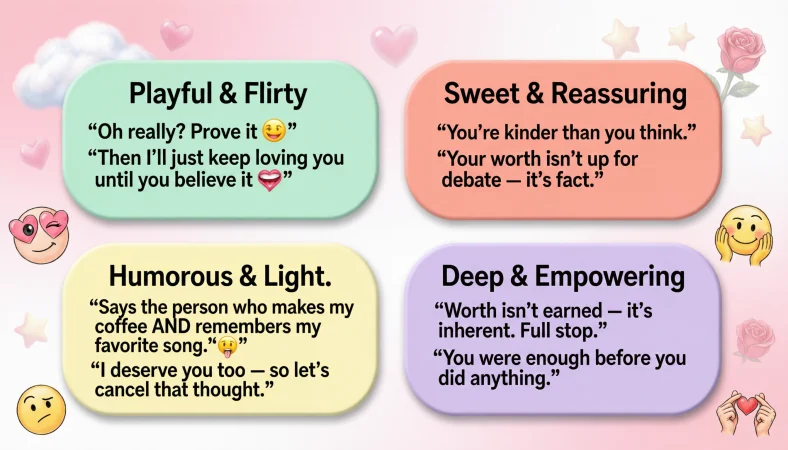
Quick Answer 🔥: When someone says “I don’t deserve you,” they may be feeling grateful, emotional, insecure, romantic, or even a little flirty. The best reply depends on the vibe and your relationship with them.
Top alternatives: You deserve love too, I think we deserve each other, Stop being so hard on yourself, I’m happy to have you, You’re more than enough
Texting “I don’t deserve you” can instantly turn a normal conversation into an emotional plot twist. One minute you’re casually chatting, and the next, someone is questioning their worth while basically handing you a compliment wrapped in feelings.
Whether it comes from a partner after a sweet gesture, a crush during a late-night DM, a friend who appreciates your support, or someone feeling insecure, your response can make a huge difference. You can reassure them, flirt a little, crack a joke, or simply remind them that relationships are not about earning a perfect score.
That is why knowing the right Replies to I don’t deserve you is useful. The right words can make someone smile, calm their insecurity, deepen a connection, or keep the conversation playful without making things awkward. From wholesome texts to confident comebacks and cheeky one-liners, there is a response for practically every mood. So pick your vibe and send something that actually sounds like you.
Funny Responses
“Too late, I already picked you.”
Use this when you want to turn an emotional moment into something playful and reassuring.
Meaning: You are jokingly saying that the relationship is already decided.
“Well, I already invested emotionally.”
Use this when you want to make them laugh while showing that you care.
Meaning: You are playfully admitting that your feelings are already involved.
“Unfortunately, refunds are unavailable.”
Use this for a silly response when the relationship has a fun, teasing dynamic.
Meaning: You are joking that they are stuck with you.
“Good thing I’m not accepting applications.”
Use this when you want a witty reply with confident humor.
Meaning: You are saying they do not need to prove themselves worthy.
“Who told you to be this dramatic?”
Use this when they are being overly emotional in a playful way.
Meaning: You are gently teasing them instead of taking the statement too seriously.
“You’re stuck with me now. Sorry.”
Use this when you want something funny but still affectionate.
Meaning: You are reassuring them that you are choosing to stay.
“Sounds like a you problem.”
Use this when your relationship allows sarcastic humor.
Meaning: You are jokingly refusing to let their insecurity become your problem.
“I accept payment in snacks.”
Use this when you want to lighten a sentimental conversation.
Meaning: You are replacing emotional seriousness with playful humor.
“That’s adorable. Anyway, you’re keeping me.”
Use this when you want to sound teasing and affectionate.
Meaning: You are playfully making it clear that you want them around.
“I checked the terms and conditions. You’re fine.”
Use this when you want a nerdy, unexpected joke.
Meaning: You are humorously reassuring them that they are good enough.
“Don’t worry, I have questionable taste.”
Use this when you want to roast yourself while reassuring them.
Meaning: You are joking that choosing them is completely intentional.
“Relax, I have standards and somehow you passed.”
Use this for playful confidence between close friends or partners.
Meaning: You are teasing them while secretly giving them a compliment.
Flirty Responses
“Maybe you don’t deserve me, but I still want you.”
Use this when you want to turn their insecurity into romantic tension.
Meaning: Your attraction matters more than whether they feel worthy.
“Who said I’m looking for someone I deserve?”
Use this when you want a confident and mysterious flirt.
Meaning: You are saying relationships are about wanting each other, not keeping score.
“Then I guess we’ll have to keep proving each other wrong.”
Use this when you want playful romantic chemistry.
Meaning: You are inviting them to continue building the connection.
“I think you deserve a little more credit.”
Use this when you want to flirt while genuinely reassuring them.
Meaning: You believe they underestimate their own value.
“Maybe I just have excellent taste.”
Use this when you want a confident, cheeky compliment.
Meaning: You are suggesting that choosing them was a great decision.
“You’re pretty hard to resist, though.”
Use this when you want a soft and charming flirt.
Meaning: You are admitting that they have a strong effect on you.
“Lucky for you, I like you anyway.”
Use this when you want casual flirting without becoming overly sentimental.
Meaning: Your feelings are not dependent on perfection.
“I think we look pretty good together.”
Use this when you want to shift the focus toward your connection.
Meaning: You like the idea of being together.
“Then let me be the judge of that.”
Use this when you want a playful and confident response.
Meaning: You are teasingly challenging their self-assessment.
“Maybe you’re exactly who I deserve.”
Use this when you want something unexpectedly romantic.
Meaning: You see the relationship as mutually meaningful.
“Keep talking like that and I might fall harder.”
Use this when the conversation already has romantic energy.
Meaning: Their vulnerability is making you feel even more attracted.
“I don’t need perfect. I just need you.”
Use this when you want a sincere romantic message.
Meaning: You value their presence rather than perfection.
Polite Responses
“That’s very sweet of you to say.”
Use this when you appreciate the sentiment but want to stay composed.
Meaning: You are acknowledging their kindness warmly.
“You deserve kindness and good people around you.”
Use this when they seem genuinely insecure.
Meaning: You are reminding them that they are worthy of positive relationships.
“Please don’t be so hard on yourself.”
Use this when they are putting themselves down.
Meaning: You want them to treat themselves with more compassion.
“I appreciate you saying that.”
Use this when you want a simple and mature response.
Meaning: You are grateful for their honesty.
“Everyone deserves to feel valued.”
Use this when you want to offer thoughtful reassurance.
Meaning: You believe worth is not something people have to earn.
“You’re more deserving than you realize.”
Use this when you want to encourage them gently.
Meaning: You see qualities in them that they may overlook.
“That means a lot to hear.”
Use this when their words genuinely touch you.
Meaning: Their appreciation has emotional value to you.
“I’m glad I can be there for you.”
Use this when they are thanking you for your support.
Meaning: You are happy to be someone they can rely on.
“You don’t have to compare yourself to anyone.”
Use this when insecurity seems to be behind their comment.
Meaning: You want them to stop measuring their worth against others.
“I think you’re doing better than you think.”
Use this when they need gentle encouragement.
Meaning: You recognize their efforts even if they do not.
“You deserve respect and appreciation too.”
Use this when you want to make the reassurance mutual.
Meaning: You believe both people should feel valued.
“Thank you for being honest with me.”
Use this when their statement comes from genuine vulnerability.
Meaning: You appreciate their willingness to share their feelings.
Professional Responses
“I appreciate your kind words.”
Use this when a colleague expresses gratitude in a workplace setting.
Meaning: You are accepting their appreciation professionally.
“You’re welcome, and I’m glad I could help.”
Use this after assisting someone professionally.
Meaning: You are acknowledging their gratitude while keeping the tone appropriate.
“There’s no need to say that. We all contribute in different ways.”
Use this when someone undervalues their professional contribution.
Meaning: You are emphasizing teamwork rather than personal worth.
“You absolutely deserve support and respect.”
Use this when a professional interaction becomes unexpectedly personal.
Meaning: You are offering respectful encouragement.
“I’m happy we could work through it together.”
Use this when someone expresses appreciation after teamwork.
Meaning: You value collaboration rather than individual credit.
“Everyone has strengths they bring to the table.”
Use this when reassuring a coworker about their abilities.
Meaning: You believe every person has something valuable to contribute.
“Please give yourself more credit.”
Use this when someone is being unnecessarily self-critical.
Meaning: You think they are underestimating their abilities.
“Your effort is appreciated.”
Use this when you want to recognize their contribution.
Meaning: Their work and dedication have value.
“We’re all learning and improving.”
Use this after someone feels inadequate because of a mistake.
Meaning: You are normalizing growth and imperfection.
“You don’t need to earn basic respect.”
Use this when the conversation involves personal insecurity.
Meaning: Respect should not depend on perfection.
“I’m glad I could support you.”
Use this when a coworker thanks you for assistance.
Meaning: You are responding warmly without crossing professional boundaries.
“You’re doing a solid job.”
Use this when you want to give a short confidence boost.
Meaning: You genuinely believe they are performing well.
Creative Responses
“Maybe the universe has better judgment than you do.”
Use this when you want a poetic but playful reassurance.
Meaning: You are suggesting that their insecurity does not define their value.
“You’re measuring yourself with the wrong ruler.”
Use this when someone is being too critical of themselves.
Meaning: Their way of judging their worth is unfair.
“Deserving isn’t a scoreboard.”
Use this when you want something short and thoughtful.
Meaning: Relationships are not competitions based on worthiness.
“Some connections aren’t earned, they’re chosen.”
Use this when you want a deeper romantic or emotional response.
Meaning: You intentionally choose the person regardless of perceived flaws.
“Maybe we found each other for a reason.”
Use this when you want a warm, meaningful response.
Meaning: You see significance in your connection.
“Your imperfections don’t cancel your good qualities.”
Use this when someone focuses too heavily on their flaws.
Meaning: Their mistakes do not erase their positive traits.
“You’re looking at yourself through a very unfair lens.”
Use this when they are being excessively self-critical.
Meaning: Their perception of themselves may be harsher than reality.
“I’d rather count memories than reasons.”
Use this when you want a sentimental response.
Meaning: You value the experiences you share more than doubts about worthiness.
“Maybe the better question is whether we make each other happy.”
Use this when you want to redirect the conversation thoughtfully.
Meaning: Mutual happiness matters more than who deserves whom.
“Some people feel like home without needing an explanation.”
Use this when the relationship is emotionally close.
Meaning: Their presence feels naturally comforting and meaningful.
“You don’t have to be perfect to be precious.”
Use this when you want a gentle, memorable reassurance.
Meaning: Imperfection does not make someone less valuable.
“I chose the person, not a flawless résumé.”
Use this when you want humor mixed with emotional depth.
Meaning: You care about who they are rather than their imaginary list of qualifications.
Sarcastic Responses
“Finally, we agree on something.”
Use this when playful sarcasm is already part of your relationship.
Meaning: You are jokingly pretending to agree with their insecurity.
“Wow, look at you being emotionally responsible.”
Use this when they suddenly become vulnerable in a funny way.
Meaning: You are teasing them for having a serious emotional moment.
“I’ll add that to your list of unnecessary concerns.”
Use this when you want sarcastic reassurance.
Meaning: You think their worry about deserving you is unnecessary.
“Please submit your insecurity in writing.”
Use this when you want an absurd workplace-style joke.
Meaning: You are playfully refusing to entertain their self-doubt.
“That sounds like something we should ignore.”
Use this when you want to dismiss the insecurity humorously.
Meaning: You do not agree with their negative view of themselves.
“Noted. Rejected.”
Use this when you want an ultra-short sarcastic response.
Meaning: You are humorously rejecting their claim.
“Your application for self-doubt has been denied.”
Use this when you want a creative sarcastic comeback.
Meaning: You are telling them to stop doubting themselves.
“Interesting theory. I disagree.”
Use this when you want something calm but witty.
Meaning: You are firmly rejecting their statement without becoming heavy.
“That’s enough emotional damage for today.”
Use this when the conversation has become overly sentimental.
Meaning: You are playfully calling time on the dramatic mood.
“Please stop making valid points about your insecurities.”
Use this when you want an ironic response.
Meaning: You are teasing them while encouraging them not to dwell on flaws.
“I’m going to pretend you never said that.”
Use this when you want playful denial.
Meaning: You do not want them putting themselves down.
“Your inner critic needs a hobby.”
Use this when someone constantly doubts themselves.
Meaning: You think their negative self-talk is unnecessary.
Cute Responses
“Aww, but I really like having you around.”
Use this when you want a soft and affectionate reply.
Meaning: Their presence genuinely makes you happy.
“You’re more than enough for me.”
Use this when they need simple reassurance.
Meaning: You accept them without demanding perfection.
“Don’t say that, you’re precious to me.”
Use this when you want to sound openly affectionate.
Meaning: You consider them emotionally important.
“You make my days better.”
Use this when you want a sweet but uncomplicated response.
Meaning: Their presence has a positive impact on you.
“I’m lucky to have you too.”
Use this when you want to make the appreciation mutual.
Meaning: You believe both people are fortunate to have each other.
“You’re exactly where you’re supposed to be.”
Use this when they need comforting reassurance.
Meaning: You want them to feel accepted and secure.
“Nope, you’re stuck being loved.”
Use this when you want cute humor mixed with affection.
Meaning: You are playfully promising continued care.
“You make my heart very happy.”
Use this when you want an innocent romantic response.
Meaning: Their presence brings you genuine emotional happiness.
“I wouldn’t trade you for anything.”
Use this when you want to make them feel valued.
Meaning: You consider your relationship irreplaceable.
“You’re one of my favorite people.”
Use this when you want something warm without being overly romantic.
Meaning: You hold them in high regard.
“Stop being adorable and accept the compliment.”
Use this when they are struggling to accept your affection.
Meaning: You want them to receive your positive feelings instead of questioning them.
“You deserve good things too, silly.”
Use this when you want reassurance with a playful touch.
Meaning: You want them to believe they are worthy of happiness.
Dramatic Responses
“Do not start this emotional storyline right now.”
Use this when you want to turn their vulnerability into playful drama.
Meaning: You are jokingly trying to stop the emotional spiral.
“And now we enter the feelings episode.”
Use this when the conversation suddenly becomes sentimental.
Meaning: You are humorously acknowledging the emotional shift.
“The universe is not ready for this level of insecurity.”
Use this when you want an exaggerated joke.
Meaning: Their self-doubt is being treated as hilariously unnecessary.
“Absolutely not. We are rejecting this plot.”
Use this when you want a dramatic but reassuring comeback.
Meaning: You refuse to accept their negative conclusion.
“Cue the emotional background music.”
Use this when you want to make the moment theatrical.
Meaning: You are playfully exaggerating the seriousness of the situation.
“I refuse to let you disrespect someone I like.”
Use this when you want a dramatic but affectionate response.
Meaning: You are defending them against their own negative self-talk.
“This conversation needs a happy ending immediately.”
Use this when you want to steer things toward positivity.
Meaning: You want them to stop focusing on insecurity.
“Enough. The court has ruled you worthy.”
Use this when you want a funny dramatic reassurance.
Meaning: You are declaring that their self-doubt has officially lost.
“Your self-doubt has officially been removed from the script.”
Use this when you want a theatrical response.
Meaning: You are refusing to let insecurity control the moment.
“We are not turning this into a tragic romance.”
Use this when you want humor during a serious moment.
Meaning: You want to keep the conversation hopeful.
“I will not allow this emotional plot twist.”
Use this when someone unexpectedly gets vulnerable.
Meaning: You want to interrupt their negative thinking.
“Roll credits. You’re already enough.”
Use this when you want a dramatic ending with genuine reassurance.
Meaning: Their worth does not need further debate.
Chill And Casual Responses
“Nah, you’re good.”
Use this when you want the simplest possible reassurance.
Meaning: You do not see them as undeserving.
“Don’t even think like that.”
Use this when they casually express insecurity.
Meaning: You want them to stop doubting themselves.
“You’re fine, seriously.”
Use this when you want to reassure them without making the moment too intense.
Meaning: You genuinely think there is nothing to worry about.
“We’re good, trust me.”
Use this when you want to create a sense of security.
Meaning: You are comfortable with the relationship.
“You don’t have to overthink it.”
Use this when they are getting stuck in their head.
Meaning: You want them to relax about the situation.
“I’m here because I want to be.”
Use this when you want calm but meaningful reassurance.
Meaning: Your presence is a choice, not an obligation.
“You’re alright with me.”
Use this when you want a casual and understated response.
Meaning: You accept them as they are.
“No stress, you’re appreciated.”
Use this when you want something warm without sounding overly emotional.
Meaning: You want them to know they matter.
“We’re just enjoying the moment.”
Use this when you want to avoid overthinking the relationship.
Meaning: You prefer focusing on the connection instead of labels.
“Don’t make it complicated.”
Use this when their insecurity is creating unnecessary tension.
Meaning: You want things to remain simple and genuine.
“I like you exactly as you are.”
Use this when you want casual reassurance with emotional weight.
Meaning: You are comfortable with their authentic self.
“You’re good, promise.”
Use this when you want a short and comforting text.
Meaning: You want them to feel secure around you.
Confident Responses
“I know my worth, and I know yours too.”
Use this when you want a mature and self-assured response.
Meaning: You believe both people bring value to the relationship.
“I chose you, remember?”
Use this when you want to remind them that being together is intentional.
Meaning: Your decision to be with them was deliberate.
“You don’t need to earn your place with me.”
Use this when someone worries they are not good enough.
Meaning: Their relationship with you is not based on constant proving.
“I wouldn’t stay if I didn’t want to.”
Use this when you want direct reassurance.
Meaning: Your continued presence is a conscious choice.
“I see your value even when you don’t.”
Use this when they struggle with self-confidence.
Meaning: You recognize qualities they cannot currently see in themselves.
“You’re not beneath me.”
Use this when someone puts you on an unrealistic pedestal.
Meaning: You see both people as equals.
“I don’t need perfection from you.”
Use this when they feel pressure to live up to expectations.
Meaning: You accept their flaws and humanity.
“You belong here as much as I do.”
Use this when you want to make them feel secure.
Meaning: They have an equal place in the relationship.
“I’m not confused about choosing you.”
Use this when they keep questioning why you are with them.
Meaning: Your feelings and decision are clear.
“You’re worth knowing, loving, and keeping around.”
Use this when you want a powerful reassurance.
Meaning: You believe they have lasting personal value.
“Stop negotiating against yourself.”
Use this when they keep talking themselves down.
Meaning: You want them to stop arguing against their own worth.
“You’re allowed to receive good things too.”
Use this when someone feels undeserving of affection.
Meaning: They should allow themselves to experience kindness and love.
Emotional Responses
“You deserve to be loved without feeling guilty about it.”
Use this when their words come from deep insecurity.
Meaning: Love should not make someone feel undeserving.
“I wish you could see yourself the way I see you.”
Use this when you want to express genuine emotional care.
Meaning: Your view of them is kinder than their view of themselves.
“You matter to me more than you realize.”
Use this when you want to communicate emotional significance.
Meaning: Their importance in your life may be greater than they understand.
“Please don’t measure your worth by your mistakes.”
Use this when they feel unworthy because of past actions.
Meaning: Mistakes do not define their entire identity.
“You don’t have to be perfect to be loved.”
Use this when someone is struggling with feeling inadequate.
Meaning: Genuine affection can exist alongside imperfections.
“I’m grateful that life brought you into mine.”
Use this when you want a heartfelt message.
Meaning: Their presence has had a meaningful impact on you.
“You’ve given me more than you realize.”
Use this when they believe they contribute nothing to your life.
Meaning: You value the things they have brought into the relationship.
“You deserve the same kindness you give others.”
Use this when they are caring toward everyone except themselves.
Meaning: They should extend compassion to themselves too.
“I don’t want you carrying that thought alone.”
Use this when they seem genuinely distressed or vulnerable.
Meaning: You want them to feel supported rather than isolated.
“You are not a burden to me.”
Use this when they fear that their presence causes problems.
Meaning: You do not see their relationship with you as a burden.
“I choose you with all your imperfect little pieces.”
Use this when you want a deeply affectionate response.
Meaning: Your acceptance includes their flaws and vulnerabilities.
“You are enough, even on the days you don’t feel like it.”
Use this when they need meaningful reassurance.
Meaning: Their worth does not disappear when their confidence is low.
Sweet Responses
“You deserve more love than you think.”
Use this when you want a warm and uplifting reply.
Meaning: You believe they are worthy of affection and care.
“I’m just happy we found each other.”
Use this when you want to make the response mutual.
Meaning: You appreciate having them in your life.
“You make loving you easy.”
Use this when you want a romantic but gentle message.
Meaning: Being affectionate toward them feels natural.
“I’m grateful for you too.”
Use this when you want to keep things simple and sincere.
Meaning: You appreciate their presence and relationship.
“You bring so much good into my life.”
Use this when you want to highlight their positive impact.
Meaning: Their presence has enriched your life.
“I hope you always know how special you are.”
Use this when you want a thoughtful emotional response.
Meaning: You want them to recognize their own value.
“I’m glad I get to know the real you.”
Use this when you want to celebrate authenticity.
Meaning: You appreciate who they genuinely are.
“You’re one of the best things in my life.”
Use this when the relationship is deeply meaningful.
Meaning: You consider their presence extremely valuable.
“I wouldn’t want this any other way.”
Use this when you want to reassure them that you are happy with the relationship.
Meaning: You have no desire to replace or change what you share.
“You have no idea how much you mean to me.”
Use this when you want to make the moment more heartfelt.
Meaning: Their importance to you is difficult to put into words.
“I hope you see what I see in you someday.”
Use this when they struggle to recognize their positive qualities.
Meaning: You see them with more compassion than they see themselves.
“You’re loved more than you know.”
Use this when you want a short but emotionally warm message.
Meaning: Their value extends beyond what they currently recognize.
Clever Responses
“Deserve is the wrong metric. Connection is the real one.”
Use this when you want a thoughtful response that still feels natural.
Meaning: Relationships are better measured by genuine connection than worthiness.
“If I wanted someone else, I’d be somewhere else.”
Use this when you want confident reassurance.
Meaning: Your choice to be with them is intentional.
“You’re assuming love comes with a grading system.”
Use this when they treat affection like something they must earn.
Meaning: Love is not an exam they need to pass.
“You don’t deserve me. You deserve yourself being kinder to you.”
Use this when you want to redirect their insecurity.
Meaning: Their biggest need may be greater self-compassion.
“Maybe the question isn’t who deserves whom.”
Use this when you want to encourage deeper thinking.
Meaning: A healthy relationship is not about ranking people.
“You’re confusing worth with perfection.”
Use this when someone believes flaws make them undeserving.
Meaning: Being imperfect does not reduce their basic value.
“I’m not here because you earned a membership.”
Use this when you want clever humor with reassurance.
Meaning: Their place in your life is not based on achievements.
“Your worth isn’t something I have to calculate.”
Use this when you want a mature response.
Meaning: You value them without needing to quantify why.
“I like you, not your imaginary perfect version.”
Use this when they are worried about disappointing you.
Meaning: You want the real person, not an idealized version.
“You’re treating affection like a transaction.”
Use this when they believe they must repay your kindness.
Meaning: Genuine affection is not something that requires equal payment.
“The fact that you care this much says plenty about you.”
Use this when their insecurity comes from wanting to be a good person.
Meaning: Their concern itself shows that they have a caring side.
“Maybe you’re not undeserving. Maybe you’re just not used to being appreciated.”
Use this when you want a thoughtful and emotionally intelligent reply.
Meaning: Their discomfort may come from unfamiliarity with receiving affection.
Reassuring Responses
“You don’t have to prove anything to me.”
Use this when someone feels pressured to earn your affection.
Meaning: You accept them without demanding constant proof.
“I’m here because I care about you.”
Use this when you want direct emotional reassurance.
Meaning: Your presence comes from genuine care.
“You deserve good people in your corner.”
Use this when they question whether they should receive support.
Meaning: You believe everyone deserves a supportive community.
“I see the good in you.”
Use this when they are struggling to see their own positive qualities.
Meaning: You recognize their strengths despite their doubts.
“You’re allowed to be loved.”
Use this when their insecurity is especially deep.
Meaning: Love is not reserved only for people who feel perfect.
“You don’t owe me perfection.”
Use this when they feel guilty about their flaws.
Meaning: You are not expecting them to be flawless.
“I’m not keeping score.”
Use this when they worry that they owe you something emotionally.
Meaning: You do not measure the relationship by who gives more.
“You bring value to my life.”
Use this when you want a direct confidence boost.
Meaning: Their presence genuinely matters to you.
“Your flaws don’t scare me away.”
Use this when they fear that imperfections will ruin the relationship.
Meaning: You can accept their humanity without abandoning them.
“You’re worthy of being cared for.”
Use this when you want a sincere and compassionate response.
Meaning: Care and affection are things they deserve.
“You can stop trying to convince me otherwise.”
Use this when they repeatedly insist they are undeserving.
Meaning: Your opinion of their worth is already settled.
“I’m choosing to be here, and I mean that.”
Use this when you want calm, serious reassurance.
Meaning: Your presence is intentional and sincere.
Witty And Playful Responses
“You clearly haven’t seen my decision-making history.”
Use this when you want self-deprecating humor with affection.
Meaning: You are joking that choosing them fits your questionable decisions.
“Lucky for you, I’m feeling generous.”
Use this when your relationship has playful teasing.
Meaning: You are jokingly pretending that being with them is a favor.
“I’ll decide who deserves me, thanks.”
Use this when you want confident humor.
Meaning: You are playfully taking control of the situation.
“You’re cute when you overthink.”
Use this when they are spiraling over their worth.
Meaning: You find their insecurity more endearing than frustrating.
“I have officially approved your existence in my life.”
Use this when you want exaggerated humor.
Meaning: You are joking that they have earned your playful approval.
“Good news: I’m keeping you.”
Use this when you want a short, confident tease.
Meaning: You are reassuring them that you want them around.
“Your insecurity has been reviewed and denied.”
Use this when you want a clever little comeback.
Meaning: You are refusing to validate their negative self-talk.
“You’re overthinking again. Classic.”
Use this when they have a habit of worrying too much.
Meaning: You are gently teasing them for their familiar pattern.
“I didn’t ask for a resignation letter.”
Use this when they jokingly act like they should leave your life.
Meaning: You are making it clear that you do not want them to go.
“Breaking news: I still like you.”
Use this when you want an internet-style playful response.
Meaning: Their insecurity has not changed your feelings.
“Plot twist: I actually know what I’m doing.”
Use this when you want to sound confident and teasing.
Meaning: You intentionally chose to have them in your life.
“Congratulations, your overthinking achieved absolutely nothing.”
Use this when you want to snap them out of a spiral with humor.
Meaning: Their worry has not changed the reality of your relationship.
Short And Direct Responses
“You absolutely do.”
Use this when you want a firm and simple reassurance.
Meaning: You completely disagree with their statement.
“You’re enough.”
Use this when you want maximum impact with minimal words.
Meaning: You believe they are worthy as they are.
“I choose you.”
Use this when you want a powerful romantic response.
Meaning: Your relationship is an intentional choice.
“Don’t doubt yourself.”
Use this when you want to encourage confidence.
Meaning: You do not want their insecurity controlling the moment.
“You matter to me.”
Use this when you want something simple and heartfelt.
Meaning: Their presence has emotional importance to you.
“I’m happy you’re here.”
Use this when you want a warm response without overexplaining.
Meaning: You genuinely enjoy having them in your life.
“You’re more than enough.”
Use this when they are feeling particularly insecure.
Meaning: You believe they already have everything needed to be valued.
“I don’t agree.”
Use this when you want to be direct without becoming emotional.
Meaning: You reject their negative assessment of themselves.
“You’re appreciated.”
Use this when you want something gentle and universal.
Meaning: Their efforts and presence are recognized.
“I’ve got you.”
Use this when you want to offer emotional security.
Meaning: You are letting them know they have your support.
“Stay exactly who you are.”
Use this when you want to encourage authenticity.
Meaning: You like the person they already are.
“You’re worth it.”
Use this when you want a classic, reassuring message.
Meaning: You believe they deserve care, love, and good things.
FAQs
What Does “I Don’t Deserve You” Mean?
It usually means someone feels that you are exceptionally kind, supportive, attractive, successful, or loving compared with how they see themselves. It can be sincere appreciation, insecurity, romance, or a mixture of all three.
Is “I Don’t Deserve You” Flirty?
It can be. In a romantic conversation, it may be a vulnerable compliment that communicates admiration and attraction. Your response can either deepen the romantic mood or keep things light.
What Is A Sweet Reply To “I Don’t Deserve You”?
Try “You’re more than enough for me” or “I’m just happy we found each other.” Both reassure the person without making the moment unnecessarily complicated.
What If I Don’t Actually Feel That Way About Them?
Keep your response kind but honest. You can say “I appreciate you saying that, but I think we should be honest about how we feel.” There is no need to make a promise you do not mean.
Can I Use Humor When Someone Says “I Don’t Deserve You”?
Absolutely, if you already have a playful relationship. Humor works best when the person is joking or comfortable with teasing. If they seem genuinely hurt or insecure, choose reassurance instead.
Is It Appropriate In A Professional Setting?
It can happen, especially after someone receives help or praise, but a professional response should stay respectful and neutral. Try “I appreciate that, and I’m glad I could help.”
What If They Say It Because They Feel Insecure?
Lead with reassurance instead of a joke. Tell them that they do not need to be perfect, that you value them, or that they should not be so hard on themselves.
What Is A Confident Reply To “I Don’t Deserve You”?
Try “I chose you, remember?” It communicates confidence while reminding them that being together is a conscious choice.
What Is A Flirty Reply To “I Don’t Deserve You”?
Try “Maybe you’re exactly who I deserve.” It turns the compliment into a romantic statement about mutual compatibility.
What Is A Funny Reply To “I Don’t Deserve You”?
Try “Unfortunately, refunds are unavailable.” It keeps the mood playful while subtly communicating that you are not going anywhere.
Conclusion
When someone says “I don’t deserve you,” you have plenty of ways to keep the moment genuine, funny, romantic, or reassuring. The best response is not always the most impressive one. Sometimes a simple “You’re enough” says more than a perfectly crafted paragraph.
Whether you are replying to a partner, crush, friend, coworker, or someone sliding into your DMs, your words can shape the entire vibe. Match the response to the relationship, read the emotional temperature, and do not be afraid to add your personality. Save these Replies to I don’t deserve you for the next unexpected compliment or emotional plot twist, share your favorites with a friend, and reuse the ones that sound most like you.