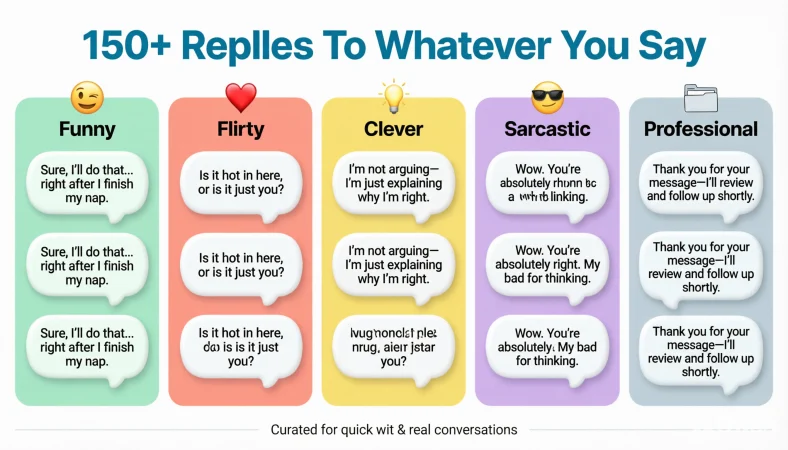
Quick Answer: “Whatever you say” can sound playful, dismissive, sarcastic, flirty, or simply uninterested depending on the situation. The best Replies to whatever you say match the other person’s energy without making things awkward.
Top alternatives: “You’re welcome to disagree,” “I’ll take that as a yes,” “That’s one way to put it,” “Noted, your honor,” “And yet, you’re still listening.”
When someone says “whatever you say,” you have officially entered the tiny battlefield of conversational tone. 😌
Maybe it came through a text from your best friend after a ridiculous debate and maybe your crush sent it after you teased them. Maybe a coworker used it in a professional chat, where suddenly every punctuation mark feels suspicious. Or perhaps someone dropped “whatever you say” in a DM and left you wondering whether they were joking, annoyed, flirting, or simply done with the conversation.
That is exactly why choosing the right response matters. A clever reply can keep things playful, while the wrong one can turn a harmless exchange into unnecessary drama. The good news? You do not need a paragraph-long explanation. Sometimes one perfectly timed sentence does all the work.
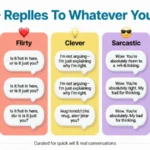
These Replies to whatever you say cover funny, flirty, confident, polite, sarcastic, professional, cute, clever, and casual moods, so you can match the moment without overthinking it.
Funny Responses
“And I’ll take that as a compliment.”
Use this when you want to turn a dismissive comment into a joke.
Meaning: You are keeping the mood light and refusing to take offense.
“Glad we agree on something.”
Use this after a playful disagreement with a friend.
Meaning: You are jokingly pretending their response means agreement.
“Excellent, my work here is done.”
Use this when someone says “whatever you say” after you make your point.
Meaning: You are humorously acting like you have won the debate.
“Please hold your applause.”
Use this when you want an exaggerated, confident joke.
Meaning: You are playfully celebrating your imaginary victory.
“That sounded suspiciously supportive.”
Use this when their tone feels teasing rather than genuinely annoyed.
Meaning: You are calling out the hidden humor in their response.
“I accept your reluctant approval.”
Use this with someone who clearly disagrees but is joking around.
Meaning: You are pretending their words were a formal endorsement.
“Put it in writing.”
Use this when you want to make their vague response funnier.
Meaning: You are jokingly demanding official confirmation.
“Noted for the historical records.”
Use this when the conversation is already playful.
Meaning: You are exaggerating the importance of their words for comedic effect.
“That’s going straight into my autobiography.”
Use this after receiving a dramatic or dismissive response.
Meaning: You are humorously pretending their comment changed your life.
“I knew you’d come around eventually.”
Use this when teasing someone who has not actually agreed with you.
Meaning: You are playfully claiming victory.
“Beautiful. Inspirational. Moving.”
Use this when you want an intentionally overdramatic joke.
Meaning: You are pretending their simple response was deeply profound.
“And that concludes today’s TED Talk.”
Use this when a debate has gone on long enough.
Meaning: You are humorously announcing that the discussion is over.
Brutal Responses
“You say that like I was waiting for permission.”
Use this when someone sounds unnecessarily dismissive.
Meaning: You are confidently showing that their approval was never required.
“Good thing I wasn’t asking.”
Use this when their response feels deliberately rude.
Meaning: You are making it clear that their opinion was not necessary.
“Your enthusiasm is truly overwhelming.”
Use this when their tone is noticeably cold.
Meaning: You are sarcastically pointing out their lack of excitement.
“That attitude really said everything.”
Use this when their words reveal their mood more than they realize.
Meaning: You are calmly calling attention to their dismissiveness.
“You could simply say you disagree.”
Use this when you want to be direct without insulting them.
Meaning: You are encouraging clearer communication.
“Noted. Your approval remains unnecessary.”
Use this when you want a polished but firm comeback.
Meaning: You are asserting independence.
“I’ll survive the disagreement.”
Use this when someone acts as though their opinion ends the discussion.
Meaning: You are showing that disagreement does not bother you.
“That was almost convincing.”
Use this when teasing someone who is trying to sound authoritative.
Meaning: You are playfully challenging their confidence.
“You really thought that settled it.”
Use this when someone is being overly dismissive.
Meaning: You are refusing to let their attitude control the conversation.
“Thanks for the permission I never requested.”
Use this when their wording sounds controlling.
Meaning: You are firmly rejecting the idea that you needed their approval.
“Confidence is great. Courtesy is better.”
Use this when the conversation has crossed into disrespect.
Meaning: You are setting a boundary without resorting to insults.
“We can disagree without the performance.”
Use this when someone is being unnecessarily dramatic.
Meaning: You are asking them to communicate more respectfully.
Flirty Responses
“Whatever I say? Careful, I might say I like you.”
Use this when the conversation already has obvious romantic energy.
Meaning: You are turning their words into a playful confession.
“Then I say you owe me a date.”
Use this when you want to confidently flirt.
Meaning: You are turning the exchange into a lighthearted invitation.
“Whatever I say? I like how obedient that sounds.”
Use this only when you already share comfortable teasing chemistry.
Meaning: You are playfully leaning into flirtatious banter.
“Then say yes and make this easy.”
Use this when you are jokingly pushing a romantic idea.
Meaning: You are confidently inviting them to play along.
“I say you’re secretly enjoying this.”
Use this when they pretend to be annoyed by your teasing.
Meaning: You are suggesting their reaction is more playful than serious.
“Then I say you’re cute when you pretend not to care.”
Use this with someone who enjoys affectionate teasing.
Meaning: You are turning their dismissive tone into a compliment.
“Whatever I say? Risky invitation.”
Use this when you want a short, mysterious flirt.
Meaning: You are hinting that you could say something romantic.
“I say we stop pretending you don’t like this.”
Use this when the banter is clearly mutual.
Meaning: You are playfully calling out their enjoyment.
“Then I choose flirting.”
Use this when you want an uncomplicated flirty response.
Meaning: You are openly steering the conversation toward romance.
“I say you owe me your attention.”
Use this when someone is playfully acting uninterested.
Meaning: You are asking for attention in a teasing way.
“That sounds like permission to flirt.”
Use this when their response feels playful rather than annoyed.
Meaning: You are humorously interpreting their words as an invitation.
“Then I say you’re making it really hard to behave.”
Use this when the chemistry is already strong.
Meaning: You are expressing playful attraction.
Polite Responses
“Fair enough, I respect your opinion.”
Use this when you want to keep a disagreement friendly.
Meaning: You acknowledge their perspective without arguing.
“No worries, we can agree to disagree.”
Use this when the conversation is going nowhere.
Meaning: You are ending the disagreement respectfully.
“Understood, thanks for letting me know.”
Use this when you want a calm and mature response.
Meaning: You are acknowledging their message without escalating.
“That’s completely fine.”
Use this when you do not want to make the exchange bigger than it needs to be.
Meaning: You are showing that you are not offended.
“I hear you.”
Use this when you want to acknowledge their position.
Meaning: You are showing that you understand without necessarily agreeing.
“No problem at all.”
Use this when the conversation is casual and harmless.
Meaning: You are keeping things friendly and relaxed.
“Thanks for being honest.”
Use this when their response is blunt but genuine.
Meaning: You appreciate straightforward communication.
“That works for me.”
Use this when their response effectively closes the topic.
Meaning: You are accepting the situation without resistance.
“I respect that.”
Use this when you want a short, mature reply.
Meaning: You are recognizing their choice or opinion.
“All good on my end.”
Use this when you want to reassure someone there is no conflict.
Meaning: You are signaling that you are perfectly fine.
“No hard feelings.”
Use this after a slightly tense exchange.
Meaning: You are making it clear that you are not holding a grudge.
“Thanks for clarifying.”
Use this when their response clears up their position.
Meaning: You appreciate having a better understanding.
Professional Responses
“Understood. I’ll proceed accordingly.”
Use this in a workplace message when a decision has already been made.
Meaning: You are acknowledging the direction professionally.
“Thanks, I’ll keep that in mind.”
Use this when responding to a coworker or manager.
Meaning: You are accepting the feedback without unnecessary debate.
“Noted, thank you.”
Use this for a concise professional response.
Meaning: You have received and acknowledged the information.
“Understood. I appreciate the clarification.”
Use this when their response resolves confusion.
Meaning: You are keeping communication respectful and productive.
“That’s clear. Thank you.”
Use this when you want to close the discussion efficiently.
Meaning: You understand what is expected.
“I’ll take it from here.”
Use this when you are responsible for the next step.
Meaning: You are confidently accepting responsibility.
“Thanks for the direction.”
Use this when someone has provided instructions.
Meaning: You acknowledge their guidance professionally.
“I’ll make a note of that.”
Use this when their response contains useful information.
Meaning: You intend to remember or apply what they said.
“Understood. I’ll follow up if needed.”
Use this when you want to keep the door open for future communication.
Meaning: You are ending the exchange while remaining professional.
“Appreciate the response.”
Use this when you want a neutral workplace reply.
Meaning: You are acknowledging their time and message.
“Thanks for confirming.”
Use this when their response confirms your understanding.
Meaning: You are documenting agreement or clarification.
“Got it. I’ll move forward.”
Use this when the next action is already obvious.
Meaning: You are confirming that you will proceed.
Creative Responses
“And thus, the mysterious ‘whatever’ returns.”
Use this when you want to make the exchange theatrical.
Meaning: You are turning a simple phrase into a mini story.
“Interesting choice of final words.”
Use this when their response feels dramatic.
Meaning: You are playfully treating their message like the ending of a movie.
“Plot twist: I’m still talking.”
Use this when you want a playful comeback.
Meaning: You are humorously refusing to let the conversation end.
“Chapter closed, apparently.”
Use this when they seem finished with the topic.
Meaning: You are joking about the sudden conversational ending.
“The council will review your statement.”
Use this when you want absurd humor.
Meaning: You are pretending their response requires official consideration.
“Your statement has been forwarded to management.”
Use this in a playful conversation with a friend.
Meaning: You are inventing a fake bureaucracy for comedic effect.
“Fascinating. I’ll add that to the lore.”
Use this when someone gives a memorable response.
Meaning: You are treating the moment like part of an ongoing story.
“A bold ending to an otherwise peaceful conversation.”
Use this when their tone catches you off guard.
Meaning: You are playfully highlighting their dramatic exit.
“And now we enter the ‘whatever’ era.”
Use this when joking about a new phase in your relationship.
Meaning: You are turning their phrase into an imaginary trend.
“Your response has been carefully filed under ‘interesting.’”
Use this when you want dry humor.
Meaning: You are playfully avoiding a serious reaction.
“I’ll consult the ancient texts.”
Use this when someone gives you an intentionally vague response.
Meaning: You are exaggerating how difficult their answer is to interpret.
“A fascinating contribution to modern communication.”
Use this when you want sophisticated sarcasm.
Meaning: You are jokingly treating their simple phrase like a major discovery.
Sarcastic Responses
“Wow, what a detailed explanation.”
Use this when someone gives you an extremely short response.
Meaning: You are teasing them for being vague.
“Thank you for your extensive feedback.”
Use this when their response contains almost no useful information.
Meaning: You are sarcastically exaggerating its value.
“Your enthusiasm is contagious.”
Use this when they sound completely uninterested.
Meaning: You are highlighting their lack of enthusiasm.
“Truly a masterpiece of communication.”
Use this when their reply is especially dismissive.
Meaning: You are using irony to point out how unhelpful it was.
“I’ll treasure those words forever.”
Use this when you want exaggerated sarcasm.
Meaning: You are pretending their basic response was unforgettable.
“Such wisdom in so few words.”
Use this when their message is hilariously vague.
Meaning: You are playfully mocking its lack of substance.
“Well, that cleared up absolutely nothing.”
Use this when their response leaves you confused.
Meaning: You are directly joking about the ambiguity.
“I can feel the excitement from here.”
Use this when someone sounds particularly bored.
Meaning: You are sarcastically commenting on their low energy.
“A truly unforgettable response.”
Use this when they give you a dismissive one-liner.
Meaning: You are exaggerating its importance for humor.
“I’ll frame this moment.”
Use this when their response is unexpectedly dry.
Meaning: You are pretending it was historically significant.
“You really brought the whole dictionary today.”
Use this when someone responds with very few words.
Meaning: You are teasing their minimal effort.
“What a beautifully complicated answer.”
Use this when their response is actually extremely simple.
Meaning: You are using irony to make the exchange funnier.
Cute Responses
“Okay, but don’t be grumpy.”
Use this when a friend or crush is pretending to be annoyed.
Meaning: You are keeping the interaction affectionate.
“Fine, but I’m still smiling.”
Use this when their response does not actually bother you.
Meaning: You are showing playful positivity.
“Whatever you say, sunshine.”
Use this when you want a sweet, teasing nickname.
Meaning: You are responding warmly while lightly teasing them.
“Aww, someone’s feeling dramatic.”
Use this when their response sounds playful rather than serious.
Meaning: You are gently teasing them.
“Okay, little attitude.”
Use this with someone you have comfortable chemistry with.
Meaning: You are affectionately calling out their sass.
“You’re adorable when you pretend to be annoyed.”
Use this when the situation is clearly playful.
Meaning: You are turning their attitude into a compliment.
“Fine, I’ll let you have this one.”
Use this after a friendly disagreement.
Meaning: You are playfully giving them a pretend victory.
“Okayyy, I see that attitude.”
Use this when you want a cute, casual response.
Meaning: You are acknowledging their playful sass.
“Don’t worry, I still like you.”
Use this when teasing someone after a disagreement.
Meaning: You are reassuring them while keeping things light.
“That was cute, try again.”
Use this when their response is playful and you want to continue flirting.
Meaning: You are encouraging more banter.
“You’re lucky you’re cute.”
Use this when someone is being mildly annoying in an endearing way.
Meaning: You are pretending their charm excuses their attitude.
“Okay, I’ll stop bothering you… maybe.”
Use this when you want a playful ending.
Meaning: You are teasingly suggesting you may continue.
Dramatic Responses
“And just like that, our friendship ended.”
Use this when joking with someone after a tiny disagreement.
Meaning: You are dramatically exaggerating the situation.
“I shall never recover.”
Use this after an intentionally dismissive reply.
Meaning: You are pretending their words deeply wounded you.
“My heart has officially filed a complaint.”
Use this when you want exaggerated emotional humor.
Meaning: You are pretending their response caused emotional damage.
“I expected better from this storyline.”
Use this when a conversation takes an unexpected turn.
Meaning: You are treating the interaction like a dramatic series.
“This betrayal will be remembered.”
Use this when a friend playfully disagrees with you.
Meaning: You are jokingly portraying disagreement as betrayal.
“I need a moment to process this.”
Use this when you want to exaggerate your reaction.
Meaning: You are pretending their simple response was shocking.
“Well, that escalated emotionally.”
Use this when the tone suddenly becomes tense.
Meaning: You are acknowledging the shift with humor.
“I will be thinking about this at 3 a.m.”
Use this when you want an exaggerated reaction.
Meaning: You are joking that their words will stay on your mind.
“The audacity has entered the chat.”
Use this when their response is unexpectedly bold.
Meaning: You are humorously calling attention to their attitude.
“I require emotional compensation.”
Use this after playful teasing.
Meaning: You are pretending their words deserve repayment.
“This is my villain origin story.”
Use this when someone jokingly annoys you.
Meaning: You are dramatically exaggerating their offense.
“Someone alert the historians.”
Use this when the moment feels funny or unexpectedly dramatic.
Meaning: You are pretending the exchange deserves historical recognition.
Chill And Casual Responses
“Haha, fair enough.”
Use this when you want to keep things relaxed.
Meaning: You acknowledge their response without making it serious.
“Alright, cool.”
Use this when you want a simple, low-effort reply.
Meaning: You are showing that everything is fine.
“You got it.”
Use this when you want to move on quickly.
Meaning: You are casually accepting what they said.
“No stress.”
Use this when you want to reassure someone.
Meaning: You are telling them there is no problem.
“Fair.”
Use this when their response makes sense even if you disagree.
Meaning: You are casually acknowledging their point.
“Haha, okay then.”
Use this when you want to keep the mood friendly.
Meaning: You are accepting their answer without tension.
“Works for me.”
Use this when their response does not create a problem.
Meaning: You are comfortable with the outcome.
“All good.”
Use this when you want to close the topic peacefully.
Meaning: You are signaling that you are not bothered.
“Say less.”
Use this when you already understand what they mean.
Meaning: You are showing quick agreement or understanding.
“Gotcha.”
Use this when you want a natural texting response.
Meaning: You understand their message.
“Cool, we’re good.”
Use this when you want to remove any awkwardness.
Meaning: You are confirming there is no conflict.
“Haha, noted.”
Use this when their response is mildly funny or dismissive.
Meaning: You are acknowledging it without taking it personally.
Confident Responses
“I usually do.”
Use this when someone says “whatever you say” after you make a confident point.
Meaning: You are playfully embracing your confidence.
“Exactly. Glad we cleared that up.”
Use this when you want to sound assured.
Meaning: You are humorously acting as though they confirmed your point.
“You’ll get used to it.”
Use this when you want a confident, teasing response.
Meaning: You are suggesting your personality is here to stay.
“I stand by it.”
Use this when you genuinely mean what you said.
Meaning: You are showing confidence in your opinion.
“I said what I said.”
Use this when you want a firm but memorable response.
Meaning: You are standing behind your words.
“Confidence looks good on me, right?”
Use this when the conversation is playful.
Meaning: You are turning confidence into a joke.
“You know I’m usually right.”
Use this when teasing someone who likes to debate you.
Meaning: You are playfully claiming intellectual superiority.
“I’ll accept that as acknowledgment.”
Use this when someone responds without fully agreeing.
Meaning: You are confidently treating their reply as recognition.
“That’s the spirit.”
Use this when their response can be interpreted playfully.
Meaning: You are encouraging the interaction with confidence.
“I’ll consider that a win.”
Use this after a friendly disagreement.
Meaning: You are humorously declaring victory.
“You can disagree. I’ll still sleep peacefully.”
Use this when someone strongly challenges your opinion.
Meaning: You are showing that disagreement does not shake you.
“My confidence remains undefeated.”
Use this when you want an exaggerated confident joke.
Meaning: You are playfully celebrating your certainty.
Emotional Responses
“I hope you know I mean well.”
Use this when the conversation feels slightly tense.
Meaning: You are clarifying that your intentions are positive.
“I’m not trying to argue with you.”
Use this when you sense the other person is becoming defensive.
Meaning: You want to reduce tension and communicate peacefully.
“I just wanted you to understand where I’m coming from.”
Use this when you feel misunderstood.
Meaning: You are expressing your perspective without demanding agreement.
“It’s okay if we see things differently.”
Use this when disagreement is becoming personal.
Meaning: You are accepting differences while preserving the relationship.
“I care more about understanding than winning.”
Use this when the conversation matters emotionally.
Meaning: You are prioritizing connection over being right.
“I didn’t mean to upset you.”
Use this when your words may have landed badly.
Meaning: You are acknowledging their feelings.
“Your response tells me you need some space.”
Use this when their tone seems genuinely frustrated.
Meaning: You are respecting their emotional boundaries.
“I’m here if you want to talk about it.”
Use this when you suspect something deeper is bothering them.
Meaning: You are offering support without pressure.
“I’d rather clear this up than leave it awkward.”
Use this when a misunderstanding is developing.
Meaning: You want honest communication.
“I hear you, even if I see it differently.”
Use this during a respectful disagreement.
Meaning: You are validating their perspective without surrendering yours.
“I hope we’re okay.”
Use this when you are unsure whether their response signals real frustration.
Meaning: You are gently checking on the relationship.
“I never wanted this to become a problem.”
Use this when a casual exchange unexpectedly becomes tense.
Meaning: You are expressing concern and a desire to resolve things.
Sweet Responses
“I’ll take that as your way of saying you care.”
Use this when someone hides affection behind playful dismissal.
Meaning: You are interpreting their response warmly.
“You know I’m only teasing you.”
Use this when your earlier message was playful.
Meaning: You are reassuring them about your intentions.
“It’s okay, I still appreciate you.”
Use this when a friend seems mildly annoyed.
Meaning: You are keeping the relationship warm.
“You make conversations way too fun.”
Use this when the banter is enjoyable.
Meaning: You are complimenting their personality.
“I’ll forgive the attitude this time.”
Use this when joking with someone you care about.
Meaning: You are playfully acknowledging their sass.
“You’re still one of my favorite people.”
Use this after a harmless disagreement.
Meaning: You are reinforcing affection despite the difference of opinion.
“No worries, we’re good.”
Use this when you want to reassure someone quickly.
Meaning: You are removing tension from the exchange.
“I know you didn’t mean it badly.”
Use this when their wording sounds harsher than their likely intention.
Meaning: You are giving them the benefit of the doubt.
“I’m smiling, so you’re safe.”
Use this when you want to respond with playful affection.
Meaning: You are signaling that you are not genuinely upset.
“You’re forgiven already.”
Use this when they are jokingly being difficult.
Meaning: You are showing warmth without taking things seriously.
“Still love the energy.”
Use this when their teasing makes the conversation more fun.
Meaning: You appreciate their personality and humor.
“Keep being you.”
Use this when you want a simple, positive ending.
Meaning: You are encouraging their individuality.
Clever Responses
“That depends on how you define ‘whatever.’”
Use this when you want to turn their vague phrase into wordplay.
Meaning: You are playfully challenging the ambiguity.
“Interesting. I’ll interpret that creatively.”
Use this when you want a witty response without sounding harsh.
Meaning: You are joking that their words are open to interpretation.
“Your ambiguity has been noted.”
Use this when you want dry, intelligent humor.
Meaning: You are pointing out that their answer was deliberately vague.
“That response leaves several questions unanswered.”
Use this when you want to tease their lack of clarity.
Meaning: You are jokingly requesting more information.
“I’ll let your tone testify for you.”
Use this when their wording and attitude do not quite match.
Meaning: You are suggesting their tone reveals what they really mean.
“Technically, that is a response.”
Use this when someone gives you a vague answer.
Meaning: You are humorously questioning how useful it actually was.
“Noted. Context remains under investigation.”
Use this when you want playful detective energy.
Meaning: You are pretending to investigate their real intentions.
“I see we’re choosing ambiguity today.”
Use this when someone refuses to give a direct answer.
Meaning: You are calling out their vagueness in a clever way.
“Your answer has been accepted for processing.”
Use this when you want quirky workplace-style humor.
Meaning: You are pretending their message is being formally reviewed.
“That was vague enough to be impressive.”
Use this when someone intentionally avoids answering.
Meaning: You are complimenting their evasiveness sarcastically.
“I’ll decode that later.”
Use this when their tone is confusing.
Meaning: You are joking that their response requires interpretation.
“A fascinating example of strategic communication.”
Use this when someone gives a carefully vague response.
Meaning: You are playfully suggesting they avoided saying what they really think.
Playful Comebacks
“Then I say we keep the chaos respectful.”
Use this when the conversation is full of teasing.
Meaning: You want playful energy without crossing boundaries.
“Deal, but I’m choosing the next topic.”
Use this when you want to move the conversation forward.
Meaning: You are taking playful control of the exchange.
“Fine, but you started this.”
Use this when their response comes after mutual teasing.
Meaning: You are jokingly blaming them for the banter.
“And I say you’re not getting rid of me that easily.”
Use this with a close friend or romantic interest.
Meaning: You are playfully showing that you want to continue talking.
“Okay, mystery person.”
Use this when their response is intentionally vague.
Meaning: You are teasing them about being difficult to read.
“You really enjoy making me work for an answer.”
Use this when someone keeps being vague.
Meaning: You are playfully calling out their conversational games.
“I’ll pretend that was convincing.”
Use this after a weak excuse or argument.
Meaning: You are teasing them without becoming hostile.
“Nice try, but I’m still curious.”
Use this when someone attempts to dodge your question.
Meaning: You are keeping the conversation going.
“That attitude needs a user manual.”
Use this when someone is playfully difficult.
Meaning: You are exaggerating how complicated their mood is.
“Okay, I’ll match that energy.”
Use this when you want to tease them back.
Meaning: You are playfully mirroring their tone.
“You’re making this too easy.”
Use this when their response gives you an obvious comeback.
Meaning: You are joking that they handed you the opportunity.
“Round two?”
Use this when you want to continue a playful debate.
Meaning: You are inviting more banter rather than ending the conversation.
FAQs
What does “whatever you say” mean?
It usually means “okay, if that is what you think,” but the exact meaning depends heavily on tone and context.
Can “whatever you say” be flirty?
Yes. With playful texting, teasing, or romantic chemistry, it can sound flirtatious rather than dismissive.
What does “whatever you say” mean emotionally?
It can signal amusement, annoyance, surrender, sarcasm, indifference, or playful teasing.
How do I respond professionally to “whatever you say”?
Keep it neutral with responses such as “Understood,” “Noted, thank you,” or “I’ll keep that in mind.”
What if I do not actually mean my reply?
Choose a neutral response rather than pretending to agree. “I understand your point” works when you want to acknowledge someone without claiming agreement.
Is humor appropriate when someone says “whatever you say”?
Yes, if the relationship and context are already playful. If they genuinely seem irritated, a calm response is usually better.
Should I use a flirty reply with a crush?
If the conversation already has mutual playful energy, a light flirty response can work. Keep it natural instead of forcing the moment.
What is the safest response?
“Fair enough” is short, flexible, and unlikely to escalate the situation.
Conclusion
The perfect response does not always need to be clever. Sometimes a simple “fair enough” works, while other moments practically beg for a funny, flirty, or confident comeback. The key is reading the tone and choosing words that fit the relationship.
Whether you are texting a friend, replying to a crush, handling workplace banter, or navigating a slightly awkward DM, the right response can completely change the energy. Save your favorites, mix up your style, and do not be afraid to have a little fun with your replies. After all, conversations are more memorable when they sound like you. Share this list with someone who always needs the perfect comeback, and keep these responses ready for your next “whatever you say” moment!