Quick Answer:The best replies to “Is everything okay?” depend on how you actually feel and who is asking. You can keep it casual, be honest, make them laugh, or let them know you appreciate their concern.
Top alternatives: “Yeah, I’m good, thanks for checking,” “I’m okay, just tired,” “All good over here,” “I’ll be fine, promise,” “Actually, can I talk to you?”
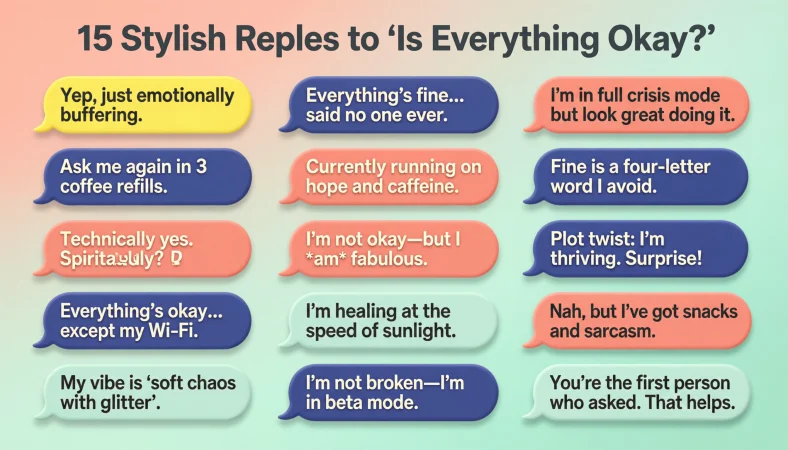
That “Is everything okay?” text can hit differently depending on who sends it. From a friend noticing your unusually quiet mood to a crush wondering why you suddenly disappeared, those three little words can open the door to a surprisingly important conversation. Maybe everything really is fine. Maybe you are exhausted, overwhelmed, annoyed, or simply running on 3% battery and questionable decisions. Knowing the best replies to is everything okay helps you respond without sounding awkward, overly dramatic, or colder than you intended. Your reply can reassure someone, invite a deeper conversation, add some humor, or gently communicate that you need space. Whether it happens in a DM, group chat, workplace message, or face-to-face conversation, the right response can make the interaction feel natural instead of forced. Here are plenty of options for every mood.
Funny Responses
“Define okay.”
Use this when you want to joke about having a slightly chaotic day.
Meaning: You are playfully admitting things are not completely perfect.
“Emotionally? Pending.”
Use this when your mood is questionable but you still want to laugh.
Meaning: You are joking that your emotional status is still processing.
“Ask me after snacks.”
Use this when food is genuinely capable of improving your mood.
Meaning: You are keeping the situation light and playful.
“Everything except my sleep schedule.”
Use this when you are tired but otherwise doing fine.
Meaning: You are saying life is okay while blaming your exhaustion.
“My brain has left the group chat.”
Use this when you feel mentally exhausted.
Meaning: You are joking about being completely drained.
“Surprisingly, yes.”
Use this after someone catches you looking unusually serious.
Meaning: You are humorously reassuring them.
“I’m surviving beautifully.”
Use this when life is chaotic but you refuse to take it too seriously.
Meaning: You are acknowledging the struggle with confidence and humor.
“Everything is okay-ish.”
Use this when things are neither terrible nor amazing.
Meaning: You are giving an honest but lighthearted middle-ground answer.
“Ask my therapist.”
Use this only with someone who understands your humor.
Meaning: You are joking about having complicated thoughts.
“Just fighting my daily side quests.”
Use this when your day has been unusually busy.
Meaning: You are humorously describing everyday problems.
“Physically here, mentally on vacation.”
Use this when you are present but completely distracted.
Meaning: You are saying your mind is elsewhere.
“I’m okay. The plot is just developing.”
Use this when something interesting or chaotic is happening.
Meaning: You are teasing that there is more to the story.
Brutal Responses
“Would it change anything if I said no?”
Use this when someone asks but has not been supportive before.
Meaning: You are questioning whether their concern is genuine.
“Not really, but thanks for noticing.”
Use this when you want to acknowledge their question honestly.
Meaning: You are admitting something is wrong without oversharing.
“I’m fine enough to function.”
Use this when you do not want sympathy.
Meaning: You are saying you can handle yourself.
“That depends on how honest you want me to be.”
Use this when you suspect they may not be ready for the truth.
Meaning: You are warning them that the answer could be complicated.
“No, but I’m handling it.”
Use this when you are struggling but remaining independent.
Meaning: You acknowledge the problem without asking for rescue.
“Not everything needs fixing.”
Use this when someone keeps trying to solve your problems.
Meaning: You want understanding rather than unsolicited advice.
“I’ll let you know if I need something.”
Use this when you want to shut down unnecessary concern.
Meaning: You are politely establishing independence.
“I appreciate the concern, but I’m good.”
Use this when someone is becoming too involved.
Meaning: You are setting a respectful boundary.
“Honestly, I’m not discussing it.”
Use this when the topic is personal.
Meaning: You are clearly communicating that you need privacy.
“Nope. Still standing, though.”
Use this when life is difficult but you remain resilient.
Meaning: You are acknowledging problems without sounding defeated.
“Could be better, could be worse.”
Use this when you want to stay emotionally neutral.
Meaning: You are admitting things are imperfect without making them dramatic.
“I’ve got it under control.”
Use this when someone is worrying unnecessarily.
Meaning: You are reassuring them while protecting your independence.
Flirty Responses
“Maybe you should come find out.”
Use this when the person asking is someone you are attracted to.
Meaning: You are turning concern into a playful invitation.
“I might be better if you were here.”
Use this when you want to make your interest obvious.
Meaning: You are hinting that their presence improves your mood.
“I was fine until you started making me smile.”
Use this when the conversation already feels playful.
Meaning: You are giving them a cute compliment.
“Why, are you worried about me?”
Use this when you want to tease someone who seems concerned.
Meaning: You are inviting them to admit they care.
“Depends. Are you offering to cheer me up?”
Use this when you want to flirt without being too direct.
Meaning: You are giving them an opening to make a move.
“I’m okay now that you asked.”
Use this when you want something sweet and subtle.
Meaning: You are showing that their attention matters.
“Everything’s fine, handsome.”
Use this when you want a confident compliment.
Meaning: You are reassuring them while adding flirtation.
“Maybe I just needed your attention.”
Use this when you want to playfully suggest you missed them.
Meaning: You are expressing interest in a teasing way.
“I could use a little distraction.”
Use this when you want to flirt without saying too much.
Meaning: You are subtly suggesting that they could brighten your day.
“Why do you sound so concerned? Cute.”
Use this when someone is clearly checking on you.
Meaning: You find their concern attractive.
“I’m okay, but you asking is kind of adorable.”
Use this when you want to reward their caring behavior.
Meaning: You are turning their concern into a compliment.
“Everything’s okay. You’re making it better.”
Use this when you want warm, romantic energy.
Meaning: You are telling them their presence has a positive effect.
Polite Responses
“Yes, everything is okay. Thanks for asking.”
Use this when you want a simple, respectful answer.
Meaning: You are reassuring them and appreciating their concern.
“I’m doing okay, thank you for checking in.”
Use this when someone has shown genuine concern.
Meaning: You are responding warmly without oversharing.
“I’m fine, just having a quiet day.”
Use this when you want to explain your mood briefly.
Meaning: You are saying your silence is not a problem.
“Everything is alright on my end.”
Use this when you want a calm, neutral response.
Meaning: You are reassuring the person without adding details.
“I appreciate you checking on me.”
Use this when their message made you feel cared for.
Meaning: You are acknowledging their kindness.
“I’m okay, just a little tired.”
Use this when exhaustion explains your behavior.
Meaning: You are offering a simple reason without creating concern.
“Nothing serious, but thank you.”
Use this when someone seems worried.
Meaning: You are gently reducing their concern.
“I’m alright, just taking things slowly today.”
Use this when you need a quieter day.
Meaning: You are communicating that you need some downtime.
“Yes, thankfully. I hope you’re okay too.”
Use this when you want to return the concern.
Meaning: You are showing consideration for them as well.
“I’m doing fine, thanks for checking.”
Use this for everyday conversations.
Meaning: You are giving a friendly reassurance.
“All is well, thank you.”
Use this when you prefer a polished response.
Meaning: You are calmly confirming that everything is fine.
“I’m okay, and I appreciate you asking.”
Use this when you want to sound sincere.
Meaning: You are combining reassurance with gratitude.
Professional Responses
“Yes, everything is under control. Thank you for checking.”
Use this when a colleague asks about a work issue.
Meaning: You are professionally reassuring them.
“Everything is fine on my end.”
Use this in a workplace message.
Meaning: You are giving a clear, neutral update.
“I’m all good, thank you.”
Use this when responding quickly to a coworker.
Meaning: You are keeping the interaction friendly and concise.
“Thanks for checking in. Everything is okay.”
Use this when someone shows professional concern.
Meaning: You appreciate their consideration.
“Yes, no issues at the moment.”
Use this when discussing a project or task.
Meaning: You are confirming that there is no current problem.
“Everything is progressing as expected.”
Use this when someone asks about work progress.
Meaning: You are providing calm professional reassurance.
“I’m fine, just working through a few things.”
Use this when your workload is heavy.
Meaning: You acknowledge pressure while remaining composed.
“Nothing urgent, but I appreciate you checking.”
Use this when someone worries about a workplace situation.
Meaning: You are clarifying that there is no immediate concern.
“Yes, thank you. I’ll reach out if anything changes.”
Use this when someone is monitoring a situation.
Meaning: You are reassuring them while keeping communication open.
“All good here. Thanks for asking.”
Use this for a friendly workplace response.
Meaning: You are keeping the tone warm but professional.
“I’m doing well, thank you.”
Use this in formal or semi-formal conversations.
Meaning: You are giving a straightforward positive answer.
“Everything is fine at the moment.”
Use this when you want to avoid unnecessary details.
Meaning: You are confirming that there is no immediate issue.
Creative Responses
“The plot is messy, but the main character is surviving.”
Use this when your day feels like a chaotic story.
Meaning: You are turning your situation into a playful narrative.
“My emotional Wi-Fi is reconnecting.”
Use this when you feel mentally scattered.
Meaning: You are humorously saying you need time to reset.
“Currently buffering, but operational.”
Use this when you are tired or overwhelmed.
Meaning: You are saying you are functioning despite low energy.
“The clouds are passing.”
Use this when you are having a temporary rough patch.
Meaning: You are expressing hope that things will improve.
“Life is doing life things.”
Use this when you do not want to explain everything.
Meaning: You are acknowledging normal chaos.
“The system is running on low power mode.”
Use this when you are exhausted.
Meaning: You need rest but are still functioning.
“All chapters are intact.”
Use this when you want a mysterious but positive answer.
Meaning: You are saying you are okay without explaining your story.
“Somewhere between peaceful and problematic.”
Use this when your mood is mixed.
Meaning: You are describing an imperfect but manageable day.
“The vibes are under review.”
Use this when you are unsure how you feel.
Meaning: You are humorously admitting that your mood is unsettled.
“I’m navigating the plot twist.”
Use this when something unexpected happened.
Meaning: You are dealing with change while keeping perspective.
“The emotional weather is cloudy with a chance of snacks.”
Use this when you want to make someone laugh.
Meaning: You are admitting you are not at your best but keeping things playful.
“Still loading, but I’ll get there.”
Use this when you need time to process something.
Meaning: You are saying you are working through your feelings.
Sarcastic Responses
“No, everything is absolutely perfect. Obviously.”
Use this when someone knows you are having a rough day.
Meaning: You are sarcastically suggesting the opposite.
“Me? Struggling? Never heard of it.”
Use this when you want to hide stress behind humor.
Meaning: You are joking about pretending everything is fine.
“Of course. I’m the picture of stability.”
Use this with a close friend who understands sarcasm.
Meaning: You are playfully admitting things are chaotic.
“Absolutely. My life is a five-star experience.”
Use this when your day has been anything but relaxing.
Meaning: You are using exaggeration to make fun of the situation.
“Everything’s great if we ignore everything.”
Use this when you are overwhelmed.
Meaning: You are jokingly acknowledging several problems.
“Couldn’t be better. Couldn’t be worse either.”
Use this when your mood is somewhere in the middle.
Meaning: You are giving a dry, sarcastic assessment.
“Sure, let’s call it okay.”
Use this when you are barely holding things together.
Meaning: You are humorously lowering the definition of okay.
“My life has entered its experimental era.”
Use this when things feel unpredictable.
Meaning: You are making uncertainty sound intentional.
“I’m thriving in a very suspicious way.”
Use this when things are weirdly chaotic.
Meaning: You are joking about questionable progress.
“Everything is fine according to the official statement.”
Use this when you do not want to reveal details.
Meaning: You are jokingly avoiding the full truth.
“Nothing to see here, citizen.”
Use this when a friend keeps investigating your mood.
Meaning: You are playfully telling them to stop asking.
“I have chosen denial today.”
Use this when you are avoiding a stressful thought.
Meaning: You are openly joking about your coping strategy.
Cute Responses
“Aww, you noticed.”
Use this when someone pays attention to your mood.
Meaning: You are appreciating their care in a cute way.
“I’m okay, promise.”
Use this when you want to reassure someone close to you.
Meaning: You are offering gentle comfort.
“Better now that you checked on me.”
Use this when you feel touched by their concern.
Meaning: Their attention made you feel cared for.
“I’m okay, just need a tiny reset.”
Use this when you need a little downtime.
Meaning: You are honestly asking for space without sounding distant.
“You’re sweet for asking.”
Use this when someone checks on you unexpectedly.
Meaning: You appreciate their kindness.
“I’m good, sunshine.”
Use this with someone you have a playful relationship with.
Meaning: You are responding warmly and affectionately.
“All okay in my little corner.”
Use this when you want a soft, cheerful answer.
Meaning: You are reassuring them in a gentle way.
“I’m fine, just being a little human today.”
Use this when you are having an imperfect day.
Meaning: You are normalizing your emotions.
“I’ll be okay. Pinky promise.”
Use this when someone is genuinely worried.
Meaning: You are offering extra reassurance.
“Everything’s okay, sweet soul.”
Use this when you want to return warmth.
Meaning: You are keeping the interaction affectionate.
“I’m alright, thanks for caring.”
Use this when their concern means something to you.
Meaning: You are showing appreciation and reassurance.
“Just a little tired, nothing scary.”
Use this when someone is worried about your quietness.
Meaning: You are gently explaining your mood.
Dramatic Responses
“Okay? That word feels dangerously optimistic.”
Use this when your day has been wildly chaotic.
Meaning: You are exaggerating the situation for humor.
“I have survived another episode.”
Use this after an especially stressful day.
Meaning: You are treating your life like a dramatic series.
“The emotional damage is currently under investigation.”
Use this when something annoying happened.
Meaning: You are joking about processing the situation.
“I have seen things today.”
Use this when your day has been unusually eventful.
Meaning: You are teasing that something dramatic happened.
“The situation has layers.”
Use this when you do not want to explain everything immediately.
Meaning: You are hinting that there is a bigger story.
“I’m alive, which feels like an achievement.”
Use this after an exhausting day.
Meaning: You are celebrating basic survival with humor.
“My peace has filed for early retirement.”
Use this when someone has disturbed your calm.
Meaning: You are joking about losing your patience.
“Today chose violence.”
Use this when everything seems to go wrong.
Meaning: You are humorously blaming the day for the chaos.
“The plot thickened considerably.”
Use this when new drama appears.
Meaning: You are saying the situation became more complicated.
“I’m emotionally starring in a season finale.”
Use this when your feelings are intense.
Meaning: You are playfully exaggerating your emotional state.
“We are not asking questions at this time.”
Use this when you want to avoid explaining a messy situation.
Meaning: You are humorously shutting down the investigation.
“I require snacks and a dramatic soundtrack.”
Use this when you are stressed but still joking.
Meaning: You are making your frustration sound theatrically serious.
Chill And Casual Responses
“Yeah, I’m good.”
Use this when everything is genuinely fine.
Meaning: You are giving a simple reassurance.
“All good.”
Use this when you want the shortest possible response.
Meaning: You are saying there is no problem.
“Yep, just tired.”
Use this when exhaustion explains your mood.
Meaning: You are keeping the explanation casual.
“I’m chilling.”
Use this when you are relaxed and doing fine.
Meaning: You are communicating a laid-back mood.
“Nothing major, I’m okay.”
Use this when someone seems slightly worried.
Meaning: You are reassuring them without details.
“Just having one of those days.”
Use this when your mood is a little off.
Meaning: You are admitting you are not at your best.
“Yeah, we’re good over here.”
Use this when you want a friendly casual tone.
Meaning: You are confidently saying there is no issue.
“I’m surviving, lol.”
Use this when life feels mildly chaotic.
Meaning: You are joking while admitting things are busy.
“Nothing to worry about.”
Use this when someone seems concerned.
Meaning: You are telling them the situation is manageable.
“I’m fine, just taking it easy.”
Use this when you want a calm response.
Meaning: You are explaining your quiet mood.
“Pretty much, yeah.”
Use this when things are mostly okay.
Meaning: You are giving a relaxed, honest answer.
“Yeah, just vibing through it.”
Use this when you are dealing with minor stress.
Meaning: You are keeping the situation positive and relaxed.
Confident Responses
“I’m good. I know how to handle myself.”
Use this when someone worries about your ability to cope.
Meaning: You are confidently asserting your independence.
“Everything’s okay. I’ve got this.”
Use this when you want to reassure someone firmly.
Meaning: You are showing confidence and control.
“I’m fine, just focused.”
Use this when you are quiet because you are concentrating.
Meaning: You are explaining your behavior without apologizing.
“Nothing I can’t handle.”
Use this when life gets difficult.
Meaning: You are emphasizing resilience.
“I’m doing better than I look.”
Use this when someone misreads your serious expression.
Meaning: You are reassuring them while keeping your confidence.
“I’m good. Just moving differently today.”
Use this when your mood is more reserved.
Meaning: You are saying your behavior is intentional.
“Everything is manageable.”
Use this when someone asks about a stressful situation.
Meaning: You are acknowledging pressure without sounding overwhelmed.
“I’m okay and taking care of myself.”
Use this when someone genuinely worries about you.
Meaning: You are reassuring them that you are prioritizing your well-being.
“I’ve handled worse.”
Use this after a difficult experience.
Meaning: You are reminding yourself and others of your resilience.
“I’m steady.”
Use this when you want a short, confident answer.
Meaning: You are saying your emotions are under control.
“I know what I need to do.”
Use this when someone offers unnecessary advice.
Meaning: You are confidently communicating self-awareness.
“I’ll be fine. Trust me.”
Use this when you want to end the concern gently.
Meaning: You are asking them to trust your judgment.
Emotional Responses
“Honestly, not really.”
Use this when you are ready to admit something is wrong.
Meaning: You are opening the door to an honest conversation.
“I’ve been struggling a little.”
Use this when you want someone to understand your mood.
Meaning: You are sharing vulnerability without overwhelming them.
“I’m not okay today, but I’ll get through it.”
Use this when you need to be honest while remaining hopeful.
Meaning: You are acknowledging pain and resilience together.
“I appreciate you asking because I needed that.”
Use this when someone checks in at the right moment.
Meaning: Their concern made you feel supported.
“It’s been a lot lately.”
Use this when several things have built up.
Meaning: You are honestly acknowledging emotional pressure.
“I’m trying my best.”
Use this when you feel overwhelmed.
Meaning: You are asking for understanding rather than judgment.
“I’m okay enough to talk about it.”
Use this when you are ready to open up.
Meaning: You are signaling that a deeper conversation is possible.
“Not completely, but I’m getting there.”
Use this when you are recovering from a difficult period.
Meaning: You are expressing honesty and hope.
“I could actually use someone to listen.”
Use this when advice is not what you need.
Meaning: You are asking for emotional support.
“Thank you for noticing.”
Use this when someone recognizes your struggle.
Meaning: You feel seen and appreciate their attention.
“I’ve been keeping a lot inside.”
Use this when you want to begin a serious conversation.
Meaning: You are indicating that deeper emotions need to come out.
“I’m not ready to explain everything yet.”
Use this when you need space before opening up.
Meaning: You are being honest while maintaining a boundary.
Sweet Responses
“I’m okay, and thank you for caring.”
Use this when someone genuinely makes you feel supported.
Meaning: You are combining reassurance with gratitude.
“You always know when to check in.”
Use this when someone is especially attentive.
Meaning: You are complimenting their emotional awareness.
“I’m alright, especially knowing someone cares.”
Use this when their message makes you feel comforted.
Meaning: Their concern has made your day better.
“I’m good, but that was really kind of you.”
Use this when you do not need help but appreciate the gesture.
Meaning: You value their thoughtfulness.
“Everything’s okay, promise. Thank you for being here.”
Use this with someone close to you.
Meaning: You are reassuring them while expressing affection.
“I’m fine, but your message made me smile.”
Use this when their concern genuinely brightened your mood.
Meaning: You are showing that their attention mattered.
“I’m okay. You’re a good friend.”
Use this when a friend checks on you.
Meaning: You are appreciating their loyalty.
“I’m doing alright, thanks for thinking of me.”
Use this when someone reaches out unexpectedly.
Meaning: You are acknowledging their kindness.
“I’m okay, sweetheart.”
Use this when the relationship is affectionate.
Meaning: You are responding with warmth and reassurance.
“You checking in means more than you know.”
Use this when their message arrived during a difficult moment.
Meaning: Their concern provided emotional comfort.
“I’m okay, and I hope you are too.”
Use this when you want to return their kindness.
Meaning: You are showing mutual care.
“Thanks for making sure I’m okay.”
Use this when someone consistently looks out for you.
Meaning: You are sincerely appreciating their support.
Clever Responses
“Okay is a spectrum.”
Use this when your mood is complicated.
Meaning: You are saying you are neither completely fine nor completely struggling.
“Depends which version of me you ask.”
Use this when your emotions are mixed.
Meaning: You are playfully admitting your mood is complicated.
“I’m functional, which counts.”
Use this when you are tired but managing.
Meaning: You are defining success as simply getting through the day.
“Currently accepting reassurance and snacks.”
Use this when you want support without sounding too serious.
Meaning: You are lightly asking for comfort.
“The answer is complicated, but the short version is yes.”
Use this when you are mostly okay.
Meaning: You are simplifying a more complicated emotional state.
“My circumstances say no, my attitude says yes.”
Use this when life is difficult but your mindset remains positive.
Meaning: You are choosing optimism despite challenges.
“I’m okay enough for today.”
Use this when you are taking life one day at a time.
Meaning: You are honestly describing your current capacity.
“Nothing is perfect, but nothing is impossible.”
Use this when you want an optimistic response.
Meaning: You are acknowledging challenges while staying hopeful.
“I’m currently negotiating with reality.”
Use this when your day is unpredictable.
Meaning: You are joking about adapting to circumstances.
“My mood has mixed reviews.”
Use this when you cannot decide how you feel.
Meaning: You are describing emotional uncertainty humorously.
“I’m okay with a few terms and conditions.”
Use this when things are mostly fine but complicated.
Meaning: You are playfully admitting there are exceptions.
“Ask again after coffee.”
Use this when your mood depends heavily on caffeine.
Meaning: You are saying you are not fully operational yet.
Supportive Responses
“I’m okay, but I really appreciate you checking.”
Use this when you want to reassure someone while recognizing their kindness.
Meaning: You value their emotional support.
“I’m getting through it one day at a time.”
Use this during a difficult period.
Meaning: You are acknowledging the struggle while staying hopeful.
“Not perfect, but I’m managing.”
Use this when you want an honest middle-ground response.
Meaning: You are admitting difficulty without sounding defeated.
“I’m okay for now, thank you.”
Use this when you need a little space.
Meaning: You are reassuring them while keeping boundaries.
“I appreciate you being there.”
Use this when someone has consistently supported you.
Meaning: You are recognizing their reliability.
“I’m taking things one step at a time.”
Use this when life feels overwhelming.
Meaning: You are focusing on manageable progress.
“I’ll be okay. I just need some time.”
Use this when you need emotional space.
Meaning: You are asking for patience rather than immediate solutions.
“I’m working through it.”
Use this when you do not want to discuss details.
Meaning: You are acknowledging the issue while keeping it private.
“It helps knowing you asked.”
Use this when someone’s concern genuinely comforts you.
Meaning: You are telling them their support matters.
“I’m not at my best, but I’m not giving up.”
Use this when you are going through a challenging moment.
Meaning: You are expressing vulnerability and determination.
“I’m taking care of myself.”
Use this when someone worries about you.
Meaning: You are reassuring them that you are prioritizing yourself.
“I’ll reach out if I need you.”
Use this when you appreciate support but need independence.
Meaning: You are keeping the door open without asking for immediate help.
Direct And Honest Responses
“No, actually.”
Use this when you want to be completely straightforward.
Meaning: You are clearly admitting that something is wrong.
“Not really, but I’m okay talking about it.”
Use this when you are ready to open up.
Meaning: You are inviting an honest conversation.
“Yes, everything is fine.”
Use this when there genuinely is no issue.
Meaning: You are giving direct reassurance.
“I’m upset, but I’ll be okay.”
Use this when you want to explain your mood honestly.
Meaning: You are acknowledging emotion without creating panic.
“I need a little space right now.”
Use this when you are not ready to talk.
Meaning: You are setting a clear emotional boundary.
“Something is bothering me.”
Use this when you want someone to know there is a problem.
Meaning: You are opening the conversation without revealing everything.
“I’m fine physically, just mentally exhausted.”
Use this when someone mistakes tiredness for illness.
Meaning: You are clarifying what kind of support you need.
“I’m dealing with some personal stuff.”
Use this when you want privacy.
Meaning: You are explaining your mood without giving details.
“I’m okay, but I don’t want to talk about it yet.”
Use this when you need time.
Meaning: You are being honest while protecting your emotional space.
“I could be better.”
Use this when you want to acknowledge difficulty subtly.
Meaning: You are saying things are not ideal without elaborating.
“I’m having a rough day.”
Use this when you want someone to understand your behavior.
Meaning: You are clearly identifying your current mood.
“Honestly, I could use some support.”
Use this when you are comfortable asking for help.
Meaning: You are directly communicating a need for emotional support.
Playful Responses
“Why, did my face betray me?”
Use this when someone notices you look serious.
Meaning: You are joking about your expression giving away your mood.
“I’m fine. My face is just dramatic.”
Use this when people often misread your expression.
Meaning: You are blaming your facial expression rather than your mood.
“Only my playlist knows the truth.”
Use this when your mood is complicated.
Meaning: You are joking that music understands you better.
“I’m okay, but my coffee has concerns.”
Use this when you are tired.
Meaning: You are making your low energy sound funny.
“Nothing happened that a nap can’t fix.”
Use this when exhaustion is the main problem.
Meaning: You are saying rest is all you need.
“I’m good, just starring in my own little drama.”
Use this when you are feeling emotional.
Meaning: You are playfully acknowledging your mood.
“Everything is fine in the alternate universe.”
Use this when your day is going badly.
Meaning: You are using absurd humor to describe chaos.
“I’m okay-ish, with emphasis on the ish.”
Use this when things are only partly fine.
Meaning: You are giving an honest answer with humor.
“My brain requested a timeout.”
Use this when you feel mentally exhausted.
Meaning: You need a short break from everything.
“I’m fine, just buffering dramatically.”
Use this when you need time to process something.
Meaning: You are joking about feeling mentally slow.
“No crisis, just vibes and questionable decisions.”
Use this when your day has been messy.
Meaning: You are keeping a minor problem playful.
“I’m okay, but I reserve the right to be dramatic.”
Use this with someone who enjoys your humor.
Meaning: You are admitting you may complain while still being fine.
FAQs
What Does “Is Everything Okay?” Mean?
It usually means someone has noticed a change in your mood, behavior, or energy and wants to know whether something is wrong.
Can “Is Everything Okay?” Be Flirty?
Yes. A crush asking can be a subtle way of showing they care, especially if they notice small changes in your behavior.
What Is a Good Reply If Everything Is Fine?
Try “Yeah, I’m good, thanks for checking!” or “Everything’s fine, just having a quiet day.”
What If Everything Is Not Okay?
Be honest without sharing more than you want. Try “Not really, but I appreciate you asking.”
What If You Need Space?
Say “I’m okay, I just need a little time to myself.” It is honest and sets a clear boundary.
What If You Want To Talk?
Try “Actually, I could use someone to talk to.” This lets the other person know you are open to support.
Is Humor Appropriate?
Yes, especially with close friends or people who understand your personality. Avoid jokes when someone is genuinely worried about your safety or well-being.
What Is A Good Professional Reply?
Try “Everything is fine on my end. Thanks for checking.” It sounds friendly without becoming overly personal.
What If You Do Not Want To Explain?
You can simply say “I’m okay, but I’d rather not talk about it right now.” You never owe someone every detail.
Can “I’m Fine” Sound Rude?
Sometimes. A softer version like “I’m okay, thanks for checking” sounds warmer and shows appreciation.
What Is A Good Reply To A Crush?
Try “I’m okay now that you asked.” It is sweet, subtle, and gives the conversation a little flirtatious energy.
What Is A Good Funny Reply?
Try “Emotionally? Pending.” It works especially well when you want to acknowledge mild chaos without making the conversation heavy.
Conclusion
Knowing how to respond to “Is everything okay?” gives you more control over the conversation. You do not have to automatically say “I’m fine,” and you definitely do not have to explain your entire life story just because someone asked. Choose a funny reply when the moment needs a laugh, an honest answer when you need support, or a simple response when everything really is fine. Your words can reassure someone, create a deeper connection, set a boundary, or even make a crush smile. The best response is the one that sounds like you. Save this list for your next unexpected check-in, share it with a friend, and pick your favorite response when the moment arrives.