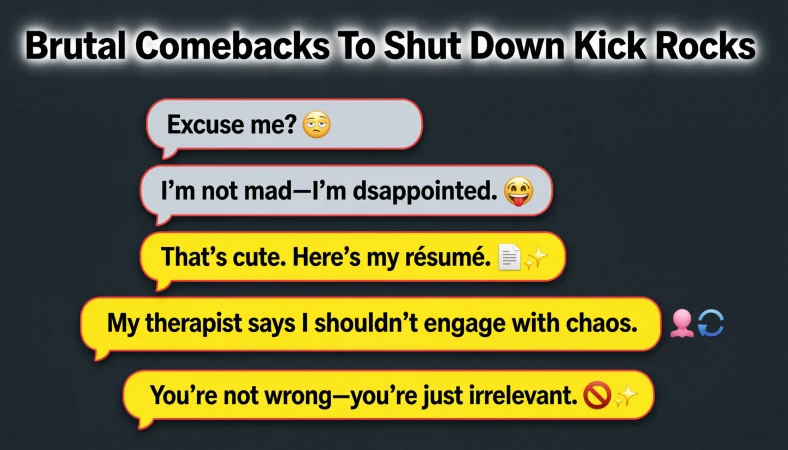
Quick Answer: The best brutal comebacks to shut down “kick rocks” are short, confident, and sharp enough to end the exchange without making you look bothered. Whether someone is being rude in a text, DM, comment, or real-life argument, the right comeback can close the conversation fast.
Top alternatives: “Already halfway out the door,” “You first,” “Gladly, but don’t miss me,” “That was almost intimidating,” “Consider the conversation officially over”
Someone says “kick rocks,” and suddenly the conversation has gone from normal to unnecessary real quick. Maybe it happened during a heated text exchange, a petty DM, a disagreement with a friend, or even a comment section battle where everyone suddenly becomes a professional comedian. “Kick rocks” is basically a dismissive way of telling someone to go away, so responding with the right energy matters. You could get defensive, throw an insult back, or simply deliver one perfectly timed line that ends the whole thing. That is where brutal comebacks to shut down “kick rocks” come in. The best ones are witty, confident, and short enough to hit without sounding desperate. Sometimes the strongest comeback is not the loudest one. It is the one that makes the other person realize they should have stopped talking first.
Brutal Responses
Gladly. I was already leaving.
Use this when someone tells you to go away during an argument.
Meaning: You show that their dismissal does not affect you.
You first.
Use this when someone tries to send you away rudely.
Meaning: You casually throw their attitude right back at them.
Already halfway out the door.
Use this when you were done with the conversation anyway.
Meaning: You make it clear they are not controlling your exit.
That was supposed to hurt?
Use this when someone tries to provoke you.
Meaning: You show that their words had no emotional impact.
Cute command. Wrong person.
Use this when someone acts overly authoritative.
Meaning: You are refusing to be bossed around.
I’ll leave when I’m finished.
Use this when someone tries to rush you out of a conversation.
Meaning: You are calmly asserting control.
Don’t worry, I won’t stay where I’m unwanted.
Use this when the interaction has become genuinely unpleasant.
Meaning: You are choosing dignity over pointless arguing.
You make leaving sound like a punishment.
Use this when someone tells you to leave dramatically.
Meaning: You imply that walking away is actually your advantage.
That attitude explains a lot.
Use this when someone’s behavior has become disrespectful.
Meaning: You are pointing out that their attitude speaks for itself.
Consider me gone and uninterested.
Use this when you want to end the conversation completely.
Meaning: You are withdrawing your attention without begging for approval.
You could have simply said goodbye.
Use this when someone uses “kick rocks” instead of communicating normally.
Meaning: You are calling out their unnecessary hostility.
Conversation dismissed. Your opinion included.
Use this when someone is being unnecessarily rude.
Meaning: You are ending the exchange with confidence.
Funny Responses
Sure, should I bring hiking boots? 😂
Use this when a friend says “kick rocks” jokingly.
Meaning: You turn their insult into harmless comedy.
Only if you promise to join me.
Use this when the exchange is playful.
Meaning: You are refusing to take their dismissal seriously.
Do rocks come with instructions?
Use this when someone dramatically tells you to leave.
Meaning: You are making their insult sound ridiculous.
Is this a sponsored hiking trip?
Use this when someone says “kick rocks” in a silly argument.
Meaning: You respond with absurd humor.
Fine, but I’m picking the smoothest rocks.
Use this when you want to keep things playful.
Meaning: You turn their command into a joke.
I’ll kick one with your name on it.
Use this when close friends are roasting each other.
Meaning: You return the teasing without making it serious.
Do I get a map or just vibes?
Use this when someone tells you to disappear.
Meaning: You exaggerate the request for comedic effect.
Plot twist: I brought sandals.
Use this when someone expects you to get offended.
Meaning: You show that their insult is not bothering you.
Rock kicking? Finally, a productive hobby.
Use this when the other person is clearly joking.
Meaning: You turn their insult into a silly activity.
I’ll add rock kicking to my weekend plans.
Use this when you want a light comeback.
Meaning: You pretend to take their dismissal literally.
Sounds peaceful, honestly.
Use this when someone tries to provoke you.
Meaning: You make their insult sound like an attractive escape.
Thanks for the travel recommendation.
Use this when you want a playful response.
Meaning: You turn their rude comment into fake helpful advice.
Sarcastic Responses
Wow, what a powerful argument.
Use this when someone has no real response left.
Meaning: You sarcastically point out how weak their comeback is.
I’ll alert the rock department.
Use this when someone says “kick rocks” dramatically.
Meaning: You make their insult sound official and ridiculous.
Thank you for that deeply insightful suggestion.
Use this when someone is being dismissive.
Meaning: You sarcastically mock the lack of substance.
Your creativity is truly unmatched.
Use this when they use a predictable insult.
Meaning: You are sarcastically calling their comeback unoriginal.
Brilliant. Absolutely groundbreaking.
Use this when someone thinks they delivered a devastating line.
Meaning: You are mocking their confidence.
Was that your best one?
Use this when someone tries to shut you down.
Meaning: You imply their insult was unimpressive.
I expected better from you.
Use this when someone gives a weak comeback.
Meaning: You reverse the judgment onto them.
The drama is adorable.
Use this when someone is making a small disagreement dramatic.
Meaning: You refuse to treat their behavior seriously.
What a remarkably mature response.
Use this when someone is being childish.
Meaning: You sarcastically highlight their immaturity.
I’ll treasure that terrible advice forever.
Use this when someone gives a dismissive command.
Meaning: You are humorously rejecting their suggestion.
A classic line from the petty handbook.
Use this when someone uses a predictable insult.
Meaning: You point out how unoriginal their response is.
And here I thought we were having a conversation.
Use this when someone suddenly becomes rude.
Meaning: You call out the shift in tone.
Clever Responses
I don’t take directions from people who lack direction.
Use this when someone tries to control the conversation.
Meaning: You question their authority without shouting.
If dismissal is your strongest argument, we’re done here.
Use this when someone avoids the actual issue.
Meaning: You point out that they have no useful response.
Interesting way to admit you’ve run out of things to say.
Use this when someone tells you to leave after losing an argument.
Meaning: You frame their dismissal as conversational defeat.
I’ll take that as your official concession.
Use this when someone ends an argument abruptly.
Meaning: You jokingly interpret their exit as surrender.
That’s one way to announce you’ve lost interest in reasoning.
Use this when someone becomes dismissive.
Meaning: You highlight the lack of logical discussion.
You confused confidence with authority.
Use this when someone acts like they can command you.
Meaning: You remind them that confidence does not give them control.
Your exit strategy needs better material.
Use this when someone tries a predictable insult.
Meaning: You cleverly criticize their weak comeback.
If you wanted the last word, you could have simply asked.
Use this when someone tries to end the exchange dramatically.
Meaning: You point out their need for control.
I recognize the dismissal, but not the authority behind it.
Use this when someone tells you what to do.
Meaning: You refuse to treat their command as meaningful.
You made a statement, not a point.
Use this when someone avoids the actual argument.
Meaning: You distinguish between attitude and substance.
That’s an instruction, not an argument.
Use this when someone tries to shut down discussion.
Meaning: You highlight that they have not actually made a case.
I’ll consider your suggestion approximately never.
Use this when you want a dry, witty comeback.
Meaning: You jokingly reject their advice.
Confident Responses
I don’t need your permission to leave.
Use this when someone tries to control your actions.
Meaning: You reinforce your independence.
If I leave, it’ll be because I choose to.
Use this when someone gives you a command.
Meaning: You make it clear that your decisions belong to you.
You don’t have to like me, and I don’t have to care.
Use this when someone is trying to get a reaction.
Meaning: You refuse to seek their approval.
I’m comfortable walking away from this.
Use this when the conversation becomes pointless.
Meaning: You prioritize your peace over winning.
Your attitude isn’t my responsibility.
Use this when someone is being unnecessarily hostile.
Meaning: You refuse to carry their negativity.
I know when a conversation isn’t worth my time.
Use this when you want to end an argument.
Meaning: You are confidently choosing to disengage.
I don’t argue for validation.
Use this when someone keeps provoking you.
Meaning: You do not need their agreement to feel secure.
I’m good with my decision.
Use this when someone tries to pressure you.
Meaning: You remain confident without escalating.
You can have the last word. I’m still leaving.
Use this when the argument has become repetitive.
Meaning: You prioritize peace over verbal victory.
I don’t need to prove myself here.
Use this when someone challenges you unnecessarily.
Meaning: You are refusing to participate in pointless conflict.
Your reaction doesn’t change my position.
Use this when someone becomes dismissive.
Meaning: You remain steady despite their attitude.
I’m not bothered enough to argue.
Use this when someone expects an emotional reaction.
Meaning: You show that their provocation failed.
Chill And Casual Responses
Alright, I’m out.
Use this when you simply want to leave the conversation.
Meaning: You end things without unnecessary drama.
Cool, take care.
Use this when someone is being dismissive.
Meaning: You respond calmly instead of escalating.
No worries. I’m good.
Use this when you do not want to continue arguing.
Meaning: You are comfortable disengaging.
Fair enough. Catch you later.
Use this when the exchange is not worth pursuing.
Meaning: You end the conversation casually.
Okay, we’re done here.
Use this when things are becoming repetitive.
Meaning: You are choosing to stop engaging.
All good. I’m moving on.
Use this when someone tells you to leave.
Meaning: You are letting the conversation go.
Sure thing. Have a good one.
Use this when you want a surprisingly calm comeback.
Meaning: You respond politely despite their attitude.
Got it. No hard feelings.
Use this when you want to end things maturely.
Meaning: You refuse to carry unnecessary resentment.
Sounds good. I’m logging off.
Use this during an online argument.
Meaning: You are choosing to disengage.
Okay, peace.
Use this when you want a short exit.
Meaning: You are ending the exchange without drama.
Message received. I’m moving along.
Use this when someone tells you to go away.
Meaning: You acknowledge them and leave confidently.
No problem. Conversation over.
Use this when you want a firm but calm ending.
Meaning: You are closing the discussion.
Brutally Funny Responses
I’ll kick rocks right after you kick that attitude.
Use this when someone is being unnecessarily rude.
Meaning: You return the attitude with humor.
Sure, but your personality already kicked mine out.
Use this when someone is being especially dismissive.
Meaning: You jokingly blame their attitude for ending the interaction.
I would, but apparently you’re already collecting them.
Use this when someone says “kick rocks” sarcastically.
Meaning: You turn their phrase back around.
I’ll kick rocks when you kick the ego.
Use this when someone is acting overly confident.
Meaning: You call out their arrogance.
Rocks are probably more pleasant company.
Use this when the other person is being extremely annoying.
Meaning: You imply that leaving is actually an improvement.
I might, but I don’t want to damage the rocks.
Use this when you want an absurd comeback.
Meaning: You joke that even the rocks deserve better.
I’d rather talk to the rocks. They seem quieter.
Use this when someone will not stop arguing.
Meaning: You jokingly suggest the rocks are better company.
At least rocks know when to stay silent.
Use this when someone keeps talking unnecessarily.
Meaning: You criticize their inability to stop arguing.
I’ll kick rocks after I finish watching this meltdown.
Use this when someone is being dramatically angry.
Meaning: You make their reaction part of the joke.
You say kick rocks like you invented them.
Use this when someone acts proud of their insult.
Meaning: You mock their confidence.
Rock kicking sounds better than this conversation.
Use this when the exchange has become exhausting.
Meaning: You humorously admit that leaving sounds preferable.
Thanks, but I prefer walking away with dignity.
Use this when someone is trying to bait you.
Meaning: You choose composure over retaliation.
Polite But Firm Responses
I think it’s best if we end this conversation here.
Use this when someone becomes disrespectful.
Meaning: You set a clear boundary without insulting them.
I’m happy to disagree, but I’m not interested in disrespect.
Use this when a disagreement turns personal.
Meaning: You distinguish healthy disagreement from hostility.
If we’re done talking, that’s perfectly fine.
Use this when someone dismisses you.
Meaning: You accept the end without needing the final word.
I’ll step away from this conversation now.
Use this when the exchange becomes unproductive.
Meaning: You calmly remove yourself.
I don’t think continuing this is productive.
Use this when both sides are going in circles.
Meaning: You prioritize resolution over arguing.
Let’s leave it there.
Use this when you want a simple boundary.
Meaning: You are closing the discussion.
I respect your decision to end the conversation.
Use this when someone tells you to leave.
Meaning: You respond with maturity.
There’s no need for us to be disrespectful.
Use this when someone becomes rude.
Meaning: You calmly call attention to their behavior.
I’ll give you the space you’re asking for.
Use this when someone clearly wants distance.
Meaning: You respect their boundary.
We clearly see this differently. Let’s leave it at that.
Use this when an argument cannot be resolved.
Meaning: You accept disagreement without escalation.
I won’t engage with hostility.
Use this when someone tries to provoke you.
Meaning: You establish a firm communication boundary.
Take care. I think we’re finished here.
Use this when you want a respectful final message.
Meaning: You close the conversation cleanly.
Clever One-Liners
Don’t threaten me with a good time.
Use this when someone says “kick rocks” jokingly.
Meaning: You make leaving sound like a reward.
Already gone mentally.
Use this when you are completely over the conversation.
Meaning: You show emotional detachment.
You say that like I wanted to stay.
Use this when someone assumes you need their approval.
Meaning: You make their dismissal irrelevant.
Trust me, leaving isn’t the insult you think it is.
Use this when someone tries to offend you.
Meaning: You show that walking away benefits you too.
Your permission was never required.
Use this when someone tries to command you.
Meaning: You firmly reject their authority.
That’s cute. I’m still not impressed.
Use this when someone expects you to feel intimidated.
Meaning: You remain completely unfazed.
You really thought that would end me?
Use this when someone attempts to provoke you.
Meaning: You show emotional resilience.
I was going to leave anyway. Thanks for the reminder.
Use this when the conversation is already pointless.
Meaning: You turn their insult into a helpful suggestion.
You can keep the attitude. I’ll keep my peace.
Use this when someone is being hostile.
Meaning: You choose calm over confrontation.
Your words aren’t nearly as powerful as you think.
Use this when someone tries to intimidate you.
Meaning: You remind them that their insult has limits.
I don’t chase conversations that want to end.
Use this when someone dismisses you.
Meaning: You refuse to beg for continued interaction.
Enjoy your victory lap. I’m not competing.
Use this when someone wants to feel like they won.
Meaning: You refuse to participate in their competition.
Creative Responses
I’ll go where the rocks are less judgmental.
Use this when someone jokingly tells you to leave.
Meaning: You turn their phrase into a playful escape.
Consider this my dramatic departure scene.
Use this when ending a silly argument.
Meaning: You make your exit intentionally theatrical.
Fine, I’ll go consult the rocks about your attitude.
Use this when someone is being difficult.
Meaning: You use absurd humor to respond.
The rocks await my arrival.
Use this when you want a short, playful comeback.
Meaning: You pretend to accept their ridiculous command.
I’ll be over there, living rent-free in your thoughts.
Use this when someone is clearly bothered by you.
Meaning: You joke that they are still thinking about you.
Off to begin my rock-kicking era.
Use this when someone says “kick rocks” jokingly.
Meaning: You turn their insult into a fake new chapter.
Adding “professional rock kicker” to my résumé.
Use this when you want a silly comeback.
Meaning: You humorously pretend their insult gave you a new career.
Time to touch grass and kick rocks, apparently.
Use this when the conversation gets overly online.
Meaning: You poke fun at the absurdity of the exchange.
I’ll make sure the rocks hear about this.
Use this when someone delivers a dramatic dismissal.
Meaning: You exaggerate their comment for humor.
My next adventure: somewhere far from this energy.
Use this when the conversation becomes negative.
Meaning: You are choosing better energy elsewhere.
And thus begins my legendary rock-kicking journey.
Use this when you want an exaggerated response.
Meaning: You turn their insult into an imaginary adventure.
Fine, but I’m leaving with better energy than I arrived with.
Use this when someone is trying to bring you down.
Meaning: You refuse to let their negativity affect you.
Cold Responses
Noted. Goodbye.
Use this when you want to end the conversation immediately.
Meaning: You acknowledge their message without emotion.
Understood. Take care.
Use this when someone clearly wants distance.
Meaning: You respond with calm finality.
Then we’re finished.
Use this when someone tells you to leave.
Meaning: You close the exchange without further argument.
No need to repeat yourself.
Use this when someone keeps dismissing you.
Meaning: You show that their message was already understood.
Message received.
Use this when you want an emotionally detached response.
Meaning: You acknowledge the statement without engaging.
That’s all I needed to know.
Use this when someone’s attitude tells you enough.
Meaning: You have decided there is nothing more to discuss.
Understood. I won’t bother you again.
Use this when someone clearly rejects further interaction.
Meaning: You accept the boundary and disengage.
Noted. I’ll act accordingly.
Use this when you want to sound composed and distant.
Meaning: You are making a deliberate decision based on their behavior.
We don’t need to continue this.
Use this when the conversation has become hostile.
Meaning: You are ending the interaction.
I’ll respect your request.
Use this when someone asks you to leave.
Meaning: You show emotional control.
Consider it handled.
Use this when you want a short, firm answer.
Meaning: You are signaling that the matter is closed.
Take care. We’re done.
Use this when you want a final boundary.
Meaning: You are ending the interaction without further discussion.
Flirty And Playful Responses
Only if you’re coming with me. 😉
Use this when “kick rocks” is playful flirting.
Meaning: You turn the dismissal into an invitation.
You just wanted an excuse to keep talking to me.
Use this when there is obvious chemistry.
Meaning: You playfully suggest their teasing is attention-seeking.
You could’ve just said you missed me.
Use this when someone is teasing you affectionately.
Meaning: You turn their irritation into flirtation.
If I leave, who’s going to entertain you?
Use this when the person enjoys your attention.
Meaning: You tease them about secretly wanting you around.
That sounded more like flirting than rejection.
Use this when their tone is clearly playful.
Meaning: You challenge their supposed dismissal.
You tell me to leave, but keep giving me attention. Interesting.
Use this when someone sends mixed signals.
Meaning: You playfully point out their contradictory behavior.
Careful, I might actually leave and make you miss me.
Use this when you want playful romantic tension.
Meaning: You suggest your absence could make them regret the dismissal.
I could leave, but where’s the fun in that?
Use this when the conversation is lighthearted.
Meaning: You are teasing them while keeping the interaction going.
You make being annoying look kind of cute.
Use this when someone is playfully rude.
Meaning: You turn their attitude into a compliment.
Fine, but you owe me a reason to come back.
Use this when you want a flirty comeback.
Meaning: You playfully challenge them to keep your attention.
If you wanted me gone, you wouldn’t be this entertaining.
Use this when the banter is strong.
Meaning: You imply that the conversation is too fun to end.
I’ll kick rocks after you admit you like my company.
Use this when flirting is already obvious.
Meaning: You turn the dismissal into a playful challenge.
Mature Responses
I don’t think this conversation is going anywhere productive.
Use this when the disagreement keeps escalating.
Meaning: You recognize when continuing is pointless.
Let’s take a step back.
Use this when emotions are getting high.
Meaning: You want to reduce tension.
I respect that you want space.
Use this when someone asks you to leave.
Meaning: You acknowledge their boundary.
We can disagree without disrespecting each other.
Use this when the conversation becomes hostile.
Meaning: You encourage healthier communication.
I’ll leave this conversation before it becomes something worse.
Use this when both people are frustrated.
Meaning: You choose prevention over escalation.
I don’t need to win this conversation.
Use this when someone tries to provoke you.
Meaning: You prioritize peace over being right.
I understand that you’re frustrated.
Use this when the other person is emotional.
Meaning: You acknowledge their feelings without accepting blame automatically.
Let’s talk when we’re both calmer.
Use this when the argument is getting heated.
Meaning: You want to revisit the issue constructively.
I won’t respond to disrespect with more disrespect.
Use this when someone crosses a line.
Meaning: You are maintaining your standards.
I’ll give this some space.
Use this when the conversation needs a pause.
Meaning: You are choosing distance instead of escalation.
We don’t have to agree today.
Use this when a disagreement cannot be resolved immediately.
Meaning: You allow room for differences.
I think walking away is better for both of us.
Use this when the interaction has become toxic or exhausting.
Meaning: You choose a peaceful ending.
Extra Petty Responses
I’ll leave right after I finish enjoying how bothered you are.
Use this only when the exchange is clearly playful.
Meaning: You are teasing them about their reaction.
Imagine telling someone to leave and expecting them to care.
Use this when someone assumes you need their approval.
Meaning: You emphasize your emotional independence.
That’s a lot of confidence for such a tired comeback.
Use this when someone uses “kick rocks” as an insult.
Meaning: You call out the lack of originality.
You really rehearsed that, didn’t you?
Use this when someone delivers a dramatic line.
Meaning: You imply their comeback sounds forced.
I can tell you’ve been waiting to say that.
Use this when someone seems overly eager to dismiss you.
Meaning: You suggest they are more invested than they appear.
You seem very committed to ending a conversation nobody asked you to control.
Use this when someone tries to dominate the exchange.
Meaning: You challenge their need for control.
That attitude is doing more talking than you are.
Use this when someone’s behavior is obvious.
Meaning: You suggest their attitude reveals their character.
I would take you seriously if the comeback were better.
Use this when someone is trying to intimidate you.
Meaning: You imply their attempt failed.
You wanted a reaction so badly. That’s adorable.
Use this when someone is clearly baiting you.
Meaning: You show that you recognize the provocation.
Keep the attitude. I’m keeping the receipts.
Use this when the exchange happens online.
Meaning: You are warning that their behavior is being noticed.
That was loud, but not impressive.
Use this when someone thinks they delivered a devastating comeback.
Meaning: You separate volume from effectiveness.
You can keep talking. I’m still not bothered.
Use this when someone repeatedly tries to provoke you.
Meaning: You make it clear their efforts are failing.
FAQs
What Does “Kick Rocks” Mean?
“Kick rocks” is an informal phrase telling someone to go away, leave, or stop bothering the speaker. It is usually dismissive and can sound rude depending on the situation.
Is “Kick Rocks” An Insult?
It can be. The phrase is generally dismissive, but friends may use it jokingly when teasing each other.
What Is The Best Brutal Comeback To “Kick Rocks”?
Try “You say that like I wanted to stay.” It is short, confident, and makes their dismissal feel irrelevant.
What Is A Funny Response To “Kick Rocks”?
Try “Sure, should I bring hiking boots? 😂” It works especially well when the other person is joking.
What Is A Calm Response To “Kick Rocks”?
Try “Cool, take care.” It ends the interaction without giving the other person additional drama.
Can “Kick Rocks” Be Flirty?
Yes, if it comes from someone you already have playful chemistry with. A response like “Only if you’re coming with me 😉” can turn it into teasing.
What If Someone Says “Kick Rocks” Seriously?
If they genuinely want you to leave or stop contacting them, respect the boundary. A simple “Understood, take care” is usually better than escalating.
Is It Okay To Use A Brutal Comeback?
Yes, if the context is playful or you are simply defending yourself verbally. However, the strongest response is often one that ends the interaction rather than making the conflict bigger.
Can I Use These Comebacks At Work?
Use the polite, professional, or mature responses instead of Clever ones. Workplace conversations usually benefit from calm boundaries rather than personal insults.
What If I Don’t Actually Mean “Kick Rocks”?
If you said it jokingly and think the other person misunderstood, clarify quickly. Try “I was joking, I didn’t mean for that to sound harsh.”
Should I Respond To “Kick Rocks” With Humor?
Humor works well when both people are joking. If the person is genuinely angry, a calm response is usually more effective.
What Is A Good Response If I Want The Conversation Over?
Try “I think we’re done here. Take care.” It is direct, mature, and leaves little room for another argument.
Conclusion
The perfect comeback to “kick rocks” does not have to be the nastiest line in the group chat. Sometimes a brutal one-liner is funny, sometimes a sarcastic response hits perfectly, and sometimes the most powerful move is simply saying “take care” and walking away. The goal is to match the energy without letting someone else’s attitude control yours. Use funny responses with friends, clever lines when someone is trying to provoke you, and mature replies when the situation actually matters. Confidence always sounds better than desperation, and a calm exit can say more than ten paragraphs of arguing. Save these comebacks for your next unexpected “kick rocks” moment, share your favorite, and keep your replies sharp!