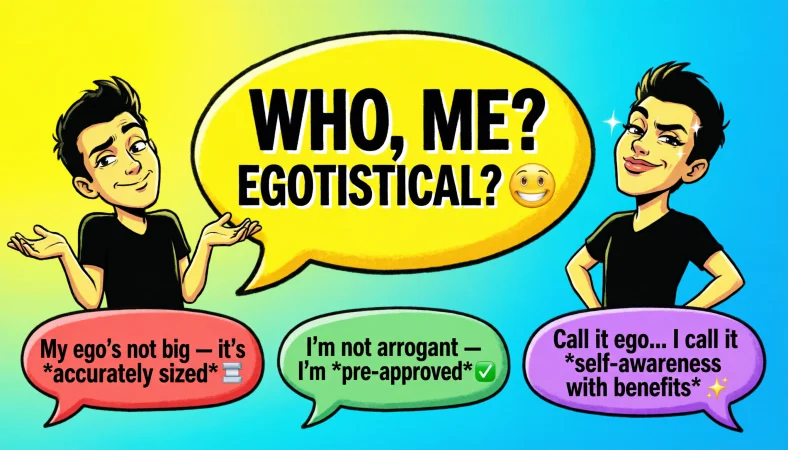
Quick Answer: When someone accuses you of having a big ego, the best comeback depends on your mood. You can keep it playful, sarcastic, confident, or completely clever without turning the moment into a full-blown drama series.
Top alternatives: “I prefer confident,” “My ego has its own Wi-Fi,” “That sounds like a you problem,” “I call it self-respect,” “Sorry, my confidence is showing”
Ever been told you have a big ego when you were simply minding your business and enjoying your own confidence? Yep, awkward. Whether it happens in a group chat, Instagram DM, workplace, friend circle, or during a little flirting session, “You have a big ego” can land anywhere. Sometimes it is genuine criticism. Sometimes it is playful teasing. And sometimes someone is simply bothered that you are not shrinking yourself to make them comfortable. That is exactly when the right response can change the whole vibe. The best hilarious comebacks for big ego accusations keep things light while showing that you can laugh at yourself without apologizing for having confidence. From clever one-liners to savclever age zingers, these replies give you plenty of options for every personality and situation.
Funny Responses
“I prefer to call it premium confidence.”
Use it when someone jokingly calls you full of yourself.
Meaning: You turn the accusation into a playful compliment.
“My ego has excellent customer service.”
Use it when the conversation is already playful.
Meaning: You are exaggerating your confidence for comedy.
“It came with the personality package.”
Use it when a friend teases you about being confident.
Meaning: You are joking that confidence is simply part of who you are.
“Sorry, I forgot to make myself smaller.”
Use it when someone thinks your confidence is excessive.
Meaning: You refuse to apologize for taking up space.
“Big ego, tiny patience.”
Use it when you want a short, funny comeback.
Meaning: You are poking fun at your own personality.
“At least somebody has to believe in me.”
Use it when someone says you think highly of yourself.
Meaning: You frame confidence as self-belief.
“My ego pays rent, so it stays.”
Use it when you want a ridiculous but memorable reply.
Meaning: You are playfully defending your confidence.
“I call it being my own hype person.”
Use it when the accusation is more teasing than serious.
Meaning: You are embracing your ability to encourage yourself.
“The ego department is currently fully booked.”
Use it in a casual group chat.
Meaning: You are jokingly treating your personality like a business.
“I would tone it down, but my confidence has other plans.”
Use it when someone playfully challenges your attitude.
Meaning: You are choosing confidence over embarrassment.
“Big ego? No, just excellent self-marketing.”
Use it when someone says you talk yourself up too much.
Meaning: You humorously reframe bragging as personal branding.
“Don’t blame me, the confidence is contagious.”
Use it when everyone is laughing about your attitude.
Meaning: You are making your confidence sound like a funny condition.
Brutal Responses
“Better an ego than an insecurity running the show.”
Use it when someone repeatedly criticizes your confidence.
Meaning: You point out that insecurity can also influence behavior.
“If my confidence bothers you, that sounds personal.”
Use it when someone clearly takes your confidence personally.
Meaning: You refuse to make their discomfort your responsibility.
“You noticed my confidence. Cute.”
Use it when you want a short, icy comeback.
Meaning: You dismiss the accusation without getting emotional.
“I could lower my standards, but why?”
Use it when the accusation comes with judgment about your expectations.
Meaning: You confidently refuse to compromise your standards.
“Not everyone is comfortable around confidence.”
Use it when someone mistakes confidence for arrogance.
Meaning: You suggest their reaction may come from discomfort.
“If confidence looks like ego to you, maybe check the mirror.”
Use it when someone is being unnecessarily critical.
Meaning: You subtly turn the criticism back on them.
“I hear you, but I don’t need your approval.”
Use it when someone expects you to change your personality.
Meaning: You establish a firm boundary.
“You call it ego. I call it knowing my worth.”
Use it when the conversation is getting serious.
Meaning: You distinguish confidence from arrogance.
“My confidence isn’t responsible for your insecurity.”
Use it when someone repeatedly projects onto you.
Meaning: You make it clear that their feelings are theirs to manage.
“Interesting observation. Completely unnecessary, but interesting.”
Use it when someone makes an unsolicited comment.
Meaning: You acknowledge the remark while dismissing its importance.
“You don’t have to like my confidence.”
Use it when someone clearly dislikes your personality.
Meaning: You remind them that your confidence does not require permission.
“I would explain the difference between confidence and ego, but we’re busy.”
Use it when you want a sarcastic shutdown.
Meaning: You imply the accusation does not deserve a lengthy explanation.
Flirty Responses
“Maybe you’re just intimidated because you like me.”
Use it when the accusation comes from someone flirting with you.
Meaning: You turn criticism into playful romantic tension.
“Big ego? Wait until you see my flirting skills.”
Use it when the conversation is already teasing.
Meaning: You add confidence and flirtation at once.
“Careful, confidence looks good on me.”
Use it when someone is playfully challenging you.
Meaning: You turn their comment into flirtatious banter.
“You seem oddly interested in my personality.”
Use it when someone keeps commenting on you.
Meaning: You teasingly suggest they are paying special attention.
“Maybe you’re just not used to someone who knows they’re cute.”
Use it when the conversation is flirtatious.
Meaning: You confidently compliment yourself while keeping things playful.
“If my ego bothers you, distract yourself with me.”
Use it when you want a cheeky romantic comeback.
Meaning: You turn the accusation into an invitation to keep flirting.
“I can be humble later. Right now you’re making it difficult.”
Use it when someone compliments you while teasing your ego.
Meaning: You playfully blame them for encouraging your confidence.
“You call it ego, I call it your favorite personality trait.”
Use it when there is obvious chemistry.
Meaning: You tease them about secretly enjoying your confidence.
“Maybe I only act this confident around you.”
Use it when you want to make the moment more personal.
Meaning: You add a softer romantic angle to the banter.
“You noticed. I must be doing something right.”
Use it when someone playfully points out your confidence.
Meaning: You turn their attention into a flirtatious win.
“Keep talking. I like the attention.”
Use it when the exchange is light and teasing.
Meaning: You openly enjoy their focus on you.
“If confidence is attractive, I’m clearly overqualified.”
Use it when you want a bold flirting moment.
Meaning: You exaggerate your confidence for playful effect.
Polite Responses
“I understand why it might come across that way.”
Use it when you want to stay calm during a serious discussion.
Meaning: You acknowledge their perspective without agreeing.
“I appreciate the honesty, but I see it differently.”
Use it when someone gives you unsolicited criticism.
Meaning: You remain respectful while holding your position.
“I try to be confident without being disrespectful.”
Use it when the conversation is genuine.
Meaning: You explain your intention clearly.
“Maybe I come across strongly sometimes.”
Use it when you want to recognize their concern.
Meaning: You admit perception can differ from intention.
“Thanks for telling me. I’ll keep it in mind.”
Use it when you do not want an argument.
Meaning: You accept the feedback without promising to change.
“Confidence and arrogance can look similar from the outside.”
Use it during a thoughtful conversation.
Meaning: You acknowledge the distinction can be subjective.
“I respect your opinion, even if I don’t share it.”
Use it when someone is being direct about your personality.
Meaning: You maintain maturity and boundaries.
“I think I’m comfortable with who I am.”
Use it when you want a calm response.
Meaning: You communicate self-acceptance.
“I never intend to make anyone feel less important.”
Use it when someone feels overshadowed by you.
Meaning: You clarify that confidence is not meant to diminish others.
“That’s fair feedback. I’ll reflect on it.”
Use it when the criticism may be sincere.
Meaning: You show emotional maturity.
“I can be confident and still hear other perspectives.”
Use it when you want to keep the discussion respectful.
Meaning: You show that confidence does not mean refusing feedback.
“I appreciate you being honest with me.”
Use it when you want to end the topic gracefully.
Meaning: You respond with courtesy instead of defensiveness.
Professional Responses
“I prefer to call it confidence in my abilities.”
Use it when a coworker comments on your self-assurance.
Meaning: You frame your attitude professionally.
“I’m confident in my work, but I’m always open to feedback.”
Use it during a workplace discussion.
Meaning: You show confidence without appearing closed-minded.
“I understand the perception, and I’m happy to clarify my intentions.”
Use it when the comment is part of a serious conversation.
Meaning: You invite constructive communication.
“Confidence helps me perform, but collaboration matters too.”
Use it when discussing workplace dynamics.
Meaning: You balance self-belief with teamwork.
“I believe in my skills without believing I’m infallible.”
Use it when someone questions your attitude.
Meaning: You communicate confidence with humility.
“I try to let my results speak louder than my personality.”
Use it in a professional setting.
Meaning: You emphasize performance over ego.
“I appreciate the feedback and will consider how it comes across.”
Use it when receiving constructive criticism.
Meaning: You respond professionally without becoming defensive.
“Strong opinions can sometimes be mistaken for ego.”
Use it when explaining your communication style.
Meaning: You distinguish assertiveness from arrogance.
“I’m comfortable advocating for my work.”
Use it when someone thinks self-promotion is excessive.
Meaning: You defend healthy professional confidence.
“I aim for confidence with accountability.”
Use it during a workplace conversation.
Meaning: You show that self-assurance comes with responsibility.
“I’ll take that as a reminder to balance confidence with listening.”
Use it when you want to respond constructively.
Meaning: You show willingness to improve communication.
“I value confidence, but I value respect even more.”
Use it when professionalism matters.
Meaning: You make your priorities clear.
Creative Responses
“My ego has entered its main-character era.”
Use it in a playful social media exchange.
Meaning: You jokingly embrace your dramatic confidence.
“Please direct all ego complaints to my imaginary manager.”
Use it when someone teases you online.
Meaning: You turn the criticism into absurd humor.
“Confidence level: professionally unbothered.”
Use it as a caption or quick reply.
Meaning: You present confidence as calm independence.
“My self-esteem accidentally got upgraded.”
Use it when someone jokes about your confidence.
Meaning: You make your confidence sound like a software update.
“The ego is fictional, but the confidence is canon.”
Use it with someone who enjoys internet humor.
Meaning: You distinguish playful exaggeration from genuine self-belief.
“I blame the character development.”
Use it when friends tease you about becoming more confident.
Meaning: You jokingly credit life experiences for your personality.
“Confidence.exe is running perfectly.”
Use it in a meme-style conversation.
Meaning: You playfully describe confidence as a working system.
“I didn’t choose the confidence. The confidence chose me.”
Use it when you want an exaggerated comeback.
Meaning: You turn confidence into a humorous destiny.
“My ego has a plotline, apparently.”
Use it when someone makes a dramatic accusation.
Meaning: You make their criticism sound hilariously theatrical.
“Welcome to the deluxe edition of me.”
Use it when someone jokes about your personality.
Meaning: You playfully suggest your confidence is part of the premium package.
“The confidence department is accepting compliments today.”
Use it when someone is clearly teasing you.
Meaning: You turn the accusation into an invitation for praise.
“I came with confidence pre-installed.”
Use it as a quick social media comeback.
Meaning: You jokingly suggest confidence is part of your default settings.
Sarcastic Responses
“Oh no, my confidence has been discovered.”
Use it when someone dramatically points out your self-assurance.
Meaning: You mock the seriousness of their accusation.
“Should I schedule an ego appointment?”
Use it when someone keeps complaining about your attitude.
Meaning: You treat the criticism like a ridiculous administrative issue.
“Thank you for the breaking news.”
Use it when the accusation is obvious and repetitive.
Meaning: You sarcastically suggest they revealed nothing new.
“Wow, groundbreaking analysis.”
Use it when someone makes an obvious observation.
Meaning: You mock the supposed importance of their comment.
“I’ll alert the confidence committee immediately.”
Use it when you want playful sarcasm.
Meaning: You exaggerate the accusation for comic effect.
“My ego appreciates the recognition.”
Use it when someone says you think highly of yourself.
Meaning: You pretend the criticism is an award.
“I was worried my confidence was getting too subtle.”
Use it when you want a dry response.
Meaning: You sarcastically celebrate being noticed.
“Oh good, another performance review.”
Use it when someone frequently critiques your personality.
Meaning: You joke that they are constantly evaluating you.
“I’ll try being less fabulous immediately.”
Use it when the situation is clearly playful.
Meaning: You jokingly connect confidence with being fabulous.
“How brave of you to notice.”
Use it when you want a sharper sarcastic tone.
Meaning: You playfully mock their observation.
“I shall now humble myself for exactly three minutes.”
Use it in a light group chat.
Meaning: You make fun of the expectation that you should be less confident.
“My ego would like to thank you for the publicity.”
Use it when someone keeps talking about your confidence.
Meaning: You turn their criticism into free attention.
Cute Responses
“Maybe I just finally learned to like myself.”
Use it when the accusation comes from someone close to you.
Meaning: You gently explain your confidence.
“I’m just my own biggest cheerleader.”
Use it when someone teases you about being confident.
Meaning: You frame confidence as positive self-support.
“A little confidence never hurt anybody.”
Use it when you want a sweet and simple response.
Meaning: You defend your self-esteem without being aggressive.
“I promise my ego is mostly harmless.”
Use it when someone is joking about your personality.
Meaning: You soften the accusation with humor.
“Maybe I’m just having a good self-esteem day.”
Use it when you want a playful response.
Meaning: You treat confidence like a temporary mood.
“I like myself. Is that illegal now?”
Use it when someone playfully criticizes your confidence.
Meaning: You humorously defend self-love.
“Don’t worry, there’s enough confidence to share.”
Use it when the atmosphere is friendly.
Meaning: You make your confidence sound generous and harmless.
“I’m working on being confidently me.”
Use it when someone is genuinely questioning your attitude.
Meaning: You show that self-acceptance is important to you.
“Maybe my confidence just got a little excited.”
Use it when you want to keep things light.
Meaning: You admit you might be enthusiastic without becoming defensive.
“I promise I still know how to laugh at myself.”
Use it when someone worries you take yourself too seriously.
Meaning: You show humility through humor.
“My ego has a soft side too.”
Use it when the exchange is affectionate.
Meaning: You balance confidence with warmth.
“I’m just rooting for me a little louder today.”
Use it when you want a wholesome comeback.
Meaning: You celebrate self-support.
Dramatic Responses
“Finally, someone has exposed my greatest weakness: confidence.”
Use it when you want an exaggerated reaction.
Meaning: You turn a simple accusation into a dramatic joke.
“The scandal has been revealed.”
Use it in a playful group chat.
Meaning: You make the accusation sound hilariously serious.
“How will I ever recover from this devastating diagnosis?”
Use it when someone calls you egotistical jokingly.
Meaning: You exaggerate the situation for laughs.
“My reputation may never survive this.”
Use it when you want theatrical humor.
Meaning: You pretend their comment has caused enormous damage.
“Tell my confidence I loved it while it lasted.”
Use it when someone says your ego is too big.
Meaning: You jokingly treat confidence like a doomed romance.
“This is the betrayal I was not prepared for.”
Use it when a friend teases you.
Meaning: You turn harmless teasing into dramatic comedy.
“I knew this day would come.”
Use it when you want an exaggerated response.
Meaning: You pretend the accusation is a long-awaited event.
“My ego and I need a private moment.”
Use it after a playful callout.
Meaning: You jokingly personify your ego.
“I shall now retreat into my castle of confidence.”
Use it when you want a theatrical exit line.
Meaning: You playfully embrace the accusation.
“This accusation has changed everything.”
Use it when someone makes a harmless comment.
Meaning: You exaggerate the importance of the moment.
“I request a lawyer and a snack.”
Use it when you want absurd dramatic humor.
Meaning: You make a tiny social moment sound like a major legal crisis.
“My confidence deserves a moment of silence.”
Use it when you want to be ridiculously dramatic.
Meaning: You humorously pretend your ego has suffered a tragedy.
Chill And Casual Responses
“Haha, maybe a little.”
Use it when a friend casually calls you confident.
Meaning: You acknowledge the joke without taking it seriously.
“I call it knowing myself.”
Use it when you want a relaxed response.
Meaning: You frame confidence as self-awareness.
“Could be. I’m not losing sleep over it.”
Use it when someone criticizes your personality.
Meaning: You show that the comment does not bother you.
“Maybe, but life’s too short to hate yourself.”
Use it when you want a relaxed but meaningful reply.
Meaning: You defend self-confidence in a calm way.
“I’m just comfortable being me.”
Use it when someone questions your confidence.
Meaning: You communicate self-acceptance.
“Eh, I’ll take confidence over insecurity.”
Use it in a casual discussion.
Meaning: You explain your preference without escalating.
“Fair enough. We see it differently.”
Use it when you want to avoid an argument.
Meaning: You acknowledge disagreement calmly.
“Maybe my personality has a little volume.”
Use it when someone says you are too much.
Meaning: You jokingly admit that you have a strong presence.
“Can’t win them all.”
Use it when someone dislikes your attitude.
Meaning: You refuse to let the criticism affect you.
“I’m good with who I am.”
Use it when the conversation becomes personal.
Meaning: You calmly express self-confidence.
“Guess my confidence clocked in early today.”
Use it when you want a playful casual reply.
Meaning: You make your confidence sound temporary and funny.
“I’ll survive the accusation.”
Use it when you want a dry, relaxed comeback.
Meaning: You show that the comment does not bother you.
Confident Responses
“I know my worth, and I’m not hiding it.”
Use it when someone mistakes self-respect for ego.
Meaning: You confidently defend your self-worth.
“Confidence isn’t arrogance when you know your limits.”
Use it during a thoughtful disagreement.
Meaning: You distinguish confidence from believing you are perfect.
“I don’t need to be smaller to make others comfortable.”
Use it when someone expects you to tone yourself down.
Meaning: You protect your right to be confident.
“I believe in myself. That’s not an apology.”
Use it when someone criticizes your self-confidence.
Meaning: You refuse to feel guilty for believing in yourself.
“I know what I bring to the table.”
Use it when someone questions your standards.
Meaning: You express confidence in your value.
“I can be confident without thinking I’m better than everyone.”
Use it when someone confuses confidence with superiority.
Meaning: You clarify your perspective.
“Self-respect can look like ego to people who expect less.”
Use it when the criticism feels unfair.
Meaning: You suggest confidence may challenge other people’s expectations.
“I like who I am. That’s a good thing.”
Use it when someone attacks your self-esteem.
Meaning: You frame self-acceptance positively.
“I don’t need permission to feel good about myself.”
Use it when someone wants you to change your attitude.
Meaning: You assert personal independence.
“Confidence is not a character flaw.”
Use it when someone repeatedly labels you arrogant.
Meaning: You firmly separate confidence from negativity.
“I know I’m not perfect, but I still like myself.”
Use it when you want confidence without arrogance.
Meaning: You show self-awareness alongside self-esteem.
“I’ll take being confident over pretending I have no value.”
Use it when someone pushes the ego accusation too far.
Meaning: You prioritize healthy self-worth.
Emotional Responses
“I’ve spent too long doubting myself to apologize for confidence now.”
Use it when someone touches on a sensitive subject.
Meaning: You explain that your confidence may come from personal growth.
“I worked hard to become comfortable with myself.”
Use it when the accusation feels unfair.
Meaning: You share the deeper reason behind your confidence.
“Sometimes confidence is just healing in public.”
Use it when discussing personal growth.
Meaning: You suggest confidence can come from overcoming insecurity.
“I know I wasn’t always this confident.”
Use it when someone questions your personality change.
Meaning: You acknowledge your personal journey.
“I’m still learning how to believe in myself.”
Use it when you want a vulnerable response.
Meaning: You show that confidence does not mean perfection.
“I don’t want to lose myself trying to please everyone.”
Use it when someone expects you to change.
Meaning: You prioritize authenticity.
“Maybe what looks like ego is just me finally standing up for myself.”
Use it during a meaningful conversation.
Meaning: You explain confidence as personal empowerment.
“I’m proud of how far I’ve come.”
Use it when someone questions your self-assurance.
Meaning: You connect confidence to growth.
“I can accept feedback without abandoning who I am.”
Use it when someone wants you to change completely.
Meaning: You show emotional balance.
“I’m still figuring out the line between confidence and arrogance too.”
Use it when you genuinely want self-reflection.
Meaning: You admit that personal growth is ongoing.
“I don’t want my confidence to hurt anyone.”
Use it when the accusation comes from someone you care about.
Meaning: You show that you value other people’s feelings.
“I hope I can be confident without making anyone feel small.”
Use it during a sincere conversation.
Meaning: You express confidence while recognizing social impact.
Sweet Responses
“Maybe I just finally learned to appreciate myself.”
Use it when someone gently teases you.
Meaning: You respond with warmth and self-love.
“I’ll accept that as a compliment.”
Use it when the accusation is clearly playful.
Meaning: You turn criticism into something positive.
“I’m just trying to be kinder to myself.”
Use it when someone questions your confidence.
Meaning: You explain your attitude as self-compassion.
“A little self-love never hurt.”
Use it with friends or someone you trust.
Meaning: You defend confidence in a warm way.
“I promise there’s room in my heart for everyone.”
Use it when someone jokingly says you think too highly of yourself.
Meaning: You soften confidence with affection.
“Maybe I’m just proud of myself today.”
Use it when you want a gentle answer.
Meaning: You present confidence as healthy pride.
“I like cheering myself on.”
Use it when someone teases you for celebrating yourself.
Meaning: You embrace positive self-talk.
“I hope you find that kind of confidence too.”
Use it when you want to turn the moment positive.
Meaning: You wish them healthy self-esteem.
“Confidence feels better when you share it.”
Use it when someone jokes about your personality.
Meaning: You make confidence sound inclusive.
“I’m learning to celebrate myself without putting anyone else down.”
Use it when the topic becomes sincere.
Meaning: You define confidence as something respectful.
“Maybe my ego just needs a little sunshine.”
Use it when you want a cute joke.
Meaning: You playfully make confidence sound like a plant.
“I’m a work in progress with good intentions.”
Use it when you want an honest but positive response.
Meaning: You acknowledge imperfections while staying optimistic.
Clever Responses
“Confidence says ‘I can.’ Ego says ‘only I can.’”
Use it when someone seriously confuses confidence with arrogance.
Meaning: You cleverly explain the difference.
“If knowing my value is ego, I’ll plead guilty.”
Use it when you want a polished comeback.
Meaning: You confidently accept the label as harmless.
“There’s a difference between self-belief and self-importance.”
Use it during a thoughtful conversation.
Meaning: You make a clear distinction between two attitudes.
“I don’t think I’m better than everyone. I just don’t think I’m less than anyone.”
Use it when someone misunderstands your confidence.
Meaning: You express equality and self-respect.
“Confidence is internal. Ego usually needs an audience.”
Use it when someone accuses you of showing off.
Meaning: You suggest genuine confidence does not depend on approval.
“If I believed I was perfect, we’d have a different conversation.”
Use it when someone assumes confidence means arrogance.
Meaning: You show self-awareness.
“Knowing your worth isn’t the same as pricing everyone else.”
Use it when someone says your standards make you arrogant.
Meaning: You clarify that self-worth does not diminish others.
“I can admire myself without competing with everyone.”
Use it when the accusation becomes serious.
Meaning: You separate self-love from superiority.
“Maybe confidence looks loud when you’re used to silence.”
Use it when someone is uncomfortable with assertiveness.
Meaning: You suggest their expectations may shape their reaction.
“I don’t need to be the best to believe I’m worth something.”
Use it when someone challenges your self-esteem.
Meaning: You show that worth does not depend on superiority.
“An ego needs applause. Confidence can survive silence.”
Use it when you want a thoughtful one-liner.
Meaning: You distinguish confidence from attention-seeking.
“I know my strengths, and I know my flaws. That’s called self-awareness.”
Use it when someone labels your confidence as ego.
Meaning: You explain that knowing yourself includes recognizing weaknesses.
Witty Responses
“My ego called. It wants better reviews.”
Use it when someone makes a playful accusation.
Meaning: You turn the comment into a joke.
“I was going to argue, but my ego said I already won.”
Use it when friends are teasing you.
Meaning: You exaggerate your confidence for humor.
“Don’t worry, my ego has a backup ego.”
Use it when you want an absurd comeback.
Meaning: You make the accusation deliberately ridiculous.
“Confidence looks expensive on me.”
Use it when someone comments on your self-assurance.
Meaning: You make confidence sound like luxury fashion.
“I came with opinions and no return policy.”
Use it when someone says you are too opinionated.
Meaning: You humorously embrace your strong personality.
“My ego has excellent taste, apparently.”
Use it when someone points out your confidence.
Meaning: You jokingly suggest your ego has good judgment.
“I’ll add ‘too confident’ to my list of achievements.”
Use it when you want playful arrogance.
Meaning: You pretend the criticism is an accomplishment.
“My confidence is just doing overtime.”
Use it when someone catches you being extra confident.
Meaning: You turn the accusation into a workplace joke.
“Don’t worry, humility is downloading.”
Use it when you want a meme-style reply.
Meaning: You pretend humility is a software update.
“The ego is buffering. Please wait.”
Use it when someone wants you to tone down your attitude.
Meaning: You make the situation intentionally absurd.
“I would shrink my ego, but it’s already on airplane mode.”
Use it when you want a random, funny comeback.
Meaning: You playfully reject the suggestion.
“My confidence has excellent Wi-Fi today.”
Use it in a casual social exchange.
Meaning: You joke that your confidence is unusually strong.
Clever But Playful Responses
“If I wanted your approval, I’d have asked for it.”
Use it when someone is being unnecessarily judgmental.
Meaning: You make it clear that their approval is not required.
“You can call it ego. I’ll keep calling it standards.”
Use it when someone criticizes your expectations.
Meaning: You confidently defend your standards.
“That’s a lot of concern for someone who isn’t paying my bills.”
Use it when someone gets too invested in your personality.
Meaning: You remind them that your choices are yours.
“I didn’t realize my confidence was your group project.”
Use it when multiple people are discussing your attitude.
Meaning: You jokingly challenge their involvement.
“You seem more bothered by my confidence than I am.”
Use it when someone repeatedly complains.
Meaning: You point out their emotional investment.
“Imagine being this interested in someone else’s self-esteem.”
Use it when the criticism feels excessive.
Meaning: You highlight how much attention they are giving your confidence.
“I’m not everyone’s cup of tea, and that’s okay.”
Use it when someone clearly dislikes your personality.
Meaning: You accept that not everyone will like you.
“You don’t have to understand me to respect me.”
Use it when someone keeps judging you.
Meaning: You establish a boundary around mutual respect.
“My confidence isn’t up for public voting.”
Use it when people are debating your personality.
Meaning: You reject the idea that others get to decide your worth.
“I’ll keep the confidence. You keep the commentary.”
Use it when you want a short shutdown.
Meaning: You separate your choices from their opinions.
“If being comfortable with myself is a crime, I’ll risk the charges.”
Use it when you want dramatic sass.
Meaning: You humorously refuse to feel guilty for self-confidence.
“Thanks for your concern. I’ll file it under ‘not changing.’”
Use it when someone gives unwanted advice.
Meaning: You dismiss the criticism with humor.
Dry Humor Responses
“Noted.”
Use it when you want the shortest possible response.
Meaning: You acknowledge the accusation without engaging.
“Fascinating.”
Use it when someone makes an unnecessary observation.
Meaning: You respond with deliberately understated sarcasm.
“I’ll alert the authorities.”
Use it when the accusation is clearly ridiculous.
Meaning: You exaggerate the situation for dry humor.
“This changes absolutely nothing.”
Use it when someone expects you to feel embarrassed.
Meaning: You show that their comment has no effect.
“What a plot twist.”
Use it when someone dramatically labels you egotistical.
Meaning: You make the accusation sound unexpectedly entertaining.
“I’ll recover eventually.”
Use it after a playful callout.
Meaning: You pretend the criticism has devastated you.
“Devastating news.”
Use it when you want an intentionally dramatic dry reply.
Meaning: You mock the seriousness of their comment.
“I’ll let my ego know.”
Use it when someone tells you to humble yourself.
Meaning: You humorously personify your ego.
“Thank you for the diagnosis.”
Use it when someone analyzes your personality.
Meaning: You sarcastically treat their opinion like a medical assessment.
“I’ll put that in the suggestion box.”
Use it when you do not plan to act on the criticism.
Meaning: You politely dismiss the comment.
“That’s going straight into the archives.”
Use it when someone says something you find amusing.
Meaning: You pretend their comment deserves historical preservation.
“I’ll lose exactly zero minutes of sleep.”
Use it when someone expects their criticism to bother you.
Meaning: You confidently show that you are unbothered.
Gen Z Style Responses
“Bro discovered self-confidence and took it personally.”
Use it when a friend jokingly complains about your ego.
Meaning: You turn the accusation into internet-style humor.
“Main character allegations again?”
Use it in a playful group chat.
Meaning: You joke about being accused of acting important.
“Not the confidence slander.”
Use it when someone calls you arrogant.
Meaning: You humorously defend your self-esteem.
“Caught being iconic, my bad.”
Use it when someone teases you about being confident.
Meaning: You playfully turn the criticism into praise.
“The allegations are Strange.”
Use it when the accusation is clearly joking.
Meaning: You pretend you are involved in a hilarious scandal.
“Respectfully, I like me.”
Use it when someone questions your self-confidence.
Meaning: You give a concise and confident answer.
“That’s Strange. Anyway, I’m still thriving.”
Use it when you want an unbothered response.
Meaning: You show that their opinion does not derail you.
“Confidence arc going Strange.”
Use it when friends notice you have become more self-assured.
Meaning: You treat personal growth like a character storyline.
“Ego? No, bestie, it’s character development.”
Use it when someone jokes that you changed.
Meaning: You frame increased confidence as growth.
“Imagine trying to nerf my confidence.”
Use it when someone wants you to tone yourself down.
Meaning: You jokingly compare confidence to an overpowered game character.
“My self-esteem said we ball.”
Use it when you want a silly internet-style comeback.
Meaning: You celebrate confidence in a deliberately goofy way.
“I fear the confidence is undefeated.”
Use it when someone tries to humble you.
Meaning: You jokingly declare that their criticism has failed.
Playful Responses For Friends
“You love my ego, admit it.”
Use it when a close friend constantly teases you.
Meaning: You turn their criticism into affectionate banter.
“You’ve been keeping tabs on me, huh?”
Use it when they notice your confidence quickly.
Meaning: You tease them for paying attention.
“You say ego, I say personality.”
Use it when friends joke that you are dramatic.
Meaning: You playfully defend your individuality.
“Someone has to keep this friend group entertaining.”
Use it when friends accuse you of being full of yourself.
Meaning: You jokingly claim responsibility for the group’s fun.
“Don’t worry, I’m humble on weekends.”
Use it when the group is laughing.
Meaning: You exaggerate your confidence for comedy.
“I blame all of you for encouraging me.”
Use it when friends have hyped you up.
Meaning: You jokingly make them responsible for your confidence.
“You created this monster.”
Use it when friends have always encouraged your bold personality.
Meaning: You playfully blame them for your confidence.
“My ego has been trained by professionals.”
Use it when you want a ridiculous comeback.
Meaning: You exaggerate how polished your confidence is.
“Friendship means supporting my delusions.”
Use it when the conversation is obviously unserious.
Meaning: You jokingly redefine friendship as encouraging your confidence.
“You knew what you signed up for.”
Use it when a friend complains about your personality.
Meaning: You remind them that your personality is not new.
“Don’t hate the confidence, join it.”
Use it when you want to keep the mood upbeat.
Meaning: You invite them to embrace confidence too.
“At least I’m entertaining.”
Use it when someone calls you too much.
Meaning: You turn the criticism into a positive trait.
Clever Comebacks For Dating
“Maybe confidence is why you’re still talking to me.”
Use it when the person is clearly interested despite teasing you.
Meaning: You turn their criticism into playful attraction.
“If my ego is so annoying, why are you still here?”
Use it when someone keeps flirting while complaining.
Meaning: You tease them about their obvious interest.
“You sound bothered, but also very interested.”
Use it when someone gives you mixed signals.
Meaning: You point out the contradiction playfully.
“Maybe you’re attracted to the ego too.”
Use it when the conversation has chemistry.
Meaning: You turn the accusation into flirtation.
“I could humble myself, but where’s the fun in that?”
Use it when the other person enjoys your confidence.
Meaning: You keep the banter bold and playful.
“You knew I came with confidence.”
Use it when someone complains about your personality while dating you.
Meaning: You remind them that your confidence is part of you.
“Don’t worry, I’m only intimidating until you get to know me.”
Use it when someone says you seem full of yourself.
Meaning: You soften the confidence with charm.
“Maybe you just need more time to appreciate the personality.”
Use it when the exchange is teasing.
Meaning: You confidently suggest they will warm up to you.
“I’m confident, not unavailable.”
Use it when someone mistakes self-assurance for emotional distance.
Meaning: You make it clear that confidence does not mean disinterest.
“You can handle the confidence, can’t you?”
Use it when there is obvious flirting.
Meaning: You challenge them playfully.
“I promise the ego comes with good conversation.”
Use it when you want to keep the date playful.
Meaning: You make your confidence sound like part of the package.
“If you like confidence, we’re already off to a great start.”
Use it when flirting feels mutual.
Meaning: You turn the accusation into a positive romantic signal.
Smart Comebacks For Social Media
“Confidence isn’t a filter, but apparently you noticed it.”
Use it when someone comments on your attitude online.
Meaning: You turn their observation into a witty response.
“Thanks for boosting engagement.”
Use it when someone leaves a critical comment.
Meaning: You jokingly treat their criticism as publicity.
“The comments section has spoken.”
Use it when several people are discussing your personality.
Meaning: You make the situation feel like a funny public vote.
“I’ll add that to my biography.”
Use it when someone labels you egotistical.
Meaning: You pretend their criticism is an important life fact.
“My confidence appreciates the attention.”
Use it when someone keeps commenting on you.
Meaning: You turn their criticism into a compliment.
“Apparently confidence is today’s hot topic.”
Use it when your post attracts personality comments.
Meaning: You make light of the discussion.
“The internet has discovered my personality.”
Use it when someone makes a dramatic observation about you.
Meaning: You humorously acknowledge online scrutiny.
“And yet you watched the whole thing.”
Use it when someone criticizes your content after engaging with it.
Meaning: You point out their continued attention.
“Thanks for the free character analysis.”
Use it when someone overanalyzes your behavior.
Meaning: You mock the seriousness of their judgment.
“My ego says thank you for the engagement.”
Use it when responding to a critical comment.
Meaning: You turn negativity into playful social media humor.
“The confidence allegations are officially trending.”
Use it when several people make similar comments.
Meaning: You turn criticism into a fake trend.
“I came for the likes, stayed for the unsolicited psychology.”
Use it when comments become overly personal.
Meaning: You jokingly call out unnecessary analysis.
Lighthearted Responses
“Maybe I’m just having a confident moment.”
Use it when you want to avoid tension.
Meaning: You make the accusation feel temporary and harmless.
“I’ll consider turning the ego down to 80 percent.”
Use it when someone jokes about your personality.
Meaning: You pretend your confidence has a volume control.
“Deal, but only after coffee.”
Use it when the conversation is casual.
Meaning: You humorously postpone the idea of becoming humble.
“I’ll work on it between snacks.”
Use it when a friend wants you to tone yourself down.
Meaning: You respond with deliberately unserious humor.
“Maybe my confidence is just enthusiastic.”
Use it when someone says you are too self-assured.
Meaning: You soften the criticism with playful wording.
“I’ll put humility on tomorrow’s schedule.”
Use it when someone teases you.
Meaning: You joke that humility can wait.
“I’m trying my best to be adorably confident.”
Use it when the mood is affectionate.
Meaning: You make your confidence sound charming rather than arrogant.
“At least we’re keeping the conversation interesting.”
Use it when someone criticizes your personality.
Meaning: You shift attention toward the fun of the exchange.
“I promise I have a humble setting somewhere.”
Use it when you want a playful comeback.
Meaning: You pretend humility is a hidden feature.
“Confidence today, humility tomorrow.”
Use it as a short text reply.
Meaning: You treat personality traits like rotating moods.
“I’ll take the compliment disguised as criticism.”
Use it when someone says you have a big ego jokingly.
Meaning: You reinterpret their words positively.
“You caught me being unapologetically me.”
Use it when you want a confident but warm response.
Meaning: You celebrate authenticity.
Short One-Liners
“Sounds like confidence to me.”
Use it when you want a quick comeback.
Meaning: You reject the negative framing.
“I’m comfortable with it.”
Use it when someone expects you to feel embarrassed.
Meaning: You show self-acceptance.
“I’ll take that.”
Use it when the accusation is playful.
Meaning: You confidently accept their observation.
“And I’m okay with that.”
Use it when someone seriously criticizes your personality.
Meaning: You show that their opinion does not control you.
“Confidence detected.”
Use it as a playful text reply.
Meaning: You make the accusation sound like a funny alert.
“Guilty of self-belief.”
Use it when you want a clever one-liner.
Meaning: You proudly frame confidence as the supposed offense.
“That’s one way to describe me.”
Use it when you want a neutral response.
Meaning: You avoid arguing while staying confident.
“Could be worse.”
Use it when someone calls you egotistical casually.
Meaning: You keep the response relaxed.
“I’ll survive.”
Use it when you want dry humor.
Meaning: You show that the comment does not affect you.
“My confidence remains intact.”
Use it when you want a playful comeback.
Meaning: You jokingly declare victory.
“Still me, though.”
Use it when someone wants you to change.
Meaning: You reinforce your authenticity.
“No refunds on personality.”
Use it when someone complains about who you are.
Meaning: You jokingly say your personality comes as-is.
FAQs
What Does It Mean When Someone Says You Have A Big Ego?
Usually, they mean you seem overly confident, self-important, or convinced of your own abilities. However, the phrase can also be playful teasing depending on the relationship and tone.
Is Calling Someone Egocentric Always An Insult?
Not necessarily. Friends, romantic interests, or coworkers may use it jokingly. Context, facial expression, and tone often reveal whether it is criticism or playful banter.
What Is A Good Flirty Response To A Big Ego Accusation?
Try something like, “Maybe you’re just attracted to confidence.” It keeps the conversation playful and gives the other person room to flirt back.
What Is A Smart Response If Someone Seriously Criticizes My Ego?
Try, “I know my worth, but I’m always willing to hear feedback.” It shows confidence without becoming defensive.
Can I Use Humor When Someone Says I Have A Big Ego?
Absolutely, especially when the comment is playful. A funny comeback can lower tension and keep the conversation enjoyable.
What If I Do Not Want To Sound Arrogant?
Choose a calm response such as, “I try to be confident without making anyone feel less important.” It communicates self-awareness and respect.
What If Someone Says I Have A Big Ego At Work?
Keep it professional. Try, “I’m confident in my abilities, but I’m always open to feedback.” This keeps the conversation constructive.
What If I Actually Think They Are Right?
You can say, “Fair point. I’ll think about how I come across.” A little self-awareness can make a confident person seem even more mature.
What Is The Difference Between Confidence And Ego?
Confidence is believing in your abilities while recognizing your limitations. Ego often involves needing to feel superior, admired, or constantly validated.
Should I Use A Brutal Comeback?
Only if the situation calls for it. If the person is genuinely sharing how your behavior affects them, a respectful response will usually work better than a clever one.
Conclusion
Being called out for having a big ego does not automatically mean you need to shrink yourself. Sometimes you need a funny comeback, sometimes a clever line, and sometimes a calm response that shows you can hear criticism without losing your confidence. The best reply depends on the person, the situation, and the vibe. A playful friend deserves playful energy, while a serious conversation may need honesty and maturity. The goal is not to win every exchange. It is to communicate with confidence while keeping your personality intact. Save these hilarious comebacks for big ego accusations, share your favorites, and pick the one that matches your mood. Stay confident, stay funny, and keep the banter alive!