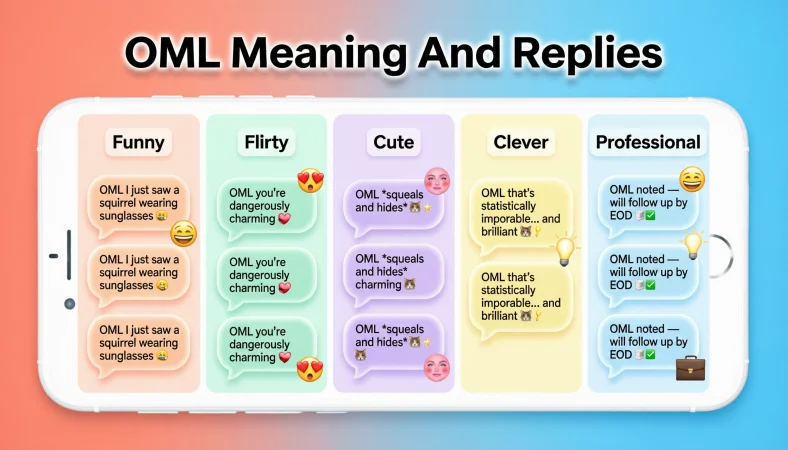
Quick Answer: OML usually means “Oh My Lord” and is commonly used in texts, DMs, comments, and social media to show surprise, excitement, disbelief, frustration, or amusement.
Top alternatives: OMG, Oh My Gosh, Oh My Goodness, No Way, I Can’t Believe ItIf someone texts you OML, your reply can be funny, flirty, sweet, sarcastic, dramatic, or completely casual depending on the vibe.
Whether it pops up in a group chat, a late-night DM, a work message, or a conversation with your crush, knowing the OML meaning and replies can help you match the energy without making the moment awkward.
OML is one of those internet abbreviations that can say a lot without saying much. Someone might use it after seeing a hilarious photo, hearing unexpected news, reacting to a compliment, or discovering something unbelievable. Basically, three letters can carry a whole emotional suitcase.
The right response depends on what caused the reaction. You might answer with humor when your friend is being dramatic, flirt back when your crush uses OML, or keep things polished in a professional setting. Here are plenty of ready-to-send options for almost every situation.
Funny Responses To OML
“And the drama begins.”
Use this when someone reacts dramatically to something minor.
Meaning: You are playfully teasing them for overreacting.
“Please remain calm.”
Use this when their OML sounds especially intense.
Meaning: You are jokingly pretending to manage their reaction.
“I know, right? 😂”
Use this when you completely agree with their reaction.
Meaning: You are joining in on the humor.
“Call the internet police.”
Use this after something surprisingly funny or unbelievable happens.
Meaning: You are exaggerating the situation for laughs.
“That bad, huh?”
Use this when you want to tease someone about their reaction.
Meaning: You are playfully asking how serious their reaction is.
“You survived. Barely.”
Use this after someone reacts dramatically to news.
Meaning: You are joking that their reaction was excessive.
“Welcome to my world.”
Use this when someone finally experiences something you already know about.
Meaning: You are humorously saying they now understand your experience.
“OML right back at you.”
Use this when you want to mirror their energy.
Meaning: You are giving their dramatic reaction right back.
“Someone needs a snack.”
Use this when a friend is being unnecessarily dramatic.
Meaning: You are joking that hunger may explain their mood.
“That escalated quickly.”
Use this when the conversation suddenly becomes dramatic.
Meaning: You are pointing out how quickly things became intense.
“And here I thought we were being normal.”
Use this when a simple conversation becomes ridiculous.
Meaning: You are joking about the unexpected chaos.
“Your reaction deserves its own episode.”
Use this when someone’s response is hilariously dramatic.
Meaning: You are saying their reaction is entertainingly exaggerated.
Brutal Responses To OML
“You’ll be okay.”
Use this when someone is complaining about something harmless.
Meaning: You are giving a blunt but playful reality check.
“It’s really not that serious.”
Use this when their reaction seems unnecessarily intense.
Meaning: You are telling them to calm down.
“Deep breaths, bestie.”
Use this when a friend is clearly overreacting.
Meaning: You are lightly calling out their dramatic behavior.
“You’ll recover eventually.”
Use this after something mildly embarrassing or surprising happens.
Meaning: You are teasing them about their reaction.
“That reaction was unnecessary.”
Use this when someone is making a big deal out of something small.
Meaning: You are directly pointing out their overreaction.
“We’re not doing all that today.”
Use this when someone starts unnecessary drama.
Meaning: You are setting a playful boundary.
“Save the theatrics.”
Use this when their response feels overly dramatic.
Meaning: You are telling them to tone down the performance.
“You made it sound way worse.”
Use this when their OML exaggerates what happened.
Meaning: You think they are making the situation seem more serious than it is.
“That was your warning sign.”
Use this when something predictable happens.
Meaning: You are teasing them for ignoring an obvious clue.
“You brought this reaction on yourself.”
Use this when someone caused the situation they are reacting to.
Meaning: You are humorously reminding them of their responsibility.
“Not the emotional breakdown over that.”
Use this when their reaction is hilariously disproportionate.
Meaning: You are poking fun at their dramatic response.
“Respectfully, calm down.”
Use this when you want to be blunt without sounding genuinely hostile.
Meaning: You are telling them to relax in a playful way.
Flirty Responses To OML
“Wait until you see me in person.”
Use this when the conversation already has a playful romantic vibe.
Meaning: You are teasing them with a confident flirt.
“Did I finally leave you speechless?”
Use this when OML follows a compliment or flirty message.
Meaning: You are playfully suggesting that you impressed them.
“That reaction was kinda cute.”
Use this when you want to turn their surprise into flirting.
Meaning: You find their reaction adorable.
“I’ll take that as a compliment.”
Use this when their OML seems impressed or surprised.
Meaning: You are confidently interpreting their reaction positively.
“Careful, you’re making me blush.”
Use this when their OML follows something sweet.
Meaning: You are responding with playful romantic embarrassment.
“You haven’t seen anything yet.”
Use this when you want to tease them.
Meaning: You are hinting that more surprises are coming.
“That sounded a little flustered.”
Use this when their reaction seems shy or overwhelmed.
Meaning: You are playfully calling attention to their nervousness.
“I like that reaction.”
Use this when their response suggests they are impressed.
Meaning: You are confidently enjoying their attention.
“Should I be flattered?”
Use this when you suspect their OML has romantic energy.
Meaning: You are inviting them to clarify their interest.
“Your OML is telling on you.”
Use this when they seem secretly impressed by you.
Meaning: You are teasing them about their feelings.
“Keep reacting like that and I’ll get confident.”
Use this when you want a playful, self-assured flirt.
Meaning: You are enjoying their attention while teasing them.
“I was hoping you’d react like that.”
Use this when you intentionally tried to impress them.
Meaning: You are admitting that their reaction pleased you.
Polite Responses To OML
“Haha, I know what you mean.”
Use this when you want to acknowledge their reaction warmly.
Meaning: You understand and share their feeling.
“I had the same reaction.”
Use this when something genuinely surprised you too.
Meaning: You are agreeing naturally.
“It was definitely unexpected.”
Use this when you want a calm response to surprising news.
Meaning: You agree that the situation was surprising.
“I know, it caught me off guard too.”
Use this when something unexpected happens.
Meaning: You are sharing their surprise.
“Right? I couldn’t believe it either.”
Use this when you genuinely relate to their reaction.
Meaning: You are emphasizing that you felt the same way.
“I completely understand.”
Use this when someone reacts strongly to understandable news.
Meaning: You are acknowledging their feelings respectfully.
“That was quite a surprise.”
Use this when you want to keep your response composed.
Meaning: You recognize that something was unexpected.
“Honestly, same here.”
Use this when you want a short and friendly response.
Meaning: You agree with their reaction.
“I can see why you reacted that way.”
Use this when their reaction makes sense to you.
Meaning: You are validating their perspective.
“It definitely caught everyone by surprise.”
Use this when multiple people were surprised.
Meaning: You are confirming that the reaction was understandable.
“Haha, fair reaction.”
Use this when their OML is reasonable but funny.
Meaning: You accept their response in a friendly way.
“I was surprised too.”
Use this when you want to keep things simple.
Meaning: You are sharing the same emotional reaction.
Professional Responses To OML
“I understand the reaction.”
Use this when responding to a surprised coworker in a work chat.
Meaning: You acknowledge their response without matching overly casual language.
“It was certainly unexpected.”
Use this when discussing surprising work news.
Meaning: You recognize the unexpected nature of the situation professionally.
“I had a similar reaction.”
Use this when you also found the information surprising.
Meaning: You are agreeing in a workplace-friendly way.
“Yes, that was quite unexpected.”
Use this when a colleague expresses surprise.
Meaning: You confirm the situation was unusual.
“I can understand why that was surprising.”
Use this when someone reacts strongly to an update.
Meaning: You acknowledge their perspective professionally.
“It definitely changed the situation.”
Use this when unexpected information affects a project.
Meaning: You recognize the practical impact.
“That was not what I expected either.”
Use this when you were equally surprised.
Meaning: You are calmly sharing the same reaction.
“Agreed, that came as a surprise.”
Use this when you want to validate their response.
Meaning: You confirm that the news was unexpected.
“I appreciate the reaction.”
Use this when someone reacts positively to an announcement.
Meaning: You acknowledge their enthusiasm.
“Let’s take a moment to process that.”
Use this when unexpected work news needs a thoughtful response.
Meaning: You suggest pausing before reacting further.
“I understand. Let’s look at the details.”
Use this when surprise needs to transition into action.
Meaning: You are moving the conversation toward practical discussion.
“That certainly gives us something to discuss.”
Use this when surprising information requires follow-up.
Meaning: You are acknowledging the issue while staying professional.
Creative Responses To OML
“And thus begins the plot twist.”
Use this when surprising news changes the mood.
Meaning: You are turning the moment into a playful story.
“The universe has entered the chat.”
Use this when something feels strangely unexpected.
Meaning: You are humorously suggesting fate is involved.
“Insert dramatic music here.”
Use this when the situation deserves theatrical energy.
Meaning: You are making the moment feel like a movie scene.
“Plot twist nobody ordered.”
Use this when something unexpected happens.
Meaning: You are joking about an unwanted surprise.
“Well, that took a turn.”
Use this when events suddenly become surprising.
Meaning: You are highlighting the unexpected change.
“Cue the group chat chaos.”
Use this when surprising news is about to cause discussion.
Meaning: You expect everyone to start reacting.
“And suddenly, everything makes sense.”
Use this when new information explains something confusing.
Meaning: You are celebrating a surprising realization.
“The tea has officially been served.”
Use this when the reaction involves juicy information.
Meaning: You are saying the situation has become interesting.
“That belongs in the history books.”
Use this when something feels unforgettable.
Meaning: You are humorously exaggerating its importance.
“Someone write this down.”
Use this when something surprising or memorable happens.
Meaning: You are joking that the moment deserves to be remembered.
“The storyline is getting interesting.”
Use this when a conversation develops unexpectedly.
Meaning: You are treating the situation like an ongoing story.
“Well, nobody saw that coming.”
Use this when an unexpected event happens.
Meaning: You are emphasizing the surprise.
Sarcastic Responses To OML
“Yes, tragedy has struck.”
Use this when someone dramatically reacts to something insignificant.
Meaning: You are sarcastically exaggerating the situation.
“Thoughts and prayers.”
Use this when a friend is jokingly overwhelmed.
Meaning: You are pretending their minor problem is a major crisis.
“How will we ever recover?”
Use this when something mildly inconvenient happens.
Meaning: You are sarcastically acting devastated.
“Alert the authorities.”
Use this when someone reacts dramatically.
Meaning: You are exaggerating their reaction for comedic effect.
“This is truly historic.”
Use this when something ordinary is treated like a major event.
Meaning: You are using exaggerated seriousness for humor.
“What a shocking development.”
Use this when the outcome was obvious.
Meaning: You are sarcastically pretending to be surprised.
“I’ll notify the committee.”
Use this when someone makes a dramatic announcement.
Meaning: You are playfully treating their message like official business.
“Breaking news, apparently.”
Use this when someone shares something everyone already knows.
Meaning: You are teasing them for acting like the information is groundbreaking.
“We may never know peace again.”
Use this when something creates minor chaos.
Meaning: You are jokingly exaggerating the consequences.
“The situation is under investigation.”
Use this when you want a mock-serious response.
Meaning: You are pretending the situation requires an official inquiry.
“Someone call the news.”
Use this when a friend announces something obvious.
Meaning: You are sarcastically treating it as major news.
“Clearly, civilization is finished.”
Use this when something silly gets an overly serious reaction.
Meaning: You are exaggerating the situation for comedic effect.
Cute Responses To OML
“Aww, was that surprising?”
Use this when someone reacts sweetly to your message.
Meaning: You are gently teasing them.
“You’re adorable.”
Use this when their reaction makes you smile.
Meaning: You find their response genuinely cute.
“Haha, I knew you’d react like that.”
Use this when you expected their surprised response.
Meaning: You know their personality well enough to predict them.
“Don’t be too shocked.”
Use this when you want a playful and gentle response.
Meaning: You are keeping the mood light.
“Aww, I got a reaction.”
Use this when you are happy that your message landed.
Meaning: You are playfully celebrating their response.
“That little OML was cute.”
Use this when you want to tease them affectionately.
Meaning: You enjoyed their reaction.
“You’re making me smile now.”
Use this when their response makes you happy.
Meaning: Their reaction positively affected your mood.
“I’ll take that as a tiny compliment.”
Use this when their OML sounds impressed.
Meaning: You are turning their reaction into something sweet.
“Okay, that reaction made my day.”
Use this when their response genuinely cheers you up.
Meaning: You appreciate their reaction.
“You’re too sweet.”
Use this when their OML follows something kind or affectionate.
Meaning: You appreciate their warmth.
“I love your reaction.”
Use this when their response is especially charming.
Meaning: You enjoyed seeing how they reacted.
“Sending you a virtual hug.”
Use this when the OML follows emotional or surprising news.
Meaning: You are offering friendly affection and support.
Dramatic Responses To OML
“The world has officially changed.”
Use this when you want to match an exaggerated reaction.
Meaning: You are playfully making the situation sound enormous.
“This is the beginning of the end.”
Use this when something unexpectedly dramatic happens.
Meaning: You are humorously predicting total chaos.
“I need a moment.”
Use this when the information is genuinely surprising.
Meaning: You need time to process what happened.
“Everything is falling apart.”
Use this when joking about a small disaster.
Meaning: You are intentionally exaggerating the situation.
“I was not emotionally prepared for this.”
Use this when something catches you completely off guard.
Meaning: You are humorously saying the surprise was intense.
“My entire timeline just shifted.”
Use this when new information changes your perspective.
Meaning: You are emphasizing how unexpected the news feels.
“This cannot be real.”
Use this when something is genuinely unbelievable.
Meaning: You are expressing strong disbelief.
“We need to sit down for this.”
Use this when something is too surprising for a casual reaction.
Meaning: You are joking that the news requires serious attention.
“I need several business days to recover.”
Use this when something leaves you stunned.
Meaning: You are humorously exaggerating how long it will take to process.
“My brain has left the chat.”
Use this when you cannot process what happened.
Meaning: You are expressing playful disbelief.
“This is more than I signed up for.”
Use this when a situation becomes unexpectedly intense.
Meaning: You feel overwhelmed by what happened.
“Someone document this moment.”
Use this when something feels unforgettable.
Meaning: You are emphasizing how memorable the situation is.
Chill And Casual Responses To OML
“Haha, yeah.”
Use this when you want a relaxed response.
Meaning: You acknowledge their reaction without overthinking it.
“I know 😂.”
Use this when you completely understand their surprise.
Meaning: You share their reaction.
“Right?”
Use this when you want to keep the conversation moving naturally.
Meaning: You are inviting agreement.
“Honestly, same.”
Use this when you feel exactly the same way.
Meaning: You agree with their reaction.
“Yep, pretty much.”
Use this when the situation is exactly as surprising as they think.
Meaning: You casually confirm their reaction.
“For real though.”
Use this when you want to shift from joking to sincerity.
Meaning: You are emphasizing that you genuinely agree.
“That’s what I’m saying.”
Use this when their OML confirms your point.
Meaning: You are happy they understand your perspective.
“I was thinking the same thing.”
Use this when their reaction matches your thoughts.
Meaning: You are showing agreement.
“No seriously.”
Use this when something deserves genuine emphasis.
Meaning: You are confirming that the situation is truly surprising.
“Exactly!”
Use this when you strongly agree.
Meaning: You are enthusiastically validating their reaction.
“Yep, it happened.”
Use this when something unbelievable actually occurred.
Meaning: You are casually confirming the reality of the situation.
“Welcome to the chaos.”
Use this when something has become entertainingly messy.
Meaning: You are inviting them to enjoy the situation rather than stress about it.
Confident Responses To OML
“I know I made an impression.”
Use this when someone reacts strongly to something you said or did.
Meaning: You confidently acknowledge your impact.
“You’re welcome.”
Use this when their OML follows something impressive or helpful.
Meaning: You jokingly accept credit for their reaction.
“I tend to have that effect.”
Use this when you want playful confidence.
Meaning: You are suggesting that surprising people comes naturally to you.
“Just doing what I do.”
Use this when you want to sound effortlessly confident.
Meaning: You are treating the reaction as expected.
“I’ll consider that a success.”
Use this when your goal was to surprise them.
Meaning: You are pleased that your message worked.
“Mission accomplished.”
Use this when you intentionally wanted a strong reaction.
Meaning: You are celebrating the successful reaction.
“Glad I could make an impact.”
Use this when someone reacts strongly to you.
Meaning: You are confidently acknowledging your influence.
“I knew that would get your attention.”
Use this when you deliberately said something attention-grabbing.
Meaning: You expected them to react.
“That’s the reaction I was looking for.”
Use this when their response was exactly what you wanted.
Meaning: You are confidently satisfied.
“Not bad for three letters, huh?”
Use this when their OML is especially dramatic.
Meaning: You are joking about the power of their reaction.
“I’ll take the win.”
Use this when you successfully surprised or impressed them.
Meaning: You are playfully claiming success.
“You seem impressed.”
Use this when their reaction strongly suggests admiration.
Meaning: You are confidently teasing them about being impressed.
Emotional Responses To OML
“I know, it’s a lot to take in.”
Use this when someone reacts emotionally to serious news.
Meaning: You acknowledge that the information may feel overwhelming.
“I understand how you feel.”
Use this when their reaction comes from genuine emotion.
Meaning: You are showing empathy.
“Honestly, I’m still processing it too.”
Use this when you are equally affected by the situation.
Meaning: You are admitting that you also need time to process.
“That hit me too.”
Use this when their reaction relates to something emotionally powerful.
Meaning: You are saying the moment affected you as well.
“I wish I had better words.”
Use this when the situation is difficult to explain.
Meaning: You are honestly acknowledging the limits of what you can say.
“I know. It’s hard.”
Use this when someone reacts to difficult circumstances.
Meaning: You are offering simple emotional validation.
“Take your time.”
Use this when someone needs space to process surprising information.
Meaning: You are encouraging patience.
“I’m here if you need to talk.”
Use this when OML follows emotional news.
Meaning: You are offering support.
“I felt that too.”
Use this when their reaction reflects your own feelings.
Meaning: You are showing emotional connection.
“That was a lot for me too.”
Use this when you were also affected.
Meaning: You are honestly sharing the emotional weight.
“Some moments really leave you speechless.”
Use this when words do not adequately capture the situation.
Meaning: You recognize the emotional impact of the moment.
“We’ll get through it.”
Use this when the OML relates to a difficult situation you are facing together.
Meaning: You are offering reassurance and solidarity.
Sweet Responses To OML
“I know, sweetheart.”
Use this when talking to someone you are close with.
Meaning: You are responding with warmth and affection.
“I’m glad you liked it.”
Use this when their reaction follows something thoughtful you did.
Meaning: You are happy your gesture made an impression.
“That reaction means a lot.”
Use this when their response genuinely matters to you.
Meaning: You appreciate their emotional reaction.
“You deserve good surprises.”
Use this when you want to respond warmly to their excitement.
Meaning: You are expressing kindness and affection.
“I’m happy I made you smile.”
Use this when your message causes a positive reaction.
Meaning: Their happiness makes you happy too.
“Aww, that makes me happy.”
Use this when their OML shows genuine excitement.
Meaning: You appreciate seeing them happy.
“You’re making this moment better.”
Use this when their reaction adds warmth to the conversation.
Meaning: You value their presence and response.
“I’m glad you understand.”
Use this when their OML shows emotional recognition.
Meaning: You appreciate being understood.
“That was exactly the reaction I hoped for.”
Use this when you planned something special.
Meaning: Their response made the effort worthwhile.
“You always make things more fun.”
Use this when chatting with someone who brings positive energy.
Meaning: You appreciate their personality.
“Your reaction just made me smile.”
Use this when their response brightens your mood.
Meaning: Their reaction had a positive emotional effect.
“Keep that energy.”
Use this when someone responds enthusiastically.
Meaning: You encourage them to stay positive and excited.
Clever Responses To OML
“Context changes everything.”
Use this when the meaning of the reaction depends on what happened.
Meaning: You are pointing out that the surrounding situation matters.
“And that’s exactly why I told you.”
Use this when their reaction proves your earlier point.
Meaning: You are cleverly reminding them that you predicted the outcome.
“Three letters, maximum emotional damage.”
Use this when their short message carries a lot of emotion.
Meaning: You are joking about how expressive OML can be.
“That abbreviation said everything.”
Use this when their OML perfectly captures their reaction.
Meaning: You think they communicated a lot with very few words.
“Your keyboard understood the assignment.”
Use this when their reaction is perfectly timed.
Meaning: You are complimenting the effectiveness of their response.
“No further explanation needed.”
Use this when their OML already says enough.
Meaning: Their reaction clearly communicates their feelings.
“The abbreviation speaks for itself.”
Use this when their reaction is obvious.
Meaning: You are saying their message needs no interpretation.
“I see we’re using the full emotional vocabulary today.”
Use this when they are reacting dramatically.
Meaning: You are playfully teasing their expressive texting style.
“That was concise but powerful.”
Use this when their short response carries strong emotion.
Meaning: You are jokingly praising the impact of their message.
“Efficiency meets emotion.”
Use this when they express a lot with very few words.
Meaning: You are humorously describing their concise reaction.
“Noted. The reaction has been received.”
Use this when you want a clever, mock-formal reply.
Meaning: You are playfully acknowledging their message.
“Message received loud and clear.”
Use this when their OML makes their feelings obvious.
Meaning: You understand exactly what they are trying to communicate.
Witty Responses To OML
“Should I be concerned?”
Use this when their OML sounds unexpectedly intense.
Meaning: You are playfully asking whether something serious happened.
“That sounded personal.”
Use this when their reaction seems unusually strong.
Meaning: You are teasing them about the intensity.
“Okay, that was a strong reaction.”
Use this when you want to point out their surprise.
Meaning: You are acknowledging how strongly they responded.
“I’m sensing emotions.”
Use this when their OML seems dramatic or excited.
Meaning: You are humorously calling attention to their feelings.
“And what exactly did you just discover?”
Use this when you are curious about their reaction.
Meaning: You want to know what caused the surprise.
“That OML needs some context.”
Use this when their message is vague.
Meaning: You want them to explain what happened.
“I’m listening.”
Use this when you expect an interesting explanation.
Meaning: You are inviting them to continue.
“Now you have my attention.”
Use this when their reaction makes you curious.
Meaning: You want to know what caused it.
“Okay, spill.”
Use this when OML suggests juicy or surprising information.
Meaning: You are asking them to explain the story.
“That reaction deserves an explanation.”
Use this when their response seems unusually intense.
Meaning: You want more context.
“You can’t just drop an OML and disappear.”
Use this when they send OML without explaining why.
Meaning: You jokingly demand the missing context.
“Interesting choice of three letters.”
Use this when their OML seems loaded with emotion.
Meaning: You are teasing them about how expressive the abbreviation is.
Chill Responses For Texting And DMs
“Lol, I know.”
Use this when chatting casually with a friend.
Meaning: You agree while keeping things relaxed.
“Haha, same.”
Use this when their reaction matches yours.
Meaning: You are casually expressing agreement.
“Yep 😂.”
Use this when you want an effortless response.
Meaning: You acknowledge their reaction without adding much.
“I was thinking that too.”
Use this when you share their reaction.
Meaning: You are confirming that you feel similarly.
“Right??”
Use this when you want an enthusiastic agreement.
Meaning: You are inviting them to continue the shared reaction.
“Honestly, yeah.”
Use this when you genuinely agree.
Meaning: You are giving a relaxed but sincere response.
“That’s exactly it.”
Use this when their reaction summarizes your feelings.
Meaning: You strongly agree with them.
“No joke.”
Use this when something is genuinely surprising.
Meaning: You are emphasizing that you are serious.
“For sure.”
Use this when you want a simple confirmation.
Meaning: You casually agree.
“You said it.”
Use this when their reaction expresses what you were thinking.
Meaning: You appreciate that they said it first.
“Couldn’t agree more.”
Use this when you strongly share their reaction.
Meaning: You completely agree.
“Exactly my reaction.”
Use this when you had the same response.
Meaning: You are saying they reacted exactly as you did.
FAQs About OML Meaning And Replies
What Does OML Mean In Texting?
OML most commonly means “Oh My Lord.” It is an informal texting abbreviation used to express surprise, shock, excitement, disbelief, amusement, or frustration.
Can OML Have A Flirty Meaning?
Yes. OML itself is not inherently flirty, but context can make it playful or romantic. If someone uses OML after your photo, compliment, or flirty message, the reaction may carry extra playful energy.
Is OML Appropriate In Professional Messages?
Usually, OML is better suited to casual conversations, texts, DMs, and social media. In professional communication, a clearer phrase such as “That was unexpected” or “I understand the reaction” is generally more appropriate.
What Should I Say If I Do Not Mean The Same Thing?
You do not have to match their energy. Try something simple like “I see what you mean,” “I understand,” or “Interesting reaction.”
Is Humor Appropriate When Someone Says OML?
Humor works well when you know the person and the situation is lighthearted. If their OML relates to serious or emotional news, a supportive response is usually more suitable.
Is OML The Same As OMG?
They are similar in function because both can express strong reactions. OML generally means “Oh My Lord,” while OMG commonly means “Oh My God.”
Can I Use OML With Friends?
Absolutely. OML is especially common in casual texting, group chats, comments, and DMs where informal language is expected.
What Is A Good Reply To OML From A Crush?
Try something playful such as “Did I finally leave you speechless?” or “Should I be flattered?” The best choice depends on the tone of the conversation.
Can OML Be Used Sarcastically?
Yes. People often use OML sarcastically to exaggerate a reaction, especially when something is funny, mildly inconvenient, or unexpectedly dramatic.
What Is The Best Response To OML?
There is no single best response. Match the situation: use humor for friends, warmth for emotional moments, flirting for romantic conversations, and straightforward language for professional settings.
Conclusion
Knowing the OML meaning and replies makes it much easier to keep conversations natural, funny, and engaging. The same three-letter reaction can call for a joke, a flirty tease, a supportive message, or a simple acknowledgment depending on the situation.
Your response can change the entire mood of a conversation, so do not be afraid to match the energy. Keep a few funny lines ready for your group chat, save the clever ones for DMs, and use the sweeter replies when the moment calls for them.
Whether you are texting a friend, replying to a crush, or reacting to unexpected news, confidence makes every message land better. Save this list, share it with your favorite texting partner, and reuse your favorites whenever an OML lands in your inbox.