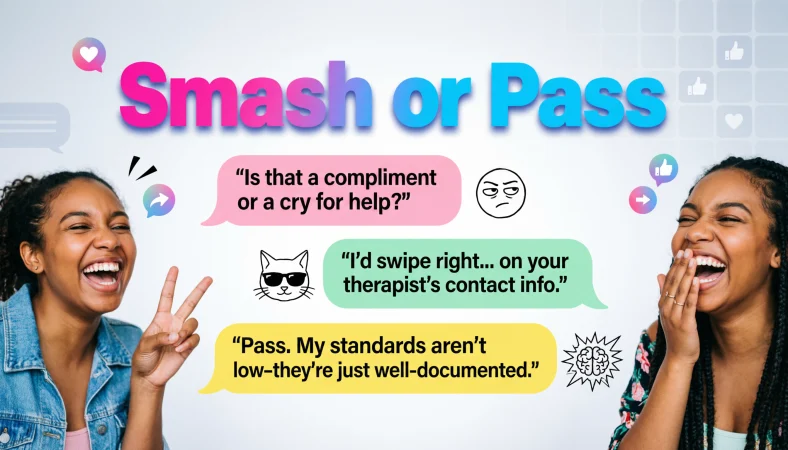
Quick Answer: Need a funny comeback for “smash or pass”? These replies keep the game playful, confident, and unpredictable without making things awkward. Pick your level of humor and send it.“Pass, I have standards”, “Depends, what’s the return policy?”, “Can I phone a friend?”, “Bold of you to ask”, “I’m requesting a third option”.
A “smash or pass” question can go from hilarious to painfully awkward in about three seconds. Whether it lands in a group chat, a TikTok comment, a dating app, a DM, or a late-night conversation with friends, the right response can completely change the energy.
That is why having a few funny comebacks ready is surprisingly useful. You can play along, dodge the question, flirt a little, roast the situation, or simply make everyone laugh without taking the game too seriously. The best replies are short enough to text instantly but clever enough to become the line everyone remembers.
If you are looking for funny comebacks for smash or pass you can actually use, this list has something for every mood. From dry humor to dramatic reactions and playful one-liners, consider this your emergency supply of conversational ammunition.
Funny Responses
“Pass, I’m emotionally unavailable.”
Use it when you want a ridiculous excuse that sounds oddly serious.
Meaning: You are jokingly blaming your imaginary emotional baggage.
“I need more data.”
Use it when you want to make the question sound like a scientific investigation.
Meaning: You are playfully refusing to make a quick decision.
“Where’s the third option?”
Use it when you dislike the limited choices.
Meaning: You are jokingly demanding more freedom.
“Can I phone a friend?”
Use it when you want to turn the question into a game-show moment.
Meaning: You are pretending the decision is far too important to make alone.
“My lawyer says no comment.”
Use it when you want an exaggerated, deadpan response.
Meaning: You are humorously avoiding the question.
“I’ll need a committee meeting.”
Use it when you want to make a tiny decision sound corporate.
Meaning: You are playfully overcomplicating the choice.
“Pass. My schedule is full.”
Use it when you want a confident excuse.
Meaning: You are joking that your calendar is somehow relevant.
“That question needs a snack break.”
Use it when you want a random, unexpected answer.
Meaning: You are dodging the question through absurd humor.
“I decline to participate in this survey.”
Use it when you want dry internet-style humor.
Meaning: You are humorously opting out.
“Let me consult the vibes.”
Use it when you want a trendy, casual response.
Meaning: You are pretending your decision depends entirely on the mood.
“I wasn’t prepared for this pop quiz.”
Use it when the question catches you off guard.
Meaning: You are making your hesitation funny.
“My answer has entered airplane mode.”
Use it when you want a silly excuse for silence.
Meaning: You are jokingly saying your brain has disconnected.
Witty Responses
“That sounds like a question for future me.”
Use it when you want to avoid giving an immediate answer.
Meaning: You are playfully postponing the decision.
“Interesting proposal. I’ll pretend to consider it.”
Use it when you want confident humor.
Meaning: You are teasing the person without taking the question seriously.
“I require additional evidence.”
Use it when you want to sound unnecessarily analytical.
Meaning: You are making the choice seem like an investigation.
“The jury is still out.”
Use it when you want a classic clever response.
Meaning: You are keeping your verdict undecided.
“That depends on the terms and conditions.”
Use it when you want to make the situation sound contractual.
Meaning: You are joking that there are rules involved.
“I’m keeping my options aesthetically vague.”
Use it when you want an unusual, stylish comeback.
Meaning: You are intentionally refusing to be specific.
“Let’s not rush into important life decisions.”
Use it when you want exaggerated seriousness.
Meaning: You are treating the playful question like a major commitment.
“I’ll need to review the application.”
Use it when you want playful corporate humor.
Meaning: You are pretending the person needs to qualify.
“Your request is under review.”
Use it when you want a short, confident tease.
Meaning: You are humorously making them wait.
“That information is classified.”
Use it when you want mysterious humor.
Meaning: You are keeping your answer deliberately secret.
“I have questions before I have answers.”
Use it when you want to turn the tables.
Meaning: You are making the other person work for a response.
“I’m going to let the universe decide.”
Use it when you want playful uncertainty.
Meaning: You are pretending fate has the final vote.
Sarcastic Responses
“Wow, such an elegant question.”
Use it when the question feels hilariously direct.
Meaning: You are gently mocking the lack of subtlety.
“And people say romance is dead.”
Use it when the question arrives with zero finesse.
Meaning: You are joking about the questionable charm.
“What a sophisticated discussion.”
Use it when you want dry sarcasm.
Meaning: You are pretending the topic is intellectually impressive.
“Truly, the conversation has peaked.”
Use it when the question is hilariously random.
Meaning: You are sarcastically declaring it the highlight of the day.
“You really woke up and chose this question.”
Use it when someone catches you off guard.
Meaning: You are teasing their boldness.
“The internet has taught us so much.”
Use it when you want a deadpan reaction.
Meaning: You are joking about modern online culture.
“This is definitely going on my résumé.”
Use it when you want absurd sarcasm.
Meaning: You are pretending the moment is professionally significant.
“Excellent. Another normal conversation.”
Use it when the topic gets unexpectedly chaotic.
Meaning: You are sarcastically calling the conversation ordinary.
“Humanity continues to surprise me.”
Use it when the question is especially unexpected.
Meaning: You are playfully questioning the state of society.
“I see we skipped the small talk.”
Use it when someone gets straight to the point.
Meaning: You are joking about their lack of subtlety.
“Bold strategy.”
Use it when someone takes a very direct approach.
Meaning: You are acknowledging their confidence with dry humor.
“Well, that escalated efficiently.”
Use it when the topic suddenly becomes personal.
Meaning: You are humorously pointing out how quickly things changed.
Flirty Responses
“Depends, are you asking for yourself?”
Use it when you want to turn the question into playful flirting.
Meaning: You are hinting that their interest matters.
“That sounds suspiciously personal.”
Use it when you want a teasing flirt.
Meaning: You are suggesting they might have ulterior motives.
“You first.”
Use it when you want to make them reveal their answer.
Meaning: You are playfully putting the pressure back on them.
“I might need a closer look.”
Use it when you want a subtle flirt.
Meaning: You are showing interest without being too direct.
“Careful, you’re making this interesting.”
Use it when the conversation already has chemistry.
Meaning: You are encouraging the playful tension.
“I’ll give you a hint: you’re asking the right person.”
Use it when you want confident flirting.
Meaning: You are teasing that your answer may be favorable.
“Maybe, but I charge for exclusive opinions.”
Use it when you want playful confidence.
Meaning: You are making your attention sound valuable.
“You seem very invested in my answer.”
Use it when the other person seems especially curious.
Meaning: You are teasing them about their interest.
“Is this your subtle way of flirting?”
Use it when you suspect they are interested.
Meaning: You are openly calling out the flirtation.
“I’ll answer if you promise not to blush.”
Use it when you want a playful challenge.
Meaning: You are creating cute romantic tension.
“That depends on whether you’re on the list.”
Use it when you want a cheeky hint.
Meaning: You are suggesting they might be involved.
“You’re making a strong case for yourself.”
Use it when you want confident flirt energy.
Meaning: You are playfully implying attraction.
Cute Responses
“My brain says pass, my curiosity says wait.”
Use it when you want a cute, indecisive answer.
Meaning: You are playfully showing mixed feelings.
“I need a tiny moment to process.”
Use it when the question surprises you.
Meaning: You are responding shyly without being serious.
“That was unexpectedly bold.”
Use it when someone catches you off guard.
Meaning: You are acknowledging their confidence warmly.
“I’m too cute for difficult questions.”
Use it when you want a playful self compliment.
Meaning: You are keeping the mood light and confident.
“Can we add ‘maybe with snacks’?”
Use it when you want wholesome humor.
Meaning: You are making the answer intentionally silly.
“My answer is hiding.”
Use it when you want a soft dodge.
Meaning: You are playfully refusing to reveal your choice.
“I’m requesting a cute little timeout.”
Use it when you need a moment to think.
Meaning: You are making your hesitation adorable.
“My decision-making skills have left the chat.”
Use it when you want relatable humor.
Meaning: You are joking that you cannot decide.
“That question made me giggle.”
Use it when you genuinely find the question amusing.
Meaning: You are responding warmly without committing.
“I plead the fifth, but make it cute.”
Use it when you want playful avoidance.
Meaning: You are refusing to answer in a lighthearted way.
“I’m blushing at the audacity.”
Use it when someone is being especially bold.
Meaning: You are mixing embarrassment with amusement.
“I’ll keep that little thought to myself.”
Use it when you want to stay mysterious.
Meaning: You are playfully keeping your verdict private.
Clever Responses
“I refuse to let a two-option question control my destiny.”
Use it when you want an exaggerated clever comeback.
Meaning: You are joking about the limitations of the game.
“My answer depends on the supporting evidence.”
Use it when you want mock-serious logic.
Meaning: You are pretending the choice requires research.
“I’m currently accepting arguments.”
Use it when you want to keep the game going.
Meaning: You are inviting playful persuasion.
“That decision requires a risk assessment.”
Use it when you want business-style humor.
Meaning: You are making attraction sound like corporate planning.
“Let’s circle back after further investigation.”
Use it when you want workplace humor.
Meaning: You are deliberately delaying your answer.
“I have not yet reached a statistically significant conclusion.”
Use it when you want nerdy humor.
Meaning: You are making the answer hilariously complicated.
“My official statement is pending.”
Use it when you want mysterious confidence.
Meaning: You are refusing to reveal your verdict yet.
“I’m outsourcing this decision.”
Use it when you want a short clever joke.
Meaning: You are pretending someone else gets to decide.
“I’m waiting for the plot twist.”
Use it when you want internet-friendly humor.
Meaning: You expect something unexpected before deciding.
“The evidence is compelling, but I remain neutral.”
Use it when you want playful ambiguity.
Meaning: You are keeping the answer open.
“I’m operating on vibes, not spreadsheets.”
Use it when you want clever casual humor.
Meaning: You are admitting the decision is purely about feeling.
“Your question has been forwarded to management.”
Use it when you want a witty corporate comeback.
Meaning: You are pretending your personal decision needs executive approval.
Dry Humor Responses
“Noted.”
Use it when you want the shortest possible reaction.
Meaning: You acknowledge the question without giving anything away.
“Interesting.”
Use it when you want maximum ambiguity.
Meaning: You are leaving the other person guessing.
“Bold.”
Use it when someone asks very directly.
Meaning: You are acknowledging their confidence with one word.
“Fascinating choice of words.”
Use it when you want subtle sarcasm.
Meaning: You are drawing attention to how direct the question is.
“I’ll pretend I didn’t hear that.”
Use it when you want a deadpan escape.
Meaning: You are humorously avoiding the question.
“That’s information.”
Use it when you want deliberately flat humor.
Meaning: You are acknowledging the question without engaging.
“Unexpected.”
Use it when the question catches you off guard.
Meaning: You are giving a deliberately understated reaction.
“We’ve reached this point, apparently.”
Use it when the conversation takes an unexpected turn.
Meaning: You are dryly accepting the situation.
“Okay, then.”
Use it when you want calm, understated humor.
Meaning: You are letting the awkwardness speak for itself.
“Noted for future reference.”
Use it when you want mock professionalism.
Meaning: You are pretending the question is useful information.
“I’ll file that accordingly.”
Use it when you want corporate-style deadpan humor.
Meaning: You are pretending the question belongs in an official record.
“That certainly happened.”
Use it when you want a classic understated reaction.
Meaning: You are humorously acknowledging the moment without committing.
Dramatic Responses
“How dare you place this burden upon me?”
Use it when you want theatrical humor.
Meaning: You are pretending the question is unbearably difficult.
“I was not emotionally prepared for this moment.”
Use it when you want exaggerated drama.
Meaning: You are joking about being caught off guard.
“My entire evening has changed.”
Use it when you want an over-the-top reaction.
Meaning: You are pretending the question is life altering.
“This is the plot development nobody warned me about.”
Use it when the question arrives unexpectedly.
Meaning: You are turning the moment into a fictional storyline.
“I need to stare dramatically out a window.”
Use it when you want theatrical humor.
Meaning: You are exaggerating your need to process the question.
“My ancestors were not prepared for this.”
Use it when you want absurd drama.
Meaning: You are joking that the question transcends generations.
“The council will decide.”
Use it when you want fantasy-style humor.
Meaning: You are pretending a mysterious committee controls your answer.
“This is bigger than both of us.”
Use it when you want dramatic exaggeration.
Meaning: You are making a playful question sound monumental.
“I shall reflect upon this under moonlight.”
Use it when you want intentionally theatrical humor.
Meaning: You are pretending the decision requires a cinematic moment.
“My peace has been disturbed.”
Use it when you want mock outrage.
Meaning: You are joking that the question has disrupted your calm.
“I require a dramatic soundtrack.”
Use it when you want to make the moment cinematic.
Meaning: You are exaggerating the importance of your decision.
“Tell my story when I’m gone.”
Use it when you want absurdly dramatic humor.
Meaning: You are joking that the question is somehow dangerous to your peace.
Chill And Casual Responses
“Haha, maybe.”
Use it when you want an easygoing answer.
Meaning: You are keeping things relaxed and open.
“Depends on the vibe.”
Use it when you do not want to overthink it.
Meaning: You are letting the mood guide your answer.
“I’m keeping it mysterious.”
Use it when you want casual ambiguity.
Meaning: You are choosing not to reveal your verdict.
“That’s between me and my Wi-Fi.”
Use it when you want random internet humor.
Meaning: You are dodging the question playfully.
“Let’s not rush the process.”
Use it when you want relaxed humor.
Meaning: You are jokingly taking your time.
“I’ll get back to you eventually.”
Use it when you want casual teasing.
Meaning: You are playfully delaying the answer.
“I’m undecided and thriving.”
Use it when you want confident casual humor.
Meaning: You are comfortable not choosing.
“I’m just here for the entertainment.”
Use it when you want to avoid participating seriously.
Meaning: You are treating the game as pure fun.
“We’ll see what happens.”
Use it when you want to keep things open.
Meaning: You are avoiding a definite answer.
“I’m going with vibes today.”
Use it when you want modern casual energy.
Meaning: You are letting instinct decide.
“No thoughts, just vibes.”
Use it when you want a short meme-style reply.
Meaning: You are joking that your brain has no official verdict.
“Ask me after coffee.”
Use it when you want a relatable excuse.
Meaning: You are pretending caffeine controls your decision making.
Confident Responses
“I know my worth, but I appreciate the survey.”
Use it when you want confident humor.
Meaning: You are playfully reminding everyone that your standards matter.
“I don’t make rushed decisions.”
Use it when you want calm confidence.
Meaning: You are showing that you do not feel pressured.
“I’m selective.”
Use it when you want a short, confident response.
Meaning: You are saying your standards are intentional.
“You’ll have to impress me first.”
Use it when you want playful confidence.
Meaning: You are making it clear that charm takes effort.
“I’m not handing out verdicts for free.”
Use it when you want cheeky confidence.
Meaning: You are teasing that your opinion has value.
“I like keeping people guessing.”
Use it when you want mysterious confidence.
Meaning: You enjoy maintaining a little intrigue.
“My standards have entered the chat.”
Use it when you want a modern confident joke.
Meaning: You are emphasizing that your preferences matter.
“I choose carefully.”
Use it when you want something simple and assured.
Meaning: You are showing self-confidence.
“I’m not easily impressed.”
Use it when you want playful challenge energy.
Meaning: You are suggesting that winning you over takes effort.
“That answer requires premium access.”
Use it when you want a humorous boundary.
Meaning: You are joking that your opinion is exclusive.
“Confidence is cute, but effort helps.”
Use it when you want a confident tease.
Meaning: You are saying boldness alone is not enough.
“You may submit your application.”
Use it when you want playful authority.
Meaning: You are joking that people need to qualify for your attention.
Creative Responses
“Pass or smash? I prefer plot development.”
Use it when you want to reinvent the game.
Meaning: You are steering the moment toward playful storytelling.
“I’m choosing ‘needs another episode.’”
Use it when you want a pop-culture-style joke.
Meaning: You are saying the verdict is not ready yet.
“My answer is currently buffering.”
Use it when you want tech humor.
Meaning: You are joking that your brain needs time.
“I’m consulting the moon.”
Use it when you want whimsical humor.
Meaning: You are pretending cosmic forces control the decision.
“Let the algorithm decide.”
Use it when you want internet-themed humor.
Meaning: You are outsourcing the decision to technology.
“I’m putting this in the suggestion box.”
Use it when you want a random corporate joke.
Meaning: You are playfully refusing to decide immediately.
“My inner narrator needs more context.”
Use it when you want quirky humor.
Meaning: You are pretending the situation needs a storyline.
“I choose chaos, respectfully.”
Use it when you want playful unpredictability.
Meaning: You are embracing the absurdity of the question.
“I’m taking this question to the group chat.”
Use it when you want social humor.
Meaning: You are joking that friends must approve the decision.
“This deserves a cinematic answer.”
Use it when you want dramatic creativity.
Meaning: You are making the response intentionally theatrical.
“I need a mood board before answering.”
Use it when you want creative exaggeration.
Meaning: You are pretending the decision needs visual planning.
“I’m waiting for the director’s cut.”
Use it when you want a playful movie reference.
Meaning: You are suggesting there is more information to come.
Playful Roast Responses
“You really thought that was your best question?”
Use it when friendly teasing fits the relationship.
Meaning: You are playfully poking fun at their approach.
“Confidence level: surprisingly high.”
Use it when someone asks boldly.
Meaning: You are teasing them for their courage.
“You skipped several conversational levels.”
Use it when someone gets too direct too quickly.
Meaning: You are joking about the lack of buildup.
“Someone woke up fearless.”
Use it when the question is unusually bold.
Meaning: You are teasing their confidence.
“Respectfully, that was an ambitious question.”
Use it when you want a polished roast.
Meaning: You are joking that they reached a little too far.
“Your confidence deserves its own award.”
Use it when someone is extremely direct.
Meaning: You are teasing them while acknowledging their boldness.
“I admire the commitment to awkwardness.”
Use it when the question creates funny tension.
Meaning: You are playfully calling out the awkward approach.
“You really skipped the tutorial.”
Use it when someone jumps straight into the game.
Meaning: You are joking that they ignored the usual social warm-up.
“That was certainly one way to start a conversation.”
Use it when you want subtle teasing.
Meaning: You are highlighting how unexpectedly direct they were.
“Points for confidence, at least.”
Use it when you want a gentle roast.
Meaning: You are giving credit for boldness without answering.
“I respect the audacity.”
Use it when someone makes a particularly direct request.
Meaning: You are amused by their nerve.
“You brought absolutely no subtlety today.”
Use it when the person is being obvious.
Meaning: You are teasing them for being extremely direct.
Polite Responses
“I’ll pass, but thanks for asking.”
Use it when you want a friendly refusal.
Meaning: You are declining without creating tension.
“I’m going to sit this one out.”
Use it when you do not want to participate.
Meaning: You are setting a light boundary.
“I’d rather not play that game.”
Use it when you want a clear but respectful response.
Meaning: You are declining participation directly.
“I’ll leave that one unanswered.”
Use it when you want to stay neutral.
Meaning: You are choosing not to give a verdict.
“I appreciate the question, but I’ll pass.”
Use it when you want courteous wording.
Meaning: You are politely declining.
“That’s not really my kind of game.”
Use it when you want a casual boundary.
Meaning: You are explaining that the format is not for you.
“I’m keeping that opinion private.”
Use it when you want to avoid judgment.
Meaning: You are choosing privacy over participation.
“I think I’ll stay neutral on this one.”
Use it when you want a calm response.
Meaning: You are deliberately avoiding a side.
“I’m good without choosing.”
Use it when you want simple boundary-setting.
Meaning: You are comfortable opting out.
“I’ll respectfully decline the assignment.”
Use it when you want polite humor.
Meaning: You are turning the refusal into a playful joke.
“Thanks, but I’ll keep my answer to myself.”
Use it when you want warmth and privacy.
Meaning: You are declining without sounding harsh.
“I’m sitting this round out.”
Use it when you want a friendly, uncomplicated refusal.
Meaning: You are choosing not to participate.
Group Chat Responses
“Everyone remain calm.”
Use it when the group chat suddenly gets chaotic.
Meaning: You are humorously pretending the situation needs crowd control.
“The group chat was not ready for this.”
Use it when the question appears unexpectedly.
Meaning: You are making the moment sound like breaking news.
“Someone screenshot this.”
Use it when the message is especially funny.
Meaning: You are treating the moment as group-chat history.
“Adding this to tonight’s agenda.”
Use it when friends are already joking around.
Meaning: You are turning the question into a fake meeting topic.
“I need witnesses before answering.”
Use it when you want everyone involved.
Meaning: You are exaggerating the seriousness of your decision.
“This conversation needs adult supervision.”
Use it when the group gets playful.
Meaning: You are joking about the chaos.
“I’m tagging the entire committee.”
Use it when you want a group-focused joke.
Meaning: You are pretending everyone gets a vote.
“The council has been summoned.”
Use it when you want fantasy-style group humor.
Meaning: You are turning the decision into a mock tribunal.
“I’m not taking responsibility for this thread.”
Use it when the conversation gets ridiculous.
Meaning: You are humorously distancing yourself from the chaos.
“This belongs in the group chat hall of fame.”
Use it when the moment is especially funny.
Meaning: You are declaring the message memorable.
“Someone call the moderators.”
Use it when the conversation gets out of hand.
Meaning: You are joking that the group needs intervention.
“I came here for peace and found this.”
Use it when the topic appears unexpectedly.
Meaning: You are humorously complaining about the chaos.
Mysterious Responses
“Wouldn’t you like to know?”
Use it when you want to tease without answering.
Meaning: You are intentionally keeping them curious.
“That information is staying classified.”
Use it when you want playful secrecy.
Meaning: You are refusing to reveal your choice.
“Some things are better left unknown.”
Use it when you want dramatic mystery.
Meaning: You are keeping your opinion private.
“I have a verdict, but you’re not getting it.”
Use it when you want confident teasing.
Meaning: You are deliberately withholding the answer.
“The answer exists somewhere.”
Use it when you want absurd mystery.
Meaning: You are refusing to clarify.
“Maybe the universe knows.”
Use it when you want whimsical ambiguity.
Meaning: You are leaving the decision open.
“I could tell you, but where’s the fun?”
Use it when you want playful mystery.
Meaning: You are keeping the suspense alive.
“That’s between me and my intrusive thoughts.”
Use it when you want internet-style humor.
Meaning: You are jokingly keeping your answer private.
“I’m taking that secret to the grave.”
Use it when you want exaggerated secrecy.
Meaning: You are making the answer sound extremely confidential.
“The archives remain sealed.”
Use it when you want dramatic humor.
Meaning: You are pretending your answer is historical evidence.
“You may never know.”
Use it when you want a simple tease.
Meaning: You are intentionally maintaining mystery.
“I’m protecting the plot.”
Use it when you want a modern, playful response.
Meaning: You are keeping your answer hidden to make things more interesting.
Unexpected One-Liners
“I choose garlic bread.”
Use it when you want a completely random answer.
Meaning: You are abandoning the question for something universally comforting.
“My final answer is snacks.”
Use it when you want harmless absurdity.
Meaning: You are making food the priority.
“I’m emotionally attached to my blanket.”
Use it when you want relatable humor.
Meaning: You are joking that comfort wins every time.
“Can we make it brunch instead?”
Use it when you want a random change of topic.
Meaning: You are prioritizing food and plans over the question.
“I nominate pizza.”
Use it when you want an intentionally unrelated answer.
Meaning: You are embracing nonsense for comedic effect.
“I have chosen peace.”
Use it when you want a funny escape.
Meaning: You are humorously refusing to engage.
“My brain just filed for vacation.”
Use it when you want a silly excuse.
Meaning: You are pretending your brain cannot process the question.
“I vote for a nap.”
Use it when you want relatable humor.
Meaning: You are joking that sleep is more appealing.
“I choose the mystery box.”
Use it when you want playful unpredictability.
Meaning: You are refusing to pick either option.
“I’m going with neither and a side of fries.”
Use it when you want food-based humor.
Meaning: You are confidently choosing an unrelated third option.
“My answer has been replaced by elevator music.”
Use it when you want surreal humor.
Meaning: You are joking that your thoughts have disappeared.
“I would like to speak to the snack department.”
Use it when you want an absurd corporate-style joke.
Meaning: You are turning the moment into ridiculous bureaucracy.
FAQs
What Does “Smash Or Pass” Mean?
“Smash or pass” is a casual game where someone asks whether you find a person attractive enough to choose one of two options. The phrase is usually playful, but context matters.
Can “Smash Or Pass” Be Flirty?
Yes. Between consenting adults, it can be used as playful flirting or a way to test attraction. A teasing answer can keep the chemistry fun without making things overly serious.
What If I Do Not Want To Answer?
You can simply say, “I’ll pass on answering,” “I’m sitting this one out,” or “I’m keeping that private.” You never owe anyone an answer.
Can I Use These Replies At Work?
Stick to neutral or professional humor at work. A simple “I’m going to sit this one out” is much safer than turning the conversation personal.
What If I Do Not Actually Mean My Funny Reply?
Keep it clear. If someone might misunderstand your joke, follow it with a straightforward answer such as “Seriously though, I’d rather not answer.”
Is Humor Appropriate?
Humor works best when everyone is comfortable with the topic. If someone seems uncomfortable, switch to a simple, respectful response and move on.
Conclusion
The best comeback is not always the funniest one. Sometimes it is a clever dodge, a confident one-liner, a playful flirt, or a simple “I’ll pass” that keeps your boundaries intact. The trick is matching your response to the person, the setting, and the energy of the moment. Whether you are answering in a group chat, reacting to a DM, joking with friends, or dealing with an unexpectedly bold question, you have plenty of options. Save the lines that sound most like you, send them when the moment calls for it, and do not be afraid to improvise. Share this list with your funniest friend and keep your next comeback ready.