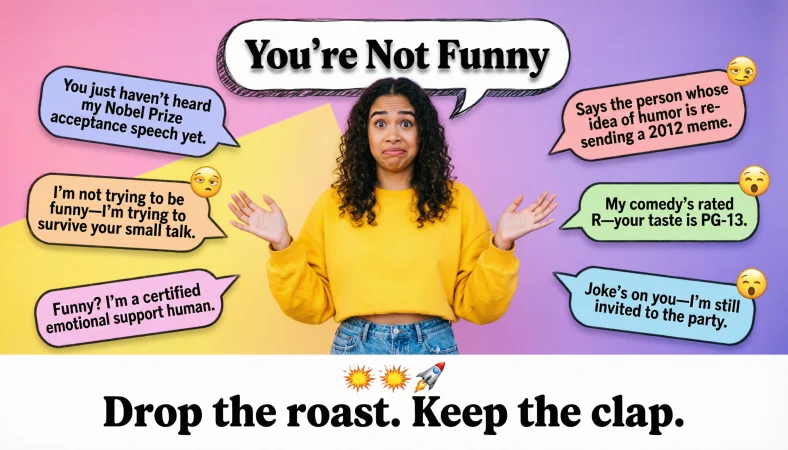
Quick Answer: When someone says “you’re not funny,” they might mean your joke missed, your humor is not their style, or they are simply teasing you. The best response depends on whether you want to be funny, confident, flirty, sarcastic, or completely unbothered.
Top alternatives: “Good thing I wasn’t auditioning,” “Humor is subjective,” “That’s okay, I’ll survive,” “You’re entitled to your opinion,” “Wait until my comeback loads.”
Nothing humbles you faster than dropping what you thought was a hilarious joke and getting hit with, “You’re not funny.” Ouch. Whether it happens in a group chat, during a date, at work, in the comments, or while joking around with friends, those four words can mean several different things. Sometimes they genuinely did not find your joke funny and Sometimes they are teasing you and Sometimes they are flirting badly. And sometimes they are basically asking for a comeback without realizing it. Understanding what someone really means when they say you’re not funny can help you decide whether to laugh it off, clap back, or simply move on. The right response can turn an awkward moment into a hilarious one. After all, the joke may have flopped, but your comeback does not have to.
Funny Responses
Good thing I wasn’t auditioning.
Use this when someone casually criticizes your humor.
Meaning: You are playfully showing that their opinion does not bother you.
Wait, let me restart my personality.
Use this after a joke completely misses.
Meaning: You are making fun of yourself instead of taking the criticism seriously.
My comedy department is currently understaffed.
Use this when friends roast your joke.
Meaning: You are responding with absurd humor.
That joke was for a very exclusive audience.
Use this when nobody understands your humor.
Meaning: You are joking that they simply were not part of the intended audience.
I’ll invoice you for the entertainment anyway.
Use this when someone says you are not funny after enjoying your attention.
Meaning: You are turning their criticism into a playful joke.
The joke landed. You just weren’t at the airport.
Use this when someone misses your humor.
Meaning: You are confidently teasing them about not getting the joke.
My humor has a loading screen.
Use this when your joke gets an awkward reaction.
Meaning: You are playfully blaming the timing.
I promise my next joke will require a subscription.
Use this when someone dismisses your humor.
Meaning: You are jokingly making your comedy sound exclusive..
Don’t worry, comedy is still processing.
Use this when your punchline gets no reaction.
Meaning: You are making the awkward silence part of the joke.
I’m hilarious in another timezone.
Use this when your humor is not connecting.
Meaning: You are playfully blaming circumstances rather than your joke.
You had to be there, and apparently you still weren’t.
Use this with a friend who does not understand your joke.
Meaning: You are teasing them for missing the humor.
Brutal Responses
And yet you’re still listening. Interesting.
Use this when someone keeps engaging despite criticizing you.
Meaning: You are pointing out that they clearly enjoy the interaction.
Not everyone has elite taste.
Use this when someone dismisses your humor.
Meaning: You are confidently suggesting their opinion is the problem.
I’ll try to recover from this devastating review.
Use this when someone gives you a blunt criticism.
Meaning: You are mocking how seriously they take their opinion.
Your approval was never on my schedule.
Use this when you want a firm comeback.
Meaning: You are making it clear that you do not need their validation.
That’s okay. You’re not exactly my target audience.
Use this when someone does not appreciate your jokes.
Meaning: You are turning their criticism into a confident dismissal.
I can live with being misunderstood.
Use this when someone repeatedly criticizes your personality.
Meaning: You are showing that their judgment does not affect you.
Not funny to you, apparently.
Use this when you want a calm but sharp response.
Meaning: You are reminding them that humor is subjective.
I’d explain the joke, but then it would stop being funny.
Use this when someone clearly missed your point.
Meaning: You are implying that they failed to understand the joke.
You could simply admit you don’t get my humor.
Use this when someone acts overly critical.
Meaning: You are reframing their criticism as a difference in taste.
Thanks for the unsolicited comedy review.
Use this when someone critiques every joke you make.
Meaning: You are sarcastically dismissing their feedback.
Noted. I’ll notify the comedy industry immediately.
Use this when you want an exaggerated roast.
Meaning: You are humorously pretending their opinion is extremely important.
I’ll try to cope with your devastating honesty.
Use this when a friend says you are not funny.
Meaning: You are pretending their comment has dramatically wounded you.
Flirty Responses
Maybe I’m only funny when you’re around.
Use this when someone you like says you are not funny.
Meaning: You are turning the criticism into playful flirting.
I’m saving my best jokes for you.
Use this when flirting through text.
Meaning: You are implying that you want to keep impressing them.
Maybe you’re just distracting me.
Use this when the conversation has romantic tension.
Meaning: You are playfully blaming your lack of humor on their effect on you.
I’ll make you laugh eventually. Challenge accepted.
Use this when someone you like doubts your humor.
Meaning: You are confidently turning it into a playful challenge.
You think I’m not funny, but you’re still texting me.
Use this when someone keeps chatting with you.
Meaning: You are teasing them about enjoying your company anyway.
Maybe my humor gets better when I’m trying to impress you.
Use this when flirting casually.
Meaning: You are hinting that their opinion matters to you.
I guess I’ll have to find another way to make you smile.
Use this when you want a smooth romantic comeback.
Meaning: You are suggesting you have other ways to charm them.
You haven’t unlocked my premium humor yet.
Use this when you want playful flirting.
Meaning: You are teasing them about getting more of your personality.
Careful, I might take that as a challenge.
Use this when someone playfully insults your humor.
Meaning: You are showing confidence while keeping the chemistry alive.
Maybe I’m funny enough to keep you interested.
Use this when the person keeps talking to you.
Meaning: You are subtly suggesting they already enjoy your attention.
I’ll accept that review if you give me a second chance.
Use this when flirting after a failed joke.
Meaning: You are asking for another opportunity in a playful way.
If I make you laugh later, I get bragging rights. Deal?
Use this when you want a fun flirty challenge.
Meaning: You are turning the exchange into playful competition.
Polite Responses
Fair enough, humor is subjective.
Use this when you want to stay mature.
Meaning: You accept that people have different tastes.
No worries, not every joke lands with everyone.
Use this when someone genuinely dislikes your joke.
Meaning: You are responding without taking offense.
That’s completely okay. We all have different senses of humor.
Use this when you want to keep things friendly.
Meaning: You are recognizing a normal difference in personality.
I appreciate the honesty.
Use this when someone gives you direct feedback.
Meaning: You are acknowledging their opinion calmly.
Guess that one wasn’t your style.
Use this after a joke misses.
Meaning: You are treating it as a difference in preference.
Fair enough, I’ll save my best material for another day.
Use this when you want a light response.
Meaning: You are accepting the comment without embarrassment.
No hard feelings.
Use this when someone is being blunt.
Meaning: You are making it clear that you are not offended.
Different humor, I guess.
Use this when you want to keep things short.
Meaning: You are explaining the situation without arguing.
That’s fair. Not every joke is for everyone.
Use this when you want a mature response.
Meaning: You are calmly accepting their reaction.
I understand. Thanks for being honest.
Use this in a more serious situation.
Meaning: You are showing emotional maturity.
I’ll take that feedback lightly.
Use this when you want to acknowledge criticism without overreacting.
Meaning: You are keeping the moment relaxed.
Well, at least we know my humor needs a different audience.
Use this when you want to stay positive.
Meaning: You are turning criticism into a harmless observation.
Professional Responses
I suppose humor is a matter of personal preference.
Use this when a coworker comments on your humor.
Meaning: You are keeping the response professional and neutral.
Fair point. I’ll keep the jokes for the right setting.
Use this when humor may not fit a workplace situation.
Meaning: You are showing awareness of professional boundaries.
Understood. I’ll stick to the agenda.
Use this when someone criticizes a workplace joke.
Meaning: You are calmly shifting back to business.
Noted. I’ll keep things straightforward.
Use this when someone prefers a serious tone.
Meaning: You are showing flexibility.
I understand. Everyone has a different sense of humor.
Use this when you want a neutral response.
Meaning: You are acknowledging their preference respectfully.
Thanks for the feedback.
Use this when the comment comes from a colleague or manager.
Meaning: You are responding professionally without escalating.
Fair enough. Let’s keep it focused.
Use this when the conversation needs to return to work.
Meaning: You are redirecting attention toward the task.
I’ll take that into consideration.
Use this when someone gives serious feedback.
Meaning: You are acknowledging the comment without agreeing completely.
Understood. I’ll read the room better next time.
Use this when your joke was inappropriate for the setting.
Meaning: You are accepting responsibility for poor timing.
No problem. Let’s move on.
Use this when you want to end the topic quickly.
Meaning: You are preventing an unnecessary discussion.
Point taken.
Use this when you want a short professional reply.
Meaning: You understand what they are saying.
That’s fair. I’ll keep the tone appropriate for the situation.
Use this when workplace professionalism matters.
Meaning: You are showing good judgment.
Sarcastic Responses
Wow, I’ll never recover from that review.
Use this when someone jokingly criticizes your humor.
Meaning: You are exaggerating their comment for comedic effect.
Breaking news: one person didn’t laugh.
Use this when you want a playful sarcastic comeback.
Meaning: You are joking about how little their opinion matters.
Thank you for your incredibly important announcement.
Use this when someone dramatically says you are not funny.
Meaning: You are sarcastically pretending their opinion is major news.
Alert the authorities. My joke failed.
Use this after an awkward joke.
Meaning: You are exaggerating the situation for humor.
I’ll add that to my list of life-changing opinions.
Use this when someone is overly critical.
Meaning: You are sarcastically downplaying their judgment.
Somehow, I’ll find the strength to continue.
Use this when you want dramatic sarcasm.
Meaning: You are pretending their criticism is devastating.
Your comedy certification has spoken.
Use this when a friend acts like a humor expert.
Meaning: You are teasing them for taking their opinion too seriously.
Thank you for your TED Talk.
Use this when someone gives an unnecessarily long critique.
Meaning: You are sarcastically ending their lecture.
I’ll inform my three fans immediately.
Use this when someone says you are not funny.
Meaning: You are joking about your imaginary comedy fanbase.
The council has reviewed your complaint.
Use this when you want an absurd sarcastic reply.
Meaning: You are pretending your joke has gone through an official investigation.
I’ll notify my manager that you’re dissatisfied.
Use this with friends who enjoy dry humor.
Meaning: You are pretending your personality is a customer service operation.
Your complaint has been forwarded to nobody.
Use this when you want a sharper sarcastic comeback.
Meaning: You are jokingly showing that their criticism will be ignored.
Cute Responses
Aww, you still listened to my joke though.
Use this when someone playfully says you are not funny.
Meaning: You are turning their criticism into affection.
Maybe I’m cute instead. Does that count?
Use this when flirting or joking with someone close.
Meaning: You are replacing humor with charm.
I’ll try harder next time, promise.
Use this when you want a sweet response.
Meaning: You are playfully showing that you care about their reaction.
Okay, I’ll work on my comedy skills. 😂
Use this after a harmless joke fail.
Meaning: You are taking the criticism lightly.
At least I made you look at your phone.
Use this when texting someone.
Meaning: You are joking about getting their attention.
I’m still adorable though.
Use this when someone says you are not funny.
Meaning: You are confidently switching to your charm.
Fine, I’ll just smile dramatically instead.
Use this when you want a playful response.
Meaning: You are jokingly accepting defeat.
Maybe my jokes need a little more love.
Use this when talking to someone you care about.
Meaning: You are asking for playful encouragement.
Okay, but you have to admit I tried.
Use this after a joke misses.
Meaning: You are turning the failure into something endearing.
I’ll consider that constructive criticism. Maybe.
Use this with a close friend.
Meaning: You are pretending to take their criticism seriously.
Guess I’ll stick to being your favorite distraction.
Use this when flirting.
Meaning: You are suggesting your company matters more than your jokes.
Fine, I’ll save the terrible jokes for someone else. 😌
Use this when teasing someone playfully.
Meaning: You are pretending to withdraw your humor for dramatic effect.
Dramatic Responses
My entire comedy career is over.
Use this after someone rejects your joke.
Meaning: You are exaggerating the criticism for entertainment.
I need a moment to process this betrayal.
Use this when a friend says you are not funny.
Meaning: You are jokingly treating their comment like a personal betrayal.
After everything I’ve done for this friendship?
Use this when teasing a close friend.
Meaning: You are dramatically exaggerating the situation.
I thought we had something special.
Use this when someone does not laugh at your joke.
Meaning: You are pretending the failed joke has damaged the relationship.
My confidence has left the group chat.
Use this after an awkward joke.
Meaning: You are humorously describing your embarrassment.
This is the worst review I’ve ever received.
Use this when you want an exaggerated response.
Meaning: You are pretending their comment is a major disaster.
I may never joke again.
Use this when a joke completely flops.
Meaning: You are playfully acting devastated.
My ancestors felt that one.
Use this when someone delivers a brutal criticism.
Meaning: You are exaggerating how deeply the comment affected you.
I was not emotionally prepared for this level of honesty.
Use this when someone is unusually blunt.
Meaning: You are making their criticism sound hilariously dramatic.
Please respect my privacy during this difficult time.
Use this when your joke gets rejected.
Meaning: You are turning embarrassment into mock tragedy.
Cancel the comedy tour. It’s over.
Use this after a terrible punchline.
Meaning: You are jokingly declaring your imaginary career finished.
I shall retire from humor with immediate effect.
Use this when you want theatrical sarcasm.
Meaning: You are pretending to quit comedy forever.
Chill And Casual Responses
Haha, fair enough.
Use this when someone casually says you are not funny.
Meaning: You are acknowledging it without making a big deal.
Maybe it just wasn’t your kind of humor.
Use this when your joke misses.
Meaning: You are keeping the response relaxed and mature.
No worries, I’ll get you next time.
Use this when joking with a friend.
Meaning: You are treating it like a harmless challenge.
Fair, I can take it.
Use this when someone gives you a playful roast.
Meaning: You are showing that you are not easily offended.
Haha, I tried.
Use this after a joke falls flat.
Meaning: You are casually acknowledging the failed attempt.
Guess I missed that one.
Use this when your joke gets no reaction.
Meaning: You are admitting the joke did not land.
It happens.
Use this when you want to move on quickly.
Meaning: You are refusing to overthink the situation.
Maybe next joke.
Use this when you want a short response.
Meaning: You are casually suggesting another attempt.
Different humor, no big deal.
Use this when someone does not enjoy your style.
Meaning: You are accepting the difference without conflict.
I’ll survive. 😂
Use this when someone playfully insults your humor.
Meaning: You are showing that the criticism does not affect you.
Noted, comedy police.
Use this when a friend acts overly serious.
Meaning: You are lightly teasing them for judging your joke.
All good. We can disagree on the funny stuff.
Use this when you want to stay relaxed.
Meaning: You are accepting their opinion without arguing.
Confident Responses
I know I’m funny to the right people.
Use this when someone criticizes your humor.
Meaning: You are confident without needing universal approval.
Humor is subjective, and that’s okay.
Use this when you want a mature confident response.
Meaning: You recognize that comedy depends on personal taste.
I’m not here to make everyone laugh.
Use this when someone expects you to entertain them.
Meaning: You are refusing to seek approval.
I like my sense of humor, and that’s enough.
Use this when someone is overly critical.
Meaning: You are comfortable with your personality.
Maybe you’re just not my audience.
Use this when you want a confident comeback.
Meaning: You are framing the disagreement as a difference in taste.
I’ll keep being me.
Use this when someone criticizes your personality.
Meaning: You are confidently refusing to change for approval.
Not every joke needs your approval.
Use this when someone acts judgmental.
Meaning: You are setting a confident boundary.
I can handle one bad review.
Use this when someone says you are not funny.
Meaning: You are showing emotional confidence.
I know my humor isn’t for everyone.
Use this when someone genuinely dislikes your jokes.
Meaning: You understand that different people enjoy different humor.
That’s your opinion, not a universal fact.
Use this when someone speaks as though their judgment is absolute.
Meaning: You are calmly challenging their certainty.
I’m comfortable with my personality.
Use this when the criticism becomes personal.
Meaning: You are showing self-assurance.
You don’t have to find me funny for me to enjoy myself.
Use this when someone repeatedly judges your humor.
Meaning: You are making it clear that your happiness does not depend on their approval.
Clever Responses
Maybe the joke was smarter than the audience.
Use this when you want a playful intellectual comeback.
Meaning: You are joking that they missed the point.
The punchline arrived. Your sense of humor didn’t.
Use this when someone completely misses your joke.
Meaning: You are turning their criticism back on them.
Humor requires context. Apparently, we skipped that chapter.
Use this when your joke needs explanation.
Meaning: You are cleverly blaming the missing context.
I guess my comedy has a niche demographic.
Use this when only some people laugh at your jokes.
Meaning: You are framing your humor as specialized.
That’s okay. Great art is often misunderstood.
Use this when you want an intentionally arrogant joke.
Meaning: You are exaggerating your own comedic genius.
Your funny settings might be different from mine.
Use this when you want a clever but friendly reply.
Meaning: You are suggesting your humor preferences simply differ.
Maybe we need to update your humor software.
Use this with someone who enjoys tech jokes.
Meaning: You are playfully suggesting their humor needs improvement.
The joke passed quality control. You didn’t.
Use this when you want a sharper comeback.
Meaning: You are confidently reversing the criticism.
I’ll add “not funny to you” to the official report.
Use this when someone gives an absolute judgment.
Meaning: You are cleverly narrowing their opinion to personal preference.
Interesting. My joke and your sense of humor clearly missed each other.
Use this when you want to stay clever and composed.
Meaning: You are describing the disagreement without becoming hostile.
Perhaps the comedy frequency is slightly off.
Use this when you want dry humor.
Meaning: You are joking that your humor simply operates differently.
The joke was fine. The timing had other plans.
Use this after a joke fails because of timing.
Meaning: You are separating the quality of the joke from its delivery.
Sweet And Respectful Responses
That’s okay. I’m glad you told me honestly.
Use this when someone genuinely dislikes your humor.
Meaning: You are showing maturity and appreciation for honesty.
No worries, we can have different senses of humor.
Use this when you want to preserve a good relationship.
Meaning: You are accepting personality differences.
I’ll try not to take it personally.
Use this when the comment feels slightly harsh.
Meaning: You are choosing emotional maturity over defensiveness.
Thanks for letting me know. I’ll keep that in mind.
Use this when someone gives sincere feedback.
Meaning: You are acknowledging their perspective respectfully.
It’s all good. Not every joke works for everyone.
Use this when you want to keep things peaceful.
Meaning: You are normalizing different reactions.
I appreciate your honesty, really.
Use this when you want to respond sincerely.
Meaning: You are showing that you value direct communication.
Maybe our humor is just different, and that’s perfectly fine.
Use this when you want to avoid conflict.
Meaning: You are framing the disagreement positively.
I’d rather you be honest than pretend to laugh.
Use this when someone genuinely did not find your joke funny.
Meaning: You prefer authenticity over fake reactions.
No hard feelings at all.
Use this when you want to reassure someone.
Meaning: You are letting them know you are not upset.
I’ll take the joke fail with a smile.
Use this when you want to stay positive.
Meaning: You are showing confidence and good humor.
We don’t have to laugh at the same things.
Use this when discussing different personalities.
Meaning: You are recognizing that humor varies between people.
Thanks for being real with me.
Use this when someone gives honest feedback.
Meaning: You value their honesty more than forced approval.
Comebacks For Friends
Bro, that was my warm-up.
Use this when a friend says your joke is bad.
Meaning: You are joking that your best material has not arrived yet.
You laughed before, don’t rewrite history.
Use this when your friend denies enjoying your jokes.
Meaning: You are playfully calling out their inconsistency.
You’re just mad because I’m funnier than you.
Use this when your friendship is built around roasting.
Meaning: You are turning the criticism into friendly competition.
Friendship revoked for 24 hours.
Use this after a particularly brutal roast.
Meaning: You are pretending to punish them dramatically.
I expected betrayal, just not this early.
Use this when a friend rejects your joke.
Meaning: You are playfully exaggerating the offense.
Fine, I’ll take my comedy elsewhere.
Use this when your friends do not laugh.
Meaning: You are jokingly threatening to leave the audience.
Your loss, honestly.
Use this when a friend dismisses your humor.
Meaning: You are confidently teasing them.
You used to have taste. What happened?
Use this when you want a playful roast.
Meaning: You are joking that their preferences have declined.
I’ll remember this when you need entertainment later.
Use this when your friend constantly asks you to make them laugh.
Meaning: You are teasing them about relying on your humor.
Okay, comedy critic, calm down.
Use this when a friend overanalyzes your joke.
Meaning: You are lightly mocking their seriousness.
I’ll forgive you eventually.
Use this when you want dramatic friendship humor.
Meaning: You are pretending their criticism was a serious offense.
That’s why we have different friends. 😂
Use this only with a close friend who understands your humor.
Meaning: You are jokingly threatening the friendship.
Clever But Playful Responses
You’re not funny either, but I still keep you around.
Use this when a close friend starts roasting you.
Meaning: You are returning the playful insult.
And somehow you’re still here. Fascinating.
Use this when someone keeps engaging despite criticizing you.
Meaning: You are teasing them for enjoying your company.
I’d take your opinion seriously, but you made it difficult.
Use this when someone is being unnecessarily rude.
Meaning: You are giving a sharp but playful dismissal.
Maybe your laugh button is broken.
Use this when someone refuses to laugh at your joke.
Meaning: You are joking that the problem is theirs.
You’re confusing “not funny” with “not your type of funny.”
Use this when someone makes an absolute judgment.
Meaning: You are reminding them that humor is subjective.
I’d explain it, but I don’t have crayons.
Use this only with close friends who enjoy Clever humor.
Meaning: You are joking that they need the joke simplified.
I could be funnier, but then you’d feel insecure.
Use this when the friendship allows confident teasing.
Meaning: You are playfully exaggerating your superiority.
That opinion needed a warning label.
Use this when someone delivers a harsh criticism.
Meaning: You are joking about how unnecessary their comment was.
You really woke up and chose comedy criticism.
Use this when someone suddenly starts judging your jokes.
Meaning: You are playfully calling out their attitude.
Imagine taking a joke this seriously.
Use this when someone reacts strongly to your humor.
Meaning: You are pointing out their overreaction.
Your humor detector needs maintenance.
Use this when they repeatedly miss your jokes.
Meaning: You are joking that their ability to recognize humor is broken.
Congratulations, you survived one joke you didn’t like.
Use this when someone dramatically complains about your humor.
Meaning: You are making fun of their exaggerated reaction.
FAQs
What Does “You’re Not Funny” Usually Mean?
It can mean the person genuinely did not enjoy your joke, your humor is not their style, or they are simply teasing you.
Can “You’re Not Funny” Be Flirty?
Sometimes. If someone keeps talking, teasing, or playfully challenging you afterward, the comment may be part of flirtatious banter.
Does “You’re Not Funny” Always Mean They Dislike You?
No. Humor and attraction are separate things. Someone can dislike a joke while still enjoying your company.
What Does Someone Really Mean When They Say You’re Not Funny?
Usually, they mean your particular joke or humor style did not work for them. It does not automatically mean your entire personality is boring.
What Should I Say If I Am Actually Hurt?
Try, “Fair enough, but that came across a little harsh.” It communicates your feelings without starting unnecessary drama.
What If They Are Just Teasing Me?
Play along if you are comfortable. A funny comeback like “My best material is still loading” can keep the mood light.
What If I Do Not Want To Argue?
Say, “Fair enough, humor is subjective,” and move on. You do not have to defend every joke.
Is It Okay To Respond Sarcastically?
Yes, especially with close friends. With coworkers, strangers, or someone who seems genuinely annoyed, a calmer response is usually better.
What Is A Confident Response?
“I’m not here to make everyone laugh” is confident without being unnecessarily rude.
What Is A Funny Response?
“Good thing I wasn’t auditioning” is short, playful, and easy to use in a casual situation.
What Is A Flirty Response?
“I’ll make you laugh eventually. Challenge accepted” works well when there is already playful chemistry.
Should I Change My Personality Because Someone Says I’m Not Funny?
Not automatically. Consider whether the situation involved genuinely inappropriate humor, but remember that different people naturally enjoy different styles.
Can “You’re Not Funny” Be An Insult?
Yes, especially if it is said seriously or repeatedly. Context, tone, and the relationship between you matter.
What If Someone Says It At Work?
Keep it professional. “Fair point, I’ll keep things focused” is a safe response when the situation calls for a serious tone.
Is It Better To Laugh It Off?
Usually, if the comment is playful. Laughing it off shows confidence and prevents a harmless joke from becoming an unnecessary argument.
Conclusion
When someone says “you’re not funny,” do not immediately assume your entire personality just received a one-star review. Sometimes the joke simply missed. Sometimes the person has a completely different sense of humor. And sometimes they are practically handing you the setup for a comeback. Your response can turn an awkward moment into another reason to laugh. Choose something funny with friends, confident when you want to stand your ground, flirty when the chemistry is obvious, or polite when the situation calls for maturity. Most importantly, do not let one person’s reaction define your personality. Save your favorites, share them with your funniest friend, and keep the comebacks ready for your next unexpected roast