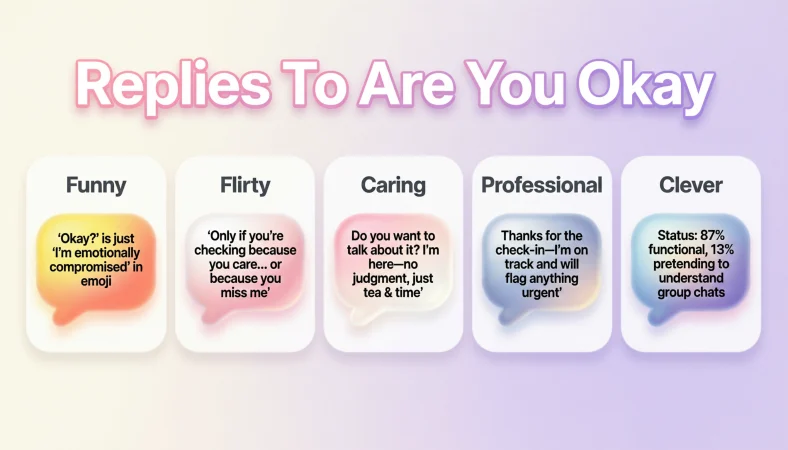
Quick Answer: The best Replies to are you okay depend on your mood and the situation. You can keep it casual, funny, flirty, honest, or reassuring without making the conversation awkward.
I’m good, Thanks for checking, I’m hanging in there, All good on my end, I’ll be okay
When someone texts “Are you okay?”, your reply can say much more than whether you are actually fine. A simple “I’m good” might work with a coworker, while a playful answer can keep things light with a friend or crush. The right response depends on who is asking, why they are asking, and how honest you want to be.
You might get the question in a late-night text, a worried DM, a workplace chat, or right after someone notices your mood has changed. Sometimes you genuinely feel fine. Other times, “Are you okay?” is basically an invitation to open up. And sometimes you just want to answer without turning the conversation into a three-hour emotional documentary.
That is why having different Replies to are you okay can make texting easier. Here are natural responses for funny, flirty, caring, professional, confident, emotional, and plenty of other moods.
Funny Responses
1. I’m okay-ish. The deluxe version is still loading.
Use this when you are mostly fine but want to joke about having a rough moment.
Meaning: You are okay enough, but not completely at your best.
2. Physically, yes. Mentally, ask me tomorrow.
Use this when you want to acknowledge that your brain is having a questionable day.
Meaning: You are functioning, but mentally you are struggling a little.
3. Define okay.
Use this when someone asks casually but you want to add a playful twist.
Meaning: You are teasing while suggesting that things may not be perfect.
4. Still alive, still thriving, technically.
Use this when you want an exaggerated but lighthearted answer.
Meaning: You are getting through the day despite some difficulties.
5. I have survived worse group chats.
Use this when your situation is annoying but nowhere near serious.
Meaning: You are using humor to show that you can handle it.
6. Ask again after snacks.
Use this when food would genuinely improve your mood.
Meaning: You are joking that your current mood depends on getting something to eat.
7. I’m okay according to the terms and conditions.
Use this for a witty text when you want to sound playfully evasive.
Meaning: You are technically okay but not completely enthusiastic about it.
8. My emotional Wi-Fi is reconnecting.
Use this when you feel mentally drained but want to keep things humorous.
Meaning: Your emotions are temporarily out of sync.
9. Somewhere between fine and needing a vacation.
Use this when you want a relatable response to a stressful day.
Meaning: You are functioning but could definitely use some rest.
10. I’m okay. My brain has other opinions.
Use this when your thoughts are making the day harder than expected.
Meaning: You are outwardly fine but mentally overwhelmed.
11. Surviving on vibes and questionable decisions.
Use this with close friends who understand your humor.
Meaning: You are getting through things without taking the moment too seriously.
12. Ask my coffee. It knows everything.
Use this when caffeine is carrying your mood.
Meaning: You are joking that coffee is currently responsible for keeping you functional.
Polite Responses
1. I’m doing okay, thank you for asking.
Use this when someone checks on you and you want to respond respectfully.
Meaning: You appreciate their concern and are generally fine.
2. I’m alright, thanks for checking in.
Use this when you want a warm but simple response.
Meaning: You acknowledge their kindness while saying you are okay.
3. I’m fine, I appreciate you asking.
Use this when someone has noticed you seem quieter than usual.
Meaning: You are reassuring them while recognizing their concern.
4. I’m doing well, thank you.
Use this in everyday conversations where you want to sound composed.
Meaning: You are communicating that everything is generally fine.
5. I’m okay for now, thank you.
Use this when things are manageable but not completely perfect.
Meaning: You are reassuring them without pretending everything is ideal.
6. I appreciate you checking on me. I’m alright.
Use this when you want to make the other person feel valued.
Meaning: Their concern matters to you, and you are currently okay.
7. I’m hanging in there, but thank you.
Use this when you are having a difficult day but do not want to explain everything.
Meaning: You are managing despite some challenges.
8. I’m okay. That means a lot coming from you.
Use this when the person genuinely cares about you.
Meaning: You appreciate both the question and the person asking it.
9. I’m getting through it, thank you.
Use this when you want to be honest without going into detail.
Meaning: Things may be difficult, but you are coping.
10. I’m alright at the moment. Thanks for asking.
Use this when your mood has been unpredictable.
Meaning: You are okay right now while leaving room for honesty.
11. I’m okay, and I appreciate your concern.
Use this when you want to sound considerate and mature.
Meaning: You are reassuring them while respecting their concern.
12. Thank you for checking in. I’m doing okay.
Use this for a warm response to someone being thoughtful.
Meaning: You are acknowledging their care and reassuring them.
Flirty Responses
1. I might be, now that you’re checking on me.
Use this when a crush asks about your mood and you want a subtle flirt.
Meaning: Their attention is making you feel better.
2. I’m okay. Are you always this caring?
Use this when you want to turn their concern into playful flirting.
Meaning: You are complimenting their caring nature.
3. I was waiting for you to ask.
Use this when you want to hint that you enjoy hearing from them.
Meaning: Their attention was secretly something you wanted.
4. Better now that I’m talking to you.
Use this when you want a sweet and direct romantic response.
Meaning: Their presence improves your mood.
5. I’m okay, but your message helped.
Use this when you want to flirt without going overboard.
Meaning: Their message made you feel noticed and cared for.
6. I’ll be okay if you keep checking on me.
Use this when playful attention feels welcome.
Meaning: You enjoy their concern and want more of it.
7. Depends. Are you staying to make sure?
Use this when you want a confident, teasing response.
Meaning: You are inviting them to continue the conversation.
8. I’m fine, but I like that you care.
Use this when you want to acknowledge their interest.
Meaning: Their concern feels attractive and meaningful to you.
9. I’m okay. You asking is kind of cute though.
Use this when you want to make the interaction more playful.
Meaning: You find their concern endearing.
10. I’m good. Your timing is suspiciously perfect.
Use this when they message you at exactly the right moment.
Meaning: Their message arrived when you needed some attention.
11. I’m okay, but you could make my day better.
Use this when you want to leave room for playful conversation.
Meaning: You are interested in spending more time talking to them.
12. I’m fine. Should I be asking if you’re thinking about me?
Use this when you want a cheeky response to someone you like.
Meaning: You are playfully suggesting they may have you on their mind.
Professional Responses
1. I’m doing well, thank you for checking.
Use this with a colleague who asks about your wellbeing.
Meaning: You are politely confirming that you are okay.
2. I’m alright, thank you. I appreciate you asking.
Use this when you want to remain courteous and professional.
Meaning: You are acknowledging their concern respectfully.
3. I’m okay and ready to get back to it.
Use this when the question comes during a busy workday.
Meaning: You are fine and prepared to continue working.
4. Thank you for checking in. I’m doing fine.
Use this in workplace messages where warmth and professionalism matter.
Meaning: You appreciate their consideration.
5. I’m managing well, thank you.
Use this when things are busy but under control.
Meaning: You are handling the situation appropriately.
6. I’m okay at the moment, thank you.
Use this when you want a neutral professional answer.
Meaning: You are currently doing fine without oversharing.
7. I appreciate the check-in. Everything is under control.
Use this when someone is concerned about a work situation.
Meaning: You are reassuring them that the situation is manageable.
8. I’m doing fine. I’ll let you know if anything changes.
Use this when someone needs reassurance but may need future updates.
Meaning: You are okay now and will communicate if circumstances change.
9. I’m alright, thank you. I’m taking care of it.
Use this when someone checks on an issue you are handling.
Meaning: You are confirming that you have the situation covered.
10. I’m doing okay, and I appreciate your concern.
Use this when a manager or coworker shows genuine care.
Meaning: You are responding professionally while acknowledging their kindness.
11. Thank you. I’m managing and staying focused.
Use this during a demanding workday.
Meaning: You are communicating that you remain capable of handling your responsibilities.
12. I’m fine, thank you. I appreciate you checking in.
Use this when you want a polished workplace response.
Meaning: You are reassuring the other person in a respectful way.
Sarcastic Responses
1. Obviously. Look at this masterpiece of emotional stability.
Use this with a friend who understands your sarcasm.
Meaning: You are joking that your emotional state may not actually be perfect.
2. Absolutely. Couldn’t be more okay.
Use this when the opposite is obviously closer to the truth.
Meaning: You are using exaggeration to hint that you are struggling.
3. Define “okay” and we’ll negotiate.
Use this when you want to dodge a straightforward answer playfully.
Meaning: You are teasing while admitting that “okay” is complicated.
4. Yep, everything is perfectly under control. Totally.
Use this when your day feels messy but not serious.
Meaning: Your sarcasm suggests things may be less organized than they appear.
5. I’m okay in the loosest possible sense.
Use this when you are not exactly doing great.
Meaning: You are admitting that your definition of okay is generous.
6. Sure, let’s call it okay.
Use this when you do not want to explain your mood.
Meaning: You are accepting the label while leaving some uncertainty.
7. My face says yes, my brain says no.
Use this when you are visibly tired or overwhelmed.
Meaning: You are joking about the difference between appearances and reality.
8. Emotionally? Pending approval.
Use this for a playful text when you are unsure about your mood.
Meaning: You are humorously saying your emotional status is unresolved.
9. I’m okay enough to answer this question.
Use this when you want a dry, understated joke.
Meaning: You are functional but not necessarily feeling wonderful.
10. Five stars for concern, two stars for my current mood.
Use this when someone is being caring and you want a humorous answer.
Meaning: You appreciate them but admit your mood needs improvement.
11. I’m fine. Let’s not investigate further.
Use this when you want to shut down the topic playfully.
Meaning: You are signaling that you would rather not discuss your feelings.
12. Ask me after I’ve had a personality reset.
Use this when you feel socially or mentally drained.
Meaning: You need a little time before feeling like yourself again.
Cute Responses
1. I’m okay. Thanks for caring about me.
Use this when someone genuinely makes you feel supported.
Meaning: You appreciate their kindness and attention.
2. I’m better now that you checked on me.
Use this when their message brightens your mood.
Meaning: Their concern made you feel valued.
3. I’m alright, little worried one.
Use this with someone close who tends to check on you.
Meaning: You are playfully acknowledging their caring personality.
4. I’m okay, promise.
Use this when someone is genuinely worried about you.
Meaning: You want to reassure them gently.
5. I’m hanging in there, but your message was sweet.
Use this when you are having a difficult day.
Meaning: You appreciate their emotional support.
6. I’m okay. Sending you a little thank-you hug.
Use this when you want to respond warmly through text.
Meaning: You are expressing affection and appreciation.
7. I’m fine, sunshine. Thanks for checking.
Use this with someone you have a warm relationship with.
Meaning: You are returning their kindness with affection.
8. I’m okay, promise. You’re sweet for asking.
Use this when you want to make someone feel appreciated.
Meaning: Their concern feels thoughtful and endearing.
9. A little tired, but still smiling.
Use this when you want an upbeat response despite low energy.
Meaning: You are not at your best but still maintaining a positive outlook.
10. I’m okay. Your message made me smile.
Use this when their check-in genuinely brightens your day.
Meaning: Their attention had a positive emotional effect.
11. I’m doing okay, thanks for being thoughtful.
Use this when someone checks on you unexpectedly.
Meaning: You value their kindness.
12. I’m alright. Now you tell me how you’re doing.
Use this when you want to return the care.
Meaning: You appreciate their concern and want to check on them too.
Chill And Casual Responses
1. Yeah, I’m good.
Use this when a friend casually checks on you.
Meaning: You are fine and do not need a serious conversation.
2. I’m all good.
Use this for a simple everyday response.
Meaning: Everything is generally fine.
3. Yep, doing okay.
Use this when you want to keep your answer relaxed.
Meaning: You are doing reasonably well.
4. I’m fine, just tired.
Use this when low energy is the only problem.
Meaning: You are okay but need some rest.
5. Yeah, just having a day.
Use this when things feel slightly overwhelming.
Meaning: You are dealing with an ordinary rough patch.
6. I’m alright, just chilling.
Use this when everything is calm.
Meaning: You are relaxed and doing fine.
7. Doing my best.
Use this when things are not perfect but manageable.
Meaning: You are coping and continuing forward.
8. Yeah, nothing serious.
Use this when someone seems worried about you.
Meaning: You are reassuring them that there is no major issue.
9. I’m okay, just keeping to myself today.
Use this when you need some quiet time.
Meaning: You are fine but prefer some personal space.
10. Pretty much, yeah.
Use this when you want a low-key response.
Meaning: You are mostly okay without making a big deal about it.
11. I’m hanging in there.
Use this when your day has been challenging.
Meaning: You are managing even though things are not perfect.
12. Yeah, I’ll be fine.
Use this when someone is worried but you do not want extra attention.
Meaning: You are reassuring them that you can handle things.
Confident Responses
1. I’m good. I’ve got this.
Use this when someone checks on you during a difficult situation.
Meaning: You are reassuring them that you can handle the problem.
2. I’m okay, just working through it.
Use this when you want to be honest without sounding defeated.
Meaning: You are facing the situation and making progress.
3. I’m fine. Nothing I can’t handle.
Use this when you want to sound composed.
Meaning: You believe you can manage whatever is happening.
4. I’m doing alright and staying focused.
Use this during a demanding period.
Meaning: You are maintaining control and concentrating on what matters.
5. I’m okay. I know what I need to do.
Use this when someone worries about a situation you are handling.
Meaning: You have a plan and feel capable of following it.
6. I’m good. Just taking things one step at a time.
Use this when life feels busy but manageable.
Meaning: You are approaching challenges calmly and practically.
7. I’m alright. I’ll figure it out.
Use this when you do not have every answer yet.
Meaning: You trust yourself to find a solution.
8. I’m okay. I’m stronger than this moment.
Use this when you want an empowering response.
Meaning: You are refusing to let a difficult moment define you.
9. I’m doing fine and keeping my head up.
Use this when you want to sound optimistic.
Meaning: You are choosing resilience despite difficulties.
10. I’m okay. No need to worry about me.
Use this when someone is becoming overly concerned.
Meaning: You are confidently reassuring them.
11. I’m handling it. Appreciate you asking.
Use this when someone checks on a problem you are already managing.
Meaning: You are capable while still appreciating their concern.
12. I’m good. I’ll bounce back.
Use this after a disappointing or difficult moment.
Meaning: You believe you will recover and move forward.
Emotional Responses
1. Honestly, not really, but I’m trying.
Use this when you are ready to be truthful without explaining everything.
Meaning: You are struggling but making an effort to cope.
2. I’ve been better, to be honest.
Use this when you want to acknowledge that something is wrong.
Meaning: You are not feeling your best and may need support.
3. I’m having a hard time right now.
Use this when you want someone to understand your emotional state.
Meaning: You are openly admitting that you are struggling.
4. I’m not okay, but thank you for asking.
Use this when someone gives you a genuine opening to talk.
Meaning: You are being honest while appreciating their concern.
5. I’m trying to keep it together.
Use this when emotions feel difficult to manage.
Meaning: You are doing your best despite feeling overwhelmed.
6. I could honestly use someone to talk to.
Use this when you want emotional support.
Meaning: You are inviting the other person to listen.
7. Not completely, but I’ll get through it.
Use this when you want honesty with a hopeful ending.
Meaning: You are struggling now but believe the situation will improve.
8. I’m a little overwhelmed right now.
Use this when too many things are happening at once.
Meaning: You need understanding rather than pressure.
9. I don’t really know how I’m feeling yet.
Use this when your emotions are confusing or unsettled.
Meaning: You need time to understand your own feelings.
10. I’m struggling more than I’ve let on.
Use this when you are finally ready to be vulnerable.
Meaning: Your difficulties have been deeper than others may have realized.
11. I’m not at my best today.
Use this when you want honesty without a detailed explanation.
Meaning: You are having an emotionally difficult day.
12. Thank you for asking. I actually needed that.
Use this when someone’s concern arrives at an important moment.
Meaning: Their check-in made you feel supported and less alone.
Sweet Responses
1. I’m okay, thank you for caring.
Use this when someone consistently shows concern for you.
Meaning: You genuinely appreciate their kindness.
2. I’m doing alright. It means a lot that you asked.
Use this when the person’s support feels meaningful.
Meaning: Their concern has emotional value to you.
3. I’m okay, and I hope you are too.
Use this when you want to return their kindness.
Meaning: You care about their wellbeing as well.
4. I’m hanging in there. Thanks for being here.
Use this when you need encouragement from someone close.
Meaning: Their presence makes a difficult moment easier.
5. I’m alright. You always know when to check in.
Use this when someone notices your mood quickly.
Meaning: You appreciate how attentive they are.
6. I’m okay. You’re thoughtful for asking.
Use this when you want to compliment someone’s kindness.
Meaning: You recognize their considerate behavior.
7. I’m doing okay, thanks to people like you.
Use this when someone has been supportive during a difficult period.
Meaning: Their kindness has genuinely helped you.
8. I’m okay now. Thank you for caring enough to ask.
Use this after someone notices you are having a difficult time.
Meaning: Their concern made you feel valued.
9. I’m getting through it, one day at a time.
Use this when life feels challenging but you remain hopeful.
Meaning: You are patiently working through your circumstances.
10. I’m alright. Your kindness means more than you know.
Use this when someone offers unexpected emotional support.
Meaning: Their concern has had a meaningful impact on you.
11. I’m okay, especially knowing someone cares.
Use this when you want a heartfelt response.
Meaning: Feeling cared for makes the situation easier.
12. I’m doing okay. Thank you for not ignoring it.
Use this when someone notices a change in your mood.
Meaning: You appreciate that they paid attention instead of dismissing you.
Clever Responses
1. I’m okay enough to pass the vibe check.
Use this when you want a modern, playful answer.
Meaning: You are doing fine enough despite minor problems.
2. Status update: functioning.
Use this when you want a short and witty reply.
Meaning: You are operational even if you are not feeling perfect.
3. Currently accepting emotional software updates.
Use this when you want to joke about needing a reset.
Meaning: Your mood needs some adjustment or recovery.
4. I’m somewhere between fine and figuring it out.
Use this when your situation is uncertain.
Meaning: You are coping while still working through things.
5. Operating normally with minor glitches.
Use this when you are mostly okay but slightly stressed.
Meaning: You have some small issues but nothing major.
6. Emotionally available for snacks only.
Use this when you want a humorous boundary.
Meaning: You are not ready for serious conversation but welcome comfort food.
7. My current status is: under construction.
Use this when you are going through personal changes.
Meaning: You are still working through your thoughts and feelings.
8. I’m fine-ish. The “ish” is doing heavy lifting.
Use this when you are not completely okay.
Meaning: You are using humor to admit that things are complicated.
9. Stable enough for public viewing.
Use this with friends who appreciate dry humor.
Meaning: You are joking that you are managing despite some internal chaos.
10. I’m okay according to preliminary findings.
Use this when you want a clever, mock-serious response.
Meaning: You are playfully avoiding a completely serious answer.
11. Emotionally buffering, please stand by.
Use this when you need time to process your feelings.
Meaning: You are temporarily overwhelmed and need a moment.
12. The system is running, but updates are pending.
Use this when you are functional but mentally tired.
Meaning: You are okay enough but still recovering or adjusting.
Dramatic Responses
1. I have seen things no Tuesday should ever see.
Use this after an unusually stressful or ridiculous day.
Meaning: You are exaggerating your struggles for comic effect.
2. I’m okay, but the plot has thickened.
Use this when something unexpected has happened.
Meaning: Your situation has become more complicated.
3. I survived the emotional season finale.
Use this after getting through a particularly difficult moment.
Meaning: You feel like you have made it through a major emotional event.
4. Barely, but the story continues.
Use this when you want dramatic humor.
Meaning: Things have been difficult, but you are continuing.
5. I’m alive, but my peace has left the chat.
Use this when something has disrupted your calm.
Meaning: You are functioning but emotionally unsettled.
6. My inner peace has filed for resignation.
Use this when a frustrating situation has ruined your mood.
Meaning: You are humorously saying that you feel stressed.
7. I’m okay after approximately seventeen emotional plot twists.
Use this when your day has been unusually eventful.
Meaning: You have endured a series of unexpected problems.
8. The emotional damage has been documented.
Use this after something embarrassing or frustrating.
Meaning: You are jokingly acknowledging that the situation affected you.
9. I’m recovering from the events of today.
Use this after an exhausting day.
Meaning: You need time to mentally recover.
10. I have returned from the battlefield of adulthood.
Use this after work, errands, or responsibilities become exhausting.
Meaning: Everyday responsibilities have worn you out.
11. I’m okay, but my dramatic era is thriving.
Use this when you want to exaggerate a minor problem for fun.
Meaning: You are intentionally being theatrical about your mood.
12. Ask me after the credits roll.
Use this when the situation is still unfolding.
Meaning: You do not know how things will turn out yet.
Supportive And Caring Responses
1. I’m okay, but thank you for noticing.
Use this when someone picks up on a change in your behavior.
Meaning: You appreciate their attentiveness.
2. I’m not completely okay, but I’m glad you asked.
Use this when you want to open the door to a deeper conversation.
Meaning: You are struggling and appreciate having someone to talk to.
3. I’m getting through it. Having you check in helps.
Use this when someone’s support genuinely makes a difference.
Meaning: Their concern provides emotional comfort.
4. I’m alright, just taking some time for myself.
Use this when you need space without worrying someone unnecessarily.
Meaning: You are okay but need personal time.
5. I’m having a rough day, but I’ll be okay.
Use this when you want to be honest while remaining reassuring.
Meaning: You are struggling temporarily but remain hopeful.
6. I appreciate you asking. I’ll tell you if I need anything.
Use this when you want to accept their support without needing immediate help.
Meaning: You value their offer and know you can reach out.
7. I’m okay for now. Can we talk later?
Use this when you are not ready to discuss everything immediately.
Meaning: You may want support but need time first.
8. I’m a little overwhelmed, honestly.
Use this when you want someone to understand your current state.
Meaning: You are struggling with too much emotionally or mentally.
9. I’m okay, just need someone to listen.
Use this when advice is not what you need.
Meaning: You mainly want emotional support and understanding.
10. Thank you for checking. I really needed someone to ask.
Use this when you have been quietly struggling.
Meaning: Their concern makes you feel seen.
11. I’m trying my best today.
Use this when you are doing what you can despite difficulties.
Meaning: You are coping as well as possible.
12. I’m not great, but knowing you care helps.
Use this when you want to be vulnerable with someone you trust.
Meaning: Their support gives you comfort during a difficult time.
Playful And Teasing Responses
1. Why, did I look suspicious?
Use this when someone asks if you are okay and you want to tease them.
Meaning: You are playfully asking what made them concerned.
2. That depends. What did you hear?
Use this when you want to create playful mystery.
Meaning: You are teasing them instead of answering directly.
3. I’m okay. Should I be worried about something?
Use this when their question catches you off guard.
Meaning: You are playfully turning their concern back around.
4. Look who suddenly cares.
Use this with someone close when the teasing is clearly affectionate.
Meaning: You are joking about their sudden concern.
5. I’m fine. Why are you investigating?
Use this when a friend seems unusually concerned.
Meaning: You are playfully questioning their curiosity.
6. I was okay until you asked me that.
Use this when you want a cheeky response.
Meaning: You are pretending their question created a problem.
7. I’m fine. Your concern is noted.
Use this when you want dry humor.
Meaning: You acknowledge their care while keeping the mood playful.
8. I’m okay. Are you trying to read my mind?
Use this when someone correctly notices your mood.
Meaning: You are teasing them for being perceptive.
9. You noticed? Interesting.
Use this when you want a mysterious response.
Meaning: You are playfully surprised that they picked up on something.
10. I’m okay. But now I’m curious why you asked.
Use this when their concern seems unexpected.
Meaning: You want to know what prompted their question.
11. I’m fine. You seem more worried than I am.
Use this when someone is overthinking your mood.
Meaning: You are reassuring them while lightly teasing them.
12. Depends how much emotional support you’re offering.
Use this when you want a playful but caring answer.
Meaning: You are inviting them to show how much they care.
Honest And Straightforward Responses
1. Yeah, I’m okay.
Use this when you genuinely feel fine and want a direct answer.
Meaning: You are giving clear reassurance.
2. Honestly, I’m not okay right now.
Use this when you need to be completely truthful.
Meaning: You are openly communicating that you are struggling.
3. I’m okay, just processing a few things.
Use this when your emotions need some time to settle.
Meaning: You are not in immediate crisis but need space to think.
4. I’m doing alright, just tired.
Use this when exhaustion is affecting your mood.
Meaning: You are fine but physically or mentally drained.
5. I’m not feeling great today.
Use this when you want to acknowledge a difficult day.
Meaning: Your mood or wellbeing is below normal.
6. I’m okay, but I could use some space.
Use this when you want privacy.
Meaning: You are managing but need time alone.
7. I’m fine now, thanks for checking.
Use this after a difficult moment has passed.
Meaning: You have recovered enough to feel okay again.
8. I’m still figuring things out.
Use this when you do not have a clear emotional answer.
Meaning: You need time before you can explain how you feel.
9. I’m struggling a little, but I’m managing.
Use this when you want honesty without alarming someone.
Meaning: Things are difficult but still manageable.
10. I’m okay, just not very social today.
Use this when you want to explain quiet behavior.
Meaning: You are fine but prefer less interaction.
11. I’m not sure yet, honestly.
Use this when you genuinely cannot identify how you feel.
Meaning: You need more time to understand your emotions.
12. I appreciate you asking. I’ll be honest if I need help.
Use this when someone is concerned about you.
Meaning: You appreciate their support and are willing to communicate if needed.
Short And Text-Ready Responses
1. I’m good.
Use this when you want the quickest reassuring answer.
Meaning: You are fine.
2. I’m okay.
Use this when you want a simple neutral response.
Meaning: You are generally alright.
3. All good here.
Use this for a relaxed everyday text.
Meaning: Nothing important is wrong.
4. I’m alright.
Use this when you want something casual but slightly warmer than “fine.”
Meaning: You are doing reasonably well.
5. Doing okay.
Use this when you want to keep the response short.
Meaning: You are managing.
6. Yep, I’m fine.
Use this when someone seems slightly worried.
Meaning: You are reassuring them.
7. I’ll be okay.
Use this when things are difficult but temporary.
Meaning: You believe you will get through it.
8. Hanging in there.
Use this when you are having a challenging day.
Meaning: You are coping despite difficulties.
9. I’m fine, promise.
Use this when someone needs extra reassurance.
Meaning: You want them to stop worrying.
10. Better now.
Use this when your mood has recently improved.
Meaning: You are feeling better than you were earlier.
11. Just tired.
Use this when exhaustion explains your mood.
Meaning: You are okay but low on energy.
12. I’m good, thanks.
Use this when you want a polite but concise response.
Meaning: You are fine and appreciate the check-in.
FAQs
What Does “Are You Okay?” Mean?
“Are you okay?” is usually a way of checking whether someone is physically, emotionally, or mentally doing well. The meaning can change depending on tone, timing, and the relationship between the people involved.
Can “Are You Okay?” Have A Flirty Meaning?
Yes. If it comes from a crush or romantic interest, it can sometimes show genuine concern, attention, or an attempt to start a conversation. The surrounding context matters more than the phrase alone.
What Is A Professional Reply To “Are You Okay?”
Try “I’m doing well, thank you for checking,” “I’m alright, I appreciate you asking,” or “I’m managing well, thank you.” These responses are polite without oversharing.
What If I’m Not Actually Okay?
You do not have to pretend. A simple response such as “Honestly, I’m having a difficult day” lets the other person know that you may need support without explaining everything immediately.
Is Humor Appropriate When Someone Asks “Are You Okay?”
Humor can work when the situation is light and you know the person well. If they seem genuinely worried or the situation is serious, a sincere response is usually more appropriate.
Conclusion
The best response to “Are you okay?” is not always the longest or cleverest one. Sometimes “I’m good” is perfect, while other moments call for honesty, humor, warmth, or a little playful energy. Your response can reassure someone, invite a deeper conversation, protect your privacy, or simply keep the chat moving.
With these Replies to are you okay, you have options for friends, coworkers, crushes, DMs, and everyday conversations. Pick the one that actually matches your mood instead of forcing a response that does not feel like you. Save this list, share it with someone who always overthinks their texts, and reuse your favorites whenever the question pops up.