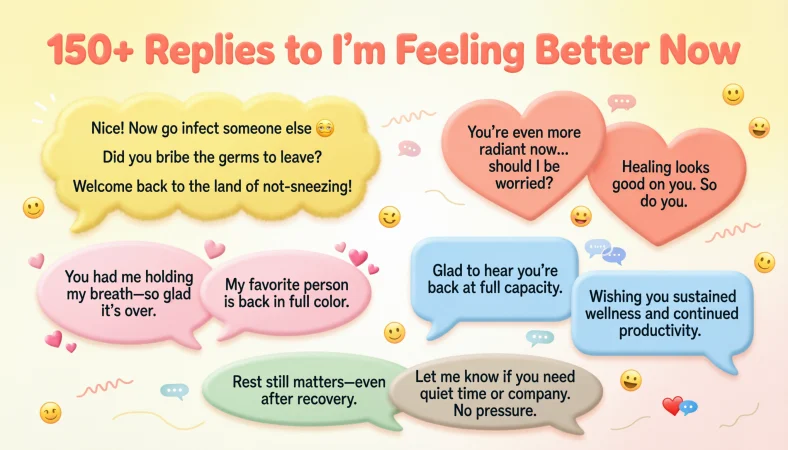
Quick Answer: When someone says “I’m feeling better now,” they are usually letting you know that their health, mood, or situation has improved. A caring, funny, or encouraging reply can show that you are happy for them and still care.
Top alternatives: Glad to hear that, That’s such good news, I’m happy you’re feeling better, Keep taking care of yourself, You deserve to feel your best
That little text saying “I’m feeling better now” can mean a lot. Maybe your friend was sick, your crush had a rough day, or a coworker finally recovered from a stressful week. Sometimes, it arrives in a DM after you spent hours worrying. Other times, it is the perfect opening for a cute joke, a thoughtful message, or a little flirtation.
Knowing the right Replies to I’m feeling better now can make your conversation feel more natural and meaningful. A simple “Glad to hear that” works, but a more personal response can show genuine care. Whether you want to sound funny, sweet, professional, confident, or slightly dramatic, there is a reply for every mood. From wholesome check-ins to playful internet-style comebacks, these responses will help you keep the conversation going without sounding like a greeting card from 2007.
1. Funny Responses
- Finally, the system is back online!
Use this when a friend has recovered and you want to celebrate with a playful tech joke.
Meaning: You are happy they are feeling better and are joking about their recovery. - Good, because we were about to call in the backup squad.
Use this when someone has been unwell and enjoys exaggerated humor.
Meaning: You missed them and are relieved they are doing better. - The world can breathe again.
Use this when your friend loves dramatic jokes about everyday situations.
Meaning: Their improvement feels like a big win to you. - Excellent news! Your subscription to feeling terrible has expired.
Use this when you want to make a recovering friend laugh.
Meaning: You are celebrating the end of their difficult spell. - Look who decided to return to the living!
Use this with a close friend who appreciates lighthearted teasing.
Meaning: You are happy they are back to their usual self. - That’s great! Now please don’t immediately overdo it.
Use this when someone feels better but may be tempted to resume everything at once.
Meaning: You are joking while reminding them to take care of themselves. - Nature is healing. My favorite human is functioning again.
Use this for a close friend or family member after a rough day.
Meaning: Their recovery genuinely makes you happy. - Breaking news: You have defeated the villain!
Use this when someone has recovered from an illness or difficult situation.
Meaning: You are turning their improvement into a funny victory story. - Great, because I was running out of dramatic concern.
Use this when you have been checking on someone repeatedly.
Meaning: You care about them but are playfully pretending to be exhausted by worrying. - Glad you’re better. Your fans were getting restless.
Use this when teasing a friend who enjoys being the center of attention.
Meaning: You missed their presence and are pleased they have recovered. - A miracle! Should we throw a tiny parade?
Use this when someone has finally started feeling good after a difficult week.
Meaning: You are celebrating their improvement with exaggerated enthusiasm. - Good to hear. Now return my regularly scheduled chaos partner.
Use this with a close friend who is known for being energetic or mischievous.
Meaning: You are glad they are better and miss their usual personality.
2. Brutal Responses
- Good. Now try not to make it everyone’s problem again.
Use this only with a close friend who enjoys sharp teasing.
Meaning: You are jokingly warning them not to return to their usual troublemaking. - Finally. We almost had to replace you.
Use this when a friend has been away and understands your humor.
Meaning: You missed them but are expressing it through exaggerated sarcasm. - Glad you’re better. The drama department was getting nervous.
Use this when someone tends to make ordinary problems sound dramatic.
Meaning: You are happy they improved while lightly teasing their dramatic personality. - Good news. Your complaints can now be delivered in HD.
Use this with someone who likes witty, modern humor.
Meaning: You are playfully saying they are back to their normal self. - Excellent. I was almost enjoying the peace.
Use this with a best friend who appreciates playful insults.
Meaning: Their return is welcome, even though you pretend otherwise. - Glad you’re okay. Try not to speedrun another crisis.
Use this when a friend frequently jumps into unnecessary trouble.
Meaning: You care about them but are joking about their chaotic habits. - Good. Your main-character privileges have been restored.
Use this when someone loves attention and playful banter.
Meaning: You are celebrating their recovery with a humorous compliment. - Nice. Now the group chat can become unbearable again.
Use this when a chat has been unusually quiet without them.
Meaning: You missed their energy, even if you tease them about it. - Great. We can stop pretending we know how to replace you.
Use this with a close friend who has been absent.
Meaning: Their presence matters more than your joke suggests. - Good to know. The inconvenience department is back in business.
Use this when teasing someone who regularly asks for favors.
Meaning: You are happy they feel better and are joking about their demands. - Glad you survived your personal season finale.
Use this after a friend has overcome a stressful or difficult episode.
Meaning: You are celebrating their return with dramatic humor. - Good. Now please stop making recovery look like a full-time job.
Use this with a friend who enjoys sarcastic encouragement.
Meaning: You are relieved they feel better and are playfully teasing them.
3. Flirty Responses
- I’m glad you’re feeling better, because I missed your attention.
Use this when someone you like has been distant because they were unwell.
Meaning: You care about their recovery and want more connection. - Good, because I need my favorite distraction back.
Use this when flirting with someone who makes your day more exciting.
Meaning: You missed their presence and enjoy talking to them. - That’s great news. Can I take some credit for making you smile?
Use this when you have been cheering someone up through texts.
Meaning: You are playfully asking whether you helped them feel better. - I’m happy you’re better. Now let me make your day even better.
Use this when you want to continue a warm, flirtatious conversation.
Meaning: You want to bring more happiness into their day. - Good, because your smile is my favorite notification.
Use this when someone you like says they are recovering.
Meaning: Their happiness matters to you, and you find them charming. - That’s a relief. I was starting to miss my favorite person.
Use this when you share a close or romantic connection.
Meaning: You missed them and are happy they are doing better. - Glad you’re better. I still have a date with your smile to plan.
Use this when you want to hint at romantic interest.
Meaning: You are interested in spending time together. - Good to hear. I was about to send you a care package with my heart in it.
Use this when you want to be sweet and slightly bold.
Meaning: You care deeply and are expressing affection playfully. - I’m glad you’re okay. You had me missing you more than usual.
Use this when you have been thinking about someone special.
Meaning: Their absence made your feelings more noticeable. - Better now? Perfect. I was saving some flirting for you.
Use this when the conversation already has a playful romantic vibe.
Meaning: You want to return to fun, flirtatious messaging. - That’s good. Your favorite texter was getting worried.
Use this when you want to flirt without being too direct.
Meaning: You are playfully presenting yourself as someone important to them. - I’m happy you’re feeling better. Now I can stop worrying and start missing you properly.
Use this when you want a romantic but humorous reply.
Meaning: You care about their well-being and want their company.
4. Polite Responses
- I’m glad to hear you’re feeling better.
Use this when replying kindly to a friend, acquaintance, or neighbor.
Meaning: You are pleased that their condition has improved. - That’s wonderful news. Please continue taking care of yourself.
Use this when someone has recently recovered from an illness.
Meaning: You are happy for them and encourage continued self-care. - I’m happy you’re doing better now.
Use this when you want a simple, sincere response.
Meaning: Their improvement makes you feel relieved and pleased. - That’s a relief to hear. I hope you continue feeling well.
Use this when you have been concerned about someone.
Meaning: You care about their ongoing health and comfort. - I’m pleased to know things are improving.
Use this when responding to someone who has had a difficult time.
Meaning: You recognize their progress and express support. - That’s good news. Wishing you continued recovery.
Use this when someone is still recovering from sickness or stress.
Meaning: You hope their improvement continues. - I’m glad you’re on the mend. Take it easy.
Use this when someone is recovering and needs rest.
Meaning: You are encouraging patience and care. - It’s lovely to hear that you’re feeling better.
Use this when you want to sound warm and considerate.
Meaning: Their improved condition makes you happy. - That’s reassuring. Please don’t forget to rest.
Use this when someone says they are improving but may still need time.
Meaning: You are pleased but remain thoughtfully concerned. - I’m glad things are looking up for you.
Use this when the person is recovering emotionally or physically.
Meaning: You are acknowledging positive change. - Thank you for letting me know. I’m happy you’re feeling better.
Use this when someone updates you after you checked on them.
Meaning: You appreciate the update and care about their well-being. - That’s great to hear. I hope the rest of your day goes smoothly.
Use this when you want to end the exchange politely.
Meaning: You are expressing kindness and wishing them well.
5. Professional Responses
- I’m glad to hear you’re feeling better.
Use this when responding to a colleague who was absent due to illness.
Meaning: You acknowledge their recovery in a professional and caring way. - That’s good news. Please take the time you need to fully recover.
Use this when a team member returns after being unwell.
Meaning: You support their health and do not want them to rush. - I’m pleased to hear that your condition has improved.
Use this in a formal email or workplace message.
Meaning: You are respectfully acknowledging their improvement. - That’s reassuring to hear. Wishing you continued good health.
Use this when responding to a client or professional contact.
Meaning: You express concern and offer a courteous good wish. - I’m happy to know you’re doing better. Please let me know if you need anything.
Use this when supporting a colleague during recovery.
Meaning: You are offering practical help in a respectful manner. - Thank you for the update. I’m glad you’re feeling better now.
Use this when someone informs you that they can return to work.
Meaning: You appreciate the communication and welcome their improvement. - That’s excellent news. I hope you continue to recover comfortably.
Use this in a thoughtful workplace email.
Meaning: You are expressing encouragement without being overly familiar. - I’m glad your health is improving. Please prioritize your well-being.
Use this when speaking to a colleague who has been under pressure.
Meaning: You value their health and encourage balance. - It’s good to hear that you’re feeling better. We can discuss the remaining tasks when you’re ready.
Use this when a recovering colleague mentions unfinished work.
Meaning: You are being supportive while keeping work expectations reasonable. - I’m pleased to hear that you’re recovering. Take care, and we’ll stay in touch.
Use this when ending a professional conversation.
Meaning: You offer encouragement and maintain a respectful connection. - That’s a positive update. I hope you continue to feel stronger each day.
Use this when replying to a business contact or coworker.
Meaning: You recognize progress and offer a warm professional wish. - I’m glad you’re feeling better. Please don’t hesitate to reach out if support is needed.
Use this when a manager or teammate wants to offer assistance.
Meaning: You are expressing care and making help available.
6. Creative Responses
- A brighter chapter has officially begun.
Use this when someone has moved past a difficult period.
Meaning: You are celebrating their improvement in a poetic way. - The clouds are clearing, and I’m here for it.
Use this when a friend is recovering emotionally or physically.
Meaning: You are happy that their situation is becoming more positive. - Your good-energy era has entered the chat.
Use this when sending a playful, modern message to a friend.
Meaning: You are celebrating their return to a better mood. - Consider this your official comeback season.
Use this when someone is recovering from a rough week or illness.
Meaning: You are framing their recovery as a fresh start. - The sunshine is back in your forecast.
Use this when someone says their mood has improved.
Meaning: You are expressing hope and happiness about their emotional recovery. - Your smile has been restored to factory settings.
Use this when joking with someone who is feeling better.
Meaning: You are celebrating their return to their usual cheerful self. - The plot is finally moving in your favor.
Use this when someone has overcome a frustrating situation.
Meaning: You are happy that circumstances are improving. - Welcome back to the land of good vibes.
Use this when a friend has been feeling down or unwell.
Meaning: You are warmly celebrating their better mood. - The clouds have clocked out.
Use this when someone has moved beyond a stressful day.
Meaning: You are saying that their difficult moment seems to be ending. - Your personal sunshine has officially switched back on.
Use this when someone has returned to their happy personality.
Meaning: You are recognizing and celebrating their renewed positivity. - A little recovery, a little peace, and suddenly the universe is cooperating.
Use this when someone has finally had a positive turn.
Meaning: You are celebrating the relief that comes with feeling better. - The comeback looks good on you.
Use this when someone has overcome a challenge.
Meaning: You admire their resilience and improvement.
7. Sarcastic Responses
- Oh, so now you decide to feel better?
Use this with a close friend who understands playful sarcasm.
Meaning: You are relieved but teasing them for taking so long. - Wonderful. I can retire from my unpaid worrying position.
Use this when you have been concerned about someone.
Meaning: You care about them but are joking about your worry. - Amazing. The recovery department finally approved your request.
Use this when someone has improved after a difficult spell.
Meaning: You are celebrating their recovery with mock formality. - Good to know. I was about to send a search party.
Use this when a friend has been quiet or unavailable.
Meaning: You missed them and are glad they are doing better. - Well, look at you, making progress and everything.
Use this when someone has improved after a challenging day.
Meaning: You are praising them in a lightly sarcastic tone. - Excellent. The universe can stop buffering now.
Use this when someone says their mood or health has improved.
Meaning: You are joking that their recovery took too long. - Finally, a positive update in this economy.
Use this when responding to good news with internet-style humor.
Meaning: You are genuinely pleased but adding a playful social comment. - Good. I was preparing a very dramatic speech.
Use this when you want to exaggerate how concerned you were.
Meaning: You care about the person and are relieved. - Impressive. You have successfully upgraded your mood.
Use this when someone feels better after a rough day.
Meaning: You are humorously celebrating their improvement. - Glad to hear it. Please keep the plot twists to a minimum.
Use this when someone has experienced repeated ups and downs.
Meaning: You hope their situation stays peaceful. - A rare victory for common sense and rest.
Use this when someone has recovered after finally taking a break.
Meaning: You are jokingly praising their decision to rest. - Good news. My imaginary emergency meeting is canceled.
Use this when a friend has made you worry.
Meaning: You are relieved and expressing affection through sarcasm.
8. Cute Responses
- Aww, I’m so happy you’re feeling better.
Use this when someone close to you shares a positive health update.
Meaning: You are expressing genuine affection and relief. - Yay! Sending you a big virtual hug.
Use this when you want to offer comfort from a distance.
Meaning: You are celebrating their improvement and sending warmth. - That makes my little heart happy.
Use this when someone you care about has recovered.
Meaning: Their happiness brings you personal joy. - Good! Now keep being gentle with yourself.
Use this when someone is feeling better but still needs care.
Meaning: You want them to protect their well-being. - I’m smiling just knowing you’re okay.
Use this when you have been worried about someone special.
Meaning: Their recovery has made you feel relieved and happy. - That’s the sweetest update I could get today.
Use this when someone’s improvement brightens your day.
Meaning: Their good news matters to you. - Yay for better days and happier hearts!
Use this when someone is recovering emotionally or physically.
Meaning: You are celebrating their positive change. - I’m glad my favorite human is doing better.
Use this when sending a warm message to a close friend or partner.
Meaning: You care deeply about their happiness. - Rest, hydrate, and keep being adorable.
Use this when playfully caring for someone who has been sick.
Meaning: You want them to recover while adding a little affection. - That’s such a relief, sweetheart.
Use this when you share a close, affectionate relationship.
Meaning: You are expressing tenderness and happiness. - Your good news just made my day brighter.
Use this when someone’s recovery lifts your mood.
Meaning: Their improvement has a positive effect on you. - Keep that happy little energy going.
Use this when encouraging someone who has regained their good mood.
Meaning: You want their positive feelings to continue.
9. Dramatic Responses
- At last, the healing chapter begins!
Use this when celebrating someone’s recovery with theatrical enthusiasm.
Meaning: You are excited that their difficult period is ending. - The kingdom rejoices at this glorious news.
Use this when a friend enjoys exaggerated, storybook-style humor.
Meaning: You are playfully treating their improvement as a major victory. - I can finally unclench my soul.
Use this when you have been genuinely worried about someone.
Meaning: You are relieved that they are doing better. - The clouds have parted, the birds are singing, and peace has returned.
Use this when someone has recovered after a difficult day.
Meaning: You are celebrating their improvement with dramatic imagery. - A hero’s journey is never easy, but look at you!
Use this when someone has overcome a challenge.
Meaning: You admire their strength and progress. - This is the plot twist we were waiting for.
Use this when someone finally shares good news.
Meaning: You are excited that their situation has improved. - The emergency orchestra may now stop playing.
Use this when joking about how worried you were.
Meaning: You are relieved and playfully exaggerating your concern. - The comeback has been approved by the entire universe.
Use this when someone has returned to a better mood.
Meaning: You are celebrating their recovery in an over-the-top way. - A standing ovation for your immune system and your resilience.
Use this when someone has recovered from illness or stress.
Meaning: You admire their ability to get through a difficult time. - Today, we celebrate the return of your legendary energy.
Use this when a lively friend starts feeling better.
Meaning: You missed their personality and are happy it has returned. - The dark clouds have been officially dismissed.
Use this when someone has overcome sadness or stress.
Meaning: You are celebrating a brighter emotional moment. - Cue the inspirational soundtrack. You’re feeling better!
Use this when you want a playful, cinematic reply.
Meaning: You are turning their recovery into a cheerful victory moment.
10. Chill And Casual Responses
- Glad you’re feeling better!
Use this when you want a simple and natural text.
Meaning: You are happy that their situation has improved. - That’s good to hear.
Use this when responding casually to a friend or acquaintance.
Meaning: You acknowledge their update with warmth. - Nice! Take it easy, though.
Use this when someone is recovering and may still need rest.
Meaning: You are happy for them and gently encourage caution. - Good stuff. Hope you keep feeling better.
Use this when you want to sound relaxed and supportive.
Meaning: You hope their improvement continues. - Love to hear that!
Use this when a friend shares positive news.
Meaning: Their recovery genuinely makes you happy. - That’s a win.
Use this when someone has overcome a rough day or illness.
Meaning: You see their improvement as a positive step. - Awesome, one step at a time.
Use this when someone is gradually recovering.
Meaning: You encourage patience and steady progress. - Good to know. How’s the rest of your day going?
Use this when you want to keep the conversation moving.
Meaning: You care about their improvement and want to hear more. - Glad things are looking up.
Use this when someone has been going through a tough time.
Meaning: You are pleased that their situation is becoming more positive. - That’s a relief. Keep resting when you need to.
Use this when someone has been unwell.
Meaning: You are glad they feel better and want them to continue recovering. - Nice, glad you’re back on track.
Use this when someone is recovering from stress or a difficult day.
Meaning: You are happy they are returning to normal. - Good news! Hope the good vibes stick around.
Use this when someone says their mood has improved.
Meaning: You hope their positive feelings last.
11. Confident Responses
- I knew you’d bounce back.
Use this when someone has overcome a challenge.
Meaning: You believed in their ability to recover. - That’s what I like to hear. Keep going.
Use this when encouraging someone who is making progress.
Meaning: You are pleased with their improvement and want them to stay positive. - Good. You’re stronger than you think.
Use this when someone has struggled but is beginning to feel better.
Meaning: You are reminding them of their resilience. - Glad you’re better. Your best days are still ahead.
Use this when someone is recovering from a difficult period.
Meaning: You are offering hopeful and confident encouragement. - That’s a solid comeback.
Use this when someone has improved after a setback.
Meaning: You admire their progress and resilience. - I’m happy for you. Keep that momentum going.
Use this when someone is getting back into a positive routine.
Meaning: You want them to continue making progress. - Good to hear. You’ve got this.
Use this when someone needs encouragement after a tough time.
Meaning: You believe they can handle what comes next. - That’s progress, and progress counts.
Use this when someone is improving gradually.
Meaning: You recognize that even small steps matter. - Glad you’re feeling better. Keep choosing yourself.
Use this when someone is recovering emotionally or physically.
Meaning: You encourage them to prioritize their well-being. - Look at you, getting back in your power.
Use this when someone is regaining confidence after a setback.
Meaning: You celebrate their renewed strength and self-belief. - Excellent. Now protect that peace.
Use this when someone has moved beyond stress or negativity.
Meaning: You encourage them to maintain their emotional balance. - That’s the energy. Keep moving forward.
Use this when someone has regained motivation.
Meaning: You support their progress and positive mindset.
12. Emotional Responses
- I’m honestly so relieved to hear that.
Use this when you have been genuinely worried about someone.
Meaning: Their improvement has eased your concern. - You have no idea how happy that makes me.
Use this when someone important to you says they are feeling better.
Meaning: Their well-being means a great deal to you. - I’m glad you’re getting some relief. You deserve it.
Use this when someone has experienced pain, stress, or sadness.
Meaning: You believe they deserve comfort and happiness. - I was thinking about you. I’m happy things are improving.
Use this when you have been concerned but did not want to overwhelm them.
Meaning: They have been on your mind, and their recovery matters to you. - That’s such a comfort to hear. Please keep looking after yourself.
Use this when someone has been struggling with their health or emotions.
Meaning: You feel reassured and want them to stay safe. - I’m really proud of you for getting through this.
Use this when someone has overcome a difficult experience.
Meaning: You admire their strength and perseverance. - I wish I could give you a big hug right now.
Use this when you want to offer emotional support from a distance.
Meaning: You want to comfort them and show affection. - I’m glad the heavy feeling is starting to lift.
Use this when someone has been emotionally overwhelmed.
Meaning: You recognize their emotional relief. - You’ve been through a lot. I’m happy you’re finally getting a break.
Use this when someone has had a stressful or painful period.
Meaning: You acknowledge their struggle and celebrate their relief. - Your good news means more than you know.
Use this when someone’s recovery has deeply affected you.
Meaning: Their well-being is emotionally important to you. - I hope every day gets a little kinder to you.
Use this when someone is gradually recovering from a difficult experience.
Meaning: You are offering a gentle wish for continued improvement. - I’m here for you, whether today is good or difficult.
Use this when someone needs reassurance during recovery.
Meaning: You are promising steady emotional support.
13. Sweet Responses
- I’m so happy you’re feeling better. Please keep taking care of yourself.
Use this when responding to someone you genuinely care about.
Meaning: You are relieved and want them to continue prioritizing their health. - That’s wonderful to hear. You deserve all the good days ahead.
Use this when someone has overcome a difficult period.
Meaning: You are wishing them continued happiness. - I’m glad your day is getting brighter.
Use this when someone has been feeling emotionally low.
Meaning: You are happy that their mood is improving. - Sending you a little extra love today.
Use this when you want to make someone feel supported.
Meaning: You are offering affection and encouragement. - I hope you keep finding reasons to smile.
Use this when someone has recently started feeling better.
Meaning: You want their happiness to continue. - That’s such lovely news. I’m genuinely happy for you.
Use this when someone shares a positive update.
Meaning: Their improvement brings you sincere joy. - You deserve to feel good, inside and out.
Use this when encouraging someone after a difficult experience.
Meaning: You believe they deserve complete well-being. - I’m glad the tough part is behind you.
Use this when someone has recovered from a challenging period.
Meaning: You are relieved that they are moving forward. - Keep resting, smiling, and being kind to yourself.
Use this when someone is still recovering.
Meaning: You encourage gentle self-care and patience. - Your happiness is always good news to me.
Use this when responding to someone special.
Meaning: Their emotional well-being matters personally to you. - I’m sending you the warmest wishes for more good days.
Use this when you want to sound thoughtful and affectionate.
Meaning: You hope their recovery continues peacefully. - I’m glad you’re feeling better, lovely.
Use this when speaking warmly to someone with whom you share affection.
Meaning: You are expressing tenderness and happiness about their recovery.
14. Clever Responses
- Improvement detected. Good news confirmed.
Use this when you want a short, witty response.
Meaning: You are humorously acknowledging their recovery. - That sounds like a much better status update.
Use this when someone has moved from feeling bad to feeling better.
Meaning: You are pleased that their situation has improved. - A positive update? We love to see it.
Use this when someone shares good news in a casual chat.
Meaning: You are celebrating their improvement. - Small progress is still a big deal.
Use this when someone is recovering gradually.
Meaning: You recognize that every improvement matters. - Looks like your good days are making a comeback.
Use this when someone has overcome a rough period.
Meaning: You are hopeful about their continued improvement. - That’s a much better headline for today.
Use this when someone shares a positive change.
Meaning: You are saying that their improvement is welcome news. - Glad to hear your energy levels are updating successfully.
Use this when someone enjoys playful tech-related humor.
Meaning: You are celebrating their recovery with a clever joke. - One good update can change the whole mood.
Use this when someone’s recovery makes you feel happier.
Meaning: Their positive news has improved the atmosphere. - Your comeback has officially entered the progress report.
Use this when someone has overcome a challenge.
Meaning: You are recognizing their progress in a witty way. - That’s the kind of update worth saving.
Use this when someone important shares good news.
Meaning: Their improvement is meaningful and memorable to you. - Glad to hear the situation is trending upward.
Use this when someone is recovering from stress or illness.
Meaning: You are expressing optimism about their improvement. - Better is a good direction. Keep going.
Use this when someone is making gradual progress.
Meaning: You encourage them to continue moving toward full recovery.
15. Supportive And Caring Responses
- I’m glad you’re feeling better. Is there anything you still need?
Use this when someone has recently been sick or exhausted.
Meaning: You are happy about their recovery and willing to help. - That’s good to hear. Don’t feel pressured to do too much yet.
Use this when someone is recovering from an illness or stressful period.
Meaning: You want them to recover at a comfortable pace. - I’m happy you’re doing better. I’m still here if you want to talk.
Use this when someone has been emotionally overwhelmed.
Meaning: You are offering continued emotional support. - That’s a relief. Please remember to give yourself time.
Use this when someone is recovering gradually.
Meaning: You encourage patience and self-care. - I’m glad things are improving. Let me know how you’re doing later.
Use this when you want to check in without being intrusive.
Meaning: You care about their progress and want to stay connected. - You don’t have to rush back to normal. Just keep feeling better.
Use this when someone is recovering from a difficult experience.
Meaning: You want them to prioritize recovery over expectations. - That’s wonderful news. I hope you get plenty of rest tonight.
Use this when someone has been unwell during the day.
Meaning: You are wishing them continued comfort. - I’m really glad you told me. I was hoping you’d feel better soon.
Use this when someone updates you after a period of concern.
Meaning: You were thinking about them and are relieved by the news. - Good to hear. Be gentle with yourself today.
Use this when someone is feeling better but may still be vulnerable.
Meaning: You encourage kindness toward themselves. - I’m happy for you. Take things one day at a time.
Use this when someone is recovering emotionally or physically.
Meaning: You support their progress without putting pressure on them. - That’s a positive step. I’m rooting for you all the way.
Use this when someone is making progress after a challenge.
Meaning: You believe in them and want them to succeed. - I’m glad you’re feeling better. Your well-being really matters.
Use this when you want to express sincere care.
Meaning: You are reminding them that their health and happiness are important.
FAQs About Replies To I’m Feeling Better Now
What Does “I’m Feeling Better Now” Mean?
It usually means that someone’s health, mood, energy, or overall situation has improved. They may be recovering from sickness, stress, sadness, or a difficult experience.
What Is A Good Reply To “I’m Feeling Better Now”?
A natural reply is, “I’m glad to hear that! Please keep taking care of yourself.” It is warm, caring, and suitable for most situations.
Can “I’m Feeling Better Now” Have A Flirty Meaning?
Yes, depending on the context. If someone is flirting, they may be inviting a caring or playful response. A message such as “Good, because I missed talking to you” can add a gentle romantic touch.
How Do I Reply Professionally?
You can say, “I’m glad to hear you’re feeling better. Please take the time you need to recover fully.” This is respectful and appropriate for coworkers or professional contacts.
What If I Don’t Actually Mean It?
Keep your reply honest and simple. Try, “I’m glad things are improving for you,” or “I hope you continue to feel better.” You do not need to pretend to feel deeply emotional.
Is Humor Appropriate When Someone Says They Feel Better?
Humor is appropriate when you know the person enjoys jokes and their situation is not serious. If they have been seriously ill or emotionally distressed, choose a caring response first.
Should I Ask A Follow-Up Question?
Yes, if you want to continue the conversation. You could ask, “What helped you feel better?” or “Are you feeling completely okay now?” Keep the question gentle and avoid pressuring them.
What Is A Short Reply For Texting?
“Glad to hear it!” is short, friendly, and works in most casual conversations.
What Should I Say If Someone Was Feeling Emotionally Low?
Try, “I’m really glad you’re feeling better. I’m here if you need anything.” It shows care without forcing them to explain what happened.
How Can I Make My Reply More Personal?
Mention something specific, such as their rest, recovery, or a conversation you had earlier. For example, “I’m glad that walk helped you feel better” sounds more personal than a generic response.
Conclusion
The best Replies to I’m Feeling Better Now are the ones that match the person, the situation, and your relationship. A simple “Glad to hear that” can be enough, while a funny comeback, sweet message, or thoughtful check-in can make the moment more memorable. You do not need a perfect line every time. Just show a little care, choose the right tone, and let the conversation flow naturally. Save these responses for your next text, DM, workplace chat, or late-night conversation. Try a few, make them your own, and share this list with someone who always needs the perfect reply. Keep the good vibes going!