Quick Answer: A delayed response usually means someone took longer than expected to reply, but the reason can range from being busy or distracted to feeling unsure, uninterested, or simply forgetting. Context matters more than the delay itself.
Top alternatives: Late reply, slow response, delayed text, took a while to respond, response came late
The phrase delayed response meaning can seem simple, but in texting, DMs, friendships, work conversations, and dating, a late reply can carry a surprising amount of emotional weight. Sometimes someone is genuinely busy. Sometimes they opened the message, got distracted, and forgot. Other times, the delay may suggest hesitation, low priority, or uncertainty about what to say.
That is why knowing how to interpret and respond to a delayed response matters. A playful reply can keep things light, while a polite or professional response can prevent unnecessary tension. And if a crush takes six hours to answer after viewing your message? Suddenly, your brain has written a 12-episode drama series.
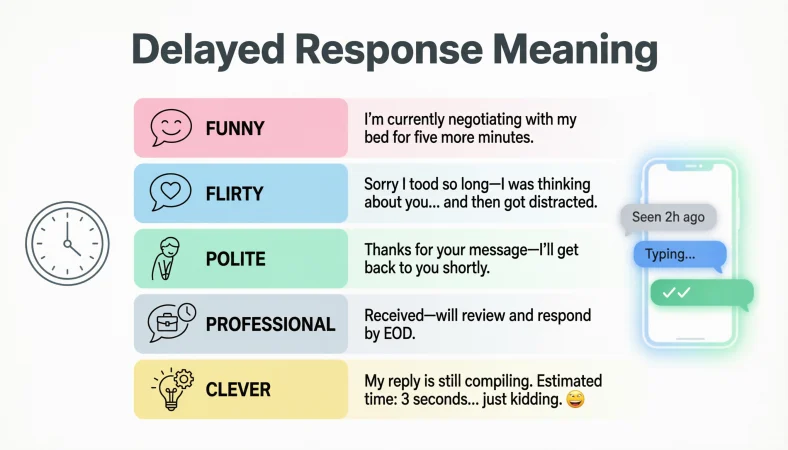
This guide breaks down the delayed response meaning from funny, flirty, professional, emotional, casual, and clever angles. Whether you are replying to a friend, coworker, crush, or someone in your DMs, you will find natural responses that fit the moment.
Funny Responses To A Delayed Response
“Well, look who finally arrived.”
Use this when a friend takes noticeably long to reply.
Meaning: You are playfully calling attention to their late response.
“I almost sent a search party.”
Use this when the delay was long enough to become funny.
Meaning: You jokingly exaggerate how long you waited.
“Did your message travel by carrier pigeon?”
Use this for an especially slow text exchange.
Meaning: You are teasing them about the ridiculously long delay.
“Glad you made it back to civilization.”
Use this when someone disappears from a conversation.
Meaning: You are humorously treating their absence like an adventure.
“That reply had a whole journey.”
Use this when their response arrives much later than expected.
Meaning: You are making the delay sound dramatically long.
“I was starting to think my phone offended you.”
Use this with someone you are comfortable joking with.
Meaning: You playfully suggest they intentionally ignored your message.
“Breaking news: You replied.”
Use this when someone finally answers after hours.
Meaning: You turn their response into a fake news event.
“That was a premium-speed response.”
Use this sarcastically when someone replies extremely late.
Meaning: You are joking about their very slow timing.
“I had already moved on emotionally.”
Use this with close friends when the delay feels comically long.
Meaning: You exaggerate the emotional impact of waiting.
“Welcome back, stranger.”
Use this after a noticeable communication gap.
Meaning: You lightly point out that they disappeared.
“Should I frame this response?”
Use this when their reply feels unusually rare.
Meaning: You jokingly treat their response as something special.
“The suspense was unnecessary, but okay.”
Use this when you want playful teasing without sounding angry.
Meaning: You acknowledge the delay with humor.
Brutal Responses To A Delayed Response
“That reply took its sweet time.”
Use this when you want to call out the delay directly.
Meaning: You are pointing out that their response was noticeably late.
“You replied when the moment had already passed.”
Use this when timing actually affected the conversation.
Meaning: You are saying the late response reduced its usefulness.
“I had already figured you weren’t answering.”
Use this when you stopped expecting a response.
Meaning: You communicate that their delay changed your expectations.
“Timing really matters, you know.”
Use this when the delay genuinely bothered you.
Meaning: You are emphasizing that responsiveness can affect communication.
“That was impressively late.”
Use this when you want dry, understated criticism.
Meaning: You sarcastically highlight the length of the delay.
“Guess my message needed an appointment.”
Use this when someone consistently responds slowly.
Meaning: You are criticizing their communication speed through humor.
“You answered eventually.”
Use this when you want to remain brief and detached.
Meaning: You acknowledge the response without showing much enthusiasm.
“I wasn’t holding my breath.”
Use this when you want to sound independent.
Meaning: You are making it clear you were not waiting around.
“The delay said enough.”
Use this when the timing itself felt meaningful.
Meaning: You imply that their lack of urgency affected your interpretation.
“Not exactly a lightning-fast response.”
Use this when you want mild criticism instead of confrontation.
Meaning: You are pointing out the slow timing without being overly harsh.
“I had already made other plans.”
Use this when their delayed answer affected your schedule.
Meaning: You are showing that you continued with your own plans.
“Next time, just let me know if you’re busy.”
Use this when you want clearer communication.
Meaning: You are asking for consideration rather than another unexplained delay.
Flirty Responses To A Delayed Response
“Took you long enough to miss me.”
Use this when you want to turn the delay into playful flirting.
Meaning: You jokingly suggest they took time because they were thinking about you.
“Were you trying to make me wait?”
Use this when you suspect the person is teasing you.
Meaning: You frame the delay as intentional flirting.
“I was wondering when you’d come back.”
Use this when you want to show interest without sounding intense.
Meaning: You are subtly admitting that you noticed their absence.
“I see you like keeping me curious.”
Use this when the delayed response creates playful tension.
Meaning: You suggest their timing is part of the flirtation.
“You finally decided to give me attention.”
Use this with someone you already have playful chemistry with.
Meaning: You tease them while signaling that you enjoy their attention.
“That reply was worth the wait.”
Use this when their eventual message is genuinely good.
Meaning: You turn the delay into a compliment.
“Were you thinking of the perfect reply?”
Use this when you want to flirt without sounding demanding.
Meaning: You jokingly suggest they took time because they cared about their answer.
“I was starting to think you were playing hard to get.”
Use this when the conversation has romantic energy.
Meaning: You playfully interpret the delay as flirtatious behavior.
“You disappear and somehow still keep my attention.”
Use this when you want a more charming response.
Meaning: You admit that their absence did not stop your interest.
“Late, but I’ll allow it.”
Use this when you want confident, playful flirting.
Meaning: You tease them while showing you are still interested.
“I was beginning to wonder if you missed me.”
Use this when you want a soft romantic tease.
Meaning: You use the delay as an opening to express interest.
“Okay, you’re forgiven… for now.”
Use this when you want playful relationship-style banter.
Meaning: You pretend their delayed response requires forgiveness.
Polite Responses To A Delayed Response
“No worries, I understand.”
Use this when you do not want to make the delay uncomfortable.
Meaning: You are showing patience and understanding.
“Thanks for getting back to me.”
Use this when you simply appreciate receiving a response.
Meaning: You acknowledge their reply respectfully.
“That’s completely fine.”
Use this when the delay did not cause a serious problem.
Meaning: You are reassuring them that there is no issue.
“No problem, I know things get busy.”
Use this when you want to sound considerate.
Meaning: You recognize that people may have competing responsibilities.
“Thanks for the update.”
Use this when their response contains useful information.
Meaning: You appreciate the information rather than focusing on the delay.
“Whenever you had a moment was fine.”
Use this when you want to remove pressure.
Meaning: You are communicating that an immediate response was not necessary.
“I appreciate you replying.”
Use this when you want to remain warm and respectful.
Meaning: You value their effort to respond.
“All good on my end.”
Use this when the delayed reply has not created a problem.
Meaning: You are confirming that everything remains fine.
“Thanks for taking the time to respond.”
Use this when the conversation requires extra consideration.
Meaning: You acknowledge their effort.
“No rush, I understand.”
Use this when you want to keep communication relaxed.
Meaning: You are telling them there is no immediate pressure.
“That’s okay, thanks for letting me know.”
Use this when their response resolves uncertainty.
Meaning: You appreciate the clarification.
“Glad to hear back from you.”
Use this when you want to sound friendly without complaining.
Meaning: You are happy that communication has resumed.
Professional Responses To A Delayed Response
“Thank you for getting back to me.”
Use this in emails or workplace messages after a delayed reply.
Meaning: You acknowledge their response professionally.
“I appreciate your response.”
Use this when the information they provided is important.
Meaning: You show professional courtesy.
“Thank you for the update.”
Use this when their reply provides progress or clarification.
Meaning: You recognize the usefulness of their information.
“No problem, thank you for following up.”
Use this when you want to avoid emphasizing the delay.
Meaning: You keep the interaction positive and professional.
“I understand you may have been occupied.”
Use this when you want to acknowledge the delay tactfully.
Meaning: You recognize that other priorities may have affected their response time.
“Thanks for your time and response.”
Use this when maintaining a formal tone matters.
Meaning: You appreciate their effort.
“I appreciate you circling back.”
Use this in workplace conversations when someone reconnects after a delay.
Meaning: You value their follow-up.
“Thank you for addressing this.”
Use this when the delayed response resolves an issue.
Meaning: You acknowledge their action.
“I appreciate the clarification.”
Use this when their response answers your question.
Meaning: You focus on the useful information rather than the timing.
“Thank you for keeping me informed.”
Use this when the response provides an important status update.
Meaning: You appreciate continued communication.
“Understood, thank you for confirming.”
Use this when their reply confirms details.
Meaning: You acknowledge the information clearly.
“Thanks for following up when you had the opportunity.”
Use this when you want to be especially courteous.
Meaning: You recognize that they responded when they were able.
Creative Responses To A Delayed Response
“Your reply just entered the chat from another timeline.”
Use this when you want a creative, internet-friendly joke.
Meaning: You exaggerate the delay as though time itself changed.
“That message took the scenic route.”
Use this when someone responds much later than expected.
Meaning: You jokingly describe the reply as taking a long journey.
“Your response arrived fashionably late.”
Use this when you want playful sophistication.
Meaning: You frame the delay as a stylish entrance.
“The reply has officially landed.”
Use this when someone finally answers.
Meaning: You make their response sound like an important arrival.
“Your text crossed several time zones.”
Use this when the response took ages.
Meaning: You creatively exaggerate how long it took.
“That response came with a plot twist.”
Use this when you were surprised they eventually replied.
Meaning: You treat the delayed message like an unexpected story development.
“The suspense department really delivered.”
Use this when the waiting period was noticeable.
Meaning: You jokingly praise the delay for creating suspense.
“Your message completed its side quest.”
Use this when you want a gaming-inspired joke.
Meaning: You pretend the message had an adventure before reaching you.
“I see the response train finally arrived.”
Use this when you want a playful metaphor.
Meaning: You compare their late response to delayed transportation.
“That reply deserves a dramatic entrance.”
Use this when the delay was unusually long.
Meaning: You humorously suggest the response arrived like a celebrity.
“The message finally escaped the draft folder.”
Use this when you suspect they took forever to send it.
Meaning: You joke that they spent too long preparing the response.
“Delayed, but definitely memorable.”
Use this when you want a short creative comeback.
Meaning: You acknowledge the timing while keeping the mood light.
Sarcastic Responses To A Delayed Response
“Wow, lightning speed.”
Use this when someone replies much later than expected.
Meaning: You sarcastically describe their slow response as fast.
“Thanks for the immediate response.”
Use this when the delay is obvious.
Meaning: You use irony to highlight the slow timing.
“I was sure you’d reply next year.”
Use this when the response took a comically long time.
Meaning: You exaggerate the delay for sarcasm.
“Excellent timing, as always.”
Use this when someone has a habit of replying late.
Meaning: You sarcastically point out their questionable timing.
“I nearly forgot what we were discussing.”
Use this when the conversation has gone cold.
Meaning: You emphasize how much time passed.
“That was only slightly late.”
Use this when you want dry humor.
Meaning: You sarcastically minimize an obvious delay.
“Glad the message eventually found you.”
Use this when you want a clever sarcastic jab.
Meaning: You pretend the message had trouble reaching them.
“I admire the commitment to slow replies.”
Use this when someone consistently answers late.
Meaning: You sarcastically praise their communication habit.
“No need to rush next time.”
Use this when the response was extremely delayed.
Meaning: You humorously imply that they certainly did not rush.
“Perfect, just in time.”
Use this when their answer arrives after the relevant moment.
Meaning: You sarcastically point out that their timing was poor.
“I had plenty of time to think about it.”
Use this when waiting gave you a lot of time to reconsider.
Meaning: You highlight the effect of the delay.
“Your response speed is truly unforgettable.”
Use this when you want polished sarcasm.
Meaning: You mock the unusually slow response without being overly aggressive.
Cute Responses To A Delayed Response
“It’s okay, you’re here now.”
Use this when you want to respond warmly.
Meaning: You focus on their return instead of their delay.
“I was wondering where you went.”
Use this when you genuinely noticed their absence.
Meaning: You show gentle concern and interest.
“No worries, little late is okay.”
Use this when you want to keep things sweet.
Meaning: You reassure them that the delay is not a big deal.
“Glad you came back.”
Use this when someone resumes a conversation after disappearing.
Meaning: You are happy to reconnect.
“Better late than never.”
Use this when you want a familiar and friendly response.
Meaning: You accept the delayed response positively.
“I was waiting for your little update.”
Use this when you care about hearing from them.
Meaning: You gently show that their message matters to you.
“You’re forgiven for being late.”
Use this when playful affection fits the relationship.
Meaning: You tease them while keeping the mood warm.
“A late reply is still a reply.”
Use this when you want to be understanding.
Meaning: You value communication even when it is delayed.
“It’s nice hearing from you.”
Use this when you want a sincere and gentle response.
Meaning: You are happy to reconnect.
“I knew you’d pop back eventually.”
Use this when you want to sound confident and affectionate.
Meaning: You expected them to return to the conversation.
“No stress, take your time.”
Use this when you genuinely do not mind waiting.
Meaning: You are offering reassurance and patience.
“There you are!”
Use this when someone finally replies after disappearing.
Meaning: You warmly acknowledge their return.
Dramatic Responses To A Delayed Response
“I lived an entire lifetime waiting for this.”
Use this when you want exaggerated humor.
Meaning: You dramatically overstate how long the wait felt.
“The silence was becoming legendary.”
Use this when someone disappeared for a long time.
Meaning: You turn the delay into a dramatic event.
“I feared our conversation had entered its final chapter.”
Use this when a chat suddenly went quiet.
Meaning: You jokingly suggest the conversation was ending.
“And just like that, hope returned.”
Use this when someone finally replies.
Meaning: You dramatically celebrate their response.
“I had accepted my fate.”
Use this when you expected no reply.
Meaning: You exaggerate your resignation for humor.
“The waiting period tested my soul.”
Use this when the delay was unusually long.
Meaning: You playfully dramatize the experience.
“This response has been awaited for generations.”
Use this when you want exaggerated comedy.
Meaning: You make the delay sound historically significant.
“I thought the story had ended.”
Use this when a conversation suddenly resumes.
Meaning: You dramatize the unexpected return.
“At last, the prophecy has been fulfilled.”
Use this when you want an over-the-top joke.
Meaning: You treat their response like a long-awaited event.
“The silence was almost cinematic.”
Use this when the delay created awkward suspense.
Meaning: You turn the quiet period into a dramatic scene.
“I was preparing my farewell speech.”
Use this when you thought they would not reply.
Meaning: You jokingly imply you had given up.
“And suddenly, the main character returns.”
Use this when someone finally comes back to the conversation.
Meaning: You humorously frame their response as a dramatic comeback.
Chill And Casual Responses To A Delayed Response
“No worries.”
Use this when the delay does not bother you.
Meaning: You are keeping the interaction relaxed.
“All good.”
Use this when you want an effortless response.
Meaning: You are signaling that there is no issue.
“No stress.”
Use this when you want to reassure someone.
Meaning: You are telling them not to worry about replying late.
“You’re good.”
Use this when someone apologizes for taking a while.
Meaning: You are letting them know everything is fine.
“It happens.”
Use this when you want a realistic, relaxed response.
Meaning: You recognize that delayed replies are normal sometimes.
“No big deal.”
Use this when the delay was insignificant.
Meaning: You are showing that you are not bothered.
“Take your time.”
Use this when an immediate reply is unnecessary.
Meaning: You are giving them space to respond when convenient.
“We’re cool.”
Use this when you want to reassure someone casually.
Meaning: You are confirming there are no hard feelings.
“No problem at all.”
Use this when you want friendly reassurance.
Meaning: You are making the situation feel completely normal.
“It’s fine, life happens.”
Use this when you understand why someone was unavailable.
Meaning: You recognize that real-life responsibilities can interrupt texting.
“You made it back, that’s what matters.”
Use this when someone returns after being busy.
Meaning: You focus on reconnecting rather than the delay.
“No worries, what’s up?”
Use this when you want to move the conversation forward.
Meaning: You accept the delay and continue naturally.
Confident Responses To A Delayed Response
“I figured you’d reply when you were ready.”
Use this when you want to sound secure and patient.
Meaning: You show that you were not anxiously waiting.
“No pressure, I have my own things going on too.”
Use this when you want to establish independence.
Meaning: You communicate that your life does not stop while waiting.
“It’s all good, I don’t rush conversations.”
Use this when you want calm confidence.
Meaning: You show that you value natural communication.
“I wasn’t worried about it.”
Use this when someone assumes their delay upset you.
Meaning: You communicate emotional independence.
“Reply when it works for you.”
Use this when you want to remove unnecessary pressure.
Meaning: You are comfortable allowing them to choose their timing.
“No need to explain.”
Use this when the delay does not require an excuse.
Meaning: You show that you are not demanding justification.
“We’re both busy sometimes.”
Use this when you want a mature perspective.
Meaning: You recognize that delayed communication can happen to anyone.
“I don’t take delayed replies personally.”
Use this when someone worries you misunderstood the situation.
Meaning: You separate response timing from personal worth.
“Whenever you’re free works for me.”
Use this when you want to sound relaxed and self-assured.
Meaning: You are comfortable with flexible communication.
“No worries, I kept moving.”
Use this when you want to subtly show independence.
Meaning: You continued with your life instead of waiting around.
“The timing is fine.”
Use this when you want a short, confident answer.
Meaning: You are communicating that there is no emotional issue.
“We can pick it up from here.”
Use this when you want to restart the conversation smoothly.
Meaning: You are focusing on the present instead of the delay.
Emotional Responses To A Delayed Response
“I was honestly wondering if something was wrong.”
Use this when the delay caused genuine concern.
Meaning: You are expressing care without blaming them.
“I noticed you went quiet.”
Use this when someone’s absence affected you.
Meaning: You are acknowledging the change in communication.
“I wasn’t sure how to take the silence.”
Use this when the delay created uncertainty.
Meaning: You are honestly sharing how their silence felt.
“I’m glad you finally got back to me.”
Use this when their response brought relief.
Meaning: You are expressing appreciation for reconnecting.
“I missed hearing from you.”
Use this when you genuinely value the person.
Meaning: You are openly expressing that their communication matters.
“I wondered if I had said something wrong.”
Use this when the delay caused self-doubt.
Meaning: You are explaining the emotional effect without accusing them.
“The silence made me overthink a little.”
Use this when you want to be honest but gentle.
Meaning: You admit that the delay created uncertainty.
“I appreciate you coming back to the conversation.”
Use this when reconnecting feels meaningful.
Meaning: You value their decision to continue communicating.
“I wasn’t expecting to hear back anymore.”
Use this when the delay was significant.
Meaning: You explain that your expectations had changed.
“Your response actually made me feel better.”
Use this when you were worried about the situation.
Meaning: Their message provided emotional reassurance.
“I care, so I noticed the silence.”
Use this when you want to explain why the delay mattered.
Meaning: You connect your concern to genuine care.
“Thanks for letting me know you’re okay.”
Use this when the delay caused concern about their wellbeing.
Meaning: You prioritize their safety and reassurance.
Sweet Responses To A Delayed Response
“No worries, I’m just happy to hear from you.”
Use this when you want to respond with warmth.
Meaning: You care more about reconnecting than the timing.
“Take all the time you need.”
Use this when someone genuinely needs space or time.
Meaning: You are offering patience without pressure.
“It’s always nice hearing from you.”
Use this when you want to make someone feel appreciated.
Meaning: You value their presence in your conversations.
“I’m glad you replied.”
Use this when their message matters to you.
Meaning: You are expressing sincere appreciation.
“No need to apologize.”
Use this when the person feels guilty about replying late.
Meaning: You want them to feel comfortable continuing the conversation.
“I understand, things get busy.”
Use this when you want to show empathy.
Meaning: You recognize that life can interrupt communication.
“Whenever you have time is okay.”
Use this when you want to remove pressure.
Meaning: You are giving them flexibility.
“I’m just glad we’re talking again.”
Use this when reconnecting matters emotionally.
Meaning: You focus on the relationship rather than the delay.
“You don’t have to worry about the timing.”
Use this when you want to reassure someone.
Meaning: You want communication to feel comfortable.
“Your message made me smile.”
Use this when their eventual response genuinely makes you happy.
Meaning: You show positive emotion without focusing on the delay.
“It’s okay, I’m here.”
Use this when someone has been dealing with something difficult.
Meaning: You are offering emotional support and availability.
“Some replies are worth waiting for.”
Use this when you want a warm, slightly romantic message.
Meaning: You suggest their response was important enough to wait for.
Clever Responses To A Delayed Response
“Timing is a language of its own.”
Use this when you want a thoughtful but concise observation.
Meaning: You suggest that response timing can communicate something.
“Better late than misunderstood.”
Use this when accuracy matters more than speed.
Meaning: You value a thoughtful response over a rushed one.
“The delay tells part of the story, not the whole story.”
Use this when you want to avoid jumping to conclusions.
Meaning: You recognize that timing alone does not reveal someone’s intentions.
“A late reply isn’t automatically a bad reply.”
Use this when someone is overthinking a delayed message.
Meaning: You separate response speed from response quality.
“Context beats the clock.”
Use this when discussing what a delayed response means.
Meaning: You believe the circumstances matter more than the exact timing.
“Not every pause needs a hidden meaning.”
Use this when someone is reading too much into a delay.
Meaning: You encourage a balanced interpretation.
“The message matters, but so does the timing.”
Use this when communication has emotional significance.
Meaning: You acknowledge both the content and timing of a response.
“Sometimes busy means busy.”
Use this when someone assumes a late reply indicates rejection.
Meaning: You remind them that ordinary responsibilities can cause delays.
“Response time isn’t a personality test.”
Use this when discussing texting habits.
Meaning: You caution against judging someone entirely by their reply speed.
“Read the situation, not just the timestamp.”
Use this when someone is analyzing a delayed text.
Meaning: You encourage looking at the wider context.
“A pause can mean many things.”
Use this when the reason for a delayed reply is unclear.
Meaning: You acknowledge multiple possible explanations.
“The best interpretation starts with context.”
Use this when someone wants to understand a late response.
Meaning: You recommend considering circumstances before assuming intent.
FAQs
What does delayed response mean?
A delayed response means someone replies later than expected. It can happen because they are busy, distracted, unavailable, forgot, needed time to think, or simply have a different communication style.
What does a delayed response mean in texting?
In texting, a delayed response can have many meanings. The safest interpretation depends on the person’s usual texting habits, the situation, the content of the message, and how they respond once they return.
Can a delayed response be flirty?
Sometimes. A person might intentionally take time before replying, but a delayed response alone does not prove romantic interest. The overall tone and pattern of communication provide more context.
Does a delayed response mean someone is ignoring you?
Not necessarily. People can miss notifications, become busy, forget to respond, or need time before answering. One delayed message usually does not provide enough information to know someone’s intentions.
What does a delayed response mean professionally?
In professional communication, it usually means the recipient took longer than expected to respond. Workload, meetings, schedules, time zones, and competing priorities can all affect response time.
What should you say if you do not actually mean your delayed response?
Keep it honest and simple. You can say, “Sorry for the late reply, I got caught up with a few things,” if that accurately explains the situation.
Is humor appropriate for a delayed response?
Humor works best with friends, close contacts, or people who already understand your personality. For professional conversations or sensitive situations, a polite response is usually more suitable.
Should you apologize for a delayed response?
If the delay affected someone or you had promised to respond sooner, a brief apology can be appropriate. If the delay was minor and there was no expectation of an immediate answer, an apology may not be necessary.
Can a delayed response hurt someone’s feelings?
Yes, especially when the person expected an answer or is emotionally invested in the conversation. However, the emotional impact depends heavily on the relationship and circumstances.
How should you respond to someone who always replies late?
You can stay relaxed if the delay does not affect you, or communicate your expectations if it repeatedly causes problems. Clear communication is usually better than silently guessing.
Conclusion
A delayed response can mean many things, and that is exactly why context matters. A late text from a friend may deserve a funny comeback, while a delayed work email may call for a polite and professional response. With a crush, a playful or flirty line can keep the energy moving without creating unnecessary pressure.
The best reply is not always the cleverest one. Sometimes confidence means keeping things casual, sometimes it means being honest, and sometimes it means simply moving the conversation forward. Save these responses for your next late text, DM, email, or awkward silence, and pick the tone that actually fits the moment. Share, save, and reuse your favorites whenever the reply finally arrives.