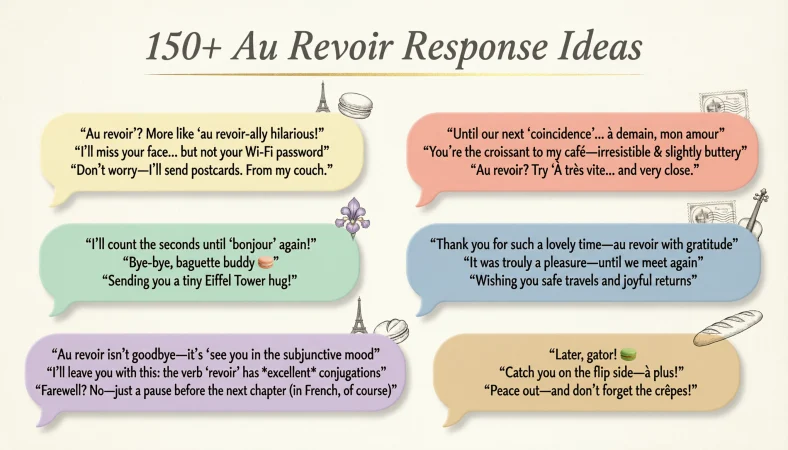
Quick Answer: An au revoir response can be warm, funny, flirty, casual, or polished depending on who said it and why. Choose a reply that matches the mood without making the goodbye feel awkward.
Top alternatives: See you soon, Until next time, Take care, Catch you later, À bientôt
Ever received an “au revoir” and suddenly wondered whether you should reply with something elegant, funny, or just a simple “bye”? You’re definitely not alone. Whether it pops up in a text, DM, workplace message, conversation with friends, or a goodbye with someone you secretly like, the right au revoir response can completely change the mood.
“Au revoir” means “goodbye” or, more literally, “until we see each other again,” so your reply can carry anything from casual friendliness to genuine affection. You might want to keep things classy, add a little humor, flirt without trying too hard, or simply leave the door open for another conversation. This list gives you plenty of natural, text-message-ready replies for every vibe, because sometimes “bye” just does not have enough personality.
Funny Au Revoir Responses
“Au revoir, fancy pants!”
Use this when a friend is being unnecessarily sophisticated.
Meaning: You’re playfully teasing their dramatic goodbye.
“Bon voyage, even if you’re going next door.”
Use this for an overly theatrical farewell.
Meaning: You’re joking about how serious the goodbye sounds.
“Farewell, mysterious traveler.”
Use this when someone makes a simple goodbye sound dramatic.
Meaning: You’re adding playful exaggeration.
“Okay, French exit unlocked.”
Use this when the person suddenly disappears after saying goodbye.
Meaning: You’re making the farewell feel like a joke.
“Au revoir, superstar.”
Use this with a friend who loves attention.
Meaning: You’re sending them off with playful affection.
“Go forth and cause minimal trouble.”
Use this when saying goodbye to a mischievous friend.
Meaning: You’re teasing them while wishing them well.
“Until our next episode.”
Use this when your conversations feel like an ongoing series.
Meaning: You’re joking that you’ll meet again soon.
“And scene!”
Use this after an especially dramatic goodbye.
Meaning: You’re treating the farewell like the ending of a movie.
“Goodbye, but make it French.”
Use this when someone uses “au revoir” casually.
Meaning: You’re playfully pointing out the fancy wording.
“May your Wi-Fi be strong until we meet again.”
Use this with an internet-loving friend.
Meaning: You’re turning a normal farewell into a modern joke.
“Leaving already? The plot just started.”
Use this when you want someone to stay longer.
Meaning: You’re jokingly protesting their departure.
“Au revoir, legend.”
Use this for a friend who deserves a playful send-off.
Meaning: You’re showing friendly admiration.
Brutal Au Revoir Responses
“Au revoir, and good luck out there.”
Use this when you want a slightly pointed goodbye.
Meaning: You’re keeping things polite while adding attitude.
“Sure, see you when you circle back.”
Use this when someone repeatedly leaves and returns.
Meaning: You’re teasing their predictable pattern.
“Au revoir. No dramatic comeback needed.”
Use this when someone enjoys making entrances and exits.
Meaning: You’re playfully calling out their theatrics.
“Take care, you’ll manage somehow.”
Use this with a close friend who understands your humor.
Meaning: You’re offering support with a teasing edge.
“Until next time, apparently.”
Use this when the goodbye feels unnecessarily dramatic.
Meaning: You’re lightly questioning the seriousness of the farewell.
“Go ahead, I’ll survive.”
Use this when a friend acts like their departure is devastating.
Meaning: You’re pretending their absence will not affect you.
“Au revoir, drama department.”
Use this when someone turns goodbye into a whole performance.
Meaning: You’re teasing their dramatic personality.
“Bye, before this gets any more theatrical.”
Use this when the farewell is becoming overly emotional.
Meaning: You’re cutting through the drama with humor.
“See you later, probably.”
Use this for a casual but slightly cheeky goodbye.
Meaning: You’re keeping expectations deliberately relaxed.
“Au revoir. Keep the speeches short next time.”
Use this after a long farewell message.
Meaning: You’re joking about their excessive goodbye.
“Leaving with confidence, I see.”
Use this when someone walks away dramatically.
Meaning: You’re teasing their bold exit.
“Go be unforgettable somewhere else.”
Use this with someone who enjoys attention.
Meaning: You’re combining a compliment with playful sarcasm.
Flirty Au Revoir Responses
“Au revoir, handsome.”
Use this when you want a simple compliment with your goodbye.
Meaning: You’re adding obvious but effortless flirtation.
“Until next time, cutie.”
Use this when you expect to see the person again.
Meaning: You’re keeping the goodbye warm and affectionate.
“Don’t stay away too long.”
Use this when you want to hint that you’ll miss them.
Meaning: You’re showing interest without overdoing it.
“Au revoir, but I’m already looking forward to hello.”
Use this for someone you genuinely want to see again.
Meaning: You’re making your interest clear in a sweet way.
“See you soon, hopefully.”
Use this when you want to suggest another meeting.
Meaning: You’re subtly opening the door for future plans.
“Leaving already? I was enjoying this.”
Use this when you want to make someone feel wanted.
Meaning: You’re admitting that you enjoyed their company.
“Until our next little adventure.”
Use this after spending enjoyable time together.
Meaning: You’re creating a romantic sense of anticipation.
“Au revoir, troublemaker.”
Use this with someone you have playful chemistry with.
Meaning: You’re flirting through light teasing.
“Make your return worth the wait.”
Use this when you want a confident flirty goodbye.
Meaning: You’re suggesting you expect them back.
“See you later, favorite distraction.”
Use this for someone who keeps capturing your attention.
Meaning: You’re giving them a playful compliment.
“Go for now, but come back soon.”
Use this when you want warmth without being overly romantic.
Meaning: You’re expressing that you want to see them again.
“Au revoir, don’t forget about me.”
Use this when you want a cute hint of vulnerability.
Meaning: You’re playfully asking them to keep you in mind.
Polite Au Revoir Responses
“Au revoir, take care!”
Use this for a friendly and respectful farewell.
Meaning: You’re returning the goodbye with warmth.
“Until we meet again.”
Use this when you want a graceful response.
Meaning: You’re emphasizing the possibility of seeing them again.
“Take care and have a wonderful day.”
Use this in everyday conversations.
Meaning: You’re ending things kindly and positively.
“Goodbye, and all the best.”
Use this for someone you may not see regularly.
Meaning: You’re offering sincere good wishes.
“It was lovely speaking with you.”
Use this after a pleasant conversation.
Meaning: You’re ending the interaction graciously.
“Wishing you a lovely evening.”
Use this when the conversation happens later in the day.
Meaning: You’re offering a courteous farewell.
“Until next time, take care.”
Use this when you expect another interaction.
Meaning: You’re combining warmth with politeness.
“Have a safe journey.”
Use this when someone is traveling.
Meaning: You’re showing consideration for their trip.
“It was wonderful seeing you.”
Use this after meeting someone in person.
Meaning: You’re expressing genuine appreciation.
“Take care, and enjoy the rest of your day.”
Use this for a friendly everyday goodbye.
Meaning: You’re keeping the farewell pleasant and respectful.
“Goodbye for now.”
Use this when the separation is temporary.
Meaning: You’re suggesting you’ll reconnect later.
“Wishing you all the best until we meet again.”
Use this for a more thoughtful farewell.
Meaning: You’re expressing sincere goodwill.
Professional Au Revoir Responses
“Au revoir, and thank you for your time.”
Use this after a professional meeting or discussion.
Meaning: You’re closing the interaction respectfully.
“Until our next meeting.”
Use this when another professional interaction is expected.
Meaning: You’re ending on a polished note.
“Thank you, and have a great day.”
Use this for workplace messages and conversations.
Meaning: You’re keeping the farewell friendly and professional.
“It was a pleasure speaking with you.”
Use this after a productive conversation.
Meaning: You’re showing professional courtesy.
“Take care, and I look forward to speaking again.”
Use this when future communication is likely.
Meaning: You’re politely expressing continued interest.
“Wishing you a productive rest of the day.”
Use this in a formal workplace setting.
Meaning: You’re offering a professional closing.
“Until next time, and thank you again.”
Use this after receiving assistance or information.
Meaning: You’re combining gratitude with a respectful goodbye.
“Have a pleasant afternoon.”
Use this during daytime professional communication.
Meaning: You’re ending the interaction courteously.
“I appreciate your time. Until next time.”
Use this after a meeting or consultation.
Meaning: You’re acknowledging their time while closing the conversation.
“Goodbye, and I look forward to our next conversation.”
Use this when continued communication matters.
Meaning: You’re signaling a positive professional relationship.
“Thank you for the conversation. Take care.”
Use this after a useful discussion.
Meaning: You’re closing with appreciation and courtesy.
“Until we speak again.”
Use this for a polished professional farewell.
Meaning: You’re keeping the closing concise and formal.
Creative Au Revoir Responses
“Until the next chapter.”
Use this for a meaningful goodbye.
Meaning: You’re framing the next meeting as part of a bigger story.
“Until our paths cross again.”
Use this when you want a poetic farewell.
Meaning: You’re leaving the possibility of another meeting open.
“The curtain falls for now.”
Use this after a memorable interaction.
Meaning: You’re giving the goodbye a theatrical touch.
“Until the next plot twist.”
Use this with someone who enjoys playful language.
Meaning: You’re making the future feel unpredictable and fun.
“See you on the next page.”
Use this for a thoughtful or literary goodbye.
Meaning: You’re suggesting the story continues.
“Until the universe schedules us again.”
Use this when another meeting is uncertain.
Meaning: You’re turning uncertainty into something playful.
“Farewell for this chapter.”
Use this after an important moment together.
Meaning: You’re acknowledging change while leaving room for what comes next.
“Until our next adventure finds us.”
Use this with a close friend or travel companion.
Meaning: You’re expressing excitement about future experiences.
“And just like that, we pause.”
Use this after a meaningful conversation.
Meaning: You’re treating the goodbye as temporary.
“Until the next unexpected hello.”
Use this when you do not know when you’ll meet again.
Meaning: You’re leaving the ending hopeful.
“Closing the chat, not the story.”
Use this in a text conversation.
Meaning: You’re saying the conversation can continue later.
“Until the next memorable moment.”
Use this after a particularly good interaction.
Meaning: You’re expressing anticipation for another experience.
Sarcastic Au Revoir Responses
“Au revoir, Your Majesty.”
Use this when a friend is acting overly important.
Meaning: You’re playfully mocking their grand exit.
“Farewell, dramatic one.”
Use this when someone is making goodbye unnecessarily emotional.
Meaning: You’re teasing their dramatic style.
“Yes, yes, go be mysterious.”
Use this when someone loves cryptic messages.
Meaning: You’re playfully calling out their mysterious behavior.
“Au revoir, main character.”
Use this when someone is making a dramatic departure.
Meaning: You’re joking about their starring-role energy.
“Leaving with absolutely no announcement? Impressive.”
Use this when someone normally makes a big deal about leaving.
Meaning: You’re using irony to tease them.
“Until your next grand entrance.”
Use this for someone who frequently comes and goes.
Meaning: You’re joking about their theatrical personality.
“Bye, celebrity.”
Use this with a friend who thinks they are famous.
Meaning: You’re teasing them affectionately.
“Au revoir, please enjoy your imaginary red carpet.”
Use this when someone is being extra.
Meaning: You’re playfully exaggerating their importance.
“Safe travels, superstar.”
Use this when a friend is acting important.
Meaning: You’re giving them a deliberately exaggerated farewell.
“Go ahead, the stage is yours.”
Use this when someone is making an entrance or exit dramatic.
Meaning: You’re jokingly giving them attention.
“Until your next dramatic update.”
Use this when someone constantly sends status updates.
Meaning: You’re teasing their communication habits.
“Au revoir, keep the theatrics alive.”
Use this with a dramatic friend.
Meaning: You’re playfully celebrating their exaggerated personality.
Cute Au Revoir Responses
“Bye for now, sunshine.”
Use this with someone who brightens your day.
Meaning: You’re making the goodbye affectionate and cheerful.
“See you soon, sweetie.”
Use this for a warm personal farewell.
Meaning: You’re expressing affection and familiarity.
“Au revoir, little star.”
Use this for a playful and affectionate goodbye.
Meaning: You’re giving the person a sweet compliment.
“Until next time, lovely.”
Use this when you want a gentle goodbye.
Meaning: You’re showing warmth and appreciation.
“Don’t forget to smile.”
Use this when you want to leave someone feeling good.
Meaning: You’re ending the interaction positively.
“Bye-bye for now!”
Use this for a playful text.
Meaning: You’re keeping the farewell light and cute.
“See you on the happy side.”
Use this after a fun conversation.
Meaning: You’re ending with cheerful energy.
“Take care, cutie.”
Use this for someone you’re comfortable complimenting.
Meaning: You’re adding affection to a simple goodbye.
“Until our next smile.”
Use this after a sweet interaction.
Meaning: You’re expressing anticipation for another happy moment.
“Au revoir, favorite human.”
Use this with someone close to you.
Meaning: You’re giving them a playful affectionate compliment.
“Come back with good stories.”
Use this when someone is heading somewhere.
Meaning: You’re showing interest in hearing from them again.
“Sending you a tiny goodbye hug.”
Use this for a warm text farewell.
Meaning: You’re making the goodbye feel affectionate and personal.
Dramatic Au Revoir Responses
“Au revoir, until fate brings us together again.”
Use this when you want maximum theatrical energy.
Meaning: You’re intentionally making the goodbye grand and emotional.
“And so, our tale pauses here.”
Use this for a playful dramatic farewell.
Meaning: You’re presenting the goodbye like a story ending.
“Farewell, until the stars align again.”
Use this for an exaggerated romantic goodbye.
Meaning: You’re making the next meeting sound destined.
“The goodbye has arrived.”
Use this when someone is being theatrical.
Meaning: You’re humorously announcing the obvious.
“Until destiny writes the next scene.”
Use this for a poetic farewell.
Meaning: You’re suggesting the story is not finished.
“Our temporary separation begins.”
Use this when you know you’ll see each other again.
Meaning: You’re deliberately exaggerating a normal goodbye.
“Farewell, brave traveler.”
Use this when someone is simply leaving for the day.
Meaning: You’re turning an ordinary departure into an adventure.
“Let the countdown to our reunion begin.”
Use this when you genuinely look forward to seeing someone again.
Meaning: You’re expressing excitement about the next meeting.
“Until the next chapter of this beautiful chaos.”
Use this with a close friend.
Meaning: You’re celebrating the memorable nature of your relationship.
“The moment has come to part ways.”
Use this when you want intentionally formal drama.
Meaning: You’re making a simple farewell sound grand.
“Farewell, until our next legendary encounter.”
Use this with someone who enjoys exaggerated humor.
Meaning: You’re making the next meeting sound epic.
“And now, the goodbye music begins.”
Use this after a dramatic interaction.
Meaning: You’re jokingly adding movie-style emotion.
Chill And Casual Au Revoir Responses
“See ya!”
Use this for a quick everyday goodbye.
Meaning: You’re keeping things simple and relaxed.
“Catch you later.”
Use this with friends or casual acquaintances.
Meaning: You’re suggesting you’ll talk again soon.
“Later!”
Use this for a very casual farewell.
Meaning: You’re keeping the goodbye short and effortless.
“Take care!”
Use this when you want casual warmth.
Meaning: You’re wishing them well without overthinking it.
“See you around.”
Use this when another meeting is possible but not planned.
Meaning: You’re leaving things open-ended.
“Until next time!”
Use this when you expect another interaction.
Meaning: You’re ending positively and casually.
“Peace!”
Use this with friends who appreciate relaxed slang.
Meaning: You’re giving a friendly informal goodbye.
“Alright, later then.”
Use this for an everyday text exchange.
Meaning: You’re keeping the farewell natural.
“Have a good one!”
Use this when ending a casual conversation.
Meaning: You’re wishing them a pleasant rest of the day.
“Talk soon.”
Use this when you expect another conversation.
Meaning: You’re keeping the connection open.
“I’m out, take care.”
Use this when leaving a chat or group conversation.
Meaning: You’re announcing your departure casually.
“See you on the flip side.”
Use this with someone who enjoys playful expressions.
Meaning: You’re giving a relaxed, slightly quirky farewell.
Confident Au Revoir Responses
“Au revoir, until next time.”
Use this when you want a polished and self-assured goodbye.
Meaning: You’re ending the interaction with calm confidence.
“I’ll see you when I see you.”
Use this when you want to sound relaxed and independent.
Meaning: You’re showing that you’re comfortable with uncertainty.
“Until then, keep doing your thing.”
Use this with someone you respect.
Meaning: You’re encouraging them while saying goodbye.
“Take care, I’ll be just fine.”
Use this when someone worries about leaving you.
Meaning: You’re reassuring them with confidence.
“See you when the timing is right.”
Use this when future plans are uncertain.
Meaning: You’re comfortable letting things happen naturally.
“Goodbye for now. I know where we stand.”
Use this when the relationship feels secure.
Meaning: You’re communicating emotional confidence.
“Until next time, stay brilliant.”
Use this when you want a confident compliment.
Meaning: You’re ending positively while recognizing their strengths.
“Take care. We’ll pick this up later.”
Use this when a conversation is unfinished.
Meaning: You’re confidently signaling that the discussion can continue.
“Au revoir, not goodbye forever.”
Use this when you expect another meeting.
Meaning: You’re keeping the future open.
“Go well. I’ll catch you later.”
Use this for a relaxed but confident farewell.
Meaning: You’re showing warmth without overexplaining.
“Until next time, keep your energy high.”
Use this with an upbeat friend.
Meaning: You’re leaving them with positive encouragement.
“I’ll see you around. No pressure.”
Use this when you want to sound relaxed.
Meaning: You’re showing interest without creating expectations.
Emotional Au Revoir Responses
“Au revoir, I’ll miss you.”
Use this when the person genuinely matters to you.
Meaning: You’re honestly expressing that their absence will be felt.
“Until we meet again, take care of yourself.”
Use this during a meaningful goodbye.
Meaning: You’re expressing sincere concern and affection.
“Goodbye for now, but not forgotten.”
Use this when someone is leaving for an extended period.
Meaning: You’re reassuring them that they remain important.
“I’m glad we got this moment together.”
Use this after a meaningful interaction.
Meaning: You’re expressing gratitude for shared time.
“Until next time, hold onto the good memories.”
Use this for a sentimental farewell.
Meaning: You’re focusing on positive moments you shared.
“I hope our paths cross again soon.”
Use this when the next meeting is uncertain.
Meaning: You’re expressing genuine hope for another encounter.
“Take care until we meet again.”
Use this when you want emotional warmth without being overly intense.
Meaning: You’re combining affection with a gentle goodbye.
“I’ll be thinking of you.”
Use this when you expect to miss someone.
Meaning: You’re expressing emotional connection.
“This goodbye feels a little harder than usual.”
Use this when the farewell carries extra emotion.
Meaning: You’re acknowledging that the person matters to you.
“Until then, remember you’re appreciated.”
Use this when you want to leave someone feeling valued.
Meaning: You’re offering reassurance and affection.
“Some goodbyes deserve a little more time.”
Use this after an especially meaningful meeting.
Meaning: You’re suggesting that parting feels difficult.
“Until we meet again, stay safe and happy.”
Use this for someone you genuinely care about.
Meaning: You’re ending with sincere good wishes.
Sweet Au Revoir Responses
“Until next time, take care.”
Use this for a warm everyday goodbye.
Meaning: You’re showing kindness while keeping things simple.
“See you soon, hopefully.”
Use this when you want another meeting.
Meaning: You’re expressing gentle anticipation.
“Take care, and keep smiling.”
Use this when you want to brighten their day.
Meaning: You’re leaving them with positive energy.
“Until our next happy moment.”
Use this after a pleasant interaction.
Meaning: You’re looking forward to another good memory.
“Goodbye for now, friend.”
Use this with someone you value.
Meaning: You’re making the farewell warm and personal.
“Wishing you nothing but good things.”
Use this for a sincere farewell.
Meaning: You’re expressing genuine goodwill.
“See you again when the stars align.”
Use this when the next meeting is uncertain.
Meaning: You’re giving the goodbye a sweet poetic touch.
“Take care, you wonderful human.”
Use this with someone who deserves appreciation.
Meaning: You’re combining affection with a friendly compliment.
“Until then, be good to yourself.”
Use this when someone is going through a busy period.
Meaning: You’re encouraging self-care in a caring way.
“Sending good vibes until we meet again.”
Use this for a cheerful farewell.
Meaning: You’re keeping the goodbye upbeat.
“See you soon, hopefully with more stories.”
Use this after an enjoyable conversation.
Meaning: You’re looking forward to hearing from them again.
“Au revoir, and thank you for the lovely memories.”
Use this after a meaningful experience.
Meaning: You’re expressing sincere gratitude.
Clever Au Revoir Responses
“Au revoir means until we meet again, so I’ll take that as a promise.”
Use this when you want to turn the meaning into a clever reply.
Meaning: You’re playfully interpreting the phrase as future plans.
“Until we see each other again sounds better than goodbye.”
Use this when you want a thoughtful response.
Meaning: You’re focusing on reunion rather than separation.
“Au revoir accepted. Reunion pending.”
Use this for a short witty text.
Meaning: You’re treating the next meeting like an upcoming event.
“French goodbye, English-level confidence.”
Use this when someone uses French unexpectedly.
Meaning: You’re playfully commenting on their stylish farewell.
“I prefer ‘until next time’ anyway.”
Use this when you want a positive twist.
Meaning: You’re emphasizing continuation instead of ending.
“Au revoir today, hello again tomorrow.”
Use this when you expect to see them soon.
Meaning: You’re making the goodbye feel temporary.
“A sophisticated way of saying, ‘I’ll be back.’”
Use this when someone says au revoir dramatically.
Meaning: You’re cleverly reframing the phrase.
“Goodbye with a sequel already implied.”
Use this after someone says au revoir.
Meaning: You’re joking that another meeting is expected.
“Au revoir sounds much better than ‘I’m leaving now.’”
Use this when you want a humorous observation.
Meaning: You’re joking about the elegance of the phrase.
“Consider the goodbye officially postponed.”
Use this when you expect to reconnect soon.
Meaning: You’re playfully suggesting the farewell is temporary.
“Until next time? I can work with that.”
Use this when you like the person and want another interaction.
Meaning: You’re showing subtle enthusiasm.
“Au revoir, but let’s call it an intermission.”
Use this when you want a clever theatrical twist.
Meaning: You’re suggesting the interaction is paused, not finished.
FAQs
What Does “Au Revoir” Mean?
“Au revoir” is a French expression commonly translated as “goodbye.” It literally carries the idea of seeing someone again.
Is “Au Revoir” Flirty?
It can be. The phrase itself is not inherently flirty, but your tone and added words can make the response romantic, playful, or affectionate.
What Is A Good Au Revoir Response For A Crush?
Try “Until next time, cutie,” “Don’t stay away too long,” or “I’m already looking forward to hello.” The best choice depends on your relationship and comfort level.
What Is A Professional Response To “Au Revoir”?
“Until our next meeting,” “Thank you for your time,” or “It was a pleasure speaking with you” work well in professional settings.
What If You Don’t Actually Mean The Goodbye?
Keep your response honest and simple. “Talk soon,” “Take care,” or “See you around” can sound friendly without making promises you do not intend to keep.
Is Humor Appropriate In An Au Revoir Response?
Yes, when the relationship allows it. Funny replies work especially well with friends and people who already understand your sense of humor.
Can I Reply “Au Revoir” To “Au Revoir”?
Absolutely. Repeating the phrase can be simple, classy, and natural, especially when you want a short response.
Is “Au Revoir” Formal Or Casual?
It can work in both formal and casual situations. The surrounding words and tone determine how formal the farewell feels.
What Is A Cute Au Revoir Response?
“Until next time, lovely,” “See you soon, sunshine,” and “Take care, cutie” are cute options for someone you know well.
What Is A Short Au Revoir Response?
“See you soon,” “Take care,” “Until next time,” and “Later!” are simple choices that fit everyday conversations.
Conclusion
The perfect au revoir response does not need to be complicated. Sometimes “See you soon” says everything, while other moments call for something funny, flirty, clever, emotional, or wonderfully dramatic. The key is matching your reply to the person, situation, and energy of the conversation. A good response can make a simple goodbye feel warmer, funnier, or more memorable.
So the next time someone drops an “au revoir” into your texts, DMs, workplace chat, or real-life conversation, you’ll have plenty of options ready. Pick your favorite, make it your own, and do not be afraid to add personality. Save this list, share it with your friends, and come back whenever your next goodbye needs a little extra style.










