Quick Answer: “I’ll keep that in mind” usually means someone has acknowledged what you said and intends to remember or consider it. Your reply can be funny, polite, flirty, confident, or casual depending on the situation.
Top alternatives: Good to know, I appreciate that, Please do, That’s all I ask, I’ll hold you to that
When someone says “I’ll keep that in mind,” it can be surprisingly hard to know what to say next. Is it a polite acknowledgment? A genuine promise? A subtle way of saying “noted”? Or are they politely filing your advice away in the mental archives?
You might hear it in a text from a friend, a DM from a crush, a conversation at work, or even during a slightly awkward disagreement. The meaning can change depending on the person and the situation, which is exactly why your reply matters. A simple “okay” works, but it can also feel a little dry.
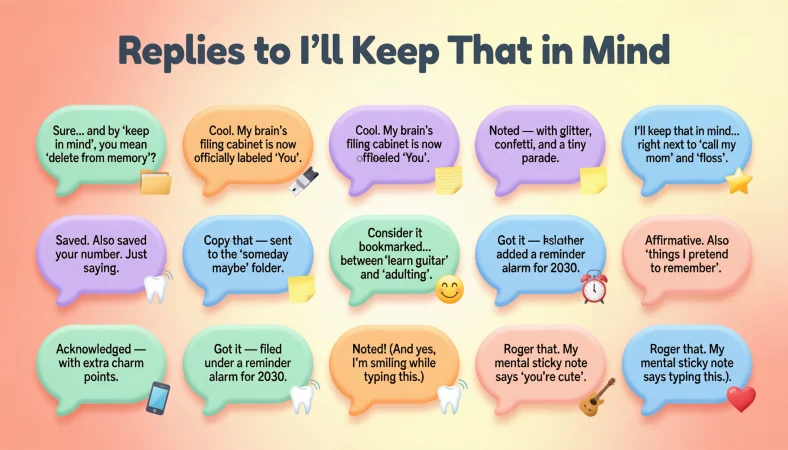
The right response can keep the conversation flowing, show appreciation, add humor, or make your personality shine. These Replies to I’ll Keep That in Mind give you plenty of options, from friendly and professional to playful, flirty, sarcastic, and clever. Pick the one that matches your mood and the person on the other side of the screen.
Funny Responses
Good, my work here is done.
Use this when you want to jokingly act like your advice has officially been delivered.
Meaning: You are playfully celebrating that they acknowledged your point.
Please store it somewhere safe.
Use this when teasing someone who is famous for forgetting things.
Meaning: You want them to actually remember what you said.
Excellent. My TED Talk is complete.
Use this after giving someone a mini lecture or lengthy piece of advice.
Meaning: You are joking about sounding overly knowledgeable.
Put it in the mental notes app.
Use this for a casual text when someone says they will remember something.
Meaning: You are humorously asking them not to forget.
I’ll be checking your memory later.
Use this when you plan to jokingly test whether they followed your advice.
Meaning: You are teasing them about remembering.
Gold star for listening.
Use this with a friend when you want to sound playfully impressed.
Meaning: You are jokingly rewarding them for paying attention.
Screenshot it if necessary.
Use this when the information is particularly important or easy to forget.
Meaning: You are humorously suggesting extra measures to remember it.
Look at you, taking notes.
Use this when someone surprisingly accepts your advice.
Meaning: You are playfully acknowledging their cooperation.
And that concludes today’s lesson.
Use this after giving advice with a humorous teacher-like tone.
Meaning: You are joking that the discussion has become a class.
I expect a full report later.
Use this when you want to keep the interaction playful.
Meaning: You are jokingly asking them to update you later.
Future you will thank me.
Use this when you believe your advice will genuinely help them.
Meaning: You are confidently suggesting your advice will pay off.
Write it on your forehead just in case.
Use this with a close friend who frequently forgets things.
Meaning: You are exaggerating how important it is to remember.
Playful Responses
That’s what I like to hear.
Use this when you want to respond positively without making things too serious.
Meaning: You are pleased that they acknowledged your point.
Good, we’re making progress.
Use this when the conversation has a light teasing energy.
Meaning: You are playfully treating their response as progress.
I’ll remember that you said that.
Use this when you want to mirror their wording in a fun way.
Meaning: You are lightly teasing them about their promise.
Deal, then.
Use this when their acknowledgment feels like an informal agreement.
Meaning: You are accepting their response positively.
I’m holding you to it.
Use this when you want to add playful accountability.
Meaning: You expect them to remember and act accordingly.
Now we’re talking.
Use this when their response is exactly what you wanted to hear.
Meaning: You are showing playful approval.
That sounded suspiciously responsible.
Use this when someone unexpectedly takes your advice seriously.
Meaning: You are joking about their unusually responsible behavior.
Look who’s actually listening.
Use this with a friend during a teasing exchange.
Meaning: You are playfully complimenting their attention.
I’ll consider that a win.
Use this when you feel your advice landed successfully.
Meaning: You are celebrating their acknowledgment.
Excellent choice of words.
Use this when you want to jokingly praise their response.
Meaning: You are playfully approving what they said.
Okay, responsible era unlocked.
Use this in a casual Gen Z style conversation.
Meaning: You are humorously celebrating their willingness to listen.
We love personal growth.
Use this when a friend finally accepts useful advice.
Meaning: You are teasing them while showing approval.
Flirty Responses
Keep me in mind too.
Use this when the conversation has a romantic or teasing undertone.
Meaning: You are turning their phrase into a subtle flirt.
I was hoping you’d say that.
Use this when you want to make the exchange warmer and more suggestive.
Meaning: You are showing that their acknowledgment pleased you.
Just don’t forget who told you.
Use this when you want playful flirtation without being too intense.
Meaning: You are making yourself part of the memory.
Good, because I plan on staying memorable.
Use this when you want a confident and charming reply.
Meaning: You are playfully suggesting you want to stand out to them.
Keep me on that list too.
Use this when you want to hint that you want their attention.
Meaning: You are flirting by asking to remain in their thoughts.
I like being on your mind.
Use this when you want a more direct romantic tone.
Meaning: You are openly enjoying the idea of them thinking about you.
Make sure I’m the first thing you remember.
Use this when the conversation is already openly flirty.
Meaning: You are confidently asking for their attention.
Careful, I might start expecting you to remember me.
Use this when you want playful romantic tension.
Meaning: You are teasing them about keeping you in their thoughts.
That’s cute. Keep thinking about me.
Use this when you want a confident but affectionate response.
Meaning: You are openly encouraging their attention.
Now I’m wondering what else you’ll keep in mind.
Use this when you want to make the conversation more teasing.
Meaning: You are creating a playful opening for further flirting.
Good, because I’m hard to forget.
Use this when you want a confident and cheeky response.
Meaning: You are playfully suggesting you leave a lasting impression.
I’ll take that as permission to stay on your mind.
Use this when you want a charming and slightly bold reply.
Meaning: You are turning their neutral phrase into flirtatious banter.
Polite Responses
I appreciate that.
Use this when you want a respectful and simple acknowledgment.
Meaning: You are thanking them for considering what you said.
Thank you for keeping that in mind.
Use this when someone has acknowledged an important request.
Meaning: You are expressing sincere appreciation.
That means a lot, thank you.
Use this when their consideration genuinely matters to you.
Meaning: You are showing warmth and gratitude.
I appreciate you considering it.
Use this when discussing something that requires thought or flexibility.
Meaning: You are recognizing their willingness to consider your perspective.
Thank you, I really appreciate it.
Use this when you want to sound warm without overdoing it.
Meaning: You are politely acknowledging their response.
That’s very kind of you.
Use this when their willingness to remember feels thoughtful.
Meaning: You are responding with genuine appreciation.
I’m glad you’ll consider it.
Use this when you want to keep the exchange positive.
Meaning: You are pleased that they are open to your suggestion.
I appreciate your understanding.
Use this when the conversation involves a personal request or boundary.
Meaning: You are thanking them for respecting your position.
Thanks for taking it into consideration.
Use this in slightly more formal everyday situations.
Meaning: You appreciate their willingness to think about your point.
I’m grateful you’ll keep it in mind.
Use this when you want to sound especially sincere.
Meaning: You are expressing genuine gratitude.
That’s all I could ask for.
Use this when their acknowledgment is enough for you.
Meaning: You are showing satisfaction with their response.
Thank you for hearing me out.
Use this after sharing something important or personal.
Meaning: You appreciate their willingness to listen.
Professional Responses
Thank you for considering it.
Use this in workplace conversations where someone has acknowledged your suggestion.
Meaning: You are responding professionally and respectfully.
I appreciate you taking that into consideration.
Use this when discussing a workplace request or recommendation.
Meaning: You value their willingness to evaluate your point.
Thank you, I appreciate your consideration.
Use this when you want a polished and courteous response.
Meaning: You are acknowledging their thoughtful response.
That sounds good, thank you.
Use this when their acknowledgment is enough to move the discussion forward.
Meaning: You are accepting their response positively.
I appreciate your openness to the idea.
Use this when presenting a suggestion at work.
Meaning: You recognize their willingness to consider another perspective.
Thanks for keeping that in mind moving forward.
Use this when discussing future decisions or workplace plans.
Meaning: You are asking them to remember the point for later.
I’m glad we could discuss it.
Use this after raising a potentially sensitive workplace topic.
Meaning: You are closing the discussion professionally.
Thank you for taking the feedback seriously.
Use this when you have provided constructive feedback.
Meaning: You appreciate their willingness to consider it.
I appreciate your attention to the matter.
Use this for more formal workplace communication.
Meaning: You are recognizing their attention to an issue.
That works for me, thank you.
Use this when their response resolves the immediate conversation.
Meaning: You are accepting the acknowledgment and moving on.
I appreciate you keeping it in consideration.
Use this when a decision will be made later.
Meaning: You are politely recognizing their willingness to think about it.
Thank you for considering my perspective.
Use this when you have shared an opinion during a professional discussion.
Meaning: You appreciate being heard even if no decision has been made.
Creative Responses
Consider it planted in your memory garden.
Use this when you want a quirky response with a playful image.
Meaning: You are humorously saying you hope the idea sticks.
Filed under: Things I Told You.
Use this when you want a clever, office-inspired joke.
Meaning: You are playfully treating the conversation like an official record.
May the memory gods be kind.
Use this when someone is likely to forget what you said.
Meaning: You are jokingly wishing them good memory.
Let that thought marinate.
Use this when your advice needs some consideration.
Meaning: You want them to think about your words before deciding.
Plant the thought and let it grow.
Use this when you want to sound thoughtful and slightly poetic.
Meaning: You are encouraging them to reflect on your idea.
Consider the seed officially planted.
Use this when you want a creative spin on their acknowledgment.
Meaning: You believe your idea has been introduced successfully.
Welcome to the remembering department.
Use this when you want to make their acknowledgment funny.
Meaning: You are joking about their new responsibility to remember.
Put it in the archives of wisdom.
Use this when your advice is intentionally dramatic.
Meaning: You are humorously presenting your words as valuable knowledge.
And into the memory vault it goes.
Use this when you want an exaggerated but harmless reply.
Meaning: You are joking that the information should be securely remembered.
Let’s call that a successful download.
Use this when chatting online or texting casually.
Meaning: You are comparing their understanding to downloading information.
Consider that thought officially bookmarked.
Use this when you want a modern digital reference.
Meaning: You are playfully saying the idea should be saved for later.
May this information live rent-free in your brain.
Use this with friends who enjoy internet-style humor.
Meaning: You jokingly hope they remember it permanently.
Sarcastic Responses
Sure, I’ll believe it when I see it.
Use this when someone has a history of forgetting things.
Meaning: You are playfully expressing doubt about their promise.
That’s a bold commitment.
Use this when their statement sounds more serious than expected.
Meaning: You are teasing them about simply saying they will remember.
We’ll see how long that lasts.
Use this when you expect them to forget quickly.
Meaning: You are jokingly questioning their memory.
I’ll alert the historians.
Use this when you want exaggerated sarcasm.
Meaning: You are joking that their acknowledgment is historically significant.
Mark the calendar.
Use this when someone rarely takes advice seriously.
Meaning: You are sarcastically celebrating the unusual moment.
A miracle has occurred.
Use this when someone unexpectedly agrees with you.
Meaning: You are playfully exaggerating their cooperation.
Should I frame this moment?
Use this when they have finally acknowledged your point.
Meaning: You are joking that their agreement is unusually important.
I’m shocked and mildly impressed.
Use this when someone surprises you by listening.
Meaning: You are mixing sarcasm with playful approval.
Well, this is unexpected.
Use this when their response catches you off guard.
Meaning: You are humorously acting surprised that they listened.
Alert the group chat.
Use this when you want to exaggerate a small victory.
Meaning: You are joking that their acknowledgment deserves public news.
Someone actually listened today.
Use this with a close friend who often ignores advice.
Meaning: You are teasing them about their unusual cooperation.
I’ll try not to faint from excitement.
Use this when you want an exaggerated sarcastic reaction.
Meaning: You are joking that their acknowledgment is almost unbelievable.
Cute Responses
Aww, I appreciate that.
Use this when someone responds thoughtfully to something you said.
Meaning: You are showing genuine warmth and appreciation.
That’s sweet of you.
Use this when their acknowledgment feels considerate.
Meaning: You are recognizing their kindness.
Okay, I’ll remember that you remembered.
Use this when you want a cute little wordplay moment.
Meaning: You are playfully returning their thoughtfulness.
That makes me smile.
Use this when their response genuinely makes you happy.
Meaning: You are openly expressing a positive emotional reaction.
You’re adorable for that.
Use this when a friend or romantic interest responds thoughtfully.
Meaning: You are affectionately complimenting their consideration.
Thank you for caring enough to remember.
Use this when their acknowledgment has emotional meaning.
Meaning: You appreciate the care behind their response.
That’s all I wanted to hear.
Use this when their response gives you reassurance.
Meaning: You feel comforted that they will consider your words.
You get a little heart for that.
Use this when you want a playful and affectionate reply.
Meaning: You are giving them imaginary credit for being thoughtful.
Okay, that was actually sweet.
Use this when someone unexpectedly responds warmly.
Meaning: You are pleasantly surprised by their consideration.
You just earned brownie points.
Use this when you want a cute, teasing compliment.
Meaning: You are playfully rewarding their thoughtful response.
I’m glad you heard me.
Use this when you want a soft and sincere response.
Meaning: You appreciate that they listened.
That means more than you know.
Use this when their acknowledgment genuinely touches you.
Meaning: You are expressing deeper appreciation.
Dramatic Responses
The message has been received.
Use this when you want to make a simple acknowledgment sound cinematic.
Meaning: You are jokingly treating the moment like a major event.
And so begins the era of remembering.
Use this when you want playful dramatic energy.
Meaning: You are exaggerating their promise to remember.
Let history record this moment.
Use this when someone finally agrees to consider your advice.
Meaning: You are humorously presenting the moment as unforgettable.
The prophecy has been fulfilled.
Use this when their response matches what you wanted to hear.
Meaning: You are dramatically celebrating their acknowledgment.
My words have entered the archives.
Use this when you want an exaggerated response.
Meaning: You are joking that your advice has officially been preserved.
A chapter has been written today.
Use this when you want to make an ordinary interaction sound important.
Meaning: You are playfully exaggerating the significance of the moment.
The council approves.
Use this when you want a mock-serious response.
Meaning: You are jokingly declaring that their acknowledgment has passed inspection.
Let the records show that I tried.
Use this when you want dramatic humor after giving advice.
Meaning: You are saying you have done your part.
The universe has taken note.
Use this when you want a playful dramatic reaction.
Meaning: You are exaggerating how meaningful their acknowledgment is.
We shall revisit this moment in due time.
Use this when you want to sound intentionally theatrical.
Meaning: You are joking that their promise will eventually be tested.
The sacred words have been spoken.
Use this when you want an intentionally over-the-top reply.
Meaning: You are humorously making their simple response sound profound.
May your memory serve you well.
Use this when you want dramatic fantasy-style humor.
Meaning: You are jokingly wishing them success in remembering.
Chill And Casual Responses
Sounds good.
Use this when you want the easiest relaxed response.
Meaning: You are casually accepting their acknowledgment.
Cool, thanks.
Use this when you want to keep the conversation friendly and low-key.
Meaning: You appreciate that they will consider it.
No worries.
Use this when you do not want to make the conversation serious.
Meaning: You are showing that there is no pressure.
Yeah, that works.
Use this when their response is perfectly fine with you.
Meaning: You are casually accepting what they said.
Perfect.
Use this when you want a short and positive answer.
Meaning: You are satisfied with their acknowledgment.
All good.
Use this when you want to close the topic naturally.
Meaning: You are signaling that everything is fine.
Appreciate it.
Use this when you want to sound relaxed but thankful.
Meaning: You are expressing casual gratitude.
Fair enough.
Use this when you accept their response without adding much.
Meaning: You acknowledge their position calmly.
Gotcha.
Use this when the conversation is informal and quick.
Meaning: You understand and accept what they said.
Sounds fair.
Use this when you want to acknowledge their willingness to consider your point.
Meaning: You are calmly accepting their response.
Okay, noted.
Use this when you want to keep things short and straightforward.
Meaning: You are acknowledging the acknowledgment.
We’re good.
Use this when you want to signal that there is no issue.
Meaning: You are closing the topic on a relaxed note.
Confident Responses
Good, because I meant what I said.
Use this when you want to show that your advice was sincere.
Meaning: You are confidently standing behind your words.
I’ll hold you to that.
Use this when you expect their acknowledgment to lead to action.
Meaning: You are confidently expecting them to remember.
That’s exactly what I wanted to hear.
Use this when their response reassures you.
Meaning: You are clearly expressing satisfaction.
You’ll thank me later.
Use this when you are confident your advice will help.
Meaning: You believe your suggestion will prove useful.
Remember it well.
Use this when you want a short, confident response.
Meaning: You are emphasizing the importance of what you said.
Good choice.
Use this when you want to sound self-assured and playful.
Meaning: You approve of their willingness to listen.
I trust you’ll remember.
Use this when you want confidence without sounding aggressive.
Meaning: You are showing expectation and trust.
That’s all I needed from you.
Use this when their acknowledgment resolves the issue.
Meaning: You are confidently signaling that the matter is settled.
Keep it in mind, because it matters.
Use this when your point is genuinely important.
Meaning: You are emphasizing the significance of your words.
I knew you’d see my point.
Use this when they seem receptive to your perspective.
Meaning: You are confidently acknowledging their understanding.
Now you know.
Use this when you want a concise and assured response.
Meaning: You are emphasizing that the information has been delivered.
Good. Don’t forget it.
Use this when you want to be direct but still casual.
Meaning: You are clearly asking them to remember.
Emotional Responses
I’m glad you heard me.
Use this after sharing something personal or meaningful.
Meaning: You feel relieved that your feelings were acknowledged.
That really means a lot to me.
Use this when their willingness to remember feels significant.
Meaning: You are expressing sincere emotional appreciation.
Thank you for taking my feelings into consideration.
Use this when discussing something sensitive.
Meaning: You appreciate their emotional awareness.
I just wanted to feel heard.
Use this when the conversation has been emotionally difficult.
Meaning: You are explaining that acknowledgment was important to you.
I appreciate you listening.
Use this when you have shared something vulnerable.
Meaning: You are grateful that they gave you their attention.
That gives me some peace of mind.
Use this when their response provides reassurance.
Meaning: You feel more comfortable knowing they will consider your words.
I’m happy you understand where I’m coming from.
Use this when discussing different perspectives.
Meaning: You appreciate their effort to understand your side.
Thank you for not brushing it off.
Use this when someone takes your concern seriously.
Meaning: You are grateful that they acknowledged its importance.
That’s really all I needed.
Use this when simply being heard is enough.
Meaning: You are emotionally satisfied with their acknowledgment.
I appreciate you being open to it.
Use this when the subject involves a meaningful conversation.
Meaning: You value their openness.
It helps knowing you’ll consider it.
Use this when their response gives you reassurance.
Meaning: Their willingness to think about your point makes you feel supported.
Thank you for hearing me out.
Use this when you have finally expressed something you were holding in.
Meaning: You appreciate being given space to speak honestly.
Sweet Responses
I appreciate that more than you know.
Use this when someone shows genuine consideration.
Meaning: You are expressing heartfelt gratitude.
Thank you for keeping it in mind.
Use this when their acknowledgment makes you feel respected.
Meaning: You sincerely appreciate their consideration.
That’s really thoughtful of you.
Use this when their response feels caring.
Meaning: You are complimenting their thoughtfulness.
I’m glad we understand each other.
Use this when the conversation ends on a positive note.
Meaning: You value mutual understanding.
That means a lot coming from you.
Use this when the person’s response has special significance.
Meaning: Their acknowledgment feels personally meaningful.
I’m happy you’ll consider it.
Use this when you want a warm but simple response.
Meaning: You appreciate their openness.
Thank you for caring enough to remember.
Use this when the subject is personal.
Meaning: You connect their memory with genuine care.
You have no idea how much I appreciate that.
Use this when their response genuinely touches you.
Meaning: You are emphasizing sincere gratitude.
That’s all I could hope for.
Use this when their acknowledgment is reassuring.
Meaning: You feel satisfied that they will consider your words.
You’re sweet for saying that.
Use this when you want to compliment their response.
Meaning: You are warmly acknowledging their kindness.
I’m really glad I told you.
Use this when sharing the information felt difficult.
Meaning: You feel relieved that you opened up.
Thank you for understanding.
Use this when you want to end the conversation warmly.
Meaning: You appreciate their willingness to understand your perspective.
Clever Responses
Consider it a mental bookmark.
Use this when you want a smart but casual response.
Meaning: You are suggesting they save the information for later.
Good, I’d hate to repeat myself.
Use this when you want a confident clever edge.
Meaning: You expect them to remember without needing another reminder.
Noted by you, noted by me.
Use this when you want playful wordplay.
Meaning: You are humorously acknowledging their acknowledgment.
That’s one step closer to wisdom.
Use this when teasing a friend about accepting your advice.
Meaning: You are joking that they have learned something valuable.
I’ll consider that officially acknowledged.
Use this when you want a mock-formal response.
Meaning: You are playfully confirming that they heard you.
Memory makes the heart grow wiser.
Use this when you want a silly twist on a familiar saying.
Meaning: You are joking about the value of remembering.
Consider it a future-you favor.
Use this when your advice is intended to help them later.
Meaning: You believe remembering your words will benefit them.
And now the responsibility is yours.
Use this when you have given them important advice.
Meaning: You are playfully handing the decision back to them.
Information successfully transferred.
Use this in texts when you want a digital-style joke.
Meaning: You are joking that your message has been received.
I’ll take that as a successful communication.
Use this when you want witty workplace-style humor.
Meaning: You are saying your message appears to have landed.
Consider the memo delivered.
Use this when you want a concise clever response.
Meaning: You are playfully treating your words like an official notice.
Your future self has entered the chat.
Use this when your advice could help them later.
Meaning: You are joking that remembering your words will benefit them in the future.
Respectful And Thoughtful Responses
I appreciate you being willing to consider it.
Use this when discussing a disagreement respectfully.
Meaning: You value their openness even if they have not made a decision.
Thank you for giving it some thought.
Use this when the subject deserves careful consideration.
Meaning: You appreciate their willingness to reflect.
I respect that.
Use this when you want to acknowledge their response without pressure.
Meaning: You are showing respect for their approach.
That’s fair, I appreciate it.
Use this when you want to keep a potentially difficult conversation calm.
Meaning: You accept their acknowledgment respectfully.
I’m glad we could talk about it openly.
Use this after discussing an important issue.
Meaning: You value honest communication.
Thanks for being receptive.
Use this when someone listens to your perspective.
Meaning: You appreciate their openness.
I appreciate you considering my side.
Use this when two people have different opinions.
Meaning: You are grateful that they are willing to understand your perspective.
That’s a good place to start.
Use this when their acknowledgment is the beginning of a larger discussion.
Meaning: You see their willingness to consider it as positive progress.
I’m glad you’re keeping an open mind.
Use this when the issue is not fully resolved.
Meaning: You appreciate their willingness to remain receptive.
Thank you for taking the time to hear me.
Use this when the conversation required patience.
Meaning: You are recognizing the effort they made to listen.
I appreciate the thought you’re giving it.
Use this when you do not expect an immediate decision.
Meaning: You respect their need to consider the matter.
Whatever you decide, I appreciate you considering it.
Use this when you want to avoid pressuring someone.
Meaning: You value their consideration regardless of the eventual decision.
FAQs
What Does “I’ll Keep That in Mind” Mean?
It usually means the person has heard what you said and plans to remember or consider it later. Depending on the tone, it can be sincere, neutral, polite, or slightly dismissive.
Can “I’ll Keep That in Mind” Be Flirty?
Yes. In a playful conversation, it can create an opening for teasing or flirtation. A reply such as “Keep me in mind too” can make the exchange more personal without being overly direct.
Is “I’ll Keep That in Mind” Professional?
Yes. It is commonly used in workplace and formal situations to acknowledge feedback, suggestions, requests, or information. It sounds polite and neutral.
What Can I Say If I Don’t Actually Mean It?
If you are the person saying the phrase, be more honest when possible. Try “I’ll think about it,” “I understand your point,” or “I’ll consider what you said” when you genuinely want to communicate openness without promising agreement.
Is Humor Appropriate When Someone Says “I’ll Keep That in Mind”?
Humor works well with friends, close coworkers, or people who already understand your personality. In serious, emotional, or formal conversations, a simple and respectful response is usually more appropriate.
Conclusion
A simple “I’ll keep that in mind” can take a conversation in almost any direction. Your response can be funny, warm, professional, clever, flirty, or completely casual depending on the relationship and the mood. The key is matching the energy instead of forcing a reply that does not sound like you.
Whether you want to make someone laugh, show appreciation, keep the flirting alive, or simply move the conversation forward, there is an option here for you. Save this list for your next text, DM, work conversation, or unexpected moment when your brain suddenly forgets how words work. Pick your favorite, send it confidently, and keep the conversation going.