Quick Answer: The best Replies to a confession of liking you depend on how you actually feel, whether you want to flirt, stay friends, keep things casual, or politely set a boundary. The goal is to be honest while matching the moment.
Top alternatives: “I’m glad you told me,” “I like you too,” “That’s really sweet,” “I had a feeling,” “Let’s see where this goes”
When someone finally admits they like you, your brain can suddenly forget every word in the dictionary. Whether it happens through a late-night text, a nervous DM, a friend’s confession, or a surprising message from your crush, the right response can make the moment feel special instead of awkward. That is why finding natural Replies to a confession of liking you matters. You might feel the same way, need time to think, or simply want to keep things friendly. Your reply should communicate that clearly without making the situation unnecessarily uncomfortable. From playful flirting to kind boundaries, there are plenty of ways to answer. A little honesty, warmth, and personality can turn an unexpected confession into a memorable conversation. And yes, you are absolutely allowed to take a second before hitting send.
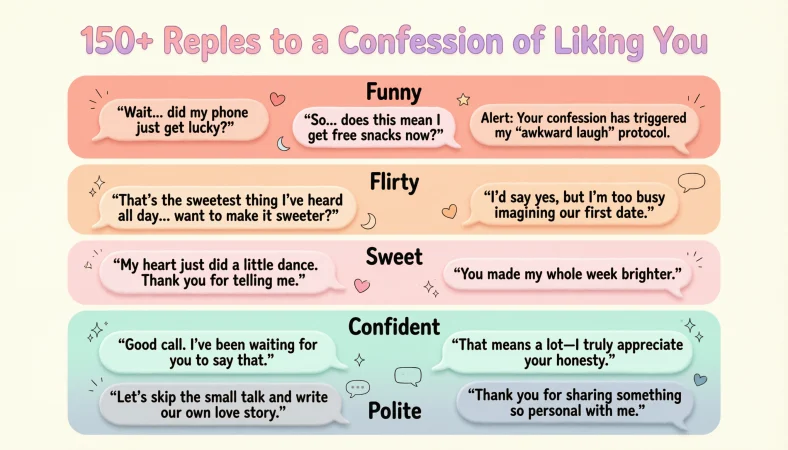
Funny Responses
“Well, this took an interesting turn.”
Use it when a confession catches you completely off guard.
Meaning: You are surprised but keeping the mood light.
“Should I pretend I didn’t hear that?”
Use it when you want to tease someone after their confession.
Meaning: You are playfully acknowledging the confession.
“Plot twist: I like you too.”
Use it when you want to reveal mutual feelings humorously.
Meaning: You are turning the confession into a fun romantic twist.
“Okay, my ego needed that today.”
Use it when you want to joke while appreciating the compliment.
Meaning: You are playfully enjoying the attention.
“And here I thought you were just being nice.”
Use it when their previous behavior suddenly makes sense.
Meaning: You are teasing them about their hidden feelings.
“Well, somebody finally said it.”
Use it when you suspected they liked you already.
Meaning: You are joking that their feelings were obvious.
“Do I get a certificate for handling this confession?”
Use it when you want to make an awkward moment funny.
Meaning: You are using humor to relax the situation.
“Noted. Very interesting information.”
Use it when you want a playful response without immediately revealing your feelings.
Meaning: You are acknowledging the confession with light teasing.
“My notifications just became exciting.”
Use it when the confession arrives unexpectedly by text.
Meaning: You are jokingly saying their message made your day more interesting.
“Okay, that explains a few things.”
Use it when you have noticed their behavior before.
Meaning: You are playfully connecting the confession to earlier clues.
“I was wondering when you’d say that.”
Use it when you suspected their feelings.
Meaning: You are confidently teasing them for finally admitting it.
“Well, this is not the plot I expected today.”
Use it when the confession arrives unexpectedly.
Meaning: You are treating the moment like a funny surprise.
Flirty Responses
“Good, because I was hoping you felt that way.”
Use it when you already have romantic feelings for them.
Meaning: You are openly showing that the attraction is mutual.
“Finally, you said it.”
Use it when you have been waiting for their confession.
Meaning: You are playfully revealing that you suspected their feelings.
“I was hoping you’d confess first.”
Use it when you wanted them to make the first move.
Meaning: You are admitting that you like them too.
“So, what are we doing about this?”
Use it when you want to move the conversation toward dating.
Meaning: You are confidently opening the door to something romantic.
“That makes two of us.”
Use it when you want a short and confident mutual confession.
Meaning: You are saying you share the same feelings.
“You have no idea how happy that makes me.”
Use it when their confession genuinely excites you.
Meaning: You are warmly showing that their feelings matter to you.
“I was trying very hard not to say the same thing.”
Use it when you have been hiding your attraction.
Meaning: You are admitting you have similar feelings.
“Now you’re making it hard to play it cool.”
Use it when you want playful romantic tension.
Meaning: You are saying their confession is making your feelings harder to hide.
“Well, that just made you more attractive.”
Use it when you want to respond with playful confidence.
Meaning: You are turning their honesty into a flirtatious compliment.
“I think we should explore that feeling.”
Use it when you are interested in seeing where things go.
Meaning: You are expressing romantic curiosity.
“I like where this conversation is going.”
Use it when you want to encourage more flirting.
Meaning: You are signaling that you welcome the romantic direction.
“Careful, I might confess something too.”
Use it when you want to build playful anticipation.
Meaning: You are hinting that your feelings may be mutual.
Sweet Responses
“That’s really sweet of you to tell me.”
Use it when you want to appreciate their honesty.
Meaning: You value their courage and openness.
“Thank you for being honest with me.”
Use it when someone shares their feelings sincerely.
Meaning: You respect their vulnerability.
“That honestly means a lot to me.”
Use it when their confession touches you emotionally.
Meaning: You genuinely appreciate what they shared.
“You’re really special to me too.”
Use it when you care deeply about them.
Meaning: You are returning affection without necessarily defining the relationship.
“I’m really glad you told me.”
Use it when you want to make them feel comfortable after confessing.
Meaning: You appreciate their honesty.
“That was brave of you to say.”
Use it when they seem nervous about confessing.
Meaning: You recognize the courage it took.
“You just made me smile.”
Use it when their confession makes you genuinely happy.
Meaning: Their words had a positive emotional effect on you.
“That’s such a beautiful thing to hear.”
Use it when you want a warm and heartfelt response.
Meaning: You are deeply touched by their honesty.
“I appreciate you trusting me with that.”
Use it when their confession feels vulnerable.
Meaning: You respect the trust behind their words.
“You deserve an honest answer from me too.”
Use it when you want to respond thoughtfully.
Meaning: You intend to be sincere rather than play with their feelings.
“That was unexpectedly lovely.”
Use it when the confession surprises you in a positive way.
Meaning: You enjoyed hearing their feelings.
“I’m smiling way too much right now.”
Use it when you are secretly thrilled by the confession.
Meaning: You are happily affected by what they said.
Cute Responses
“Aww, you finally admitted it.”
Use it when you already suspected they liked you.
Meaning: You are responding affectionately with playful teasing.
“That’s adorable.”
Use it when their confession feels sweet and sincere.
Meaning: You find their honesty endearing.
“Okay, that was cute.”
Use it after a shy or nervous confession.
Meaning: You appreciated their sweet approach.
“You just made my heart do a little thing.”
Use it when the confession genuinely affects you.
Meaning: You are playfully expressing romantic excitement.
“Stop, you’re making me blush.”
Use it when you are flattered by their words.
Meaning: You are admitting their confession made you shy or excited.
“That might be my favorite message today.”
Use it when their confession arrives by text.
Meaning: You are showing that their message made you happy.
“Well, that was unexpectedly cute.”
Use it when you did not see the confession coming.
Meaning: You found the moment charming.
“You’re making this moment very hard to forget.”
Use it when the confession feels meaningful.
Meaning: You are saying their words made a lasting impression.
“My cheeks are officially embarrassed.”
Use it when you are blushing after their confession.
Meaning: You are playfully showing that you are flattered.
“That is ridiculously sweet.”
Use it when someone confesses in a heartfelt way.
Meaning: You think their feelings are genuinely touching.
“Okay, you just won major points.”
Use it when their honesty impresses you.
Meaning: You are showing positive interest.
“This is actually the cutest surprise.”
Use it when the confession catches you pleasantly off guard.
Meaning: You are happy about their honesty.
Chill And Casual Responses
“Oh wow, I appreciate you telling me.”
Use it when you want to keep your reply relaxed.
Meaning: You acknowledge their feelings without creating pressure.
“Honestly, I didn’t expect that.”
Use it when their confession surprises you.
Meaning: You are being straightforward about your reaction.
“Thanks for being real with me.”
Use it when you appreciate their honesty.
Meaning: You respect their openness.
“I’m glad you told me.”
Use it when you want to respond warmly without overthinking it.
Meaning: You appreciate their honesty.
“That’s good to know.”
Use it when you need a calm response while deciding how you feel.
Meaning: You acknowledge the confession without giving a romantic answer.
“I appreciate that.”
Use it when you want a simple and respectful response.
Meaning: You are grateful for their honesty.
“Okay, I hear you.”
Use it when you need time before giving a deeper answer.
Meaning: You are acknowledging their feelings thoughtfully.
“That definitely explains some things.”
Use it when their behavior suddenly makes more sense.
Meaning: You are connecting their confession with previous interactions.
“Thanks for telling me straight.”
Use it when you value direct communication.
Meaning: You appreciate that they were honest.
“Let’s not make this awkward.”
Use it when you want to keep things comfortable.
Meaning: You want the conversation to remain relaxed.
“I respect that.”
Use it when you want to acknowledge their feelings maturely.
Meaning: You respect their honesty even if you need time to respond.
“That’s fair. Thanks for telling me.”
Use it when you want a calm and balanced response.
Meaning: You accept their honesty without rushing the situation.
Confident Responses
“I had a feeling you liked me.”
Use it when their confession confirms your suspicion.
Meaning: You are confidently acknowledging that you noticed the signs.
“I respect the honesty.”
Use it when you admire their courage.
Meaning: You value direct and sincere communication.
“I like people who say what they mean.”
Use it when their confidence impresses you.
Meaning: You appreciate straightforwardness.
“That took courage, and I respect it.”
Use it when the person seems nervous.
Meaning: You recognize their confidence and vulnerability.
“I’m glad you said it instead of keeping it hidden.”
Use it when you value honest communication.
Meaning: You appreciate that they expressed their feelings.
“I appreciate knowing where you stand.”
Use it when you want clarity.
Meaning: You value understanding their intentions.
“That changes the conversation a little.”
Use it when the confession shifts your perspective.
Meaning: You recognize that the relationship may now feel different.
“I like your honesty.”
Use it when their directness attracts you.
Meaning: You appreciate their courage to be open.
“You said it confidently, and I respect that.”
Use it when the confession is direct.
Meaning: You admire their straightforward approach.
“Now we both know where we stand.”
Use it when you want clarity.
Meaning: You are acknowledging that the feelings are now out in the open.
“I can work with honesty.”
Use it when you want a confident but relaxed response.
Meaning: You value clear communication.
“Well, you definitely got my attention.”
Use it when their confession intrigues you.
Meaning: You are signaling interest without making a full commitment.
Polite Responses
“Thank you for being honest about how you feel.”
Use it when you want to respond respectfully.
Meaning: You appreciate their openness.
“I’m glad you felt comfortable telling me.”
Use it when someone shares vulnerable feelings.
Meaning: You want them to feel respected and safe.
“I really appreciate your honesty.”
Use it when you want a gracious response.
Meaning: You value their sincerity.
“That means a lot, and I respect your feelings.”
Use it when you care about handling the moment kindly.
Meaning: You acknowledge their emotions with respect.
“Thank you for trusting me enough to say that.”
Use it when their confession feels personal.
Meaning: You appreciate the trust involved.
“I’m flattered that you feel that way.”
Use it when you appreciate the sentiment.
Meaning: You feel complimented by their confession.
“I appreciate you sharing that with me.”
Use it when you need a neutral but warm response.
Meaning: You acknowledge their feelings thoughtfully.
“That was very sincere of you.”
Use it when their confession feels genuine.
Meaning: You recognize the honesty behind their words.
“I understand, and I appreciate your openness.”
Use it when you want to remain respectful.
Meaning: You acknowledge their feelings without overpromising.
“Thank you for telling me directly.”
Use it when they clearly express their feelings.
Meaning: You appreciate their straightforwardness.
“I’m grateful you were honest with me.”
Use it when you want a warm and mature response.
Meaning: You value the trust behind the confession.
“I respect what you feel, and I appreciate you telling me.”
Use it when you want to handle the moment carefully.
Meaning: You acknowledge their emotions without making assumptions.
Creative Responses
“Well, that just added a new chapter to our story.”
Use it when you want a memorable romantic response.
Meaning: You see the confession as a meaningful development.
“Looks like the secret is officially out.”
Use it when you suspected their feelings.
Meaning: You are playfully acknowledging their confession.
“Interesting. The plot thickens.”
Use it when you want a witty reaction.
Meaning: You are treating the confession as an intriguing development.
“And suddenly, our friendship has a plot twist.”
Use it when a friend confesses romantic feelings.
Meaning: You recognize that the relationship may be changing.
“That was not on my conversation bingo card.”
Use it when the confession completely surprises you.
Meaning: You are using humor to express surprise.
“You just unlocked a new conversation.”
Use it when the confession opens the door to deeper discussion.
Meaning: You are ready to talk about what happens next.
“Well, that secret had a short life.”
Use it when you suspected they had been hiding their feelings.
Meaning: You are playfully pointing out that they finally confessed.
“I think the universe wanted me to hear that.”
Use it when the confession feels perfectly timed.
Meaning: You are giving the moment a playful romantic touch.
“That confession just changed the storyline.”
Use it when their words shift how you see the relationship.
Meaning: You recognize the confession as a turning point.
“You really chose today to make things interesting.”
Use it when the confession arrives unexpectedly.
Meaning: You are teasing them about the timing.
“Well, that belongs in the unexpected moments archive.”
Use it when you want a quirky reaction.
Meaning: You are joking about how surprising the confession was.
“I think we just entered a new episode.”
Use it when you want to make the moment playful.
Meaning: You are suggesting that something new may be beginning.
Sarcastic Responses
“Oh, you only waited forever to tell me.”
Use it when you have suspected their feelings for a long time.
Meaning: You are teasing them about taking so long to confess.
“Breaking news: I’m not as surprised as you think.”
Use it when their feelings were obvious.
Meaning: You suspected the confession already.
“Wow, what a shocking development.”
Use it when you already knew they liked you.
Meaning: You are playfully pretending to be surprised.
“I’ll alert the media immediately.”
Use it when you want an exaggerated humorous reaction.
Meaning: You are jokingly making their confession sound like major news.
“Should I act surprised now?”
Use it when their feelings were obvious.
Meaning: You are teasing them for thinking the confession was unexpected.
“You mean all those hints were actually hints?”
Use it when their previous behavior suddenly makes sense.
Meaning: You are joking about the clues they gave you.
“Well, that explains the suspiciously nice behavior.”
Use it when they have been unusually attentive.
Meaning: You are playfully connecting their behavior to their feelings.
“I’ll try to recover from this groundbreaking revelation.”
Use it when you want exaggerated humor.
Meaning: You are pretending the confession dramatically shocked you.
“Who could possibly have seen this coming?”
Use it when you clearly suspected their feelings.
Meaning: You are sarcastically pretending to be surprised.
“Interesting. Very unexpected. Totally.”
Use it when you want dry humor.
Meaning: You are joking that their confession was obvious.
“So that was the secret agenda.”
Use it when their behavior suddenly makes sense.
Meaning: You are teasing them about their hidden feelings.
“Well, detective work finally paid off.”
Use it when you figured out their feelings beforehand.
Meaning: You are playfully celebrating that you noticed the signs.
Emotional Responses
“I didn’t realize you felt that deeply about me.”
Use it when their confession genuinely surprises you.
Meaning: You are acknowledging the emotional weight of their words.
“Thank you for trusting me with your feelings.”
Use it when the confession feels vulnerable.
Meaning: You recognize the emotional courage involved.
“That honestly touched my heart.”
Use it when their words make you emotional.
Meaning: Their confession has affected you deeply.
“I know that probably wasn’t easy to say.”
Use it when they seem nervous or vulnerable.
Meaning: You understand the courage behind their confession.
“I’m really glad you told me how you feel.”
Use it when you value emotional honesty.
Meaning: You appreciate their willingness to open up.
“Your honesty means more than you know.”
Use it when their confession feels meaningful.
Meaning: You deeply value their openness.
“I want to be honest with you too.”
Use it when you are preparing to share your own feelings.
Meaning: You want the response to be sincere and mutual.
“That’s a beautiful thing to hear from someone I care about.”
Use it when you have genuine affection for them.
Meaning: Their feelings matter because you care about them.
“I need a little time to process that.”
Use it when the confession catches you off guard.
Meaning: You need space before giving an emotional answer.
“I don’t want to answer without being completely honest.”
Use it when you are unsure how you feel.
Meaning: You want to protect both people from a careless response.
“I really value what we have.”
Use it when the relationship matters deeply to you.
Meaning: You want to emphasize the importance of the connection.
“Whatever happens next, I’m glad we were honest.”
Use it when the situation feels emotionally significant.
Meaning: You appreciate the honesty regardless of the outcome.
Clever Responses
“That explains more than you realize.”
Use it when their confession connects several previous moments.
Meaning: You have noticed signs that now make sense.
“I suspected there was something behind that smile.”
Use it when you noticed their interest.
Meaning: You are cleverly acknowledging their attraction.
“Interesting timing, because I was wondering the same thing.”
Use it when you have also been thinking about them romantically.
Meaning: You are subtly revealing mutual interest.
“Now the clues are starting to make sense.”
Use it when their past behavior seemed suspiciously affectionate.
Meaning: Their confession explains earlier signals.
“You just answered a question I never asked.”
Use it when you secretly wondered about their feelings.
Meaning: Their confession confirms something you were curious about.
“I think we both know this changes things.”
Use it when the relationship may become romantic.
Meaning: You recognize the confession as significant.
“That is useful information to have.”
Use it when you want to stay composed and playful.
Meaning: You acknowledge the confession without rushing.
“I was beginning to connect the dots.”
Use it when you noticed several signs.
Meaning: You were already figuring out their feelings.
“That makes our last few conversations much more interesting.”
Use it when their confession changes how you interpret previous chats.
Meaning: You are reconsidering earlier interactions.
“I appreciate the clarity.”
Use it when you prefer direct communication.
Meaning: You value knowing exactly how they feel.
“Now I know how to interpret those little hints.”
Use it when they have been subtly flirting.
Meaning: Their confession confirms your suspicions.
“That certainly puts things into perspective.”
Use it when their confession changes your understanding.
Meaning: You are thoughtfully processing what they revealed.
Dramatic Responses
“Well, my entire evening just changed.”
Use it when their confession arrives unexpectedly.
Meaning: Their message has dramatically affected your mood.
“I need a moment because that was a lot.”
Use it when you are genuinely surprised.
Meaning: You need time to process their confession.
“You cannot just drop that information and expect me to act normal.”
Use it when you are excited or flustered.
Meaning: Their confession has caught you emotionally off guard.
“And suddenly, everything makes sense.”
Use it when their confession explains their past behavior.
Meaning: You now understand their earlier actions differently.
“Well, that escalated beautifully.”
Use it when the confession creates romantic excitement.
Meaning: You are playfully embracing the unexpected development.
“I was not emotionally prepared for this message.”
Use it when their confession surprises you.
Meaning: Their words caught you completely off guard.
“You really chose to change the whole storyline today.”
Use it when their confession shifts the relationship.
Meaning: You are joking about the significance of the moment.
“Okay, somebody give me a minute to process this.”
Use it when you need a moment before answering.
Meaning: You are overwhelmed by the confession.
“Well, this is officially memorable.”
Use it when you want to acknowledge the importance of the moment.
Meaning: You expect to remember their confession.
“My brain has officially stopped working.”
Use it when you are flustered.
Meaning: Their confession has left you speechless.
“That was not the plot twist I expected.”
Use it when you are surprised by their feelings.
Meaning: You are playfully emphasizing the unexpected nature of the confession.
“Okay, this conversation just became very interesting.”
Use it when you want to encourage the discussion.
Meaning: You are intrigued by what happens next.
Gentle And Respectful Responses
“I really appreciate you telling me, and I want to be honest with you.”
Use it when you want to respond thoughtfully.
Meaning: You respect their feelings enough to be sincere.
“I care about you, so I don’t want to give you a misleading answer.”
Use it when you do not share the same feelings.
Meaning: You want to avoid giving false hope.
“Your feelings matter, and I appreciate you sharing them.”
Use it when you want to acknowledge their vulnerability.
Meaning: You respect their emotional honesty.
“I’m grateful you trusted me enough to say that.”
Use it when their confession feels difficult for them.
Meaning: You value the trust involved.
“I hope you know I respect you regardless of how I feel.”
Use it when you need to establish emotional respect.
Meaning: You want to separate the relationship from romantic feelings.
“I want us to be comfortable being honest with each other.”
Use it when you want healthy communication.
Meaning: You value openness without pressure.
“I appreciate what you shared, and I hope we can handle this kindly.”
Use it when the situation feels delicate.
Meaning: You want to protect both people’s feelings.
“I understand why you wanted to tell me.”
Use it when you want to validate their decision.
Meaning: You recognize that confessing was important to them.
“Thank you for being vulnerable with me.”
Use it when someone opens up emotionally.
Meaning: You recognize the courage behind their confession.
“I don’t want you to feel embarrassed for telling me.”
Use it when they seem nervous or regretful.
Meaning: You want them to feel respected and comfortable.
“Whatever my answer is, I appreciate your honesty.”
Use it when you need to give a sincere response.
Meaning: Their openness deserves acknowledgment regardless of your feelings.
“Let’s take this one step at a time.”
Use it when you want to avoid rushing the situation.
Meaning: You prefer to let things develop naturally.
Responses If You Like Them Too
“I like you too.”
Use it when you want the clearest possible answer.
Meaning: You are directly returning their feelings.
“I’ve been feeling the same way.”
Use it when your feelings have been mutual for a while.
Meaning: You are revealing that the attraction is shared.
“I was hoping you’d say that.”
Use it when you have been waiting for their confession.
Meaning: Their feelings are exactly what you wanted to hear.
“You have no idea how happy I am to hear that.”
Use it when their confession genuinely excites you.
Meaning: Their feelings bring you happiness.
“I thought I was the only one.”
Use it when you assumed your feelings were one-sided.
Meaning: You are relieved to discover the attraction is mutual.
“This makes so much sense now.”
Use it when their confession explains the chemistry between you.
Meaning: You now understand why the connection felt different.
“I’ve wanted to tell you the same thing.”
Use it when you have been holding back your feelings.
Meaning: You are admitting that your feelings have also been present.
“Looks like we both had the same secret.”
Use it when neither person confessed earlier.
Meaning: You are playfully celebrating mutual feelings.
“I’m really glad you said it first.”
Use it when you were too nervous to confess.
Meaning: You wanted to say the same thing but hesitated.
“Then maybe we should give this a chance.”
Use it when you are interested in exploring a relationship.
Meaning: You are opening the door to something romantic.
“I think there’s something special between us too.”
Use it when you feel a deeper connection.
Meaning: You are acknowledging mutual chemistry.
“Well, this confession has made my day.”
Use it when their message genuinely makes you happy.
Meaning: You are excited and appreciative of their feelings.
Responses If You Need Time
“Thank you for telling me. Can I take some time to think about it?”
Use it when you are surprised and unsure how you feel.
Meaning: You appreciate their honesty but need time.
“I wasn’t expecting this, so I need a little time.”
Use it when the confession catches you off guard.
Meaning: You need space to process your emotions.
“I really appreciate your honesty. Let me think about what I feel.”
Use it when you want to avoid an impulsive answer.
Meaning: You want to respond sincerely.
“Can we talk about this a little later?”
Use it when you need time before discussing the confession.
Meaning: You want to continue the conversation when ready.
“I don’t want to give you a rushed answer.”
Use it when you want to think carefully.
Meaning: You take their feelings seriously.
“That means a lot, but I need some time to process it.”
Use it when their confession affects you emotionally.
Meaning: You appreciate their words but need breathing room.
“I’m glad you told me. I just need a moment.”
Use it when you are surprised.
Meaning: You acknowledge their courage while asking for time.
“I want to answer honestly, so let me think.”
Use it when you want to avoid giving a careless response.
Meaning: You prioritize sincerity.
“This is important enough for me to think about properly.”
Use it when the confession feels serious.
Meaning: You do not want to treat their feelings casually.
“I appreciate you telling me, even if I’m not ready to answer yet.”
Use it when you need more time.
Meaning: You value their honesty while maintaining your boundary.
“Can I sit with that for a little while?”
Use it when you need emotional space.
Meaning: You want time to understand your own feelings.
“I promise I’ll be honest with you once I’ve processed it.”
Use it when you want to reassure them.
Meaning: You intend to give a thoughtful answer rather than avoid the topic.
Responses If You Do Not Feel The Same
“I really appreciate you telling me, but I don’t feel the same way.”
Use it when you want to be kind and direct.
Meaning: You clearly communicate that the feelings are not mutual.
“You mean a lot to me, but only as a friend.”
Use it when you value the friendship.
Meaning: You care about them but do not want a romantic relationship.
“I’m flattered, but I don’t want to lead you on.”
Use it when you want to set a respectful boundary.
Meaning: You do not want to create false expectations.
“Thank you for being honest. I want to be honest too.”
Use it before explaining that your feelings are different.
Meaning: You are choosing sincere communication.
“I care about you, but I don’t see us romantically.”
Use it when you want a gentle but clear response.
Meaning: You value the person without sharing romantic attraction.
“I hope this doesn’t make things uncomfortable between us.”
Use it when you want to preserve the connection.
Meaning: You want to handle the situation respectfully.
“I respect your feelings, but I can’t return them.”
Use it when you need a firm but considerate answer.
Meaning: You are setting a clear emotional boundary.
“You’re wonderful, but I don’t think we’re a romantic match.”
Use it when you want to be kind without giving mixed signals.
Meaning: You are declining while recognizing their qualities.
“I’m glad you told me, and I hope you won’t feel bad for being honest.”
Use it when they seem embarrassed after confessing.
Meaning: You want them to know their honesty was respected.
“I don’t want to give you hope for something I can’t offer.”
Use it when you want to avoid ambiguity.
Meaning: You are protecting both people from confusion.
“I value what we have, and I’d rather be honest about where I stand.”
Use it when the relationship matters to you.
Meaning: You prefer honesty over pretending.
“I hope we can respect each other’s feelings and move forward comfortably.”
Use it when you want a mature ending to the conversation.
Meaning: You want both people to handle the situation with dignity.
FAQs
What Does A Confession Of Liking You Mean?
It usually means someone is openly telling you they have romantic or emotional interest in you.
Can A Confession Be Flirty?
Yes. The tone can be playful, romantic, shy, direct, or deeply emotional depending on the person and situation.
What Is A Good Reply If I Like Them Too?
Keep it honest and simple. “I like you too,” “I’ve been feeling the same way,” or “I was hoping you’d say that” all work naturally.
What If I Need Time To Decide?
You can say, “Thank you for telling me. I need a little time to process how I feel.” You do not have to give an instant answer.
What If I Don’t Like Them Back?
Be kind but clear. Avoid responses that could accidentally create false hope, and explain that you do not share the same romantic feelings.
Can I Use Humor When Someone Confesses?
Yes, if you know the person well and the situation feels comfortable. Avoid humor that embarrasses, mocks, or dismisses their vulnerability.
Can I Respond Professionally To A Confession?
If the confession happens at work, keep the response respectful, concise, and appropriate for the workplace. Clear boundaries are especially important when professional relationships are involved.
Conclusion
A confession of liking you can be exciting, awkward, flattering, surprising, or all four at once. The best response is not necessarily the cleverest one. It is the one that honestly matches how you feel and respects the other person’s courage. Whether you want to flirt back, keep things friendly, ask for time, or gently set a boundary, the right words can make the moment much easier. Use these Replies to a confession of liking you whenever you need inspiration, then add your own personality to make the message feel natural. Save this list, share it with a friend, and keep your favorite responses ready for that unexpected confession. You never know when someone might finally say what they feel.